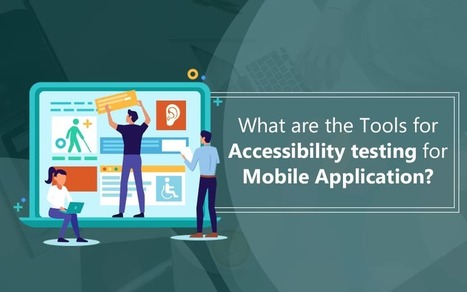
QA InfoTech thanks all the panelists and attendees for taking part in an insightful and engaging discussion on Digital Accessibility – A Real Need of the Day. Here is the full recording of the event held on 21st May, the Global Accessibility Awareness Day. Know more at https://qainfotech.com/digital-accessibility-a-real-need-of-the-day/ #DigitalAccessibility #PanelDiscussion #Recording
A student has criticised the University of Hull over the lack of wheelchair access on campus saying the institution has “completely missed the mark on what accessibility and inclusion means”.
Being a remote special education teacher can be challenging. Like the saying goes “It takes a village to raise a child”. We must be able to accommodate the needs for the children on digital platforms for the learner’s sake. Keep in mind that learning has no limits so we must take time to learn together. Choosing the platform that works best for your needs is crucial to be able to create professional opportunities.
Mel Baggs, whose forthright writings and films about being a nonverbal person with autism made an impact in the fields of neurodiversity and disability rights, died on April 11 in Burlington, Vt., at age 39.
Anna Baggs, Mx. Baggs’s mother, said the cause was believed to be respiratory failure, though numerous health problems may also have played a part.
Mx. Baggs, a vigorous blogger, used the term “genderless” as a self-description. “I like that it just means lack of gender, and has no spoken or unspoken secondary meaning,” read a 2018 entry on the blog “Cussin’ and Discussin’: Mel being human in a world that says I’m not.” Many friends and admirers posting about Mx. Baggs’s death on social media used gender-neutral pronouns, while others used the traditional feminine ones.
One of the biggest challenges in moving school online has been how to offer services for students with disabilities. But educators are finding creative ways to connect.
Imagine this: You’re working on content curation for your business site’s blog. You’ve plotted out different audiences and created personas and researched which customer needs and interests you need to address.
DYSLEXIA: My Story (2018). Here is my personal story of my Dyslexia. Dyslexia is a life long learning disability that impacts your ability to read and righ
A new-technology tool developer, writer of many articles and books on neuroscience, and a chief scientific officer of a data science company, Dr. Sukan
This talk was given at a local TEDx event, produced independently of the TED Conferences. Noah Britton attempts to change the way people look at autism b
One of the most amazing developments I?ve seen in education over the past ten years is the way that technology has created a revolution in possibilitie
Interest is growing in the association of hearing loss with other health conditions, especially cognitive disorders such as dementia. In addition, health care providers in general are being asked to routinely screen patients for common problems associated with aging, including cognitive impairment. But can hearing loss invalidate these measures? If the measures that are used to assess these problems are unduly influenced by hearing loss, they might be misinterpreted in those who do not hear well. In other words, could patients be misdiagnosed or inaccurately identified as having cognitive impairment because of hearing loss alone? We sought to answer this question by addressing the effect of hearing loss on a battery of neuropsychological measures.
HVLT-R Delayed Recall raw scores for the hearing loss group (n = 41) and normal hearing group (n = 41) by presentation condition. Mixed-model ANOVA indicated that there were significant main effect of condition and significant group by condition interaction with large effect sizes, F(2, 79) = 27.56, p <.001, ηp 2 =.41. Hearing loss, cognition, dementia.
Neuropsychological assessment involves the administration of standardized cognitive tests to examine how an individual performs in areas such as memory, language, and other thinking abilities. These evaluations are often used to identify cognitive impairments that may indicate the presence of a neurocognitive disorder such as dementia. Many cognitive tests, particularly in the area of verbal memory, require the examinee to learn and remember information that is presented orally.1 Therefore, individuals with hearing loss may be at a disadvantage to perform optimally on verbal memory tests. Difficulty with accurately hearing the information provided or expending extra cognitive effort to listening may suppress an individual's memory test scores, putting them at risk of being over diagnosed with cognitive impairment.2 Our study aimed to determine the effect of age-related hearing loss on verbal memory performance in older adults.3
STUDY HIGHLIGHTS
We recruited 41 adults with mild-to-severe sensorineural hearing loss (average PTA = 49.2 dB HL, SD = 12.9) and 41 adults with hearing in the normal range (average PTA thresholds < 25 dB HL). Participants ranged in age from 55-80 years old (average age = 66.7 years, SD = 6.5), and were free of dementia or other neurologic/psychiatric conditions that could interfere with cognitive testing. Because age is strongly related to hearing loss, the groups were matched on age (± 3 years) and did not differ in terms of gender proportion.
For the study, both groups completed a commonly used verbal memory test called the Hopkins Verbal Learning Test–Revised Edition (HVLT-R).4 This test involves learning a list of words over repeated presentation trials and recalling the words after a 20- to 25-minute delay. The test was given in a standard auditory format, in which participants wore noise-cancelling headphones and viewed video recordings of an examiner presenting the test. Hearing loss participants did not wear their hearing aids during the auditory version because of difficulties related to controlling for differences in hearing aids and because some participants with hearing loss did not have hearing aids. We thought this decision was ecologically valid because patients frequently attend clinical neuropsychological assessment appointments without their hearing aids or without ever having pursued treatment.5 Moreover, the majority of adults with hearing loss do not wear hearing aids due to several barriers, including cost and stigma.6 For the auditory presentations of the HVLT-R, we presented the tests to the two groups under two conditions: In the natural auditory condition, both groups heard the test at a normal speaking volume. In the crossed auditory condition, adults with hearing in the normal hearing range were presented the HVLT-R video with simulated hearing loss, in which the audio was edited to mimic age-related hearing loss (i.e., proportionately greater loss in high frequencies of >1 kHz compared with lower frequencies, 0.25 to 1 kHz). Adults with hearing loss were afforded amplified acoustic intensity for the crossed condition. Lastly, the test was also administered to each participant in an experimental visual format for which the word list was presented as printed words on a computer screen; this version did not include an auditory component.
Results for the delayed recall trial under the different presentation conditions are displayed in Figure 1. We found that participants with hearing loss performed significantly worse on the natural auditory verbal format compared with participants without hearing loss. They learned fewer words during the presentation trials and recalled fewer words after a delay. Interestingly, the results also demonstrated that, although hearing loss participants learned fewer words, they generally remembered the words that they did learn after the delay. This finding suggests that participants with hearing loss did not have a deficit in storing the information in memory, which is a characteristic of amnestic disorders such as mild cognitive impairment and dementia due to Alzheimer's disease. When performance on the visual version of the memory test was examined, we found that the performance of the hearing loss group was equivalent to that of the group without hearing loss, and effect sizes of any differences were small and not statistically significant. Lastly, for the crossed auditory condition, the group without hearing loss performed significantly worse than the hearing loss group. The groups did not differ in neuropsychological measures of attention, processing speed, executive function, or figural memory.
CLINICAL IMPLICATIONS
As expected, unaided hearing loss adversely affected performance on a verbal memory test when it was presented in the conventional auditory format at a normal speaking volume. In contrast, older adults with hearing loss had equivalent performance to those without hearing loss on a novel visual version of the memory test. Moreover, although they performed well under natural conditions, adults without hearing impairment who experienced simulated hearing loss performed as poorly as adults with hearing loss. These findings indicate that the standard auditory format may overestimate cognitive impairment in older adults with hearing loss, and an alternative visual version of the test may improve validity of verbal memory assessment in this population.
The association between hearing loss and dementia is potentially inflated because of the high reliance on auditory-verbal memory tests to diagnose dementia. Our findings demonstrate that individuals with hearing loss can falsely appear impaired on these measures. A body of literature has reported an association between hearing loss and increased risk for cognitive impairment and dementia.7 The underlying mechanisms for this relationship remain unclear;8 however, studies that do not account for the contribution of hearing loss to auditory cognitive test performance inflate the strength of the association. On an individual patient level, it is important that clinicians are especially mindful of the effects hearing loss can have on cognitive measures that involve auditory stimuli to avoid false-positive diagnoses of cognitive disorders. Our findings are consistent with those in other research that has demonstrated that reduced audibility results in impaired performance on verbal memory tests and cognitive screeners.2,9
Overall, this study indicates that auditory-verbal memory performance should be interpreted with caution in individuals with hearing loss. Future research should examine the effect of hearing aid use on auditory-verbal memory tests commonly used in clinical and research contexts. For individuals with severe-to-profound hearing loss in whom the use of hearing aids or other amplification is not sufficient, visual versions of verbal memory assessments should be validated for clinical use to facilitate comprehensive neuropsychological assessment rather than omitting tests with an auditory component. Interdisciplinary collaboration between audiologists and neuropsychologists will improve our understanding of the complex relationship between hearing loss and cognition, and lead to important implications for the clinical care of patients with hearing loss.
*This research was funded by a grant from Blue Cross Blue Shield of Michigan.
REFERENCES
1. Lezak MD, Howieson DB, Bigler ED, Tranel D. Neuropsychological assessment. 5 ed. New York, NY: Oxford University Press; 2012.
3. Wong CG, Rapport LJ, Billings BA, Ramachandran V, Stach BA. Hearing loss and verbal memory assessment among older adults. Neuropsychology. 2019;33(1):47-59.
7. Loughrey DG, Kelly ME, Kelley GA, Brennan S, Lawlor BA. Association of Age-Related Hearing Loss With Cognitive Function, Cognitive Impairment, and Dementia: A Systematic Review and Meta-analysis. JAMA Otolaryngol Head Neck Surg. 2018;144(2):115-126.
9. Jorgensen LE, Palmer CV, Pratt S, Erickson KI, Moncrieff D. The effect of decreased audibility on MMSE performance: A measure commonly used for diagnosing dementia. J Am Acad Audiol. 2016;27(4):311-323.
The shock has passed, the sadness comes and goes, and the stretchy waistband pants are becoming a mainstay. Your college or university is staying online for the rest of this academic year, as well as summer, and you wonder about fall 2020.
While the trauma of the COVID-19 pandemic persists, it may be time to settle into an educational environment that will be more online than previously imagined.
Warning: You will not get through the same amount of content during this pandemic. Please do not try.
Mind mapping is a crucial part of not only planning your life and goals, but also in understanding. With us ADHD'ers, it is even more important to be abl
Stephen is a Senior Directing major at Carnegie Mellon. He is also the current President of Carnegie Mellon's Film Club. He recently completed his Thesi
As we move to a model where learners have options in terms of how they learn, there is a new role for assessment in diagnosing how best to support an individual learner. This new role should not be...
Here is a curated list of resources just released on ASCD myTeachSource that offer ways to integrate appropriate strategies to help all students succeed in your
Accessibility is a huge issue that not many people seem to be talking about... Having access to the same technology and materials should be a basic right for every student/person. Google and its Chromebooks have many built-in features that help bridge the gap between the general public and those with special needs. The accessibility features are listed on this page along with information on how to make those features work.
Here's a question to ask yourself, Are you allowing those who are using your technology to have access?
When it comes to learning, every classroom teacher knows how important it is to differentiate the learning styles of students and to know their strengths and weaknesses. The accessibility function on Google for Education is on point, and it is exactly what a teacher needs in the classroom to maintain maximum focus and engagement from the students. With features like "select to speak", "dictation', and "generated transcripts" among many, many others, students who may have a learning disability or a preferred style of studying will benefit from using the accessibility tools found on Google for Education. Having taught eleventh grade U.S. History for the state of Texas end of year assessment for 5 years, I know that these same features are available on the STAAR test. I like to help the students practice using the tools that Google Education offers so that when the EOC comes around, the students will be comfortable and willing to make use of them to help them achieve the best score possible.
To get content containing either thought or leadership enter:
To get content containing both thought and leadership enter:
To get content containing the expression thought leadership enter:
You can enter several keywords and you can refine them whenever you want. Our suggestion engine uses more signals but entering a few keywords here will rapidly give you great content to curate.


 Your new post is loading...