 Your new post is loading...

|
Rescooped by
Dennis Swender
from Social Media Classroom
March 29, 2020 2:57 PM
|
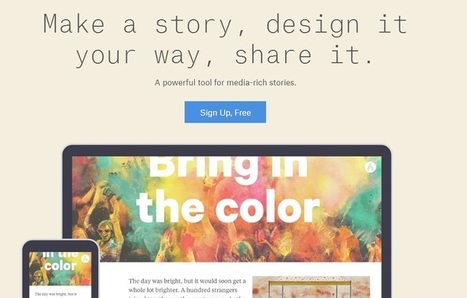
Facebook and Twitter may be ubiquitous, but there are many other social media tools out there that can enhance teaching and learning. Here, three educators share their favorites.
Via Seth Dixon
|
|
Rescooped by
Dennis Swender
from Social Media Classroom
March 29, 2020 2:44 PM
|
Learning management systems, like Blackboard and Moodle, have helped educators manage assignments. However, the LMS can be an obstacle to letting students take their work with them while connecting to the greater world.
Via Seth Dixon
Importance Internet and computer game addiction represent a growing mental health concern, acknowledged by the World Health Organization. Objective To determine whether manualized cognitive behavioral therapy (CBT), using short-term treatment for internet and computer game addiction (STICA), is efficient in individuals experiencing internet and computer game addiction.
Via ThePlanetaryArchives/BlackHorseMedia - San Francisco, Federico Santarelli
"As attention spans dwindle and the amount of content skyrockets, it’s important to know how to tell a good story."
Read the full article to view the Ultimate Storytelling Guide infographic which covers: A Story About StorytellingWhat is Storytelling?What Will Storytelling Do for My Brand?Why Storytelling WorksFinding Your Story?Telling Your Story?
Via Kim Zinke (aka Gimli Goose)
"Using digital storytelling resources in your classroom connects students to an age-old practice in a modern way." Read the full article to find out, and link to, 30 of the best digital storytelling resources on the web today.
Via Kim Zinke (aka Gimli Goose)
"Our ancestors used it to preserve history; sometimes even drawing images on cave walls and rocks to support their narratives. Kids before grew up telling stories around the campfire, their eyes reflecting the joy and wonder at new chronicles heard over roasted marshmallows. Today, storytelling takes on the form of interactive media. Thanks to advancements in technology, we’re not just exploring stories from history or science – we’re also discovering each other’s tales. From students, journalists, cooks, photographers, and even entrepreneurs: we’ve become the new breed of digital storytellers." Read the full article to find out more about these six platforms for digital storytellers: MediumStorifyMaptiaAtavistShorthandSteller
Via Kim Zinke (aka Gimli Goose)
|
|
Rescooped by
Dennis Swender
from Social Media and Healthcare
March 28, 2020 10:57 PM
|
People with serious mental illness face barriers to mental health treatment and are often reluctant to seek professional help. Especially, if they have a co-occurring disorder, meaning they may struggle with any combination of addiction, depression, anxiety, PTSD, etc., according to Buivydas. “Many people are instead seeking support and information regarding their illness via the internet, especially on social media,” he says. Pinterest, a well-known social network where people can find inspiration and ideas for interests and hobbies, made a move to remove posts related to self-harm. As a result, user reports on that type of content decreased by 88%. Pinterest also launched a feature called “compassionate search” where users can combat stress and anxiety through healthy journaling and meditation. Additionally, when a user searches for the tag “self-harm” or anything similar, it leads them to healthy they’ll find 10 new coping exercises that can help them work through difficult emotions and feelings. Similarly, back in April 2018, Instagram tackled their growing issue of drug-related hashtags. Users were using hashtags like #opiates, #fentanyl, #oxycontin, and more to sell drugs. After mounting pressure from the FDA, senators and health advocates, Instagram removed those hashtags and any post or message related to those hashtags. "Today, social media is the biggest outlet for people to seek support groups and like-minded individuals. But, sometimes those ‘support groups’ and like-minded people are doing more harm than good." “These individuals may have conditions that can affect their ability to actively participate in their communities and/or build positive social relationships. Social media allows people with and without disabilities to connect with friends and family who are near and far. People struggling with serious mental illness can use social media to communicate with friends, find peer support, or receive health-related information. Indeed, social media can also support people with severe mental illness and their care teams as a positively oriented tool to find support and connect with events and opportunities in their community.” Read More: https://www.managedhealthcareexecutive.com/news/social-networks-move-behavioral-health
Via Plus91
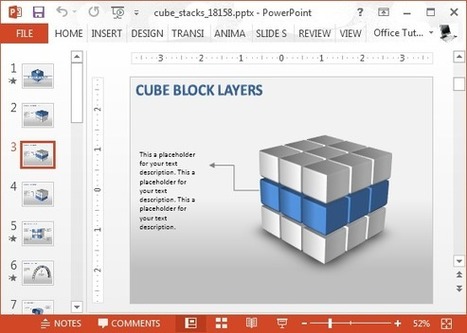
The Animated Cube Stacks PowerPoint Template is a wonderful template with animated 3D cube diagrams for PowerPoint.
Via FPPT
The Animated Gradient Mountains PowerPoint Template is a slide deck with a modern design, and a very unique color tone for presentations with modern look & feel.
Via FPPT
The Animated Social Network PowerPoint Template can be used for making PPT presentations about social networks and social media.
Via FPPT
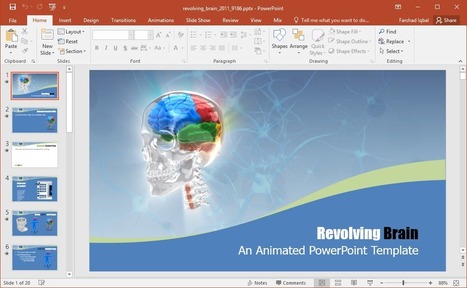
The list below contains both free and premium clipart, animations and PowerPoint templates with brain being the central theme.
Via FPPT
This Animated Tablet PowerPoint Template is suitable for all types of presentation topics since this is a general-purpose presentation template.
Via FPPT
|
|
|
Rescooped by
Dennis Swender
from Social Media Classroom
March 29, 2020 2:45 PM
|
We get it: No one likes Facebook. Twitter is full of trolls. Social networks can be a pain, but they're also great ways to stay in touch with friends and talk to new people. Even so, every few weeks we hear from someone who wants to just "quit" Facebook altogether. Here's why that's a silly idea, and what you can do instead that'll make you just as happy.
Via Seth Dixon
|
|
Rescooped by
Dennis Swender
from Social Media Classroom
March 29, 2020 2:34 PM
|
Recent studies have shown that students learn better — and get better grades — when they take notes by hand.
Via Seth Dixon
Are ScreenLock and FaceDown Mental Illnesses? - J. Thomas/BlackHorseMedia
The most serious epidemic humankind has ever faced has swept the planet and has already affected billions of people; from the poorest illiterate rural villager to the people who have money and education. It affects young and old, black and white, Boyz and Girlz. It takes many different forms, but the result is the same; screenlock. The Japanese have another name for it: ‘Facedown.’ Staring at that tiny screen for most of your waking hours. Oh sure, you watch Game of Thrones on your 72” 8K smartTV. But from the moment you wake up to the moment you fall asleep, you are engaged with and by that tiny little screen. That, amigos, is a form of mental illness. It would be different if watching that screen was informing you of current events, or teaching you the Electric Sun theory, or even telling you the names of the plants and animals you see every day, but know nothing about. Au contraire, mon ami. Numero uno, it’s impossible to actually see anything on that tiny little screen unless it is used in landscape mode, which nobody does. It blows peoples minds when I inform them that the phone was originally intended to be used this way. The reason everyone uses portrait mode is so they can type with one thumb. Spoiler Alert: anything that can be typed with one thumb is not important. Indeed, most of the cellular data being sold for extortionate fees by the telecoms is used for frivolous purposes, social networking being the most abused. I’ve observed toddlers, teenagers, and alleged adults so involved in their games they wouldn’t even make eye contact, let alone interact. Some people are so addled they can’t look away for 10 seconds straight. The problem is they don’t know how to interact because they never have to. I totally understand the need to disengage from the real world. I too have spent countless hours on mindless “entertainment.” But some of that entertainment were things that might be considered art and literature. I have read hundreds of books, including the Holy Bible cover-to-cover. Twice. Great stuff; some of it even accurate. The Bhagdad Gita is a fun read, as is the I-Ching. Siddartha is still cool. The Master and Margarita and Captain Corelli’s Mandolin are lessons in poetry as narrative. But nobody reads anything longer than a tweet on their tiny little screens. Nobody actually reads entire articles on their phone. Nobody scrolls below the ‘fold,’ or visits multiple pages on a website. Nobody spends more than a few seconds on any one app, unless it’s a game or their significant other. Nobody reads anymore; and that’s why the Elites continue to literally get away with murder. Nobody does multiple searches or anything like serious research on their phones; and yet many people forgo getting computers because all they do is WhatsUp and MyFace. Oh, and actually watch videos and movies in portrait mode. Saints preserve us….. Fortunately screen-lock or Facedown aren’t necessarily fatal, unless you die taking a selfie with a speeding train, from a vertigo-inducing height, or with a dangerous animal. Oh wait, many people have died doing exactly those things. Oh well, natural selection is a cruel master. Since screenlock is more of a learned behavior than an organic disorder, de-programming is possible. I’ve found that immersing oneself in Nature to be the best way to overcome this addiction. The world is out there; not in there. And if you’re watching mainstream media, including the most popular so-so networking sites, you’re being given the mushroom treatment. That is, you’re being kept in the dark and fed shit. What, you think the truth is freely available to the Talking Heads who read teleprompters? That the Powers That Be want an informed and/or enlightened electorate? Everything you see in the MSM is lies, damned lies, disinformation, half-truths, innuendo, gossip, propaganda, talking points, official statements, here-say, trash news, and did I mention damned lies? If you want the truth, you won’t find it in a tweet on your phone. ©2019 J. Thomas/BlackHorseMedia
Via ThePlanetaryArchives/BlackHorseMedia - San Francisco, Federico Santarelli
"After working with hundreds of nonprofits, social enterprises and impact organisations, we’ve distilled our steps for developing awesome stories into an easy to follow process, The Story Canvas. The Story Canvas is based on the Business Model Canvas’ and is a simple to use tool to develop and iterate your story ideas." Read the full article to access this step-by-step guide.
Via Kim Zinke (aka Gimli Goose)
"Kate Santore took the stage at Content Marketing World to share Coca-Cola’s storytelling ethos – and in the process inspired marketers to ask, “What if?” “Sharing our strategies and approach to marketing has been a tradition at Coca-Cola to open the door for other brands to learn from our 130 years of marketing experience,” Kate says. “Sharing this ‘thought-ware’ collectively raises the bar for every brand and therefore makes us strive for bigger, better, bolder.”" Read the full article to gain access to the 17 minute video from the conference and a brief interview that formulated the above graphic and to find out more key storytelling points.
Via Kim Zinke (aka Gimli Goose)
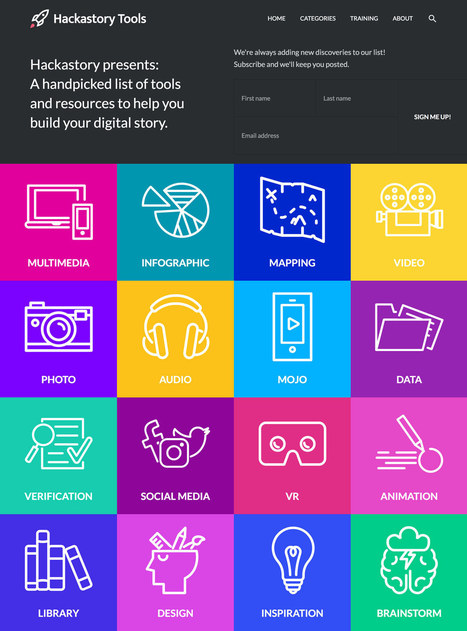
DigitalStory.Tools is a directory of tools and resources to help you build your digital stories. Have fun with our handpicked list of 85 tools. Read the full article to find the link to the (currently) 21 categories of tools.
Via Kim Zinke (aka Gimli Goose)
|
|
Rescooped by
Dennis Swender
from Social Media and Healthcare
March 28, 2020 10:58 PM
|
Theodore Roosevelt once said, “comparison is the thief of joy.” Yet, when it comes to social media, we often find ourselves comparing our lives, jobs, families, vacations, and bodies to everybody else’s perfect posts. Or, we get caught up in polarizing politics, letting ourselves get sucked into the latest controversial content. While many of us mindlessly scroll through our feeds to unwind or disconnect from the day, we may be causing more disconnection and dissatisfaction than we realize. The average internet user in America spends more than 2 hours a day on a social networking platform—that’s five and a half years online over a lifetime. Meanwhile, several studies have discovered that too much time online can cause depression, higher levels of stress, attention deficit hyperactivity disorder (ADHD), risky decision making, problems with mental functioning, paranoia, and loneliness. Even the rich and famous are impacted negatively by excessive social media consumption. Recently, “Game of Thrones” stars Maisie Williams and her onscreen sister costar Sophie Turner, better known as Arya and Sansa Stark, both attributed social media to their battles with depression, poor self-esteem and, for Turner, thoughts of suicide. These Hollywood starlets are not alone: An American Psychological Association report found that rates of depression, psychological distress and suicidal thoughts and actions have risen by 63 percent in adults age 26 and younger, with some of the highest increases among women. A psychology professor at San Diego State University discovered that teens who spend five or more hours a day online were 71 percent more likely to have at least one risk factor for suicide, compared to teens who spent only one hour a day online. This risk increases with only two or more hours spent online. The growing mental health problems associated with social media led to the creation of a new clinical term, “Facebook Depression” to describe depression that develops when teens and preteens spend time on social media sites before exhibiting the classic symptoms of depression. Before you delete all your social media profiles, the American Academy of Pediatrics suggestssocial media can offer effective distraction, humor, connection to peers, and a wide social network. Plus, increasingly, organizations are offering support services, including depression and suicide intervention services, through social media channels. Here are ways you can manage social media to encourage connection and reduce potential negative impacts on your mental health: LIMIT YOUR TIME: A study by the University of Pennsylvania found that when participants limited their social media use to 30 minutes a day, they felt significantly better after the three-week study period, reporting reduced depression and loneliness. If you have heightened FOMO, check out these strategies to take back control of your life. BUILD A COMMUNITY: Social media is a great outlet for identifying like-minded individuals. Find events or groups online and connect with them in person. One NIH study showed that when cancer patients used social media for social and emotional support, patients were less likely to suffer from depression than their non-social media user counterparts. GET HELP: NAMI, the National Alliance on Mental Illness, recommends ways to find treatments, share your feelings, or get support online and through social media, while at the same time, being aware of your triggers and getting help if you start experiencing negative thoughts. CONSCIOUSLY FILTER: Unfollow or block negative people. Instead, follow your favorite sport or nonprofit, check out inspirational quotes, DIY hobbies and videos of cute baby animals. Learn to recognize content that negatively impacts how you think and feel. And don’t let body-shaming or click-baiting (false advertising) turn your emotions against you to convince you to buy something. Never before in history has the age-old admonition of “caveat emptor” (buyer beware) been more relevant. The problem isn’t social media. It’s when digital interactions replace face-to-face encounterswith peers that social anxieties and isolation increase. Social media and our always-on technology enable us to connect like never before. Let’s use that for good, while also remembering to be social outside social media: volunteer, exercise, schedule coffee or lunch with a friend, and get involved in sports, hobbies, and other in-person community activities. — Published on July 30, 2019
Via nrip
This animated process timeline PowerPoint template gives removable images with each timeline and infographic slide, which you can edit by adding your own images with relevant text.
Via FPPT
If you are looking for a method to bring the fun of the Family Feud Show to your home, then try the Family Feud PowerPoint Template.
Via FPPT
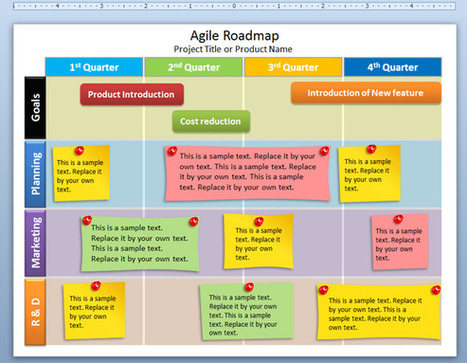
Agile Roadmap PowerPoint Template is a free editable template for Microsoft PowerPoint and project planners that you can download if you are using agile methodologies in your organization
Via FPPT
The Animated Slant Design PowerPoint Template is a presentation template which can enable you to present your slides with a unique visual perspective. Don't miss out our other PowerPoint themes.
Via FPPT
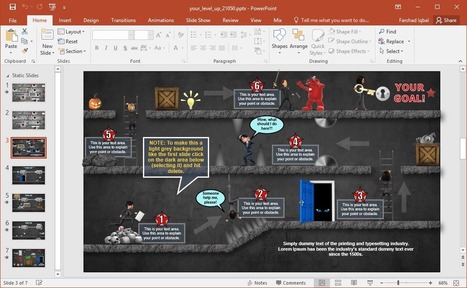
Your Level Up is the name of a Video Game PowerPoint Template which depicts various levels of an arcade like game in the form of PowerPoint slides.
Via FPPT
|






















Not suprisingly, Scoop.it is listed as one of these tools, but what is a delightful surprise is that I'm quoted throughout the article.