Distance Learning, mLearning, Digital Education, Technology
16.5K views | +0 today
Distance Learning, mLearning, Digital Education, Technology
Your new post is loading...
Rescooped by Dennis Swender from Business Improvement
November 19, 2017 7:46 PM
Scoop.it!

The 10 Laws of Visual Content Marketing - Updated 

The 10 Laws of Visual Content Marketing - Updated  | Distance Learning, mLearning, Digital Education, Technology | Scoop.it
When we published the new laws of visual content in March 2015, brands were just waking up to the power of visual content. Unfortunately, far too many good brands were getting it wrong. Yes, they were experimenting and learning through trial and error, but we wanted to remove the guesswork. So, we put together the …

Via Daniel Watson
Ian Berry's curator insight, November 20, 2017 7:32 PM
Lot of valuable insights in this to help make online more meaningful. I suspect will help next big thing which I predict is a revolution in in person
Rescooped by Dennis Swender from Mastering Facebook, Google+, Twitter
November 19, 2017 3:44 PM
Scoop.it!

Pinterest Isn't a Social Network - Why It Matters

Pinterest Isn't a Social Network - Why It Matters | Distance Learning, mLearning, Digital Education, Technology | Scoop.it
If Pinterest isn't a social network, what is it? And how can you use its unique strengths to market your business? Here's what you need to know.

Via massimo facchinetti
No comment yet.
Scooped by Dennis Swender
November 18, 2017 3:09 PM
Scoop.it!

Accessible Technology » Student Accessibility Services » UCF

Accessible Technology » Student Accessibility Services » UCF | Distance Learning, mLearning, Digital Education, Technology | Scoop.it
No comment yet.
Rescooped by Dennis Swender from Daily Magazine
November 17, 2017 1:18 PM
Scoop.it!

Facebook's new Creator app brings graphics and analytics to your videos

Facebook's new Creator app brings graphics and analytics to your videos | Distance Learning, mLearning, Digital Education, Technology | Scoop.it
Facebook has rolled out Creator, a new app for video broadcasters to enhance their content with custom graphics, and tools to interact with their audience.

Via THE OFFICIAL ANDREASCY
No comment yet.
Rescooped by Dennis Swender from Moodle Best LMS
November 17, 2017 1:17 PM
Scoop.it!

Easily specify assignment and workshop submissions format with a file type list

Easily specify assignment and workshop submissions format with a file type list | Distance Learning, mLearning, Digital Education, Technology | Scoop.it

Moodlers, we are continuing with our showcase of improvements in the Moodle 3.4 new major release.


One of the usability improvements we have included is the ability for educators to see and select a list of suggested file types that they would like their learners to use when uploading assignments and workshop submissions.


When selecting the type of files learners are allowed to upload in Moodle 3.4, educators will see a “choose” button, offering a helpful list of selections such as audio files, HTML files, document files and more.


Via Miloš Bajčetić
No comment yet.
Rescooped by Dennis Swender from Into the Driver's Seat
November 17, 2017 1:13 PM
Scoop.it!

Download Tableau Public

Download Tableau Public | Distance Learning, mLearning, Digital Education, Technology | Scoop.it
Create and share interactive charts and graphs, stunning maps, live dashboards and fun applications in minutes, then publish anywhere on the web. Anyone can do it, it’s that easy—and it’s free.


Via The Scout Report


"Tableau Public is a free data visualization suite. It can import and process data from a wide variety of sources, including online sources like Google Sheets or sites that provide Web Data Connectors. Created visualizations can be shared via email, over social media, or embedded in a website. When embedded in a website, visualizations can be both interactive and dynamic. They can update in real time as new data is published. They can also be set up to allow users to filter and explore the data that is displayed. Tableau Public is available for Windows and macOS."


Via Jim Lerman
No comment yet.
Rescooped by Dennis Swender from Into the Driver's Seat
November 16, 2017 2:11 PM
Scoop.it!

Chrome App and Extension Database | Shake Up Learning

Chrome App and Extension Database | Shake Up Learning | Distance Learning, mLearning, Digital Education, Technology | Scoop.it
There are now 150+ Chrome Apps and Extensions in this database.

I have put together a Google Chrome App and Extension Database for Teachers (also at the bottom of this post) that is loaded with apps and extensions for productivity and classroom integration. If you have followed this blog for any length of time, you probably know that I love the Google Chrome web browser! Google Chrome is the learning environment for all things Google and allows you to customize your browser to fit your needs. Better yet, Google Chrome can be customized to fit the needs of our student learners. Check out some of my previous Chrome posts:

Back to School with Google Chrome: The Complete Guide
20 Google Chrome Apps & Extensions for School Leaders
8 Reasons to Go Incognito
5 Chrome Apps for Student Creation


Jim Lerman's insight:

Click on the headline or the image to go to the original post with active links.


Via Jim Lerman
No comment yet.
Rescooped by Dennis Swender from Edumorfosis.it
November 16, 2017 2:06 PM
Scoop.it!

Social Media as an “other” in Social Learning

Social Media as an “other” in Social Learning | Distance Learning, mLearning, Digital Education, Technology | Scoop.it
Encouraging the use of social media as a credible “other” encourages employees to see what they learn on social media as an acceptable part of their development journey. Things as simple as watching a YouTube video becomes an authenticated learning experience that will positively impact on the organisation’s learning culture.

Social media as an “other” way the organisation does learning can also ensure that the knowledge economy is set within a global context and validated as the wider context in which the organisation works and learns.

Via Edumorfosis
No comment yet.
Scooped by Dennis Swender
November 14, 2017 3:00 PM
Scoop.it!

Gadget Lab Podcast: Looking Back at 10 Years of the Hashtag

Gadget Lab Podcast: Looking Back at 10 Years of the Hashtag | Distance Learning, mLearning, Digital Education, Technology | Scoop.it
A special episode recounting the day in 2007 when hashtags arrived on Twitter.
No comment yet.
Rescooped by Dennis Swender from All digital
November 14, 2017 12:17 PM
Scoop.it!

Print versus digital texts: understanding the experimental research and challenging the dichotomies | Ross | Research in Learning Technology

Print versus digital texts: understanding the experimental research and challenging the dichotomies | Ross | Research in Learning Technology | Distance Learning, mLearning, Digital Education, Technology | Scoop.it
Print versus digital texts: understanding the experimental research and challenging the dichotomies

Via Stephania Savva, Ph.D
No comment yet.
Scooped by Dennis Swender
November 14, 2017 12:16 PM
Scoop.it!

Voice Recording Tools

Voice Recording Tools | Distance Learning, mLearning, Digital Education, Technology | Scoop.it
Our voice is one of the most powerful tools we possess, but many times we default to writing instead of talking. There are definitely times when writing is the way to go, but there are other situations when spoken words can have a dramatic impact.
Juanita Amiel Townsend's curator insight, November 15, 2017 11:26 PM

Voice = Presence -  these tools will help you speak to your students. 

Rescooped by Dennis Swender from Edumorfosis.it
November 14, 2017 12:15 PM
Scoop.it!

[Infographic] The giants of Online Education

[Infographic] The giants of Online Education | Distance Learning, mLearning, Digital Education, Technology | Scoop.it

The Giants of Online Education Infographic presents an overview of the three major players in online education today and how they stack up against each other with regards to website visitors, amount of funding, and estimated valuation. The data aggregated is sourced from Funderbeam, Similarweb, and Crunchbase. Folks at Courseroot decided to put this data together because thus far this information has been rather scattered. They decided to exclude edX and Lynda because their data was less accessible which meant the number of platforms would not be consistent throughout the platform. Also, even though they are big players, they deemed the three discussed here – Udemy, Udacity, and Coursera – to outweigh. This infographic not only clearly presents the difference between the three platforms but also shows the immense growth the market itself has been going through the last few years.


Via Edumorfosis
Edumorfosis's curator insight, November 14, 2017 11:37 AM

The giants of eLearning are not the traditional universities, but the big tech companies, private businesses, and independent organizations that believe in new education modalities. The education of the 21st century is uberized by moving it to the new scenario of retail that promotes the intellectual capitalism.

Scooped by Dennis Swender
November 14, 2017 12:15 PM
Scoop.it!

PLCs on Steroids

PLCs on Steroids | Distance Learning, mLearning, Digital Education, Technology | Scoop.it
"Teachers working in collaborative teams — most frequently labeled professional learning communities (PLCs) or data teams — have become ubiquitous in K-12 education. And when such teams are implemented with fidelity and supported with adequate resources, they tend to lead to significant improvements in student performances."
No comment yet.
Rescooped by Dennis Swender from Digital Learning - beyond eLearning and Blended Learning
November 19, 2017 7:45 PM
Scoop.it!

Cambridge University could allow laptops and iPads for exams 

Cambridge University could allow laptops and iPads for exams  | Distance Learning, mLearning, Digital Education, Technology | Scoop.it
Academics say that the move, which would bring an end to more than 800 years of tradition, has come about because students rely too heavily on laptops in lectures, and are losing the ability to write by hand.

Cambridge University has now launched a consultation on the topic as part of its "digital education strategy", having already piloted an exam typing scheme in the History and Classics faculties earlier this year.

In an online survey, students are asked whether they would like the option to type exams, and whether this would have a “significant positive impact” on their “well-being”.  

Via Kim Flintoff
Kim Flintoff's curator insight, November 19, 2017 4:29 PM
About time...  the reliance on disused and flailing social practices - like handwriting - are discriminatory and retrograde.  
Rescooped by Dennis Swender from Social Media and Healthcare
November 19, 2017 3:44 PM
Scoop.it!

Why surgeons should get on social media, according to the Harvard Business Review

Why surgeons should get on social media, according to the Harvard Business Review | Distance Learning, mLearning, Digital Education, Technology | Scoop.it

In an age when the surgical community is increasingly dispersed, social media sites can serve as platforms where surgeons can interact with one another to acquire new knowledge and skills, according to experts writing for the Harvard Business Review.

Social media use in health care and IT implications 

The piece is written by Christopher Myers, an assistant professor at the Johns Hopkins University Carey Business School and Armstrong Institute for Patient Safety & Quality; Yusef Kudsi, an assistant professor of surgery at the Tufts University School of Medicineand a practicing surgeon; and Amir Ghaferi, an associate professor of surgery and business at the University of Michigan and a practicing surgeon.

The importance of interacting

According to the authors, peer-to-peer interaction is a critical method of professional development among surgeons. For instance, academic surgical departments hold weekly Morbidity and Mortality meetings to review cases and improve care, and research suggests that surgeons in solo practice, who may have less peer interaction, score lower on the American Board of Surgeons Maintenance of Certification exams than do their group practice counterparts—except when the solo practitioners reported higher levels of social engagement with colleagues.


5 myths physicians believe about patient experience


But as the field of surgery has increasingly specialized in practice, grown in number, and become more geographically diverse, "surgeons are less able to rely on casual hallway conversations, conferences, or other informal knowledge sharing strategies to learn from each other and stay sufficiently up to date with new techniques or practices," the authors contend.

What social media offers                                  

In turn, the authors write, social media platforms, such as Facebook and Twitter, "have emerged as powerful tools for keeping surgeons connected."

For instance, Facebook groups like the International Hernia Collaboration (IHC) and the Robotic Surgery Collaboration (RSC), which Kudsi founded, let surgeons worldwide share de-identified cases, ask questions, and share their experiences about certain practices and techniques, the authors explain. They cite research that indicates surgeons are actively and intentionally engaging in at least one of the groups, RSC, with surgeons checking in with the group during workdays and text-only posts generating back-and-forth commentary (which at least one study indicates helps foster vicarious learning).

One RSC user described the group as "a safe space to challenge ideas, post videos to get tips on how to do things better, and generally advance medicine collectively." But the social media groups' benefits can go beyond an exchange of ideas and actually help surgeons learn new techniques. For instance, Ghaferi was able to use the IHC Facebook group to learn a new surgical technique which had positive clinical outcomes among his patients.

The authors also discuss the value of Twitter, citing instances when stakeholders have had "TweetChat[s]" to discuss surgical treatment and disease management or used hashtags such as #NYerORCoverChallenge and #ILookLikeASurgeon to bring attention to the underrepresentation of women and minority groups in the surgical field.

According to the authors, online forums such as Facebook and Twitter also offer the opportunity for diverse input that might be absent in a clinical setting. The settings allow non-surgeons to participate and garner benefits—for instance, according to the authors, a surgical assistant member of the RSC said participation in the group "has made [the user] a better assistant."


What do patients want from surgical care?


Challenges and how to address them

Despite these benefits, the authors acknowledge that "significant managerial and legal barriers" can impede "the broad adoption of these platforms."

For instance, the authors note that while leading social media groups call for "dedicated effort and oversight," such a role "does not fit neatly into existing paradigms or leadership structures in the field of surgery." Those in the health care industry "will have to determine how to recognize, validate, and reward these learning-oriented efforts," the authors write, suggesting a new provider role that would manage social media similar to the chair of a Morbidity and Mortality conference.

At the same time, however, the authors note that the benefits these groups afford—such as their size, reach, and cross-institutional composition—make them "inherently more difficult to govern and manage." On this front, the authors call for "dedicated guidelines from major professional organizations or support from hospital leadership."

The authors acknowledge that some physicians may be hesitant to "engage professionally on social media," for several reasons, with perhaps "the most pressing and anxiety-producing" reason being "how a surgeon's social media activity would be treated in a malpractice lawsuit." The authors point out that while conventional peer review and quality improvement efforts are traditionally protected from being subject to legal discovery—which they say suggests that social media discussions might be similarly shielded—"there are no state or federal statutes that specifically protect social media groups."

Ultimately, the authors acknowledge that "social media will never completely replace in-depth, face-to-face interactions as a forum for vicarious learning in the surgical community." Nonetheless, "in an era where the practice of surgery is evolving faster, spreading farther, and involving greater numbers of people, social media provides a scalable tool that can augment in-person learning opportunities," the authors write. They conclude by calling for health care leaders and professional organizations to "embrace [social media's] potential and work to combat its current limitations" (Myers et al., Harvard Business Review, 10/30; MacDonald, FierceHealthcare, 10/31).


Via Plus91
No comment yet.
Rescooped by Dennis Swender from Into the Driver's Seat
November 17, 2017 1:21 PM
Scoop.it!

Webcam Snapshot Chrome Extension - Teacher Tech

Webcam Snapshot Chrome Extension - Teacher Tech | Distance Learning, mLearning, Digital Education, Technology | Scoop.it
If your students use Chromebooks the webcam is one of the great features to utilize. As Jon Corippo says, everything is digital when you can take a picture. My new Chrome extension allows you to use your webcam to take images and save them to Google Drive.

Via Jim Lerman
No comment yet.
Rescooped by Dennis Swender from Tools for Teachers & Learners
November 17, 2017 1:17 PM
Scoop.it!

Burst - Chat to people you disagree with

Burst - Chat to people you disagree with | Distance Learning, mLearning, Digital Education, Technology | Scoop.it

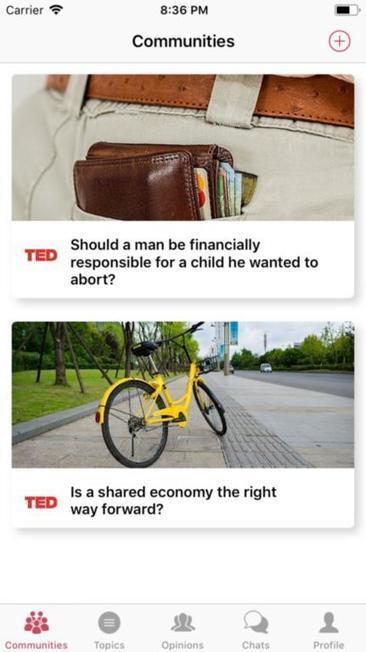
Submit topics of debate and vote your opinion on trending topics. We match you with someone who has the opposite opinion.

We believe that conversation is the way to bridge the gap between people. Technology put us into filter bubbles, now we're using technology to burst out of them.


Via Nik Peachey
Nik Peachey's curator insight, November 17, 2017 1:21 AM

This is an interesting looking app to get students practing their debating skills. It matches them up to people they diagree with so it ensures they have something to talk about.

Rescooped by Dennis Swender from Tools for Teachers & Learners
November 17, 2017 1:16 PM
Scoop.it!

Minnit Chat - Embed a Chatroom

Minnit Chat - Embed a Chatroom | Distance Learning, mLearning, Digital Education, Technology | Scoop.it
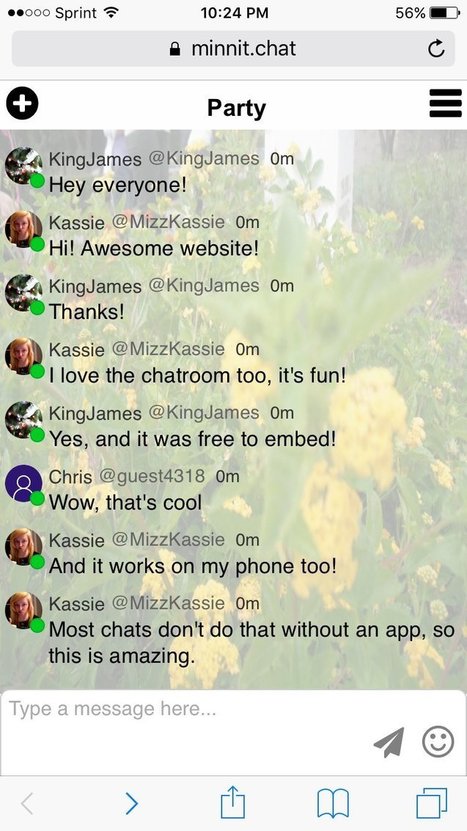
Get a fast and free chatroom with Minnit Chat. Embed on your website, or link to your friends. No downloads or apps needed.

Via Nik Peachey
Nik Peachey's curator insight, November 17, 2017 1:17 AM

Feature rich free chatroom that you can embed into your site, blog of online course.

Scooped by Dennis Swender
November 17, 2017 1:12 PM
Scoop.it!

How to Quickly Start A Campus Video Initiative

How to Quickly Start A Campus Video Initiative | Distance Learning, mLearning, Digital Education, Technology | Scoop.it
The demand for academic video is exploding. Here's how to quickly start a campus video initiative with Mediasite's capture software solutions.
No comment yet.
Rescooped by Dennis Swender from Creative teaching and learning
November 16, 2017 2:10 PM
Scoop.it!

Protecting students’ online privacy in the classroom

Protecting students’ online privacy in the classroom | Distance Learning, mLearning, Digital Education, Technology | Scoop.it

"It can be a struggle for schools and teachers to figure out how to balance ed tech learning opportunities and student privacy. Watch our Above the Noise video ..."


Via Leona Ungerer
Rubiel's curator insight, November 20, 2017 12:21 PM
In the report, EFF makes several recommendations for schools, teachers, parents and students. Some of the suggestions for teachers include teaching digital literacy to students, advocating for digital literacy teacher training, picking ed tech tools carefully and getting parental consent.
Rescooped by Dennis Swender from iGeneration - Humane Use of Technology in an AI world (Pedagogy & Digital Innovation)
November 16, 2017 2:05 PM
Scoop.it!

Digital Bulletin Boards for your classroom - Endless possibilities by Diana Benner

Digital Bulletin Boards for your classroom - Endless possibilities by Diana Benner | Distance Learning, mLearning, Digital Education, Technology | Scoop.it
Written by Diana Benner

Via Dr. Tom D'Amico (@TDOttawa)
No comment yet.
Rescooped by Dennis Swender from Distance Education and E-Learning
November 14, 2017 1:35 PM
Scoop.it!

A Useful List of the Best 100 Education Hashtags for All Educators

A Useful List of the Best 100 Education Hashtags for All Educators | Distance Learning, mLearning, Digital Education, Technology | Scoop.it
Erik Day presents a comprehensive list of 100 of the best education hashtags for every social media-savvy educator out there.

Via Takisha Reece
No comment yet.
Rescooped by Dennis Swender from All digital
November 14, 2017 12:17 PM
Scoop.it!

A reflexive evaluation of technology-enhanced learning | Young | Research in Learning Technology

A reflexive evaluation of technology-enhanced learning | Young | Research in Learning Technology | Distance Learning, mLearning, Digital Education, Technology | Scoop.it
A reflexive evaluation of technology-enhanced learning

Via Stephania Savva, Ph.D
No comment yet.
Rescooped by Dennis Swender from Social Media and Healthcare
November 14, 2017 12:16 PM
Scoop.it!

The ethics of social media

The ethics of social media | Distance Learning, mLearning, Digital Education, Technology | Scoop.it

On the heels of a study suggesting plastic surgeons need to increase their visibility on social media, comes a paper spotlighting the need for guidelines to help keep plastic surgeons’ video posts professional and respectful.

Dr. SchierleTactful educational video posts showing cosmetic surgery procedures can be good for patients, the doctors posting them as well as the specialty. But videos of surgeons dancing or singing in the operating room, or holding a patient’s tissue post-surgery, with a super-imposed baby face emoji on the image (true story), may harm patients and the profession, according to study author Clark Schierle, M.D., Ph.D., a plastic surgeon and faculty member of Northwestern University Feinberg School of Medicine and director of aesthetic surgery for Northwestern Specialists in Plastic Surgery, in Chicago.

“I think there are a number of areas where some of the more egregious posts cross the line into something that we would argue is in conflict with the principles of medical ethics that date back to Hippocrates,” Dr. Schierle says.

Plastic surgeons behind the controversial posts realize a social media irony: The more outrageous and edgy the video content, the more likely it is to go viral; the more likely they’ll get good and bad comments and coveted shares and followers.

But the social media attention comes at a price to patients — even the specialty and medicine — Dr. Schierle argues.

Sometimes, physicians have a responsibility to protect patients against themselves.

“Twenty-year-old you may see this as a really fun, playful way to express yourself on social media by having your surgery broadcast for the world to see, but 40-year-old you, who is trying to get a job someday might not be too happy when it shows up as the number one search result, when your name is Googled by your future employer,” Dr. Schierle says. 

Dr. NejadBeverly Hills, Calif.-based cosmetic dentist Matt Nejad, D.D.S., says he posts practice photos and videos to social media and his website.

“I post them to show examples of the quality of my work and also to educate patients on available high-quality treatment options. I especially like to post videos and pictures of the veneer treatment process including planning, 3D-evaluation, fabrication of temporaries and final results achieved,” he tells The Aesthetic Channel.

But Dr. Nejad agrees it’s unethical to use photos and videos without patient permission. It’s also wrong to repost another doctor’s work and pass it off as one’s own, or edit photographs to make results look better than they are.

Today’s “instant gratification society” has created a dynamic and ever changing set of challenges for any professional organization including the medical profession, according to Michael S. Kluska, D.O., president of the American Academy of Cosmetic Surgery.

“One of my positions this past year was to help our members ‘compete’ in this crazy, dynamic environment,” says Dr. Kluska, who is a dual board-certified plastic and reconstructive surgeon and cosmetic Surgeon. “Competition is good as long as it is ethical and within the rules or guidelines of what is fair to all involved. All physicians should practice medicine based on their commitment to the profession, to the patient and the acceptance of the foundation of the Hippocratic Oath including ‘do no harm’ and respect the patient and respect the authority and privilege that has been given to the physician with their medical degree.”

Do No Harm

Doing harm is another concern.

“It’s when you physically stop the operation and step away from the table to do a dance, or sing a song, or perform inappropriate activities with body parts, making inappropriate jokes. Those cross the line into something that is potentially degrading the level of care. And you’re delaying the progress of the case and increasing the length of time that patients are under general anesthesia,” Dr. Schierle says.

Videos—the good kind

Dr. Schierle says he and his coauthors are all for entertaining, engaging content.

“We understand that’s how you have to communicate to get likes and shares,” Dr. Schierle says. “But the physician-patient relationship is something special and deserves respect and decorum. And when a patient is under general anesthesia undergoing a procedure, your first and foremost responsibility should be the care of that patient.”

That’s not to mention that the physician is in a position of power when the patient having surgery is potentially unable to object at all because of general anesthesia or vulnerable because of the circumstances, he says.

Dr. TaleiBeverly Hills facial plastic and reconstructive surgeon Ben Talei, M.D., often posts clinical photos and videos. Among his postings: videos of surgical and nonsurgical procedures, as well as before and after photos. He says the posts give people watching a realistic view of what to expect.

But before posting, Dr. Talei says he takes a few things into consideration.

“The practical issue is whether or not graphic images would offend or traumatize unsuspecting followers or possibly deter them from doing a procedure because of the imagery involved,” Dr. Talei says. “Ethically, I always ensure the patient has given complete permission to publicize them and the procedure on social media whether or not their identity is revealed. Posting photos of patients without their consent is … unforgivable, even if the patient’s face is not shown.”

Dr. Kluska’s advice to physicians considering social media and other marketing: “Do to the patient what you as a physician would be comfortable having done to you or your immediate family.”


Guidelines for Posting Content on Social Media

Cosmetic specialty societies might already have general guidelines in place about how member physicians should handle marketing and promotions involving patients. That’s a good place for many to cosmetic medicine physicians go, first, for guidance when posting social media content. The American Academy of Cosmetic Surgery offers members social media guidelines, and the American Society of Plastic Surgeons’ (ASPS’) code of ethics addresses how plastic surgeons should treat patients with respect with their words and images.

“The ethics committee of the ASPS has said they will use this paper as guidance for how to enforce those guidelines,” Dr. Schierle says:

·       Clearly ask patients how they feel about having their procedures videotaped and broadcasted on social media channels, and, if they approve, get it in writing. Be specific about what you’ll do with the videos, and, when you edit the videos, make sure patient identifiers are censored. If patients agree to show their faces, get a special consent for that. Patients younger than 18 are considered minors and need parental consent. Allow patients to withdraw consent at any time and consider hiring a legal professional to draft the consent document.

·       Be clear that patients can refuse consent without affecting the care they receive.

·       Inform patients that images, including videos, might be saved, shared, changed. And even if the physician deletes them on the practice’s website or social media, copies might live forever online.

Dr. Kluska·       Uphold standards of professionalism as advocated by the American Society of Plastic Surgeons Code of Ethics. (Physicians from other specialties might refer to their codes of ethics.)

·       And concentrate on the procedure at hand — not on videotaping. Providers should consider hiring a professional videographer and training staff and others about maintaining professionalism and integrity.

The dynamic and rapidly changing social media environment will continue to challenge the medical community and its societies, according to Dr. Kluska.

“In medicine, the physician needs to not only adapt and overcome these obstacles that challenge our societies and their respective leaders but, the physician must also compete with these temptations by standing his or her ground based on [ethics], tradition and common sense,” Dr. Kluska says.


Via Plus91
nhlakanipho's curator insight, May 16, 2019 8:23 AM
As a digital citizen, you should have ethical behavior
Rescooped by Dennis Swender from Edumorfosis.it
November 14, 2017 12:15 PM
Scoop.it!

10 of the best tools for creating Digital Quizzes

10 of the best tools for creating Digital Quizzes | Distance Learning, mLearning, Digital Education, Technology | Scoop.it

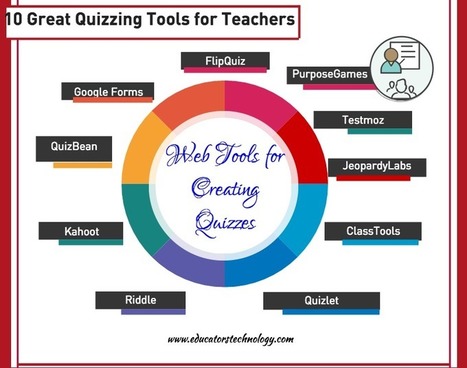
For those of you who haven't seen it yet, here is a collection of some good web tools to help you create digital quizzes. You can use them to design interactive quizzes, questionnaire, forms, polls and many more. The tools are easy and simple to use and no software installation is required. Check them out and share with us your feedback. Links of the tools are under the visual.


Via Educatorstechnology, Edumorfosis
No comment yet.