Distance Learning, mLearning, Digital Education, Technology
16.6K views | +2 today
Distance Learning, mLearning, Digital Education, Technology
Your new post is loading...
Rescooped by Dennis Swender from Into the Driver's Seat
April 18, 2018 3:23 AM
Scoop.it!

4 Chromebook Accessibility Features Every Teacher Should Know about :: Med Kharbach

4 Chromebook Accessibility Features Every Teacher Should Know about :: Med Kharbach | Distance Learning, mLearning, Digital Education, Technology | Scoop.it

"As a teacher using Chromebook in instruction, you need to make sure you are knowledgable about the required tips and features that will enable you to make the best of this device in education. Understanding the internal functioning of the gadget comes before your search for EdTech apps to install on it. As is the case with any piece of gadgetry you intend to use  in  class with students, a higher degree of familiarity with its built-in features is of utmost importance, for that can save you a lot of time and open up your eyes to diverse and creative ways to effectively leverage the educational potential of the device in your teaching.

"That being said, in today’s post, we are drawing your attention to these handy accessibility features built in the advanced settings of your Chromebook. These are features you can especially use with students with learning disabilities. More specifically, you will get to learn how to access and activate text to speech functionality, how to tap and drag your fingers to move objects, how to click objects automatically, and how to use keyboard shortcuts with one hand. All of the instructions below are taken from Google’s Chromebook Help.

"To access accessibility features in your Chromebook, open your Chromebook and click on your account photo and at the bottom click on Advanced. In the ‘Accessibility’ section, click Manage accessibility features then activate any of the following functionalities:"


Via Jim Lerman
No comment yet.
Rescooped by Dennis Swender from Into the Driver's Seat
April 18, 2018 3:23 AM
Scoop.it!

Free Technology for Teachers: 5 Good Alternatives to Google Image Search :: Richard Byrne

Free Technology for Teachers: 5 Good Alternatives to Google Image Search :: Richard Byrne | Distance Learning, mLearning, Digital Education, Technology | Scoop.it
Google Images tends to be the default image search tool of students and adults who haven't been introduced to better options. Google Images is convenient, but it's not the best place for students to find images that are in the public domain or images that have been labeled with a Creative Commons license. Here are five better options.

Via Jim Lerman
No comment yet.
Rescooped by Dennis Swender from iPads, MakerEd and More in Education
April 16, 2018 1:19 PM
Scoop.it!

Watch: The TED Talk that people at TED were talking about

Watch: The TED Talk that people at TED were talking about | Distance Learning, mLearning, Digital Education, Technology | Scoop.it
This year’s TED conference — this past week in Vancouver — kicked off with a series of talks lamenting the state of society, from sexual harassment to school shootings.

The talk from the bunch that seemed to generate the most discussion — especially among the tech-types I spoke with there — was an off-the-cuff rant by Jaron Lanier, a VR pioneer who slammed the free, ad-supported nature of the internet as one that is starting to cause great harm to humanity.

You can now watch his talk, also embedded here.


“What started out as advertising really can’t be called advertising anymore — it turned into behavior modification,” he said, referring mostly to Facebook and Google. “I can’t call these things social networks anymore. I call them behavior modification empires.”

Via John Evans
No comment yet.
Rescooped by Dennis Swender from Social Media and Healthcare
April 16, 2018 1:16 PM
Scoop.it!

Social Media Is a Drug. Should Doctors Act Accordingly?

Social media has exploded as the dominant marketing avenue for cosmetic procedures. Thanks to controversial boundary-pushers like Dr. Michael Salzhauer (AKA “Dr. Miami”), what was once an occasional post has morphed into a high-stakes arms race with 40-part Instagram stories, “trademarked” hashtags, and graphic one-upmanship. Social media’s inherent image-centricity, combined with its micro-targeting marketing capabilities, naturally lends itself to cosmetic medicine. But other traditional, disease-related specialties are following suit by increasingly leveraging these platforms for promotional purposes.

We’ve reached a point where Plastic and Reconstructive Surgery, the leading journal for plastic surgeons, felt compelled to propose ethical guidelines for social media video posting. These guidelines came on the heels of an Aesthetic Surgery Journal study demonstrating that the majority of plastic surgery-related hashtags are attached to posts by non-board certified doctors, nurses, and other under-credentialed practitioners.

None of this is to suggest that medicine and social media shouldn’t mix. Each physician has the prerogative to use social media in a way that dovetails with her personal and professional goals. But patient safety and privacy issues, along with the maintenance of medicine’s integrity, rightfully places social media within the crosshairs of board-mandated, and potentially even government, regulation.

Yet, while this important debate intensifies, there is arguably a more consequential issue being overlooked: how social media is impacting the quality of our medical work, as well as our Hippocratic mandate to prioritize overall patient well-being.

Toxicity and Negative Side Effects

Since the dawn of the smartphone era, with advertising and data collection as the dominant monetization strategies, product design goals have subtly shifted from maximizing contentment to maximizing attention. In this race to the dystopian bottom, social media has been particularly effective in leveraging addiction science to manufacture dependence. This has recently taken center stage in the lay press, where experts are sounding the alarmregarding the rapidly shifting mindscape of young adults, ostensibly linked to smartphone and social media adoption. The data shows that this cultural overhaul has led to unprecedented epidemics of anxiety, depression, loneliness, and suicidality.

So, with a spotlight squarely focused on social media’s negative impact, why highlight the physician? For several important reasons.

Doctoring involves drawing from years of intensive experience to achieve diagnoses or navigate complex surgical anatomy. Decades of passive and active exposure to patients and disease leads to this much-touted “art of medicine”: pattern recognition, nuanced intuition, and the vital subtleties of bedside manner. To do justice to this process, “Deep Work” is required — a term coined by Cal Newport’s book of the same name — which describes mindful and undistracted attention.

The disruptive nature of social media is putting a dangerous damper on this delicate and finely-tuned ability. When we go back-and-forth from the intensity of operating to Facebook Live narration, or spend regenerative time between consults mindlessly scrolling through Instagram, we are suffering an expensive switching cost, ultimately upending the vital flow of focused thought. Absent this flow, I fear we are practicing medicine beneath our potential. A recent New England Journal of Medicine Perspective piece put it succinctly: “It’s ironic that just when clinicians feel that there’s no time in their daily routines for thinking, the need for deep thinking is more urgent than ever.”

Beyond diagnostician and care taker, a physician is also a scientist. And a cornerstone of scientific insight is recognizing unforeseen connections between disparate observations. As elegantly detailed by Manoush Zamarodi in Bored and Brilliant, unfocused “boredom” is a vital ingredient for inspiration.

Not long ago, natural, “in-between” moments existed throughout the day: standing in an elevator, using the restroom and — yes — walking between consult rooms. But hyper-connectedness, typically via social media, has consumed nearly all of this fruitful boredom. This drastic shift has the potential to subtly impact serendipitous medical discovery.

There is also the touchy issue of envy and self-worth. Millennia ago there was a survival advantage in observing others and comparing their techniques to our own. Yet, by providing on-demand access to a cultivated stream of polished photos and carefully-edited narration, this once-vital trait has been hacked and exploited. It’s no wonder a recent, longitudinal studydemonstrated that the more you use Facebook, the worse you feel — despite a sometimes-obsessive need to engage.

This habitual comparison is particularly toxic for physicians. We are continuously bombarded with the supposedly perfect lives of our intellectual peers, who pursued “easier” careers that seemingly facilitate endless leisure time or fancier lifestyles. Yet while these posts highlight (or exaggerate) merely the positive, they fail to remind us why we initially made certain trade-offs. Perhaps to perform more meaningful work. Or maybe for increased independence and job security. Without this comprehensive recognition we may question our paths, foment resentment, and grow increasingly disconnected from the potential joy of practice. This does not bode well for already epidemic levels of physician burnout, no doubt at the hands of other unrelated factors like overwhelming paperwork and plummeting reimbursement.

Physicians also have a duty to examine the impact of social media on our patients. We are the ultimate guardians of health and well-being, yet social media is undisputedly a product engineered for addiction that can lead to mental illness, including the exacerbation of body dysmorphic disorder. If social media is the new smoking, do we have a responsibility to discourage patient use (as opposed to fueling it)? Are we the modern-day versions of those doctors in cigarette ads?

Powerful Tools, Used Responsibly

But we must also recognize how social media’s power has been harnessed to benefit medicine. I am fortunate to work amongst physicians who use social media to reach patients who may otherwise never receive education about a particular disease or treatment option. And I’ve personally improved my own practice by reviewing shared videos from other thoughtful and generous physicians. Perhaps most tangibly, social media has efficiently connected physicians around the globe who can leverage collective experience to arrive at difficult diagnoses. Patients also use these networks to benefit population health by stemming epidemics and collaborating in rare disease support groups.

So what can physicians do to harness the benefits of social media, while avoiding its pitfalls?

The first step is an honest reckoning of one’s relationship with these networks. Is the expenditure of time and energy intentional, or is it compulsive or obligatory? Which practices have a positive impact on ourselves and our quality of work, and where are the sources of negativity? How are current habits affecting patient care and one’s general disposition? Does patient-targeting via a purely addictive product jive with one’s own moral compass?

Systems and boundaries are then needed to leverage the positive benefits, while minimizing detriment. Advice abounds for reigning in and positively constraining social media (and smartphone) use. Notification tailoring, app deletion or even opting out are viable techniques to loosen the grip. Post planning, batching and scheduling, unfollowing or even outsourcing account management can also positively transform use.

No matter the techniques used, authenticity is the key ingredient. In a misguided attempt to compete, emulating other physicians in use-patterns or content is a losing battle, and at the very least could backfire by attracting patients who are not a good fit for your practice. No matter the medium, promoting elements of your authentic self and practice will lead to a happier, more harmonious personal and professional life.

“Create more, consume less,” a maxim popularized by the Minimalists, elegantly summarizes another recommendation. With more time spent composing meaningful content than judging, digesting, and counting the posts, comments and likes of others, you will start to naturally feel greater harmony in your social media consumption. You will also generate more value for yourself.

As social media evolves, there will be new challenges for physicians in meaningful use and boundary setting. This is already occurring with the recent explosion of time-stamped video stories and live streaming. It will take persistence, courage, and honesty to maintain an intentional and unobtrusive relationship with this medium, and to promote this same healthy relationship to our equally vulnerable patients.


Via Plus91
No comment yet.
Rescooped by Dennis Swender from Social Media and Healthcare
April 16, 2018 1:11 PM
Scoop.it!

A breach of patient privacy on Twitter 

A medical student was attending a clinical genetics clinic as an observer. Patients with rare genetic conditions were being reviewed. Some had physical abnormalities, for example, severe skeletal abnormalities of the hands and feet.

The student was asked to take photographs for the medical records of a patient's extremities by a consultant. Appropriate consent was sought from the patient to allow the photographs to be taken and stored in their notes, and the patient consented to the images being used for teaching purposes within the department.

After the clinic the student uploaded the images from the department camera to the department computer. The images were identified by the patient's identification number, rather than by name.

Whilst the student was still at the computer he emailed the images to himself and tweeted one of them making a comment about the appearance. He did not mention the patient's name but did name the condition she was suffering with the hash tag.

The patient was later informed by a friend, who also had the condition and was part of a worldwide Twitter community for sufferers, that the image had been posted. The friend had recognised the patient's hands due to the deformity and a characteristic ring she was wearing. The patient checked herself and confirmed that the image was of her hands. As the only photograph that had been taken of her hands had been done in the clinic, the patient knew that a member of staff at the hospital must have been the source of the tweet.

The patient made a complaint to the trust that the image had been used without her consent and that she had been identified from it by a third party. This was a breach of her confidentiality and had been done without her express permission.

The trust investigated the incident and identified the student involved. The matter was referred to his medical school and a fitness to practise investigation followed.

With the assistance of an MDU medico-legal adviser, the student explained he had not appreciated that the patient's express consent was needed before the images were used as he had not identified her by name and they were not of her face.

In preparation for the investigation, the student was advised to review the trust's policy on confidentiality and review the GMC's guidance on the use of social media and on using visual recordings of patients. The investigating team were satisfied the student had reflected on his behaviour and had addressed the concerns raised.

Learning points

It is important to remember that patients can be identified by means other than their name or face. Consent should always be sought before using patient images and the patient should be fully aware of what the images may be used for. Twitter has a worldwide audience and using a Twitter account, even if it is anonymous, does not protect you from being identified.

This is a fictional case compiled from actual cases from the MDU's files.


Via Plus91
No comment yet.
Rescooped by Dennis Swender from iGeneration - Humane Use of Technology in an AI world (Pedagogy & Digital Innovation)
April 16, 2018 1:10 PM
Scoop.it!

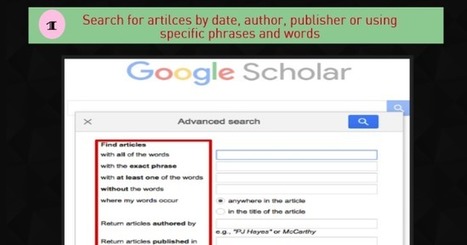
5 Key Google Scholar Features Every Teacher and Research Student Should Know About via Educators' technology

5 Key Google Scholar Features Every Teacher and Research Student Should Know About via Educators' technology | Distance Learning, mLearning, Digital Education, Technology | Scoop.it
Free resource of educational web tools, 21st century skills, tips and tutorials on how teachers and students integrate technology into education

Via Dr. Tom D'Amico (@TDOttawa)
No comment yet.
Rescooped by Dennis Swender from Edumorfosis.it
April 16, 2018 1:08 PM
Scoop.it!

The future of Online Education: Udacity Nanodegrees

The future of Online Education: Udacity Nanodegrees | Distance Learning, mLearning, Digital Education, Technology | Scoop.it

In its 20+ year history, the online education market has experienced quite a few ups and downs. From the launch of lynda.com way back in 1995 (back then, it wasn't even an EdTech company yet, strictly speaking; it only started offering courses online in 2002), to Udemy, with its marketplace for online courses in every conceivable topic, to the MOOC revolution, which promised to democratize higher education — I guess it would be fair to say that EdTech space has tried a lot of things over the years, and has gone through quite a few attempts to re-imagine itself.

On the last point, while MOOCs (massive open online courses) might not have exactly lived up to the (overhyped) expectations so far, the industry continues to live on and evolve, with the startups like Coursera, edX and Udacity continuing to expand their libraries, and experimenting with new approaches and programs.

Most recently, Udacity has shared some metrics that allow us to get a sense of how the company have been doing so far. And, in a word, we could describe it as "not bad at all". Apparently, in 2017 the company had 8 million users on the platform (that includes the users engaged with Udacity free offerings), up from 5 million the year before. Udacity also doubled its revenue to $70 million, which constitutes an impressive growth rate for a company at this stage.


Via Edumorfosis
No comment yet.
Rescooped by Dennis Swender from Mastering Facebook, Google+, Twitter
April 16, 2018 1:06 PM
Scoop.it!

9 Key Elements of an Effective Social Media Marketing Strategy, and How to Establish Them

9 Key Elements of an Effective Social Media Marketing Strategy, and How to Establish Them | Distance Learning, mLearning, Digital Education, Technology | Scoop.it

Social Media Today

Via Oliver Durrer swissleap.com, massimo facchinetti
No comment yet.
Rescooped by Dennis Swender from Bloom's Taxonomy for 21st Century Learning
April 15, 2018 6:01 AM
Scoop.it!

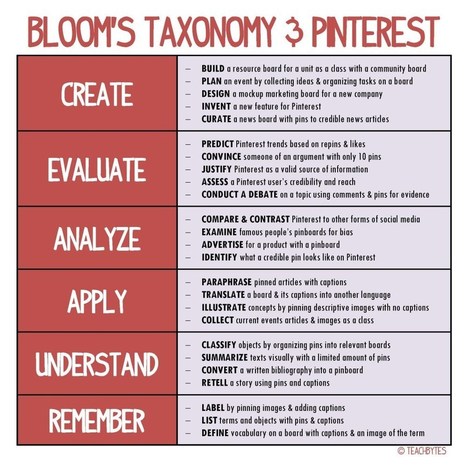
25 Ways To Use Pinterest With Bloom's Taxonomy

25 Ways To Use Pinterest With Bloom's Taxonomy | Distance Learning, mLearning, Digital Education, Technology | Scoop.it

 I researched (and procrastinated) I started developing a running list of different ways Pinterest could be tied back in with Bloom’s taxonomy, which is my go-to for aligning technology tools with educational standards.


Via JackieGerstein Ed.D.
Coolwired's curator insight, December 25, 2013 5:58 PM

Bloomin' brillant!

Angela Kerr's curator insight, March 1, 2014 11:26 AM

Agree: "Blooming Brilliant!"

Juanita Amiel Townsend's curator insight, June 25, 2017 7:03 PM
Bloomin' brillant! If you're an educator who uses Pinterest, or even if you've never used it before, check this out.
Rescooped by Dennis Swender from University-Lectures-Online
April 14, 2018 5:49 AM
Scoop.it!

MOOC Course Report: April 2018 — Class Central

MOOC Course Report: April 2018 — Class Central | Distance Learning, mLearning, Digital Education, Technology | Scoop.it
1900+ free online courses starting in April 2018; 105 of them are new

Via Dr. Stefan Gruenwald
No comment yet.
Rescooped by Dennis Swender from Edumorfosis.it
April 14, 2018 5:46 AM
Scoop.it!

3 different types of online Training Videos

3 different types of online Training Videos | Distance Learning, mLearning, Digital Education, Technology | Scoop.it

Videos also help define your “educational marketing”, that is to say, they will implicitly communicate information about you and your brand to the people who watch them. Production value says a lot more about your organization and its involvement in the training course than you might initially think. Videos that are thrown together quickly communicate a certain level of apathy towards the audience, whereas a high-quality video will contribute to building strong brand recognition.


Via Edumorfosis
No comment yet.
Rescooped by Dennis Swender from News for Discussion
April 14, 2018 5:39 AM
Scoop.it!

Is social media bad for you? The evidence and the unknowns

Is social media bad for you? The evidence and the unknowns | Distance Learning, mLearning, Digital Education, Technology | Scoop.it
What the science suggests so far about the impact of platforms such as Facebook, Twitter or Instagram on your mental well-being.

Via David M
No comment yet.
Rescooped by Dennis Swender from Digital Delights
April 13, 2018 12:56 PM
Scoop.it!

Veteran online instructors share tips on improving their practices

Veteran online instructors share tips on improving their practices | Distance Learning, mLearning, Digital Education, Technology | Scoop.it
Online instructors offer wisdom they've gathered -- what to do and what not to do -- from years of experience teaching in the modality.

Via Ana Cristina Pratas
No comment yet.
Rescooped by Dennis Swender from Into the Driver's Seat
April 18, 2018 3:23 AM
Scoop.it!

Tip of the Week – 7 Screencasting Tools That Work on All Computers :: Richard Byrne

Tip of the Week – 7 Screencasting Tools That Work on All Computers :: Richard Byrne | Distance Learning, mLearning, Digital Education, Technology | Scoop.it
There are many uses for screencasting (recording a video of your computer’s screen)  in a school setting. You can make screencasts to show your students how an app, website, or new piece of software works. You can flip that idea around and have your students make screencasts for the same purpose. In fact, that’s a great way to get students to practice giving clear instruction.

Recording a screencast while showing some slides is a simple way to make a short video lesson. I’ve done this and I recommend keeping it to five minutes or less. It’s better to have two five minute videos than one ten minute video. Again, you can make the videos or you can flip it around and have students make the videos.

The number of options for making screencast videos increases every year. The following seven screencast recording tools are free and work on Windows, Mac, and Chromebook computers.

Via Jim Lerman
No comment yet.
Scooped by Dennis Swender
April 16, 2018 1:26 PM
Scoop.it!

The 10 do’s and don’ts of FAQ pages

The 10 do’s and don’ts of FAQ pages | Distance Learning, mLearning, Digital Education, Technology | Scoop.it
While you may not be able to create a perfect FAQ on your first go, you can get a valuable early start by paying attention to the do’s and don’ts of FAQ pages.
No comment yet.
Rescooped by Dennis Swender from Edumorfosis.it
April 16, 2018 1:16 PM
Scoop.it!

4 key considerations when using Mobile Phones to support synchronous learning scenarios

4 key considerations when using Mobile Phones to support synchronous learning scenarios | Distance Learning, mLearning, Digital Education, Technology | Scoop.it

A recent infographic on this website highlighted that 87% of Millennials have their smartphone by their side at all times. The prevalence of such a powerful, web-connected, pocket-sized computer would have seemed fanciful even 20 years ago.

Now that the device has become commonplace in students’ lives, there is an opportunity for both distance-mode and face-to-face lessons to embrace mobile phones for learning (Sarrab & Elbasir, 2016).

Indeed, mobile learning has the potential to speed up the education sector’s transition away from traditional lecture-style teaching and towards collaborative critical thinking and problem-solving (Ellis, 2015; Wallace, 2011). Students’ lackluster attitudes towards such traditional modes of teaching are enough to highlight the need to continue to pursue methods for more effectively engaging students. Students’ familiarity and enthusiasm for mobile phones offer an opportunity to progress this individualized, student-centered, and active technology-enhanced learning.

We have explored this potential of mobile phones for learning in one UK University using Collaborate Ultra and Socrative apps. Here are 4 key tips for successful integration of mobile phones in both distance-mode and face-to-face learning contexts:


Via Edumorfosis
No comment yet.
Rescooped by Dennis Swender from Learning and Teaching in an Online Environment
April 16, 2018 1:11 PM
Scoop.it!

Higher education students’ experiences of digital learning and (dis)empowerment | Costa | Australasian Journal of Educational Technology

Higher education students’ experiences of digital learning and (dis)empowerment | Costa | Australasian Journal of Educational Technology | Distance Learning, mLearning, Digital Education, Technology | Scoop.it

This paper focuses on learning practices in higher education in relation to a digital participatory culture. Using key principles of critical education, the research set out to explore higher education students’ sense of agency online – or lack of it –as part of their formal learning practices. The research found that although students were proficient Web users, they did not exercise their learner agency beyond what they assumed to be expected of them, thus evidencing the stability of their learning habits in relation to the learning conventions associated with the academic field. Perhaps more surprisingly, however, is students’ perception of the Web not only as a space of student participation, but also as a space of student surveillance. Such perceptions constitute real obstacles to meaningful participation as a form of learning.


Via ColinHickie
No comment yet.
Rescooped by Dennis Swender from Mastering Facebook, Google+, Twitter
April 16, 2018 1:10 PM
Scoop.it!

Best Times To Post On Social Media According To 23 Studies

Best Times To Post On Social Media According To 23 Studies | Distance Learning, mLearning, Digital Education, Technology | Scoop.it
Do you know all the best times to post on social media? In this post, we've crunched the data from 23 studies to find the best times for each network.

Via massimo facchinetti
No comment yet.
Rescooped by Dennis Swender from Social Media and Healthcare
April 16, 2018 1:09 PM
Scoop.it!

The Role of Facebook Communities in Social Participation for Persons …

This is an independently conducted qualitative research study which provides a content analysis of the conversations patients have on rheumatoid arthritis-spec…

Via Plus91
No comment yet.
Rescooped by Dennis Swender from iGeneration - Humane Use of Technology in an AI world (Pedagogy & Digital Innovation)
April 16, 2018 1:07 PM
Scoop.it!

6 Tools to Bring Video to Your Classroom via DAVID LOCKHART

6 Tools to Bring Video to Your Classroom via DAVID LOCKHART | Distance Learning, mLearning, Digital Education, Technology | Scoop.it
Do you want to know what my favorite digital creation tool is? Without a doubt, it's video. Video is one of the most versatile creation tools a student can use.

Via Dr. Tom D'Amico (@TDOttawa)
No comment yet.
Scooped by Dennis Swender
April 15, 2018 6:04 AM
Scoop.it!

It’s about transformation

It’s about transformation | Distance Learning, mLearning, Digital Education, Technology | Scoop.it
[google-translator] DOWNLOAD THE LATEST VERSION: V4 published Mar 2015.  This PDF Poster has links to 122 of the latest and most popular educational apps.  Now these resources are available in 19 different languages.  The poster also has app selection criteria according to Blooms taxonomy.  It could provide the backbone of a complete course or seminar …
No comment yet.
Rescooped by Dennis Swender from University-Lectures-Online
April 14, 2018 5:49 AM
Scoop.it!

There Are Still Nearly 1,200 Coursera Courses That Are Completely Free

There Are Still Nearly 1,200 Coursera Courses That Are Completely Free | Distance Learning, mLearning, Digital Education, Technology | Scoop.it
Courses from 166 universities, including Stanford, Georgia Tech, Yale, Duke, and Michigan, are part of the list.

Are Coursera courses still free? At Class Central, we get that question so often that I wrote a guide to answer it. Generally speaking, Coursera courses are free to audit but if you want to access graded assignments or earn a Course Certificate, you will need to pay. This change was first announced in October 2015, and went live in January 2016.


But there are always a few courses that were still completely free. When you signed up for these courses, you would see an option of “Full Course, No Certificate.” For courses that are part of the new model, you need to select the “audit” option.


It can be tricky to figure out which courses have this option. This is particularly because Coursera is a single page app, and the information is only available once you are logged in. So instead of going through each course one by one and then clicking on enroll, Selenium was used to figure it out. The infrastructure developer Bob Brady set up an AWS instance along with a Cloud 9 IDE for this automation. Below is a screenshot of the setup. The result was, more than 1,150 Coursera MOOCs (1,174, to be exact) are still completely free (including the graded assignments, minus the certificate). Even Coursera’s own help pages claim that for “all courses” you can only access the non-graded materials and lectures for free.

Via Dr. Stefan Gruenwald
No comment yet.
Rescooped by Dennis Swender from Social Media and Healthcare
April 14, 2018 5:47 AM
Scoop.it!

Social Media and Journal Clubs: The Ultimate Peer Review? –

Social Media and Journal Clubs: The Ultimate Peer Review? – | Distance Learning, mLearning, Digital Education, Technology | Scoop.it

The Cotton Club, The Breakfast Club and journal club. Like other legendary clubs, journal club has centered around an in-person gathering to facilitate the exchange of commentary and ideas on a given topic. The critical evaluation of recent articles conducted in journal clubs serves as a building block for medical education, evidence-based guidelines and quality improvement initiatives. From residency training, I have very vivid — dare I say fond? — memories of journal club at Hines VA Hospital getting into the nitty gritty of numbers needed to treat with then Chairman Brian Schmitt, MD, MPH. For the past 180 years, from Sir James Paget to Gordon Guyatt, MD, MSc, journal clubs have been steadfast with a very gradual evolution, but the technology revolution is shaking things up.

Social media, including Twitter, has changed the way we communicate. In addition to focused composition and the introduction of emoji, it has also eliminated distance and time. Discussions including thousands can be had instantly across the globe. It has been argued that social media has dumbed down discourse, reducing it to a series of likes or retweets. Despite its limitations, it can be a powerful tool in the appraisal of the medical literature.

With most manuscripts posted on publishers’ websites well in advance of print, the peer review process can occur almost instantaneously. Social media also enables the readership to interact directly with the authors.

With such a large volume of users, critiques presented and validated are essentially crowdsourced, and conversely, individuals can provide insight on how local context may affect the application of results in their own practice. Social media invites its users to come off the bench and get into the game, identifying quality and refuting misinterpretation by a simple post for many, with others taking the next step into content creation. One key element yet to be clarified as things move forward is how these contributions will be measured and how faculty will get academic credit for participating in online forums.

While time will tell if Twitter and social media are the ultimate peer review, it is clear that they can be a powerful tool in conducting academic medicine. I wonder if William Osler would share his critiques in 280 characters or less.

Dr. Gerds is a staff physician in the Department of Hematology and Medical Oncology and publishes in medical literature about social media use. Follow him on Twitter @AaronGerds.


Via Plus91
No comment yet.
Scooped by Dennis Swender
April 14, 2018 5:45 AM
Scoop.it!

Tools for Making Vibrant Videos

Tools for Making Vibrant Videos | Distance Learning, mLearning, Digital Education, Technology | Scoop.it

Tools for Making Vibrant Videos by Jaimie Hoffman and T&L Innovations is licensed under a Creative Commons Attribution 4.0 International License.

No comment yet.
Rescooped by Dennis Swender from Digital Delights
April 13, 2018 12:57 PM
Scoop.it!

How to deal with online learning 'deniers' in your institution | Tony Bates

How to deal with online learning 'deniers' in your institution | Tony Bates | Distance Learning, mLearning, Digital Education, Technology | Scoop.it

Via Ana Cristina Pratas
No comment yet.