The mythical creature's popularity says a lot about the psychology of password creation.

 Your new post is loading...
 Scoop.it! The mythical creature's popularity says a lot about the psychology of password creation. No comment yet.
Sign up to comment
Scoop.it!

Reading and Studying on the Screen: An Overview of Literature Towards Good Learning Design Practice Via Peter Mellow
Scoop.it!
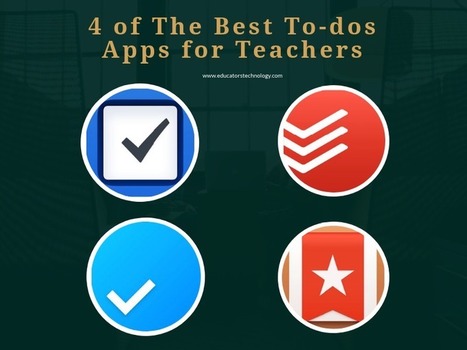
"A few days ago, a discussion thread was posted on Product Hunt on the topic of to-do apps that can track both habits and tasks. A number of apps were suggested but our favourite apps which we highly recommend for teachers are listed below ..." Things 3TodoistAny.doWunderlistVia Leona Ungerer
Scoop.it!

Scoop.it!


THE OFFICIAL ANDREASCY's curator insight,
April 24, 2018 9:37 AM
Yet another very good reason to stop using Internet Explorer...
Scoop.it!
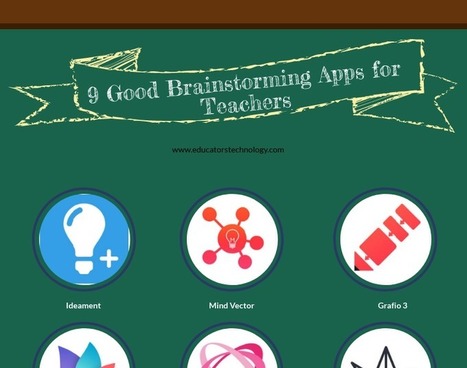
Free resource of educational web tools, 21st century skills, tips and tutorials on how teachers and students integrate technology into education Via Dr. Tom D'Amico (@TDOttawa) , Arnie Rotenberg 
Juan Pablo Lopez Sanz's curator insight,
April 27, 2018 12:58 AM
in this article, you will find more educational tools that serve in the making of brainstorm ideas. by integrating tools like these into your learning environment you will find a lot of advantages.
Scoop.it!

Anyone who’s used the internet (hopefully) knows that you can’t trust everything you see online. Just because something looks trustworthy doesn’t mean that it’s exactly what it claims. But knowing there are fakes in the wild and being able to spot them are different. Knowing how to spot counterfeit content online is a vital skill to avoid wasting time, losing money, or destroying your property. Here are seven commonly faked elements online and some advice for identifying them. 1. Download Buttons Fake download links appear all over the web through Google’s AdSense ads because scammers constantly slip them through. Even... Read the full article: How to Spot 7 Online Fakes Used by Scammers
Via MakeUseOf
Scoop.it!

Say goodbye to phone and email tag for finding the perfect meeting time with Calendly. It's 100% free, super easy to use and you'll love our customer service. Via THE OFFICIAL ANDREASCY
Scoop.it!

This paper reports the findings of a small-scale study that documented the use of information technology for learning by a small group of postgraduate students. Our findings support current knowledge about characteristics displayed by effective e-learners, but also highlight a less researched but potentially important issue in developing e-learning expertise: the ability of students to manage the combination of learning and non-learning activities online. Via THE OFFICIAL ANDREASCY
THE OFFICIAL ANDREASCY's curator insight,
March 4, 2017 1:58 AM
A paper that contributes to the scarcity of research regarding students’ effective employment of technology and how they successfully handle multiple tasks through a range of ‘boundary management’ techniques.
Useful work for developing instructional strategies in the era of a more systematic use of educational technology.
Scoop.it!

A couple of years ago I published a video tutorial on how to create a custom Google Forms theme. More than 10,000 people have since use Via Dr. Tom D'Amico (@TDOttawa)
Scoop.it!

In the past 10 years or so, we’ve witnessed a pace of disruption in education that’s unmatched in previous decades. Via Edumorfosis |
Scoop.it!

Free resource of educational web tools, 21st century skills, tips and tutorials on how teachers and students integrate technology into education Via Dr. Tom D'Amico (@TDOttawa)
Scoop.it!

Today we have more tools to record, edit, and share videos than ever before. With the tap of an app or the click of a link, you and you Via Dr. Tom D'Amico (@TDOttawa)
Scoop.it!

The new Innovate My School Guide has been unleashed! Featuring 40 top educators tackling 10 of the sector’s hottest topics. It includes the hottest edtech trends, interviews with major thought leaders, advice for school leaders, from school leaders, assessment essentials, the edu-disruptors you NEED to know and much, much more. This publication will be distributed in print form at events throughout the school year, but you can read it digitally, right now, free-of-charge. Via John Evans
Scoop.it!

Resources to help instructors and students locate and reference image, video and audio files. Via Dr. Susan Bainbridge 
shreya's comment,
September 18, 2019 5:51 AM
taobao agent Summer light bag new 2019 mobile phone bag wild summer cute mini phone bag female Messenger
https://www.yrbuy.com/china/386033/summer-light-bag-new-2019-mobile-phone-bag.html
Scoop.it!

Free resource of educational web tools, 21st century skills, tips and tutorials on how teachers and students integrate technology into education Via Dr. Tom D'Amico (@TDOttawa)
Juan Pablo Lopez Sanz's curator insight,
April 27, 2018 12:47 AM
here are some tips and tutorials that will allow you to make your classrooms more 21st century like by integrating new technologies into it.
Scoop.it!

From
dzone

Most ANN applications are for pattern classification, predictive analytics, or optimization. Learn about real-world use cases in each of these scenarios. Via THE OFFICIAL ANDREASCY
Scoop.it!
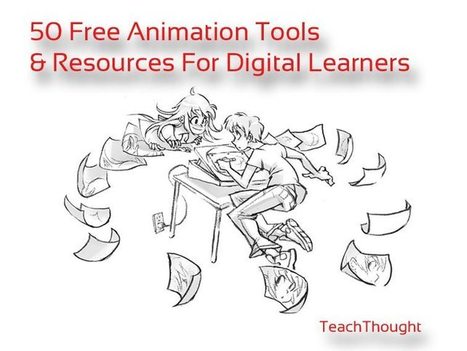
Educators need to decide which tool is best for them. If you want to create your own animation from scratch, then you want to go to sites such as Animwork. If you want to select from an animation that’s already set up, for you then perhaps Explainia makes more sense. Via John Evans, Bhushan Thapliyal
Scoop.it!

"This week alone I’ve had to remove malware from at least seven Macs – all of which could’ve been prevented had people followed one simple rule: if a website you visit instructs you to update your Adobe Flash Player – don’t do it.
Jim Lerman's insight:
This advice is from Tech Haven, a very reliable source. Via Jim Lerman
Scoop.it!

"Traditionally, teachers would be assigned a textbook and asked to use it. They were likely unaware of the many steps that the publisher of the text had taken to create, vet, edit, and review everything that went into that textbook. The book might not have been fascinating to students, but the information in it was based on research and reliable. In other words, content quality was largely outsourced, and teachers need not add it to the list of things that they needed to worry about. Edtech, however, does not usually have the same kind of review or research in place before teachers use it. And this leads to a problem with edtech: Can research keep up?" Via EDTECH@UTRGV, THE OFFICIAL ANDREASCY
Scoop.it!

The potential influence of Massive Open Online Courses (MOOCs) on higher education institutions is much discussed and debated, with some arguing that MOOCs are a disruptive innovation that will radically change existing models of higher education. However, analyses of whether and how MOOCs might disrupt higher education models are relatively scarce. This paper analyses whether MOOCs should be considered a disruptive innovation according to the concept’s defining criteria. It compares characteristics of disruptive innovation with current developments in MOOCs, suggesting three perspectives – performance, benefits, and market – that can be used as a lens and analytic framework to explore and evaluate current practice. The findings indicate that MOOCs do not match all the characteristics of disruptive innovation as they are commonly identified in the literature. However, MOOCs may be a sustaining innovation that establishes new markets for learners who are not served by universities. Via THE OFFICIAL ANDREASCY
Scoop.it!

What skills do our students need to be successful in their future? What skills do adults need to be competitive in the job market? Via Elizabeth E Charles
Scoop.it!

Strava is a fitness app that allows people to log and upload their runs, bike rides, swims and other fitness activities. Using GPS data, a runner ca Via Peter Mellow |