


Explore classroom filmmaking with this playlist of resources for teachers and students.
Via NextLearning

 Your new post is loading...
 Scoop.it! Explore classroom filmmaking with this playlist of resources for teachers and students. Via NextLearning No comment yet.
Sign up to comment
Scoop.it!

Imagine your class traveling to see the Great Pyramid of Giza, touring the International Space Station, or having a face to face conversation with a beloved author. All of these experiences are possible through virtual field trips. Virtual field trips allow us to take our students on adventures we never could before. They are fun, […] Via NextLearning
Scoop.it!

Free resource of educational web tools, 21st century skills, tips and tutorials on how teachers and students integrate technology into education Via NextLearning
Scoop.it!
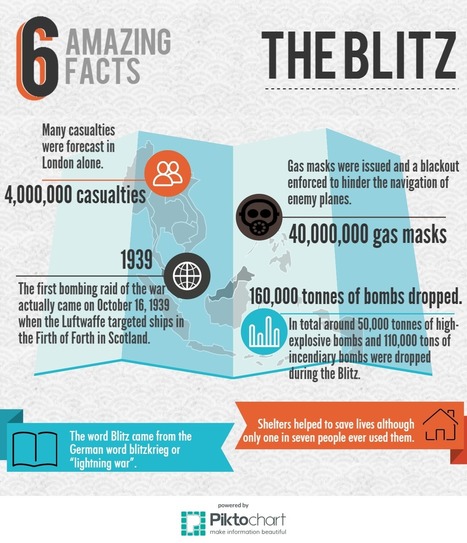
Piktochart is an excellent online website (also available on the App Store) which makes it really easy to create an infographic. An infographic is a way of displaying data in a visual way. Text is combined with images and symbols to make the message the infographic conveys, easy to understand. How do you use Piktochart?… Via NextLearning
Scoop.it!

The Teachers’ Guide to Global, Collaborative Teaching and Learning is a searchable database of global projects and resources to help educators foster global competence and build connection Via NextLearning, John Evans
Scoop.it!
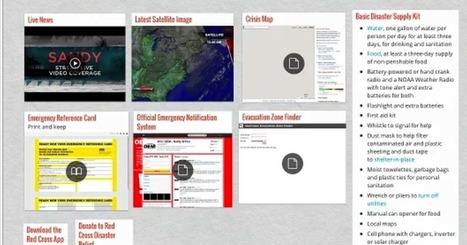
The web is a treasure trove of interesting resources to use for a variety of educational purposes. To leverage the educational potential of the web and be able to make the best of it in your instruction, you need to be equipped with tools that will enable you to curate, save and share the content you come across online. Via Elizabeth E Charles
Scoop.it!

Kathy Noble was my son Colin’s special-education teacher. Back in 1999, when Colin was 10, my conversations to date with doctors, therapists an Via Peter Mellow
Scoop.it!
If you’ve ever created assignments in Google Docs, Slides or Drawings for students to complete, you’re all too familiar with this struggle: students accidentally deleting, moving or mod… Via Dr. Tom D'Amico (@TDOttawa)
Scoop.it!

Recent advances in virtual reality (VR) technology allow for potential learning and education applications. For this study, 99 participants were assigned to one of three learning conditions: traditional (textbook style), VR and video (a passive control). The learning materials used the same text and 3D model for all conditions. Each participant was given a knowledge test before and after learning. Participants in the traditional and VR conditions had improved overall performance (i.e. learning, including knowledge acquisition and understanding) compared to those in the video condition. Participants in the VR condition also showed better performance for ‘remembering’ than those in the traditional and the video conditions. Emotion self-ratings before and after the learning phase showed an increase in positive emotions and a decrease in negative emotions for the VR condition. Conversely there was a decrease in positive emotions in both the traditional and video conditions. The Web-based learning tools evaluation scale also found that participants in the VR condition reported higher engagement than those in the other conditions. Overall, VR displayed an improved learning experience when compared to traditional and video learning methods. Via Edumorfosis
Scoop.it!

Too many students from poor families get accepted to college, but never show up. This is a low-cost solution.
Scoop.it!

To be an effective online teacher, it’s crucial to master the art of giving feedback to online learners.
Scoop.it!

As online enrollments grow and many colleges ramp up their digital course and program offerings, the role of instructional designers -- staff members who work with instructors to adapt or build new digital courses -- is growing in importance. 
Noa Botello's curator insight,
December 14, 2018 3:44 PM
Muchas instituciones educativas están creando cursos semi-presenciales o completamente virtuales, siguiendo las tendencias actuales de la educación, sin embargo, para lograr que esa adecuación sea una experiencia exitosa es necesario que el profesor de la materia y el diseñador Instruccional trabajen juntos. En muchos casos los docentes están haciendo sus propios cursos en línea, a través de la experimentación con las herramientas que ofrece la web, sin embargo es importante que los educadores sepan que pueden contar con expertos que les guíen en todo el proceso y les permitan lograr sus objetivos al cien por ciento y en menor tiempo. Todavía existen dudas en cuanto al papel del diseñador Instruccional. Aunque la experiencia del trabajo colaborativo entre el diseñador y el profesor de aula ha dado resultados exitosos, una buena parte de los docente todavía no comprende la función del diseñador o como, a través de la experiencia, herramientas y posibilidades que tiene para aportar el diseñador instruccional, se puede mejorar la experiencia de aprendizaje del alumno. El DI puede ayudar al profesor a reenfocar su clase con la finalidad de que pueda adaptarse a las exigencias de la virtualidad y a las expectativas de los estudiantes actuales. Es necesario que las instituciones educativas tomen en cuenta el rol tan importante que tiene el diseñador Instruccional, en especial en la planificación de aulas semi-presenciales y virtuales y se permita una mayor vinculación entre los diseñadores y los docentes.
Scoop.it!
Humans are the same as always, except now we have instant access to all knowledge and communication. Subscribe: http://full.sc/1s9KQGe Watch Full Episode |
Scoop.it!

Word Clouds in Education: Turn a toy into a tool. How To Use Word Clouds in Education. Via NextLearning
Scoop.it!

Two educators put the research to the test. When (and how) are iPads in the classroom most effective? Via NextLearning
Scoop.it!

A new survey profiling how American adults access, use and feel about health-related information finds that most Americans who regularly seek health information are concerned about incorrect or misleading medical information on social media, and few have found health information on social media to be accurate. These findings are consistent across generations. The survey, The Great American Search for Healthcare Information, was conducted among 1,700 Americans 18 years of age and older. It was commissioned by global communications and marketing services firm Weber Shandwick in partnership with KRC Research. I find the results of this survey very interesting for a number of reasons. Firstly, it’s interesting to learn that the majority of online health seekers are concerned about incorrect or misleading medical information. This reassures me in a way because it means that, contrary to the pervasive belief that the public believes everything they read online, people are actually far more discerning. It also underscores for me that patients aren’t looking to supplant knowledge from healthcare professionals with the information they find online. They still look to their healthcare providers as the source of credible health information.
Note that nurses, pharmacists, and eye doctors score higher than medical doctors in terms of satisfaction. This finding surprised me. The survey suggests that physicians may have a millennial problem.
Secondly, I find it disheartening that survey respondents are not finding accurate health information online. We know for a fact that accurate health information does exist online, so why are people not rating it higher? Medical information websites fall just below average in terms of satisfaction (39 percent). Finally, I’m a little surprised to learn that concerns about the accuracy of social health information are consistent across generations, including digital natives.
All of this adds up to a trust and credibility problem we need to urgently address. A Wake-up Call for Healthcare ProfessionalsThe healthcare industry is still lagging behind in delivering credible and relevant information to patients when and where they need it most. Healthcare has much to learn from other industries who are adept at mapping the customer journey and providing relevant and timely information at each stage of the journey. Earning Trust From Online Health Information SeekersWithin each problem lies its solution. To address the trust gap, the authors suggest the following fixes: Prove your online credibility from the outset information should be cited by a medical professional it should cite a scientific study it should be associated with a trusted brand it should be cited by a trusted school or research organizationDesign your content for discovery By building content that is discoverable across multiple channels – online and offline – you can intersect your customers across their journey and ensure that they find the credible information they’re looking for. Use succinct, clear and plain language in your communications. Recognise that people are swimming in information and overwhelmed by the volume, creating confusion and perceptions of conflicting facts. I would add to this list that it’s important to talk to patients in your offices about the information they find online. For more on this read What’s the Influence of Patients’ Internet Health Information-Seeking Behaviour on the Patient-Physician Relationship? A Wake-up Call for Healthcare ProfessionalsIn a post published in Physician’s Weekly, primary care physician Mikhail Varshavski, DO, is unequivocal that healthcare professionals’ failure to influence social media is responsible for the rise of misinformation online.
According to a 2017 survey by PM360 Online, only 9% of physicians engage with patients and other health care providers — this includes physicians who reply to comments, join group discussions or share helpful information and links on social media platforms – and as low as 1% of all health care professionals use social media to be content creators — publishing original content via blogs, forums, and websites.
Via Plus91
Scoop.it!

"In our social media-dominated world, most people believe that social media IS word of mouth. Not true. Jay Baer explains why ..." Via Leona Ungerer
Scoop.it!

Earlier this year Google added automatic captioning to Google Slides. This week, via The Verge, I learned that Microsoft is adding automatic captioning and translation to PowerPoint starting in January. Via Elizabeth E Charles
Scoop.it!

“What’s the completion rate for your online courses?”As an instructional designer who has been building MOOCs for the past five years, I’ve been aske Via Peter Mellow
Scoop.it!

From
qz

The speed at which technology is changing has created a reality where we have to rethink our education system. The impact that rapidly changing technology is having on the workforce and economy cannot be ignored, and we must come to terms with the fact that we need to be continually learning and refreshing our skills in order to stay relevant. Via Edumorfosis
Scoop.it!

Scoop.it!

You can learn anything. For free. For everyone. Forever
Scoop.it!

Students who enroll in online degree programs may be concerned that they will miss out on the interaction that is found in traditional degree programs. However, these students still benefit from class discussions through online discussion boards, which allow them to create original posts about a course topic and respond to the posts of other students. This guide provides information on what students can expect when using an online discussion board, the etiquette to follow on these boards, and how professors grade the posts students make.
Scoop.it!

"If self-made billionaire Mark Cuban was starting college right now, he'd choose philosophy as his major over accounting. That's because he strongly believes artificial intelligence will automate many jobs involving technical tasks, such as an accountant's. Jobs that rely more on personal judgement, critical thinking and creativity."
|






