Your new post is loading...

|
Scooped by
Romain
January 14, 2014 3:49 AM
|
L’arrivée de DHC-6 Twin-Otter au sein de l’escadron de transport (ET) 3/61 « Poitou », de la base aérienne123 d’Orléans marque la renaissance de l’escadrille F121. Par décision du général Denis Mercier, chef d’état-major de l’armée de l’air (CEMAA), cette escadrille reprend les traditions de la F121 jusqu’alors mises en sommeil. Sœur de la F118 sur C130 Hercules et de la F119 sur C160 Transall, elle sera à n’en pas douter, la digne héritière de ses Anciens spécialisés durant la Première Guerre mondiale dans la reconnaissance de jour comme de nuit et le bombardement aérien. Aujourd’hui les trois escadrilles du « Poitou » sont expertes dans les missions du commandement des opérations spéciales. Elles reconstituent les traditions du groupe de bombardement n°7 de la Première Guerre mondiale.
|
|
Scooped by
Romain
January 13, 2014 5:06 AM
|
Les Etats-Unis ont déployé une petite équipe de conseillers militaires en Somalie au cours des derniers mois, pour aider la force de l'Union africaine dans le pays, a annoncé l'armée américaine vendredi 10 janvier. L'équipe, lancée en octobre et totalement opérationnelle depuis décembre, compte « moins de cinq » soldats basés à l'aéroport de Mogadiscio, et travaille aux côtés de la mission de l'Union africaine, qui fait face à des insurgés islamistes. C'est la première fois depuis 1993 – quand deux hélicoptères Blackhaw avaient été abattus, et dix-huit soldats américains tués au cours d'une opération désastreuse – que des troupes américaines sont déployées dans ce pays de la corne de l'Afrique. Les forces américaines tentaient en vain depuis des semaines d'éliminer le puissant chef de guerre Mohamed Farah Aïdid, qui tenait le sud de la capitale somalienne. L'issue de la bataille provoqua le retrait des forces internationales de Somalie. La Somalie est en état de guerre civile depuis deux décennies. Les islamistes chabab, qui ont juré la perte des autorités, constituent encore le principal obstacle au retour de la paix dans le pays. Sous la pression de la force de l'Union africaine, qui intervient en soutien de l'embryon d'armée somalienne et d'un contingent éthiopien, les Chabab ont perdu un à un leurs bastions des centre et sud somaliens depuis deux ans et demi, mais ils continuent de contrôler de vastes zones rurales.
|
|
Rescooped by
Romain
from Newsletter navale
January 13, 2014 5:04 AM
|
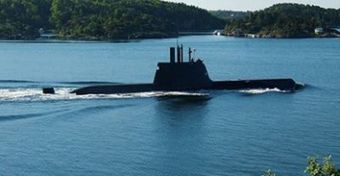
10/01/2014 (Infodefensa.com) Madrid - The German defense industry is increasing interest in the Asian market. Conflicts of interest contribute to the Far East by the German submarines at a time that also coincides with the difficulties posed by the continuing budget cuts in most Western countries. The recent custom of Singapore two submersible type 218SG to ThyssenKrupp Marine Systems ( TKMS ) is a good example of this phenomenon. The international version of the German Spiegel Online this week a piece dedicated to the interests of his country to sell submarines to the growing Asian market. It explains that the new type 218SG has a capacity to be quiet and stay under water unmatched by other conventional models. These ships are capable of being deployed at sea for more than eighty days and spent four consecutive weeks submerged, making them, according to the publication, in vessels especially suitable for the largest ocean: the Pacific . Singapore's contract for delivery of two ships this type in 2020 is valued at 1,600 million that will go directly to the German economy, according to Spiegel . The agreement also contributes to the increase of the arms race to dominate the Pacific, in which, amongst others, are China , Japan , Vietnam , Malaysia and even Russia and the United States . The fisheries resources of this area, disputes over its many islands and large deposits of minerals that are believed to be in the deep ocean contribute to the area to become one of the world's main centers for security policy . It is a state of things that promise a great deal for the German defense industry, says textually Spiegel Online , adding that the German economy is particularly lucrative selling large submarines. Each of these vessels involves, depending on their size, cost between 400 million and 800 million euros. For this reason, the information continues, the country's government supports the business. In the case of the agreement with Singapore, for example, the State guarantees the maintenance of German submarines value, which is a risk worth because the state in turn benefits from the tax revenue generated by these exports. A market of 46,000 million According to calculations by AMI International , an American company specializing in the analysis of navies, "the armed forces of the region Asia-Pacific will spend a total of 180,000 million dollars in 2031 to nearly 800 new ships, including surface vessels and submarines ". The report estimates that during that period a hundred Submersible be acquired 40 percent of the total market for new submarines, which sum, together with future systems antisubmarine warfare ( ASW , for its acronym in English), an approximate value of $ 63,000 million (46,000 million euros). With these figures the area will emerge as the largest market in the world underwater in their number, and the second in spending, after the United States.
Via Patrick H.
|
|
Rescooped by
Romain
from Newsletter navale
January 13, 2014 5:03 AM
|
Sailors on board HMS Defender have returned to Portsmouth today after they were deployed before Christmas to track Russian ships near the UK coast. The Type 45 destroyer began a 700-mile journey from Portsmouth to Scotland on December 19 to meet the Russian task group, as reported in The News at the time. The Ministry of Defence had refused to comment on the warship’s task, but has today released details. As the Fleet Ready Escort, HMS Defender was the Royal Navy’s high readiness warship over Christmas and New Year. The warship sailed through high sea states and storm force winds to ‘welcome’ the group of six vessels, including a 65,000-tonne aircraft carrier, the Royal Navy said. Due to bad weather, the Russian fleet anchored in the Moray Firth before heading down the east coast of the UK. Commander Phil Nash, HMS Defender’s commanding officer, said: ‘As a maritime nation the security of the seas around our coastline remain vital to our national interests. ‘This tasking has demonstrated the Royal Navy’s enduring commitment in home waters and readiness to undertake tasking at any time of the year. ‘I am extremely proud of each and every one of my sailors. ‘They have tackled this mission with utter professionalism and dedication to duty, whilst also being separated from their families at short notice over Christmas and new year.’ The Royal Navy today revealed the Russian ships exchanged goodwill messages with HMS Defender on New Year’s Eve as a sign of friendship between the two navies. Families of those on board yesterday gathered at the Hot Walls in Old Portsmouth to welcome their loved ones home. HMS Defender’s operations officer, Lieutenant Commander Mark Mason, added: ‘This high readiness tasking demonstrates the Type 45 Destroyer’s flexibility and agility. ‘These highly capable warships are prepared for high end warfighting, but are equally adept at conducting interdiction operations, disaster relief missions and patrolling the nation’s coastline.’ The government minister for international security strategy, Dr Andrew Murrison, said: ‘The UK and Russia enjoy a good relationship, and the deployment of HMS Defender, one of our newest destroyers, as fleet ready escort underlines the Royal Navy’s modern-day utility in UK interests.’
Via Patrick H.
|
|
Rescooped by
Romain
from Newsletter navale
January 13, 2014 4:58 AM
|
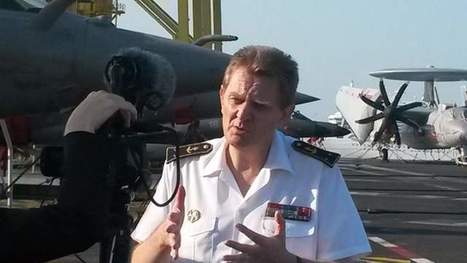
ABU DHABI — The French Navy is ready to share with gulf countries their submarine “know-how” if called upon, a senior naval commander said. Amid recent heightened interest from Gulf Cooperation Council (GCC) navies regarding submarine acquisition, Rear Adm. Eric Chaperon, commander of French Navy Task Force 473 Strike Group, said, “The French Navy has a lot of expertise from their long history in the matter of submarines. “This expertise and know-how can of course be shared, but I cannot give you more details about the interactions we have had with other parties in the region,” he added. Saudi Arabia was reportedly interested in acquiring five German-made Type 209 submarines at a cost of $3.4 billion, according to the German newspaper Bild in November. Last year, UAE Naval Commander Rear Adm. Ibrahim Al Musharrakh said that the UAE Navy is looking to acquire submarines to combat threats in the gulf’s littoral waters. “There are many different options for combating the threat of submarines in the region, for building the capacity and the capability to acquire submarines is something that is still under process and will take a long time,” Al Musharrakh said at the Gulf Naval Commanders Conference in Abu Dhabi last November. The French strike group is in the region to secure the strategic maritime sea lanes of the Strait of Hormuz, the Gulf of Aden and the Red Sea as well as enhance cooperation and interoperability with navies in the region, according to Chaperon. The strike group, which is made up of the aircraft carrier Charles de Gaulle, two destroyers, a supply vessel and a nuclear attack submarine, made port calls in Saudi Arabia last month and in Qatar earlier in January before docking Wednesday in Abu Dhabi. “France is ready to assume its responsibilities throughout the world, as she demonstrated in Libya, in Mali and more recently, in Central Africa,” Chaperon said. “France considers that the stability of the Middle East is one of her priorities; it is a region which is at the heart of her strategic interests and which is affected today by multiple crises such as piracy and terrorism. “Her commitment to the countries of the region is shown in the will to respond to their needs as a long-term strategic partner; this is at the heart of the defense agreement that was signed by France and the United Arab Emirates in 2009,” he added. The strike group carried out exercises with the Saudi and Qatari navies and is due to conduct a joint exercise, dubbed Big Fox, with the UAE Armed Forces at the end of January and with the US Navy in February in the Indian Ocean. Visiting the Charles de Gaulle was UAE Foreign Minister Sheikh Abdullah Bin Zayed Al-Nahyan, who was briefed about the strike group and its mission. On board the carrier were 10 F-3 Rafale fighters, the most advanced fighters to enter service in the French Air Force. The ship also carries two E-2C Hawkeye aircraft, two EC725 Caracal and AS532 Cougar helicopters for combat search and rescue. He added that the visit to Abu Dhabi would provide France the opportunity to further bolster its already strong ties with the UAE, particularly in sharing expertise and ideas and developing better methods of training and operational capabilities.
Via Patrick H.
|
|
Rescooped by
Romain
from Newsletter navale
January 13, 2014 4:57 AM
|
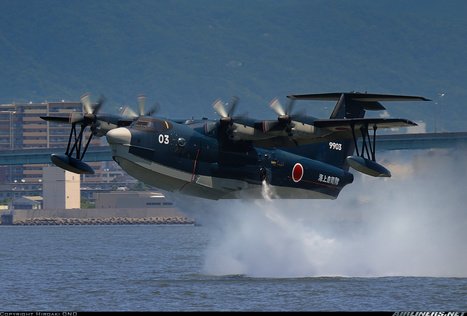
At a meeting of Defence Ministers, no decision was taken on joint exercises in Indian Ocean in view of China’s growing maritime assertivenessIndia and Japan resolved to continue their defence consultation and cooperation, including in maritime security, at a meeting of their Defence Ministers A.K. Antony and Itsunori Onodera on Monday. Mr. Onodera, who began his four-day visit to India on Sunday, called on Mr. Antony as a follow-up to the India-Japan Defence Ministerial Meeting held in November 2011. The Defence Ministry said the Ministers discussed regional and global security challenges, as well as defence cooperation and exchanges between the two countries. Mr. Onodera briefed the Indian delegation of Japan’s National Security Strategy and National Defence Program Guidelines, which were adopted in December last. When Mr. Onodera’s visit was announced in late December, some Japanese news agencies reported, citing government sources, that he “plans to promote talks to export Japan’s US-2 amphibious aircraft used by the Maritime Self-Defence Force (MSDF) to India, prior to the scheduled visit to the country by Prime Minister Shinzo Abe in late January.” However, sources here said that while Japan had been pitching for the sale of these aircraft as a special case, for the moment it did not figure on India’s list of priorities. According to the reports from Japan, the two sides were “expected to regularise joint training exercises between the MSDF and the Indian Navy in the Indian Ocean so they can protect sea-lanes in the wake of the growing maritime assertiveness of China.” But, again, the Defence Ministry remained silent on the issue; sources could only say India did not view the relations from the prism of threat because India, Japan and China together had been conducting anti-piracy exercises in the Gulf of Aden.
Via Patrick H.
|
|
Scooped by
Romain
January 13, 2014 4:53 AM
|
L’information est très sérieuse, même si l’on ne peut s’empêcher d’en tirer un trait d’humour. Le secrétaire d’Etat britannique aux Transports, Robert Goodwil, s’apprête cette semaine à exempter les agents des services de renseignement, les transporteurs d’organes ainsi que les démineurs de limites de vitesse. Même si cela semble dur à croire, la loi ne les y autorisait toujours pas. Ainsi, les agents du MI5 et du MI6 obtiendront ce passe-droit, uniquement valable en mission. Ils n’en bénéficieront toutefois qu’une fois après avoir satisfait un stage de conduite rapide. Pas sûr qu’un espion ou un transporteur d’organes n’ait suivi aucune formation à la conduite rapide pour exercer son métier. Comme le relaient sérieusement les tabloïds britanniques, un espion en train de poursuivre une cible risquait jusqu’à présent une amende s’il était pris en flagrant délit d’excès de vitesse. Les agents français ont-ils eux aussi l’autorisation de circuler comme les véhicules de secours, lorsque la situation l’exige ? Comme le dit le célèbre adage savamment repris dans les milieux du renseignement, « tous les coups sont permis, à condition de ne pas se faire prendre ».
|
|
Scooped by
Romain
January 11, 2014 7:22 PM
|
L’information a été officialisée hier. La notification du contrat remonte au 30 décembre dernier mais la DGA l’a officialisé hier. La Direction Générale de l’Armement a lancé le développement du Pod de désignation laser de nouvelle génération (PDL-NG). Le montant global du contrat s’élève à 119 millions d’euros. Ces travaux de développement du Pod de désignation laser de nouvelle génération (PDL NG), dont la qualification est attendue mi-2018, concourt avec celle du nouveau standard F3-R du Rafale annoncé dans le même temps. Développé par Thales Optronique, ce nouvel équipement vise à disposer « des moyens adaptés pour la recherche et l’identification de cibles de petite taille et permettant des frappes air-sol de grande précision », selon le communiqué. Avant la fin de l’échéance de la LPM en cours, 20 PDL NG seront livrés.
|
|
Scooped by
Romain
January 11, 2014 7:16 PM
|
Trois personnels américains ont péri dans l’accident. Pour une raison encore indéterminée, un appareil américain MC-12 s’est écrasé hier à proximité de la base de Bagram dans l’est de l’Afghanistan. Deux militaires et un contractor américain à bord sont morts dans l’accident. Selon l’ISAF, aucune activité ennemie n’avait été détectée dans la zone au moment de l’incident. Une cause technique ou une erreur de pilotage pourraient donc être à l’origine du crash. Les MC-12 peuvent servir à différentes missions de transport pour le compte de l’ambassade américaine à Kaboul ou des évacuations sanitaires. Ces appareils peuvent également servir pour des missions ISR pour le compte du 4th Expeditionary Reconnaissance Squadron, basé justement à Bagram. Équipés de capteurs vidéos et d’écoute, ils participent ainsi directement aux missions de renseignement à l’encontre des talibans. Depuis le début de l’année, quatre soldats de l’ISAF sont morts en Afghanistan, dont un au cours d’une attaque suicide le 4 janvier. Rappelons qu’un Black Hawk avait été abattu le 17 décembre dernier, tuant cinq soldats américains. L’implication des talibans dans ce dernier crash n’a été révélée que cette semaine.
|
|
Scooped by
Romain
January 10, 2014 9:44 AM
|
The Indonesian Ministry of Defence (MoD) is considering replacing the national air force's F-5 Tiger fighter aircraft with the latest generation of jet fighters, the country's Defence Minister Purnomo Yusgiantoro has revealed.
Yusgiantoro was quoted by ANTARA News as saying that the ministry has already received proposals from five to six jet fighter manufacturers for replacement of the ageing Northrop Grumman-built fighter aircraft.
''We are in the process of evaluating which jet fighter will best suit our requirements, whether the aircraft is from Russia, USA or other countries," Yusgiantoro said.
Urging Indonesian Air Force officials to quickly select the replacement aircraft to facilitate inclusion of the requisition plan in Indonesia's Strategic Plan II 2015 to 2020, the defence minister noted, "I hope the finalised next-generation jet fighter is capable of carrying long-range missiles."
Indonesian military commander general Moeldoko said the air force has carried out a study on the Russian Sukhoi Su-35, the US F-15 Eagle and F-16 Fighting Falcon, in addition to the Swedish JAS 39 Gripen fighters.
"We are still evaluating the options. It depends on Indonesias financial position," Moeldoko said.Indonesian Air Force chief of staff marshall Ida Bagus Putu Dunia said the service is planning to have a squadron of 16 new jet fighters to replace the F-5 Tiger.
"We will follow the strategic plan. We will also revise the decision in line with the command of the Indonesian Military Commander and Defense Minister as well as taking into consideration the state finances," Ida said.
Powered by two General Electric J85-GE-21B turbojet engines, the F-5 is a single-seat, supersonic fighter aircraft designed to conduct air-to-ground and air-to-air operations.
Indonesia currently operates 11 F-5E/F fighters for a range of combat missions.
The aircraft are also in use with the air forces of Austria, Brazil, Canada, Chile, Taiwan, Ethiopia, Greece, Jordan, Malaysia, Spain, Thailand and the US.
|
|
Scooped by
Romain
January 10, 2014 9:20 AM
|
Selon plusieurs sources concordantes, le général Pierre de Villiers pourrait succèder à l'amiral Edouard Guillaud au poste de chef d'état-major des armées (Cema). Cette nomination pourrait intervenir dès le mois prochain. Ce choix n'est pas définitif, même s'il semble "sûr à 95%". Pierre de Villiers est toutefois bien placé pour savoir que les politiques changent parfois d'avis au dernier moment : en 2010, il avait été quasiment désigné au poste de chef d'état-major particulier du président de la République avant que le général Puga n'y soit nommé, au terme de dix jours de vacance du poste. Une certaine prudence est donc de mise... Néanmoins, ce choix semble aujourd'hui cohérent. Un autre général, Denis Mercier, chef d'état-major de l'armée de l'air, a longtemps été favori pour ce poste et, en haut lieu, on reconnait qu'il en a toutes les qualités. Un seul problème : son âge. A 54 ans, sa nomination bloquait le poste de Cema pour près de 7 ans. Et il a encore le temps d'y prétendre, alors qu'il n'est à la tête de l'armée de l'air que depuis l'été 2012. Le nom d'un autre officier général a été avancé, l'amiral Rogel, chef d'état-major de la marine. Pierre de Villiers, 57 ans, est le major général des armées (MGA), c'est-à-dire le véritable adjoint du Cema, avec lequel il a établi une relation de grande confiance. La continuité va donc prévaloir. Il est en effet l'un des principaux acteurs des réformes en cours dans la défense et les armées au sein du Comité de cohérence de conduite du changement (C4). Il pourra donc poursuivre cette tâche, comme le souhaite le ministre de la Défense, tout en réalisant le déménagement vers Balard, en 2015. Cavalier, Pierre de Villiers a servi dans la "lourde". Il a notamment commandé le 501-503ème régiment de chars de combat à Mourmelon, puis la 2ème brigade blindée. Il a servi au Kosovo et en Afghanistan, avant d'être chef de cabinet militaire du Premier ministre François Fillon. Pierre de Villiers est un homme discret - en cela différent de son frère ainé Philippe de Villiers.
|
|
Scooped by
Romain
January 10, 2014 9:17 AM
|
Tout va bien entre la France et l'Allemagne au point de vue militaire, on vous le dit. Thomas de Maizière, le ministre de la Défense sortant, un proche d'Angela Merkel, a vidé son sac, hier lors de sa cérémonie de départ. "L'Allemagne n'a de leçons à recevoir de personne en Europe sur la manière d'organiser ses interventions militaires. Même pas de la France ou de la Grande-Bretagne. S'agissant de nos engagements internationaux plusieurs fois été plus impliqué que la France", évoquant notamment l'Afghanistan et le retrait français. "L'Allemagne fait son devoir, même lorsque la situation politique intérieure est difficile. Aucun gouvernement allemand n'a subi une défaite lors d'un vote d'approbation d'une intervention militaire" a-t-il ajouté, en collant un direct à Cameron pour sa défaite aux Communes sur une opération en Syrie. Thomas de Maizière, qui est désormais ministre de l'Intérieur (CDU), avait déjà vivement réagit à la décision française de dissoudre le 110ème RI, dernier régiment français outre-Rhin.
|
|
Scooped by
Romain
January 10, 2014 9:11 AM
|
Trois bâtiments multi-missions (B2M) seront livrés à la marine. La Direction Générale de l’Armement (DGA) a commandé au groupement d’entreprise Piriou et DCNS, le 30 décembre 2013, trois Bâtiments multi-missions (B2M), ainsi que six ans de soutien initial pour chaque navire. Les B2M, qui seront déployés outre-mer, rempliront des missions interministérielles d’Action de l’État en mer (AEM), notamment la surveillance et la protection des intérêts français dans les Zones économiques exclusives (ZEE), la sauvegarde et l’assistance au profit des populations, ainsi que la projection ponctuelle de forces : - Ils auront la capacité de projeter 20 personnes (interarmées, police ou gendarmerie) avec deux véhicules de type 4×4, leurs armes et leurs munitions. - Ils pourront assurer l’évacuation de ressortissants et contribuer à la mise en œuvre de plongeurs et d’équipements (notamment des drones) pour réaliser des interventions sous-marines. - Dans le cadre de l’action de l’État en mer, ils assureront des missions de police des pêches, et contribueront à la lutte contre l’immigration illégale, le narcotrafic et la piraterie. - Ils assisteront les navires en difficulté et participeront à la sauvegarde des biens et des personnes, grâce à leurs moyens de lutte contre l’incendie et leurs capacités de remorquage jusqu’à 30 tonnes. 20 marins seront présents sur chaque bâtiment qui pourront atteindre 13 nœuds. Ces bâtiments ravitailleurs de plateforme de forage permettront d’effectuer des missions de 30 jours sans ravitaillement, et seront en mesure de naviguer 200 jours par an.
|
|
|
Scooped by
Romain
January 13, 2014 8:22 AM
|
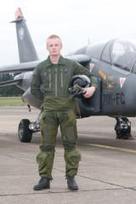
Julien Geloen porte haut les couleurs de Marcq-en-Barœul dans le Nord, à plus de 10 000 mètres d’altitude. Après trois ans de formation, le jeune homme de 24 ans est devenu pilote de chasse et officier de l'armée de l'air, le 19 décembre à Tours au cours d'une cérémonie présidée par le général de brigade aérienne Didier Rouzet, chef de la Brigade aérienne de l'aviation de chasse. Cette cérémonie d'intronisation, qui fait partie de la tradition, est appelée " macaronnage " (les jeunes pilotes reçoivent les macarons ailés de l'armée de l'air, ainsi qu'un poignard). C'est une remise de brevets qui officialise la réussite à la formation au pilotage sur Alphajet au sein de l'école de l'aviation de chasse (EAC) de Tours pendant huit mois. L'EAC forme les équipages de l'aviation de chasse, futurs pilotes ou navigateurs, de l'armée de l'air française, de l'aéronavale et d'armées étrangères. L'EAC de Tours constitue, avec l'école de transition opérationnelle de Cazaux, l'AJeTS (Advanced Jet Training School), un programme de formation franco-belge. Cette interview a été réalisée par mon collègue de l'agence de Lambersart-Marcq-en-Barœul, Quentin Laurent (photo Armée de l'Air). – Alors, ce diplôme, c’est l’aboutissement d’un rêve? « On peut dire ça ! Depuis tout petit, j’ai toujours écrit pilote de chasse sur les fiches de mes maîtresses d’école. J’ai fait mes premiers vols à l’aéroclub de Marcq-en-Barœul, où j’ai obtenu mon brevet de pilote privé en 2008. Mes parents ne sont pas du tout dans l’aviation. Mon premier contact avec les avions s’est fait avec mon parrain, qui voue une passion à l’aéromodélisme. Il m’a amené sur la base de Cambrai pour voir des petits avions. » – En 2008, vous avez obtenu un Bac S à l’Institut libre de Marcq. Quel a été votre parcours par la suite? « J‘ai passé une année dans une école de commerce, tout en passant le concours d’Élève officier du personnel naviguant (EOPN). Pour ce concours, il y a 1 500 inscrits pour douze places et on ne peut le passer qu’une fois dans sa vie. Mes chances étaient assez réduites. J’ai donc commencé un cursus en école de commerce pour assurer le coup et rassurer mes parents. Le 2 mars 2011, une fois le concours obtenu, je me suis rendu à la base de Salon-de-Provence pour une formation militaire initiale d’un mois, sans toucher à l’aéronautique. J’ai aussi passé mon brevet de parachutiste, pour être prêt en cas d’éjection de l’avion, et j’ai eu une formation théorique de pilote de ligne. Après dix mois, je suis allé à Cognac où j’ai commencé à piloter des machines plus puissantes. C’est à ce moment qu’une sélection a été faite. Sur les douze de ma promotion, on n’a été que quatre à être sélectionnés en pilotes de chasse. Les autres sont partis en catégorie transports. » – Quelles sont les sensations au manche d’un avion de chasse? « Je vais être sincère, avant d’entrer dans l’armée, j’avais l’impression que quand on partait en vol, on voyait de beaux paysages. Dans le métier, ce n’est pas du tout ça ! Il y a énormément de stress en vol. Sur 1 h 30 dans le ciel, je ne prends du plaisir que pendant cinq minutes. Tout le reste, c’est du stress. Cela va très vite, on n’a pas le droit à l’erreur. Lorsque je sors d’un vol, je suis rincé. » – Et niveau vitesse? « Dans un Alpha Jet, on atteint la vitesse de Mach 0,95, ce qui correspond à 900 km/h. Après, c’est comme entre le karting et l’automobile. Plus on est proche du sol, plus on a de sensations. À 10 000 mètres d’altitude, on n’a aucune sensation de vitesse. À 300 mètres par contre, on voit le sol défiler... » – Bien que ce soit votre rêve, est-ce que vous vous rendez compte que vous allez faire la guerre? « C’est une décision assumée. Mais la France n’est pas un État belliqueux qui va envoyer des bombes à tout-va. Tout est fait pour éviter les dommages collatéraux. Dans l’avion, nous sommes au bout d’une chaîne de décision. Quand on nous ordonne de délivrer l’armement, on appuie sur le bouton. » –Avez vous la possibilité d’avoir un dernier avis sur un ordre? « Oui, vu qu’on est sur le terrain. On peut considérer qu’il y a trop de risques pour d’autres personnes. Nous sommes les derniers à prendre la décision du tir. C’est pour ça que nous sommes officiers. » – Vous pensez aller prochainement sur un conflit? « Non, j’ai encore trois ans de mûrissement dans des avions. Je vais aller à Cazaux (BA 120) pour le stage de transition opérationnelle, pour apprendre le tir aérien et les manœuvre de combat. Puis, je vais être instructeur pour les jeunes arrivants au centre de formation des instructeurs pilotes (CFIP) de Cognac. Je participerai à mes premières opérations extérieures dans quatre ou cinq ans. »
|
|
Rescooped by
Romain
from Newsletter navale
January 13, 2014 5:05 AM
|
Fixed-wing UAVs could be operated from Japan Maritime Self-Defense Force’s destroyers in the future.
Sources say the service is researching on the need and there is a need for 19 aircraft. One type being examined is the Boeing Insitu RQ-21.
Via Patrick H.
|
|
Rescooped by
Romain
from Newsletter navale
January 13, 2014 5:03 AM
|
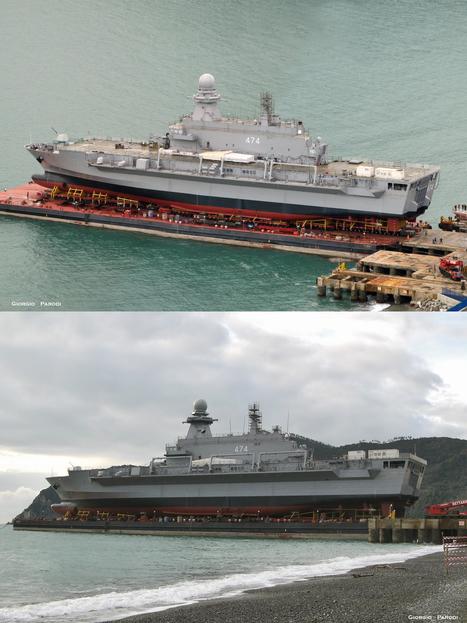
The future flagship of the Algerian fleet, an Amphibious Ship type BDSL"Batiment et de Débarquement de Soutien Logistics" commissioned from Orrizonte Sistemi Navali (a joint venture of Fincantieri and Selex Sistemi Integrati). Specifications :
-Total displacement = 9000 tons
-Length = 142.9 meters
-Width = 21.5 meters
-Flight deck with two runways and landing pads for heavy-lift helicopters in the extremities and 30-ton lift in the central part of the deck
-The power plant includes two diesel engines Wärtsilä 12V32 rated at 6000 kW
-The maximum speed = 20 knots
-Cruising range = 11,265 km
-Generation of electricity will be provided by four diesel generators Isotta Fraschini V1716 C2ME capacity of 1300 kW and one emergency V1708 T3 of 600 kW
-Armament includes MBDA SAAM-ESD (Aster missiles + A50 launcher Sylver) behind the island superstructure + Oto Melara 76/62 Super Rapid + 2 Single 25mm
-The electronic structure will include Selex Sistemi Integrati EMPAR + AESA radar of CICS Athena-C + navigation radar and flight control by -gosopoznavaniya SIR + Communication system supplied by Selex Elsag + EW systems produced by Elettronica and Thales + two SCLAR-H decoy launchers
-The Algerian helicopter landing ship dock can accommodate 3 Landing Craft Mechanized (LCM) + 3 small Landing Craft Vehicle Personnel (LCVP) + 1 large Landing Craft Personnel (LCP) + 2 semi-rigid boats. The garage can accommodate up to 15 armored vehicles.
-The crew = 150 people
-The landing force = 440 people
Via Patrick H.
|
|
Rescooped by
Romain
from Newsletter navale
January 13, 2014 4:59 AM
|
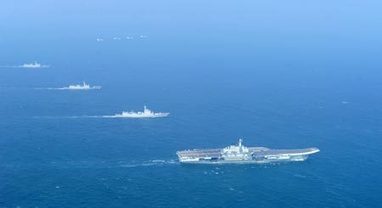
The United States Navy kept a close eye on the recent sea trials conducted in the South China Sea by the Liaoning, China's first aircraft carrier, according to a report published on US military affairs website Strategy Page. The Liaoning and its escort group of two Type 051C destroyers, two Type 054A frigates and a supply ship, returned to base on Jan. 1 after 37 days at sea, with state media declaring it a successful sea trial the next day. The Xinhua news agency said the carrier "attained the anticipated objectives," including testing its combat system and conducting a formation practice. All tests and training programs went well, as scheduled, it said. The Jan. 7 Strategy Page report claimed that the final month of Liaoning's seal trials were particularly important to the US Navy as the aircraft carrier was operating as part of a task force on the high seas for the first time. "There were some days of bad weather and how well the Chinese ships performed under these adverse conditions was a good indicator of how effective the Liaoning task force would be in combat," the article said. To monitor the Liaoning's task force during the sea trials, the US Navy employed aircraft, satellites and submarines, the report claimed, adding that it was also important to observe all activities from the surface using the USS Cowpens, a Ticonderoga-class guided missile cruiser which was confronted by the PLA Navy. On Dec. 5, one of the Liaoning's escort ships cut in front of the USS Cowpens while it was observing the carrier from a distance of 40 kilometers, a move that was condemned by US officials as a "dangerous maneuver."
Via Patrick H.
|
|
Rescooped by
Romain
from Newsletter navale
January 13, 2014 4:58 AM
|
The United States next year is slated to begin reducing launch tubes on each of its Ohio-class ballistic missile submarines, a new independent report states. The elimination of four operational launch tubes on each of the 14 submarines that make up the Navy's Ohio submarine fleet will be the first substantial reduction in U.S. strategic weapon delivery capability since the 2011 New START accord went into effect, according to Hans Kristensen, who co-authored an assessment on the current status of U.S. nuclear forces. The report was published in the January/February edition of the Bulletin of the Atomic Scientists. Nearly three years after the New START pact with Russia entered into force, implementation of the treaty has "been going very slowly," Kristensen said in a brief Monday phone interview. The treaty requires Russia and the United States by 2018 to each reduce their fielded stockpiles of strategic nuclear warheads to 1,550 and to cut their arsenals of long-range delivery vehicles down to 700 apiece, with an additional 100 systems allowed in reserve on each side. "The way that the U.S. military has approached implementation of the New START treaty so far has not done anything that has actually affected the actual number of nuclear [delivery vehicles] that are in the war plan," said Kristensen, who directs the Nuclear Information Project at the Federation of American Scientists. Instead, the Pentagon has focused on reducing the nuclear-delivery capability of selected vehicles, such as heavy bombers, that have already been retired, he said. The Defense Department has the latitude to pursue that approach because the treaty allows so many years -- seven, specifically -- before each side must carry out all mandated reductions, Kristensen said. Once all of the Ohio-class submarines have had their launch tubes capped at 20 each -- a project that is to take place in the 2015-to-2016 time frame -- the United States will be able to deploy no more than 240 submarine-launched ballistic missiles at any time, according to the report written by Kristensen and Robert Norris, who is also with the Federation of American Scientists. The submarine set to replace aging Ohio-class vessels -- dubbed "SSBN(X)" -- is expected to have only 16 missile tubes, which will reduce further the number of sea-launched ballistic missiles that the United States can deploy. The replacement fleet is also envisioned to be smaller -- only 12 submarines instead of the current 14. The Navy is not expected to begin building the first boat before 2021, and could field the vessel a decade later, according to the Bulletin report.
Via Patrick H.
|
|
Rescooped by
Romain
from Newsletter navale
January 13, 2014 4:55 AM
|
06/01/2014 (Infodefensa.com) Madrid - The Spanish Armada was forced to terminate a letter of its fleet of fighters vertical takeoff Harrier as a result of budget cuts the Defense Ministry , as did a few days ago the carrier Prince of Asturias , the only available active
Four of the 16 Harrier short takeoff and vertical landing (STVOL) will be out of service due to the lack of funds for modernization and the high cost of maintenance, reports the newspaper El País .
was These are the older devices, four AV-8B Harrier that had not been processed version AV-8B Harrier II Plus that incorporates a more modern radar, among other improvements. The modernization of these aircraft was awarded in 2008 to EADS Defense and Security Spain valued at 11.5 million euros.
fleet will be thus reduced to 12 units (plus training) whose operational life is expected to conclude in 2020. The choice of F-35 U.S. Since then, Spain should buy a replacement if you want to continue to have embarked aviation, which is not guaranteed, as the only candidate today is the F-35 Joint Strike Fighter , in which program development does not participate. Both users Harrier plus Spain - United States and Great Britain - have already been decided by the F-35 manufactured by the U.S. Lockheed Martin designing two modes, the C, conventional takeoff and B, vertical takeoff. Italy, like other countries with small aircraft carrier, also has been tilted for purchasing the F-35B to equip its future aircraft carrier Cavour . Already in 2009, the U.S. company Lockheed Martin told a group of Spanish journalists who moved his factory in Forth Worth (Texas, USA) that the F-35B would be the natural replacement for the Harrier Spanish. since their managers have tried that Spain was incorporated into the development phase of the new fifth-generation fighter unsuccessfully so far . Some have wanted to understand the various Spanish governments have not decided on this option pending, especially a European solution could appear EADS -. thing now seems unlikely that the Spanish Armada in a paper on the general lines that should mark future of 2007 signed by then Chief General Sebastián Zaragoza , and was in favor of addressing the replacement aircraft Harrier with the F-35 in a joint manner with the Air Force and figured I would need about 20 units. Refills flight also the Air Force runs the risk of losing one of its main capabilities: strategic refueling. One of two Boeing 707 that fulfilled this function and has been discharged and the other should be in two years. The Air Force has five KC-130 Hercules to resupply, but its performance is not comparable to the B-707 . The solution is to buy two tanker aircraft Airbus 330 , but each one costs about 200 million and so far there is no budget, added the same newspaper.
Via Patrick H.
|
|
Scooped by
Romain
January 11, 2014 7:48 PM
|
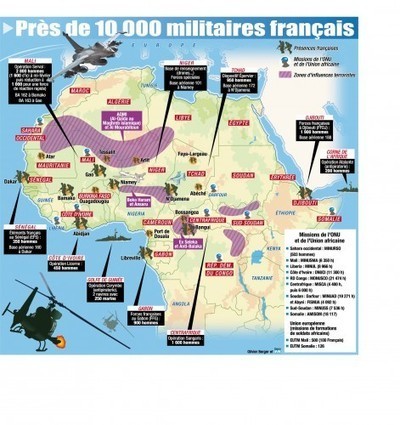
Un an après le déclenchement de l'opération Serval, nous avons interviewé le général Vincent Desportes mais aussi marqué le coup d'une carte de l'Afrique et des diverses emprises militaires françaises (plus les 100 000 soldats des missions de maintien de la paix de l'ONU et de l'Union africaine). Où l'on se rend compte que près de 10 000 militaires français sont actuellement déployés en Afrique, en ajoutant une pincée de forces spéciales, un soupçon d'agents de renseignement. Mais sans compter les navires qui œuvrent contre la piraterie à la corne de l'Afrique et dans le golfe de Guinée. Bref, 10 000 soldats français et pour longtemps dans le brouillard de la guerre en Afrique... Cette efficace et superbe infographie a été réalisée par mon collègue et camarade de La Voix du Nord GIEM. Cliquez sur la carte pour l'agrandir plein écran...
|
|
Scooped by
Romain
January 11, 2014 7:20 PM
|
The Army has launched a new recruitment campaign, complete with a slick television advert, which aims to attract new sign-ups to both the regular and reserve forces
|
|
Scooped by
Romain
January 10, 2014 11:06 AM
|
L’annonce a été faite ce vendredi 10 janvier 2014 par Jean-Yves Le Drian, actuel ministre de la défense. L’État s’engage donc à financer pour un milliard d’euros la modernisation du Rafale. Pour mémoire, il faut se souvenir que la France avait récemment finalisé les dernières commandes françaises pour le Dassault Rafale. L’Armée de l’Air et de l’Aviation Navale avaient atteint leurs objectifs en matière de dotation pour le biréacteur français. C’est donc un ouf de soulagement que les ingénieurs et techniciens de Dassault ont pu pousser. En effet, ce milliard d’euros est largement le bienvenu quand on connait toutes les difficultés que rencontrent actuellement l’avionneur pour vendre son avion de combat multirôle hors de France. Après des échecs retentissants en Corée du Sud, en Arabie Saoudite, ou plus récemment au Brésil, il est indéniable que le Rafale, aussi bon avion soit-il, est un appareil difficile à vendre. Certes son prix peut paraître prohibitif, mais force est de constater que son système d’armes est des plus efficaces. Les opérations extérieures menées en Afghanistan, en Libye, ou plus récemment au Mali en attestent. Cette modernisation va prendre la forme d’une évolution de l’actuel standard Rafale F3, vers un F3-R (pour rénové) afin de le rendre pleinement apte à affronter ses concurrents actuels et futurs. Le ministère de la défense voit en effet d’un mauvais œil la montée en puissance du Lockheed-Martin F-35 Lightning II dans les contrats à l’export. Hors si le Rafale veut demeurer compétitif, il doit s’adapter. D’où cette injection d’argent publique dans le programme. Il faut dire que tout comme Airbus, le programme Rafale est pourvoyeur d’emplois en France. Entre 450 et 500 entreprises françaises travaillent dessus, soit plus de 25000 personnes. C’est donc là encore un pari sur l’emploi que fait le gouvernement en continuant de financer la société Dassault Aviation. Au moment où le nom de Dassault est en France associé, dans la presse, à des déboires politico-judiciaires cette annonce arrive à point nommé pour rassurer les employés et les actionnaires. Oui le Rafale continuera de vivre, mais pour combien de temps encore ?
|
|
Scooped by
Romain
January 10, 2014 9:43 AM
|
CAE has been awarded a contract for delivery of a T-6C ground-based training system (GBTS) to the Mexican Air Force (FAM).
Awarded by Beechcraft, the contract is part of a series of contracts, having a combined value of more than C$110m ($101.8m) to supply a range of training systems and services to multiple defence customers.
Under the contract, the company will develop and deliver a comprehensive T-6C GBTS to FAM's Zopapan Air Base near Guadalajara, Mexico.
CAE Defence and Security Group president Gene Colabatistto said the company has a skilled and experienced training systems integrator with the proven capability to deliver comprehensive, integrated training solutions.''We are encouraged by the pipeline of global opportunities we have in front of us in both the traditional defence market as well as adjacencies such as public safety and security," Colabatistto said.
Featuring a T-6C operational flight trainer (OFT), computer-based classroom training systems and courseware, the GBTS forms part of an overall training solution Beechcraft is supplying to FAM that includes 12 T-6C+ military trainer aircraft.
The T-6C OFT will feature a high-fidelity replica of the T-6C cockpit, with a fully-enclosed 270° by 70° field-of-view display system driven by the CAE Medallion-6000 image generator.
Equipped with the CAE-developed common database (CDB), the T-6C OFT will support night-vision goggle (NGV) training, and is designed with the latest technologies to support training that progresses to fourth and fifth generation lead-in trainer and fighter platforms.
Delivery is scheduled to take place in 2015.
An upgraded variant of the Hawker T-6 military trainer aircraft used by the US Air Force (USAF) and Navy, the T-6C+ is designed to carry external stores and deliver practice weapons for training purposes.
The contracts also include a new programme to provide Beechcraft T-44C aircrew training for the US Navy and a foreign military sale (FMS) order for the supply of an MH-60R Seahawk helicopter simulator to the Royal Danish Navy.
|
|
Scooped by
Romain
January 10, 2014 9:18 AM
|
La première vague des militaires français arrivée à Ngaoundéré le 29 novembre 2013, remballe ses paquetages après avoir passé 71 jours dans la capitale de la région de l’Adamaoua. Laquelle leur a servi de base-arrière logistique à l’opération Sangaris menée en République Centrafricaine depuis le 5 décembre 2013. Aussi, une partie du matériel roulant a quitté Ngaoundéré le 7 janvier dans un convoi de 26 camions. Le dernier homme devrait être parti, en principe, le 9 janvier 2014. Selon nos informations, l’essentiel du matériel et des hommes qui étaient jusqu’ici stationnés à l’aéroport de Ngaoundéré est en cours de redéploiement. Après cette vague, d’autres militaires viendront-ils de nouveau s’installer ? Aucune information n’a filtré sur la question. En tout cas, le matériel roulant a pris la direction de Bangui. Un avion militaire devrait venir chercher le reste des troupes au sol. Cette présence militaire française n’avait pas laissé indifférents les habitants de Ngaoundéré et même une partie de l’opinion nationale. Durant le séjour de ce contingent, les gérants des snacks et autres hôtels chics de Ngaoundéré se sont remplis les poches. «Ils payent bien ces gens-là, puisqu’ils sortaient tous les soirs. Ils achètent des vins et whiskys cher… Et je vois d’ici les petits métis qu’ils vont nous laisser après leur départ», explique, ironiquement, un propriétaire de snack du centre commercial de Ngaoundéré.
|
|
Scooped by
Romain
January 10, 2014 9:16 AM
|
A part sa 1ere compagnie (les Chameaux, ceux qui ont fait l'ouverture de Serval) qui reste au camp d'Auvours pour percevoir les 26 VBCI du régiment, les marsouins du 2e RIMa (photo d'archives OF) ont mis ou vont mettre cap au sud. Direction l'Afrique. Depuis décembre, la 3e compagnie (les Scorpions) est à Djibouti. La 2e (les Boucs) se prépare à rejoindre le Gabon, d'où ils pourront éventuellement relever des troupes de Sangaris, en RCA. La 4e compagnie (les Cèdres) et un état-major rejoindront, à partir de la fin février, la Côte d'Ivoire et l'opération Licorne. Enfin, la CEA (les Dragons) va prendre la route du Sénégal où elle va armer un DIO (détachement d'instruction opérationnel) qui sera amené à intervenir au profit du Sénégal mais aussi de pays comme la Mauritanie.
|