

GrammarFlip is an interactive, online resource aimed at helping students of all abilities learn, practice, and master English grammar concepts.
Via Nik Peachey


|
Rescooped by
Dennis Swender
from Tools for Teachers & Learners
onto Bilingually Enriched Learners March 3, 2016 11:06 AM
|
 Scoop.it!
GrammarFlip is an interactive, online resource aimed at helping students of all abilities learn, practice, and master English grammar concepts.
This is a flipped classroom tool for teaching English grammar, with short video explainers followed by interactive exercises. All student activity is tracked back to an LMS. Great tool for making students responsible for their own learning.


 Your new post is loading...
 Your new post is loading...
Your new post is loading...
Scoop.it!

From
www

Educators spoke of the need for more training in a national survey on English-learner instruction. Via Dual Language Education of New Mexico
Scoop.it!

After seeing his son thrive in Willard Elementary’s Two-Way Immersion program, Marc Zarefsky wanted Evanston/Skokie School District 65 to expand bilingual education programs, not scale them back. For Zarefsky, the district’s decision to close two bilingual programs was a step in the wrong direction, he said. At the end of the academic year, Distric Via Dual Language Education of New Mexico
Scoop.it!
Scoop.it!
From
www
French overtakes Arabic to become world's fourth most spoken language "French now ranks ahead of Arabic as the fourth most widely spoken language in the world, according to a report published this week ahead of Friday's international day of the French language.
With 396 million speakers worldwide in 2025 compared to standard Arabic's 335 million, French comes in behind English, Mandarin Chinese and Spanish as one of the world's most used languages, according to figures from the International Organisation of Francophonie (OIF).
People in France make up only 66 million of the total, says the organisation, which is dedicated to promoting the French language and ties between French-speaking countries.
Nearly 65 percent of French speakers live on the African continent. The Democratic Republic of the Congo has the largest number, with just over 57 million French speakers, followed by Algeria with more than 15 million and Morocco with nearly 14 million...
By 2050, French is expected to be spoken by 590 million people, "nine out of ten of whom will live in Africa", the secretary-general of the OIF, Louise Mushikiwabo, writes in her introduction.
The report predicts the future of French "will no longer be shaped in Paris, but rather in Abidjan, Beirut, Brussels, Dakar, Kinshasa, Montreal, Port-au-Prince, Tunis or Yaoundé".
Why a changing French language is nothing to be afraid of
Learners' language The vast majority of people who speak French use it alongside other languages. Only around 90 million have it as their mother tongue.
In contrast, it is the second most widely studied foreign language in the world – after English – with nearly 170 million learners worldwide.
While French remains a key language in diplomacy, tourism and international law, the report highlights a decline in the use of French in quantitative sciences, new technologies and higher education, where English largely dominates.
On the internet, where around 20 percent of content is in English, French is the fourth most present language. It accounts for about 3.5 percent of online content, a level comparable to Arabic, Hindi, Portuguese and Russian.
The last word: why half of the world's languages could vanish this century
Keep up to date with international news by downloading the RFI app
French has been steadily expanding its global footprint over recent decades. The OIF reported 220 million French speakers in 2010, and 321 million at its last count in 2022.
Since then, however, the organisation has changed the way it calculates the total. Its latest estimate includes children learning French from age six up, whereas previous counts started from age 10.
Using the old method puts the current number of French speakers at 348 million.
In comparison, some 559 million people speak Spanish, nearly 1.2 billion speak Mandarin and over 1.5 billion speak English" 20/03/2026 #metaglossia #metaglossia_mundus Via Charles Tiayon

Charles Tiayon's curator insight,
March 21, 2:12 AM
French overtakes Arabic to become world's fourth most spoken language With 396 million speakers worldwide in 2025 compared to standard Arabic's 335 million, French comes in behind English, Mandarin Chinese and Spanish as one of the world's most used languages, according to figures from the International Organisation of Francophonie (OIF). People in France make up only 66 million of the total, says the organisation, which is dedicated to promoting the French language and ties between French-speaking countries. Nearly 65 percent of French speakers live on the African continent. The Democratic Republic of the Congo has the largest number, with just over 57 million French speakers, followed by Algeria with more than 15 million and Morocco with nearly 14 million... By 2050, French is expected to be spoken by 590 million people, "nine out of ten of whom will live in Africa", the secretary-general of the OIF, Louise Mushikiwabo, writes in her introduction. The report predicts the future of French "will no longer be shaped in Paris, but rather in Abidjan, Beirut, Brussels, Dakar, Kinshasa, Montreal, Port-au-Prince, Tunis or Yaoundé". Why a changing French language is nothing to be afraid of Learners' language In contrast, it is the second most widely studied foreign language in the world – after English – with nearly 170 million learners worldwide. While French remains a key language in diplomacy, tourism and international law, the report highlights a decline in the use of French in quantitative sciences, new technologies and higher education, where English largely dominates. On the internet, where around 20 percent of content is in English, French is the fourth most present language. It accounts for about 3.5 percent of online content, a level comparable to Arabic, Hindi, Portuguese and Russian. The last word: why half of the world's languages could vanish this century Keep up to date with international news by downloading the RFI app French has been steadily expanding its global footprint over recent decades. The OIF reported 220 million French speakers in 2010, and 321 million at its last count in 2022. Since then, however, the organisation has changed the way it calculates the total. Its latest estimate includes children learning French from age six up, whereas previous counts started from age 10. Using the old method puts the current number of French speakers at 348 million. In comparison, some 559 million people speak Spanish, nearly 1.2 billion speak Mandarin and over 1.5 billion speak English"
Scoop.it!

Enhance English speaking with LingUp's AI-driven platform for personalized conversation practice and instant feedback.
Scoop.it!

What needs to be measured is the effectiveness of the pedagogical approach. Computers can enable a fundamental change in pedagogy, but if it doesn’t happen then it’s unlikely that there will be any measurable result from adding them. Via Nik Peachey, Mar AG

Nik Peachey's curator insight,
October 14, 2015 3:39 PM
Having a bit of a rant with Phil Wade in EFL Magazine 
Mar AG's curator insight,
December 16, 2025 1:52 PM
La entrevista a Nik Peachey ofrece una reflexión relevante sobre la relación entre tecnología y motivación en el aprendizaje de EFL. Se pone de manifiesto que la motivación aumenta cuando las herramientas digitales se utilizan para crear tareas comunicativas con un propósito real, en las que el alumnado participa de forma activa.
Asimismo, el papel del docente resulta fundamental, ya que es quien debe orientla reflexión sobre el papel del docente como mediador digital resulta clave, ya que no es la herramienta en sí la que motiva, sino la forma en que se integra en el proceso de enseñanza-aprendizaje. En este sentido, la entrevista subraya la importancia de diseñar experiencias de aprendizaje atractivas que favorezcan la autonomía y el compromiso del estudiante con la lengua extranjera.
Scoop.it!

This week's question is: Via Charles Tiayon, Mar AG

Maria Rulló's curator insight,
October 30, 2017 1:44 PM
Cada dia són més nombroses i diverses les comunicacions, tant orals com escrites, a què estem exposats els usuaris de la llengua. Això provoca, d'una banda, una celeritat més gran en les comunicacions i, de l'altra, exigeix més eficàcia en la producció i recepció. A grans trets, els principis que determinen l'eficàcia comunicativa, tant pel que fa a l'emissor com al receptor, poden resumir-se en els punts següents: 1. Fer correspondre la finalitat de la comunicació (oral o escrita) amb la forma d'emissió del missatge. 
Rachel Mazzotta's curator insight,
June 18, 2019 9:38 AM
The keys to supporting English Language Learners (ELLs) in school to ensure they are successful.
Mar AG's curator insight,
December 16, 2025 1:54 PM
Este artículo pone el foco en la importancia del apoyo emocional y pedagógico para que los estudiantes de inglés no solo “sobrevivan”, sino que prosperen en el proceso de aprendizaje de la lengua. Desde la perspectiva de la motivación, crear un entorno seguro y de apoyo resulta esencial para reducir la ansiedad lingüística y favorecer una actitud positiva hacia el aprendizaje.
Scoop.it!

Modern Technology in Language Learning and Teaching Learning a language requires considerable confidence in the outcome. This, in turn, requires enthusiasm and motivation to learn, which not every student has. The strongest motivating factors that drive a person to start learning a language include the opportunity to study abroad, satisfy their ambitions, and desire for self-development. One can’t deny that modern learning is more fun, effective, and diverse than before, with various tools and technologies to come to a student’s aid. Today we will discuss some of them. The specificity of a foreign language as a subject is that communication is not only the ultimate goal of learning but also a means to achieve it. Since language remains the only universal basis for thinking, knowledge of a foreign language should be considered in terms of improving intellectual abilities. Here we are talking about memory, imagination, critical, logical, creative thinking. Methods of learning and teaching foreign languagesModern methods of teaching foreign languages, which are based on an innovative approach, are aimed at the development and self-improvement of the individual, unveiling of reserved capabilities, and creative potential. The following tendencies of innovative language learning can be identified: Establishing a friendly atmosphere and relationships between the participants of communication; students have the opportunity to be more independent and confident; the teacher encourages students to cooperate and learn from mistakes; students have the opportunity to overcome the fear of the language barrier; the teacher does not dominate; good usage of professional online translation services; encouragement of student cooperation; each student involved in the work has a specific task; students can use their knowledge and experience gained earlier.Modern methods offer an introduction of non-standard methods and forms of work for better conscious assimilation of the material. In practice, the following forms of work proved to be quite effective: See also How to Buy Quality Rear Tine Tillers? The teacher in language learning usually acts as a consultant, advisor. This drives a positive shift – students take a more active part in the learning process, put forward their views and ideas with less reluctance, and are free to act more independently and take more control over the learning process. The teacher’s task is to create conditions for practical language acquisition for each student, to use appropriate language learning apps, to choose such teaching methods that would allow each student to show their skills, creativity, to intensify cognitive activity in the process of learning foreign languages. This contributed to the establishment of updated principles of modern learning, which include: Movement from common to individual learning; student-centered classes; the purposefulness of classes; focus on social interaction; integration of language and its acquisition with the help of knowledge from other branches of science. Various Learning Technologies of TodayThere are several programs that will help you better understand the language. Yammer is a private social network that allows you to stay in touch with the right people. OneNote is a program for storing and organizing information using electronic notebooks. Hotpotatoes is a tool shell that provides the ability to independently create interactive tasks and tests for the control of students. This tool can be used without knowledge of the programming language and the involvement of specialists in the field of programming. Padlet is a multimedia resource for creating, sharing, editing, and storing data that includes a social feature that allows you to share information with friends using social networks. Webquests. For intrapersonal learners, it is useful to set a goal and achieve it through independent work. This means that online research and software solutions are indispensable. See also Free Bets and Bonuses Explained Additionally, a lot of modern technologies are based on cooperation. If you like live lessons, then most likely you have stopped your choice on Zoom, Microsoft Teams platforms, or conduct lessons in Skype or even Viber. The main idea is to create conditions for active joint activities of students in different learning situations. For instance, students can be divided into groups of 3-4 people, given one task, and told to discuss the role of each individual in task completion. Each student is responsible not only for the result of their work but also for the result of the whole group. Therefore, students are driven to cooperate and work on the task as a team, bringing their individual ideas and skills to a common table. The whole class will benefit from such an exercise because together the students can eliminate gaps in their knowledge and help each other learn. Today, teachers struggle with the interest and motivation of students to learn the language. Traditional teaching methods alone are not enough for effective language learning. We have selected some tools and resources that aim to make language learning more fruitful and interesting, and keep students more motivated, focused, and engaged in the learning process. One of the strongest motivations for learning a language is to get the first positive result. Gradually, progress will become more noticeable, and further training will bring nothing but fun. With each new lesson, the process of learning the material will be faster, which means that language learning will progress much more effectively and be a pleasurable experience for every student. Table of Contents Via Charles Tiayon, Mar AG

Graciela Flores's curator insight,
September 15, 2023 7:57 PM
Learning different languages can be challenging but with modern technology and new teaching methods educators are able to motivate students. Individual work, training in pairs and group projects are some methods that can assist for students to cooperate in the classroom.
Mar AG's curator insight,
December 16, 2025 2:17 PM
La integración de la tecnología moderna en la enseñanza y el aprendizaje de lenguas extranjeras ofrece numerosas oportunidades para reforzar la motivación del alumnado. Las herramientas digitales permiten diversificar metodologías, personalizar el aprendizaje y facilitar un acceso más flexible a los contenidos, aspectos especialmente valorados por los estudiantes actuales. No obstante, el artículo invita también a reflexionar sobre la necesidad de un uso pedagógico consciente de la tecnología. La motivación no surge de la herramienta en sí, sino de su capacidad para generar experiencias de aprendizaje significativas, comunicativas y adaptadas a las necesidades del alumnado. Cuando la tecnología se integra de forma coherente en el proceso didáctico, se convierte en un factor clave para mantener el compromiso y el interés en el aprendizaje de una lengua extranjera.
Scoop.it!

"Defence Minister inaugurates newly established Center for Languages and Translation Mogadishu, (SONNA) — The Minister of Defence, H.E. Ahmed Moallim Fiqi, today inaugurated the newly established Centre for Language and Translation of the Ministry of Defence. The ceremony was attended by the Assistant to the Chief of Defence Forces, Brig. Gen. Madey Nur Sheikh Ufurow, former Deputy Minister of Defence, Hon. Abdifitah Qassim, Members of Parliament, senior officials, and staff from the Ministry and Army HQ. In his address, the Minister underscored the strategic significance of the new Centre in enhancing the linguistic capabilities of Ministry personnel and military officers preparing for international training and cooperation programmes. He described the facility as a vital bridge strengthening Somalia’s engagement with the international community. The Minister further noted that the Centre was established to improve language proficiency and strengthen translation services for Ministry staff and SNA officers, ensuring that the Ministry, the Armed Forces, and national security operations are supported with the required communication and linguistic competencies. In conclusion, Minister Fiqi encouraged staff to fully utilise the opportunities offered by the Centre and to strengthen their professional language skills so they may effectively fulfil the national responsibilities entrusted to them." Via Charles Tiayon
Charles Tiayon's curator insight,
November 24, 2025 11:43 AM
"Defence Minister inaugurates newly established Center for Languages and Translation
Mogadishu, (SONNA) — The Minister of Defence, H.E. Ahmed Moallim Fiqi, today inaugurated the newly established Centre for Language and Translation of the Ministry of Defence. The ceremony was attended by the Assistant to the Chief of Defence Forces, Brig. Gen. Madey Nur Sheikh Ufurow, former Deputy Minister of Defence, Hon. Abdifitah Qassim, Members of Parliament, senior officials, and staff from the Ministry and Army HQ.
In his address, the Minister underscored the strategic significance of the new Centre in enhancing the linguistic capabilities of Ministry personnel and military officers preparing for international training and cooperation programmes. He described the facility as a vital bridge strengthening Somalia’s engagement with the international community.
The Minister further noted that the Centre was established to improve language proficiency and strengthen translation services for Ministry staff and SNA officers, ensuring that the Ministry, the Armed Forces, and national security operations are supported with the required communication and linguistic competencies.
In conclusion, Minister Fiqi encouraged staff to fully utilise the opportunities offered by the Centre and to strengthen their professional language skills so they may effectively fulfil the national responsibilities entrusted to them." By Khadarow Last updated: November 23, 2025 #Metaglossia #metaglossia_mundus
Scoop.it!

Learning another language could be a total game-changer for your cognitive health. Via Nik Peachey, Yashy Tohsaku
Nik Peachey's curator insight,
November 20, 2025 4:47 AM
A new study surveying more than 86,000 Europeans found a strong correlation between multilingualism and improved mental health outcomes.
Scoop.it!

In Alaska, the number of fluent Haida speakers has dwindled down into the single digits. It’s been called an endangered language. But in Juneau, one group is trying to change that. Haida Language Learners is using YouTube, Snapchat and Instagram to reach a wider audience. Via Charles Tiayon
Scoop.it!

Large language models speak over 100 languages fluently unless you're one of Africa's 1.2 billion people. Are so-called “universal” AI systems excluding an entire continent’s linguistic heritage from the digital future? "AI is finally trying to speak African languages. Will this end a historic neglect? Large language models speak over 100 languages fluently unless you're one of Africa's 1.2 billion people. Are so-called “universal” AI systems excluding an entire continent’s linguistic heritage from the digital future?
By Edibe Betul Yucer Nine years ago, Google’s CEO Sundar Pichai first pledged that artificial intelligence would make information “universally accessible” to everyone, regardless of language.
He has continued to repeat that promise ever since, fuelling expectations around the world that technology would finally bridge linguistic divides and provide equal access to knowledge for all.
Yet for those who speak any of Africa’s more than 2,000 languages, that promise remains distant.
Millions across the continent still find that the advanced AI tools transforming agriculture, education, and daily life cannot understand or communicate in their own languages.
According to research, ChatGPT – which has 800 million weekly active users worldwide— recognises only 10 to 20 per cent of sentences written in Hausa, which is spoken by over 94 million Nigerians.
The same goes for other widely spoken African languages such as Yoruba, Igbo, Swahili, and Somali, all of which remain severely underrepresented in mainstream AI models despite having tens of millions of speakers.
But why have so many African languages been overlooked by today’s most powerful AI tools and what does this reveal about who gets to shape the digital future?
‘Low resource’ languages
One of the foremost and utmost reasons for African languages’ exclusion from AI is what researchers call the “low-resource” problem.
In this context, “low-resource” refers to the scarcity of online materials such as websites, books, and transcripts available in those languages.
Since most large language models (LLMs) rely on huge volumes of such digital data to learn and generate text, the vast majority of this data is in English (high-resource) or a handful of other widely spoken global languages in the West.
“Our measure for progress and research agenda is based on what works for Western languages,” says Hellina Hailu Nigatu, an AI researcher focused on LLMs at the University of California, Berkeley.
The lack of training data leaves AI models like ChatGPT or Gemini struggling to recognise, generate or even meaningfully “see” African languages, no matter how many people speak them.
“African languages are categorised as ‘low-resource’ and are usually excluded, or even when they are included, systems perform poorly on them,” she tells TRT World.
This classification system that divides the world's languages into "high-resource" and "low-resource" categories has become the industry's preferred framework for discussing this disparity.
Commercial incentives, systemic bias and cost issue
Another reason for underrepresentation is the priorities of global AI research and development.
Research shows that large language model (LLM) outputs lean towards “Western stereotypes”.
The standards are set mostly by Western tech companies and academic institutions, which focus on languages with the largest online footprints and most funding directed towards a small group of “high-resource” languages.
As a result, African languages are rarely prioritised for investment or innovation.
Commercial incentives also play a major role. Since the immediate economic returns from African language markets are limited, companies have little motivation to dedicate time and resources to improving AI support for these languages.
This structural bias is reinforced by the datasets used to train AI models.
Even when African languages are included, the systems often adopt Western cultural assumptions, sometimes misrepresenting local contexts or perpetuating stereotypes.
The findings align with broader research on algorithmic bias.
“What we see in research is that adopting LLMs to multiple languages without careful consideration risks importing biases from English to these multilingual contexts, or misses contextual notions of bias that do not exist in English,” Nigatu says." https://trt.global/afrika-english/article/359e1362af39 #metaglossia_mundus Via Charles Tiayon
Charles Tiayon's curator insight,
August 9, 2025 12:00 AM
Large language models speak over 100 languages fluently unless you're one of Africa's 1.2 billion people. Are so-called “universal” AI systems excluding an entire continent’s linguistic heritage from the digital future?
"AI is finally trying to speak African languages. Will this end a historic neglect?
Large language models speak over 100 languages fluently unless you're one of Africa's 1.2 billion people. Are so-called “universal” AI systems excluding an entire continent’s linguistic heritage from the digital future?
By Edibe Betul Yucer
Nine years ago, Google’s CEO Sundar Pichai first pledged that artificial intelligence would make information “universally accessible” to everyone, regardless of language.
He has continued to repeat that promise ever since, fuelling expectations around the world that technology would finally bridge linguistic divides and provide equal access to knowledge for all.
Yet for those who speak any of Africa’s more than 2,000 languages, that promise remains distant.
Millions across the continent still find that the advanced AI tools transforming agriculture, education, and daily life cannot understand or communicate in their own languages.
According to research, ChatGPT – which has 800 million weekly active users worldwide— recognises only 10 to 20 per cent of sentences written in Hausa, which is spoken by over 94 million Nigerians.
The same goes for other widely spoken African languages such as Yoruba, Igbo, Swahili, and Somali, all of which remain severely underrepresented in mainstream AI models despite having tens of millions of speakers.
But why have so many African languages been overlooked by today’s most powerful AI tools and what does this reveal about who gets to shape the digital future?
‘Low resource’ languages
One of the foremost and utmost reasons for African languages’ exclusion from AI is what researchers call the “low-resource” problem.
In this context, “low-resource” refers to the scarcity of online materials such as websites, books, and transcripts available in those languages.
Since most large language models (LLMs) rely on huge volumes of such digital data to learn and generate text, the vast majority of this data is in English (high-resource) or a handful of other widely spoken global languages in the West.
“Our measure for progress and research agenda is based on what works for Western languages,” says Hellina Hailu Nigatu, an AI researcher focused on LLMs at the University of California, Berkeley.
The lack of training data leaves AI models like ChatGPT or Gemini struggling to recognise, generate or even meaningfully “see” African languages, no matter how many people speak them.
“African languages are categorised as ‘low-resource’ and are usually excluded, or even when they are included, systems perform poorly on them,” she tells TRT World.
This classification system that divides the world's languages into "high-resource" and "low-resource" categories has become the industry's preferred framework for discussing this disparity.
Commercial incentives, systemic bias and cost issue
Another reason for underrepresentation is the priorities of global AI research and development.
Research shows that large language model (LLM) outputs lean towards “Western stereotypes”.
The standards are set mostly by Western tech companies and academic institutions, which focus on languages with the largest online footprints and most funding directed towards a small group of “high-resource” languages.
As a result, African languages are rarely prioritised for investment or innovation.
Commercial incentives also play a major role. Since the immediate economic returns from African language markets are limited, companies have little motivation to dedicate time and resources to improving AI support for these languages.
This structural bias is reinforced by the datasets used to train AI models.
Even when African languages are included, the systems often adopt Western cultural assumptions, sometimes misrepresenting local contexts or perpetuating stereotypes.
The findings align with broader research on algorithmic bias.
“What we see in research is that adopting LLMs to multiple languages without careful consideration risks importing biases from English to these multilingual contexts, or misses contextual notions of bias that do not exist in English,” Nigatu says."
https://trt.global/afrika-english/article/359e1362af39
#metaglossia_mundus |
Scoop.it!

From
www
New national survey data sheds light on where schools can improve English learners' instruction. Via Dual Language Education of New Mexico
Scoop.it!
From
minddory
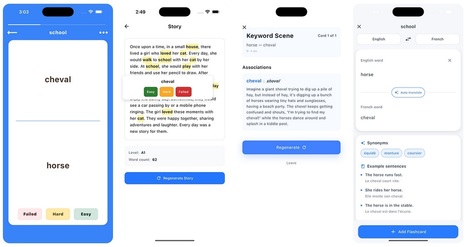
MindDory is the best language learning flashcard app with spaced repetition. AI-powered flashcards, Anki alternative for iOS. Vocabulary app that makes words stick. Free to try. Via Nik Peachey
Nik Peachey's curator insight,
April 25, 1:59 AM
MindDory wraps your target vocabulary in short AI-generated stories, so your brain encodes words with context attached. https://minddory.com/ It looks like it's only available for iPhone at present.
Scoop.it!

The former education secretary still remains hopeful, however, saying student advocacy groups will play a large role in repairing schools post-Trump. Via Dual Language Education of New Mexico
Scoop.it!
Learn European Portuguese with P2P. In this video you can learn daily uses words of portuguese language in punjabi and English explanations.
Scoop.it!

Discover how competitive gamification in ESL classrooms boosts student motivation, confidence, and engagement. Explore practical ESL gamification strategies that make vocabulary learning fun, inclusive, and effective. Via Yashy Tohsaku, Mar AG
Mar AG's curator insight,
December 16, 2025 1:56 PM
La gamificación competitiva en aulas de ESL, tal como se expone en este artículo, puede tener un impacto positivo en la motivación del alumnado cuando se aplica de forma equilibrada e inclusiva. Los elementos de juego, como los retos y las recompensas, aumentan el interés y la participación, especialmente en contextos de aprendizaje diversos. No obstante, el artículo también invita a reflexionar sobre la necesidad de adaptar la competencia a las características del grupo, evitando que se convierta en un factor desmotivador para algunos estudiantes. Cuando la gamificación se orienta al progreso personal y al aprendizaje colaborativo, puede convertirse en una estrategia eficaz para fomentar la implicación y el compromiso en el aprendizaje de la lengua extranjera.
Scoop.it!

Aligarh, May 17 (TNA) Cross-cultural communication specialists, ELT experts, linguists and faculty members explored the areas of study in interdisciplinary context such as English language teaching methodologies, constructive approaches to teaching, inclusivity, cross-cultural communication, AI generated teachings and methods, pedagogies related to methodologies, cultures, regions, and needs, knowledge systems, appropriate pedagogy and assessment, and addressing learning crisis, during the three-day international conference, organized by the Department of English, Aligarh Muslim University (AMU). The conference entitled “appropriate teaching methodologies in interdisciplinary context: mapping the sociolinguistics diversity”, was sponsored by ICSSR, New Delhi. During the valedictory session, Prof Imtiaz Hasnain, Chair- Professor, MANUU, Hyderabad, talked about “linguistic entrepreneurship, ethno-linguistics identity, and neo-liberal imagination”. Prof Hasnain also focused upon how the English language has been developed as a language of bread and butter, and hence there is more demand for English language teaching programs. The session was chaired by Prof Mohammad Asim Siddiqui, Department of English, AMU. A round table discussion on the topic “methodological diversity in classroom: contexts and perspectives”, by Prof A.R. Kidwai, (Director, K.A. Nizami Centre for Quranic Studies, AMU and Former Professor, Department of English, AMU), along with Prof Imtiaz Hasnain, Prof M.E. Veda Sharan (EFLU, Hyderabad), and Prof Shobha Satyanath (Former Professor, Department of Linguistics, University of Delhi) brought to focus the methods, linguistic and cultural diversities, and the role of teachers in teaching in the multilingual discourse community. The discussants spoke about the content subjects; how content has a kind of connectivity with methodology, scale of diversity at the level of teaching and teacher, language learning, and at the level of language culture. Delivering a plenary lecture, on the topic “New World Englishes: what’s the fuss all about”, Prof Shobha Satyanath discussed the internal diversity of Englishes which is often overlooked by the dominant discourses. Prof M.E. Veda Sharan, spoke on the topic “The Bitzer in the Classroom: imaginative ways out of hard times”, where he constructed the comparison between literature and language. Professor Chris Anson, Department of English, North California State University, USA, spoke on “writing across the curriculum: strategies for language development and deep learning.” In his Valedictory address, Prof Avinash Kumar Singh, Head, Department of Educational Policy, NIEPA, New Delhi, said that such conferences act as a driving force in the realm of interdisciplinary studies. While talking about the “Socio-linguistic polarity in education of the disadvantaged: policy perspectives and practices”, he expressed the concern of learning disadvantages as in the case of remote tribal language areas, they cannot access the home language because it’s not the medium of instruction. In such cases, the dropout rate is very high, as suggested by the World Bank reports. Discussing the idea of equity and justice, Prof Mirza Asmer Beg, Dean, Faculty of Social Sciences, explained the relevance of the idea of multiculturalism. The conference had 61 offline and 120 online paper reading sessions, and more than 130 research papers were presented at the Conference on topics ranging from multiculturalism, sociolinguistic diversity, AI and English Language Teaching, sociology, and second language acquisition, among others. Via Charles Tiayon, Mar AG
Charles Tiayon's curator insight,
May 17, 2024 10:21 PM
"Aligarh, May 17 (TNA) Cross-cultural communication specialists, ELT experts, linguists and faculty members explored the areas of study in interdisciplinary context such as English language teaching methodologies, constructive approaches to teaching, inclusivity, cross-cultural communication, AI generated teachings and methods, pedagogies related to methodologies, cultures, regions, and needs, knowledge systems, appropriate pedagogy and assessment, and addressing learning crisis, during the three-day international conference, organized by the Department of English, Aligarh Muslim University (AMU). The conference entitled “appropriate teaching methodologies in interdisciplinary context: mapping the sociolinguistics diversity”, was sponsored by ICSSR, New Delhi. During the valedictory session, Prof Imtiaz Hasnain, Chair- Professor, MANUU, Hyderabad, talked about “linguistic entrepreneurship, ethno-linguistics identity, and neo-liberal imagination”. Prof Hasnain also focused upon how the English language has been developed as a language of bread and butter, and hence there is more demand for English language teaching programs. The session was chaired by Prof Mohammad Asim Siddiqui, Department of English, AMU. A round table discussion on the topic “methodological diversity in classroom: contexts and perspectives”, by Prof A.R. Kidwai, (Director, K.A. Nizami Centre for Quranic Studies, AMU and Former Professor, Department of English, AMU), along with Prof Imtiaz Hasnain, Prof M.E. Veda Sharan (EFLU, Hyderabad), and Prof Shobha Satyanath (Former Professor, Department of Linguistics, University of Delhi) brought to focus the methods, linguistic and cultural diversities, and the role of teachers in teaching in the multilingual discourse community. The discussants spoke about the content subjects; how content has a kind of connectivity with methodology, scale of diversity at the level of teaching and teacher, language learning, and at the level of language culture. Delivering a plenary lecture, on the topic “New World Englishes: what’s the fuss all about”, Prof Shobha Satyanath discussed the internal diversity of Englishes which is often overlooked by the dominant discourses. Prof M.E. Veda Sharan, spoke on the topic “The Bitzer in the Classroom: imaginative ways out of hard times”, where he constructed the comparison between literature and language. Professor Chris Anson, Department of English, North California State University, USA, spoke on “writing across the curriculum: strategies for language development and deep learning.” In his Valedictory address, Prof Avinash Kumar Singh, Head, Department of Educational Policy, NIEPA, New Delhi, said that such conferences act as a driving force in the realm of interdisciplinary studies. While talking about the “Socio-linguistic polarity in education of the disadvantaged: policy perspectives and practices”, he expressed the concern of learning disadvantages as in the case of remote tribal language areas, they cannot access the home language because it’s not the medium of instruction. In such cases, the dropout rate is very high, as suggested by the World Bank reports. Discussing the idea of equity and justice, Prof Mirza Asmer Beg, Dean, Faculty of Social Sciences, explained the relevance of the idea of multiculturalism. The conference had 61 offline and 120 online paper reading sessions, and more than 130 research papers were presented at the Conference on topics ranging from multiculturalism, sociolinguistic diversity, AI and English Language Teaching, sociology, and second language acquisition, among others." #metaglossia_mundus
Mar AG's curator insight,
December 16, 2025 1:59 PM
Este artículo destaca la relevancia de la comunicación intercultural y los enfoques interdisciplinarios en la enseñanza de lenguas extranjeras, aspectos que influyen directamente en la motivación del alumnado. Integrar diferentes disciplinas y perspectivas culturales permite que el aprendizaje del idioma se perciba como una herramienta real de comunicación y no solo como un contenido académico.
Además, el contacto con contextos interculturales auténticos favorece la curiosidad y el interés del estudiante, incrementando su implicación en el proceso de aprendizaje. Cuando el alumnado comprende el valor del idioma como medio para interactuar en entornos diversos, su motivación y compromiso con el aprendizaje de la lengua extranjera aumentan de manera significativa.
Scoop.it!
How Can VR Technology Facilitate Second Language Acquisition? Bilingual speakers make up approximately 43% of the world’s population. By Ethan Hui Published September 14, 2022 Is life too short to learn a new language? VR might be a gamechanger in second language acquisition. Bilingual speakers make up approximately 43% of the world’s population. It is almost guaranteed that you have previously spoken with someone who is competent in speaking multiple languages. You might wonder, how do they do it so effortlessly? If you have had experiences learning a new language, you know it is the opposite of effortless. The process is painful, exhausting and frustrating—so frustrating that many of us might just give up because there are too many grammar rules to memorize. So kudos to you if you have mastered various languages! But what if there’s a simpler way to acquire a language… Well, virtual reality (VR) might be your answer. Here’s how: Providing an immersive language-learning environmentWe all know it is vital to immerse yourself in a language if you want to speak the language fluently. Through interactions with native speakers, learners can receive many language development opportunities, such as listening, speaking and feedback. However, due to geographical constraints, learners may not have the opportunity to communicate with native speakers of their target language. VR technology is thus an excellent solution to this problem, as it can provide users with an immersive language-learning environment to up their language learning game. VR technology allows learners to enter the virtual world and interact with other people around the globe without traveling to another country. For language learners, this means they can surround themselves in an “authentic” language context, thereby boosting their reading, listening and speaking skills. VR platforms have also been proven to increase learners’ overall language abilities across all linguistic levels, making VR technology truly beneficial for second language acquisition (SLA). Motivating language learnersApart from interaction and immersion, the learner’s motivation is another crucial factor in learning a new language. To effectively learn a second language, learners need to be motivated by their goals, such as to achieve fluency in English to live in an English-speaking country (an instrumental motivation) or to become a target community member (integrative motivation). Counter to our assumption, studying a language with textbooks in the classroom is not the only way to achieve these goals. After all, we can’t be purely incentivized by our own set of goals; the means of learning a language needs to be motivating and intriguing as well, and gaming can do just that. As per a study, playing commercial digital video games can increase learning motivation in SLA. The reason is simple: it is more engaging and interesting than memorizing vocabulary from a textbook. With video games, players can pick up and practice everyday language rather than complicated, academic-oriented vocabularies through communicating with other players. Having the opportunity to use the language in such a setting will encourage learners to speak and use the language more confidently. However, this is not to say that we should replace textbooks with video games. As per the same study, classical educational setting is still necessary in SLA, and the increase in language learning motivation as a result of playing video games can transfer to classroom learning. In other words, video games can facilitate language learning at schools, even if language learning is not the games’ primary purpose. With the rising popularity of VR technology, we can expect more and more VR games and headsets will be released in the market. Compared to commercial video games, these VR games can offer an even more engaging and aesthetic gaming experience, such as better graphics and audiovisual effects, which can further enhance motivation. If VR games are to be integrated into language classes, maybe we will be seeing fewer students dozing off during class and more being excited to go to class! Examples of VR language learning appsIn 2021, the global language learning market was worth US$14.2 billion, and it is projected to surpass US$28.5 billion by 2028. Surely, we will be seeing more VR language learning apps in the market soon. For now, if you are learning a new language or considering doing so, here are three apps you should check out : ImmerseMeThis VR platform helps learners increase their fluency in their second language by simulating authentic and real-life scenarios, such as buying a baguette in Paris or a bento box in Tokyo, where they have to interact with native speakers. It offers more than 3,000 real-life scenarios across nine languages, i.e. English, Spanish, French, German, Japanese, Chinese, Italian, Greek and Indonesian. Mondly VRThe VR app which was acquired by UK education giant Pearson in April this year. Similar to ImmerseMe, the VR app provides an opportunity for users to learn more than 30 languages through interacting with a virtual language teacher. After each interaction, users will receive pronunciation feedback as well as vocabulary suggestions. It also has an augmented reality (AR) app in which their virtual language teachers can appear in your living room through your phone camera. PanolingoPanolingo is a VR app that uses a gamification approach where users can collect points and bonuses from doing tasks or competing with friends. An example of said task is following instruction prompts, such as identifying what a refrigerator is in the user’s kitchen. With the gamification of the VR app, learners can be more motivated in picking up a second language via a relatively more interesting and incentivized approach. All in all, interaction and motivation are two vital factors of an effective SLA. VR technology’s ability to create a virtual environment that can motivate learners and provide them with lifelike and authentic interactions makes it especially valuable in the SLA market. With all the benefits of learning a language via VR platforms and the great potential of the language learning market, we will be seeing more tech solutions to help language learners around the world master as many languages as possible. Also read: Why Computers Can’t Master Human Language -for Now What is Natural Language Processing? LingoAce, Singapore-based online language learning platform, raises US$6 million in Series A+ led by Sequoia Capital IndiaHeader image courtesy of Freepik Via Charles Tiayon, Mar AG
Charles Tiayon's curator insight,
September 14, 2022 10:34 PM
"Is life too short to learn a new language? VR might be a gamechanger in second language acquisition. Bilingual speakers make up approximately 43% of the world’s population. It is almost guaranteed that you have previously spoken with someone who is competent in speaking multiple languages. You might wonder, how do they do it so effortlessly? If you have had experiences learning a new language, you know it is the opposite of effortless. The process is painful, exhausting and frustrating—so frustrating that many of us might just give up because there are too many grammar rules to memorize. So kudos to you if you have mastered various languages! But what if there’s a simpler way to acquire a language… Well, virtual reality (VR) might be your answer. Here’s how: Providing an immersive language-learning environmentWe all know it is vital to immerse yourself in a language if you want to speak the language fluently. Through interactions with native speakers, learners can receive many language development opportunities, such as listening, speaking and feedback. However, due to geographical constraints, learners may not have the opportunity to communicate with native speakers of their target language. VR technology is thus an excellent solution to this problem, as it can provide users with an immersive language-learning environment to up their language learning game. VR technology allows learners to enter the virtual world and interact with other people around the globe without traveling to another country. For language learners, this means they can surround themselves in an “authentic” language context, thereby boosting their reading, listening and speaking skills. VR platforms have also been proven to increase learners’ overall language abilities across all linguistic levels, making VR technology truly beneficial for second language acquisition (SLA). Motivating language learnersApart from interaction and immersion, the learner’s motivation is another crucial factor in learning a new language. To effectively learn a second language, learners need to be motivated by their goals, such as to achieve fluency in English to live in an English-speaking country (an instrumental motivation) or to become a target community member (integrative motivation). Counter to our assumption, studying a language with textbooks in the classroom is not the only way to achieve these goals. After all, we can’t be purely incentivized by our own set of goals; the means of learning a language needs to be motivating and intriguing as well, and gaming can do just that. As per a study, playing commercial digital video games can increase learning motivation in SLA. The reason is simple: it is more engaging and interesting than memorizing vocabulary from a textbook. With video games, players can pick up and practice everyday language rather than complicated, academic-oriented vocabularies through communicating with other players. Having the opportunity to use the language in such a setting will encourage learners to speak and use the language more confidently. However, this is not to say that we should replace textbooks with video games. As per the same study, classical educational setting is still necessary in SLA, and the increase in language learning motivation as a result of playing video games can transfer to classroom learning. In other words, video games can facilitate language learning at schools, even if language learning is not the games’ primary purpose. With the rising popularity of VR technology, we can expect more and more VR games and headsets will be released in the market. Compared to commercial video games, these VR games can offer an even more engaging and aesthetic gaming experience, such as better graphics and audiovisual effects, which can further enhance motivation. If VR games are to be integrated into language classes, maybe we will be seeing fewer students dozing off during class and more being excited to go to class! Examples of VR language learning appsIn 2021, the global language learning market was worth US$14.2 billion, and it is projected to surpass US$28.5 billion by 2028. Surely, we will be seeing more VR language learning apps in the market soon. For now, if you are learning a new language or considering doing so, here are three apps you should check out : ImmerseMeThis VR platform helps learners increase their fluency in their second language by simulating authentic and real-life scenarios, such as buying a baguette in Paris or a bento box in Tokyo, where they have to interact with native speakers. It offers more than 3,000 real-life scenarios across nine languages, i.e. English, Spanish, French, German, Japanese, Chinese, Italian, Greek and Indonesian. Mondly VRThe VR app which was acquired by UK education giant Pearson in April this year. Similar to ImmerseMe, the VR app provides an opportunity for users to learn more than 30 languages through interacting with a virtual language teacher. After each interaction, users will receive pronunciation feedback as well as vocabulary suggestions. It also has an augmented reality (AR) app in which their virtual language teachers can appear in your living room through your phone camera. PanolingoPanolingo is a VR app that uses a gamification approach where users can collect points and bonuses from doing tasks or competing with friends. An example of said task is following instruction prompts, such as identifying what a refrigerator is in the user’s kitchen. With the gamification of the VR app, learners can be more motivated in picking up a second language via a relatively more interesting and incentivized approach. All in all, interaction and motivation are two vital factors of an effective SLA. VR technology’s ability to create a virtual environment that can motivate learners and provide them with lifelike and authentic interactions makes it especially valuable in the SLA market. With all the benefits of learning a language via VR platforms and the great potential of the language learning market, we will be seeing more tech solutions to help language learners around the world master as many languages as possible. " #metaglossia mundus 
Elaine Weseman's curator insight,
September 10, 2023 5:37 PM
For emerging bilingual students, using a VR headset could be a game-changer when it comes to second language acquisition. It is well known that it is vital to immerse yourself in a language if you want to speak the language fluently. Interacting with native speakers helps students to develop language quicker because it provides opportunities, such as listening, speaking, and feedback. However, geographical constraints limit personal interactions. VR headsets could be the answer. VR technology can now create virtual environments in which a learner can experience interacting with native speakers in a gamified way. Of course, the traditional text is still essential, but VR can now make that text come alive.
Mar AG's curator insight,
December 16, 2025 2:15 PM
El empleo de la realidad virtual en la adquisición de segundas lenguas ofrece un gran potencial para incrementar la motivación del alumnado al situarlo en contextos comunicativos inmersivos y cercanos a situaciones reales. Al interactuar en entornos virtuales, los estudiantes pueden practicar la lengua de forma significativa, lo que favorece la implicación emocional y reduce el miedo a cometer errores. Cuando la tecnología se utiliza con un objetivo pedagógico claro, la realidad virtual se convierte en una herramienta eficaz para fomentar la participación activa y el compromiso del estudiante en el proceso de aprendizaje de una lengua extranjera.
Scoop.it!

AI-fueled technologies make communicating in other languages easier than ever, but it still can’t replace the transformative value of learning a new language. Via EDTECH@UTRGV

EDTECH@UTRGV's curator insight,
January 5, 1:41 PM
"[W]hat’s the value of learning another language when AI can handle tourism phrases, casual conversation and city navigation? The answer... lies not in fleeting encounters but in cultivating enduring capacities: curiosity, empathy, deeper understanding of others, the reshaping of identity and the promise of lasting cognitive growth."
Scoop.it!

ESL English - Adult Literacy - Listening, Reading, Audiobooks, Short Stories, Songs, PET exam Via Ana Cristina Pratas
Scoop.it!

"The Indian state where people are being beaten up for speaking the wrong language Tuesday 15 July 2025 08:29 EDT Maharashtra, long regarded as one of India’s most cosmopolitan states, has found itself reliving an old tension: a renewed battle over language. In the last few months, a state government order mandating Hindi as the third language in primary schools has sparked not just political protests but also public violence. A rickshaw driver was assaulted after refusing to speak in the state language Marathi, a shopkeeper was slapped by political activists for using Hindi, and a bank employee was threatened for defending his use of Hindi and English. At the heart of the unrest lies a 16 April education department resolution making Hindi compulsory as the third language from classes I to V in schools giving instruction in English and Marathi languages. While state officials framed the policy as a routine implementation of the federal government’s National Education Policy 2020, which encourages education in the regional language, Hindi, and English under the “three-language formula”, critics saw it as part of a broader push by prime minister Narendra Modi’s ruling Bharatiya Janata Party (BJP) to elevate Hindi at the expense of regional languages. Although the federal push to promote Hindi beyond the “Hindi belt” has faced opposition in many states, the backlash has been especially charged in Maharashtra. The western state was born out of the Samyukta Maharashtra movement of the 1950s, a mass mobilisation demanding a separate province for Marathi speakers with Mumbai as its capital. The agitation, marked by mass street protests, hunger strikes and violent police crackdowns, led to the deaths of over 100 demonstrators before Maharashtra was finally carved out of the bilingual Bombay State in 1960. Not surprisingly then, the new policy has struck a discordant note in a state where linguistic identity has long been deeply embedded in the social fabric. Many people view the introduction of compulsory Hindi not as a benign educational reform but as a renewed threat to that hard-won identity. While the state’s BJP-led government initially downplayed the controversy, the backlash quickly escalated. Opposition parties, including the Shiv Sena UBT, the Congress, and Sharad Pawar’s Nationalist Congress Party, accused the BJP of pushing a “Hindi, Hindu, Hindustan” agenda: shorthand for the Modi government’s concerted bid to promote Hindi and Hindu nationalism at the expense of India’s pluralistic character. Varsha Gaikwad of the Congress party, a former state education minister, accused the BJP of “working systematically to weaken the Marathi language in its own homeland,” The New Indian Express reported. Shiv Sena UBT chief Uddhav Thackeray and Maharashtra Navnirman Sena leader Raj Thackeray, longstanding political rivals, also voiced strong opposition to the Hindi mandate. The former referred to the new policy as a “language emergency” and said he “will not allow imposition of any language”. The latter, known for his party’s past campaigns against Hindi-speaking migrants, reiterated his stance that while Maharashtrians were Hindus, they did not accept Hindi imposition. Maharashtra deputy chief minister Ajit Pawar initially defended the policy. Its critics had “nothing else to do”, he said while arguing that Hindi and English were useful across India. But Marathi, he emphasised, would remain Maharashtra’s primary language. Federal home minister Amit Shah said last month that Indians should eventually “feel ashamed” to speak English, promoting native tongues instead. The central government under Narendra Modi has consistently promoted Hindi as the national lingua franca, not only through educational reforms like the three-language policy but also symbolic changes. Public schemes, for example, now bear Hindi titles like Mera Yuva Bharat, Pradhan Mantri Ujjwala Yojana and Pradhan Mantri Jan Dhan Yojana. The colonial-era Indian Penal Code has been replaced with Bharatiya Nyaya Sanhita. But as the Maharashtra protests grew louder and violence more visible, chief minister Devendra Fadnavis reversed the mandate and announced it would be optional. He also formed a committee to review the policy’s implementation. The resistance to “Hindi imposition” has echoed beyond Maharashtra. In Tamil Nadu, chief minister MK Stalin rejected the National Education Policy’s three-language formula and declared that the southern state was “ready for another language war” over what he called the central government’s attempt to impose Hindi. Deputy chief minister Udhayanidhi Stalin warned the state would “never accept the New Education Policy or the imposition of Hindi in any form” and cast the opposition to it as an “ethnic struggle” to protect Tamil culture. Fellow southern states Karnataka and Kerala have seen similar opposition. In Bengaluru, the capital of Karnataka, activists vandalised departure boards at the main airport over the omission of Kannada, the state language, while local governments mandated Kannada-first signage in public spaces. India is one of the most linguistically diverse countries in the world. According to the 2011 census, there are 121 languages in active use and over 1,300 distinct mother tongues, although only 22 enjoy official status under the constitution. Hindi is the most widely spoken language, used by roughly 43.6 per cent of the population, or 528 million people. Marathi is third with about 83 million speakers and Tamil ranks fifth with about 69 million speakers. As Maharashtra braces for municipal elections, the language row underscores how swiftly cultural identity can become a political fault line. What began as an administrative directive on school curriculum has grown into a broader referendum on who defines the cultural contours of a diverse and multilingual India. Via Charles Tiayon
Charles Tiayon's curator insight,
July 15, 2025 11:04 PM
"The Indian state where people are being beaten up for speaking the wrong language New rules for schools have ignited street protests and unrest, exposing a nationwide conflict over language and regional identity. Shahana Yasmin reports
Tuesday 15 July 2025 08:29 EDT
Maharashtra, long regarded as one of India’s most cosmopolitan states, has found itself reliving an old tension: a renewed battle over language.
In the last few months, a state government order mandating Hindi as the third language in primary schools has sparked not just political protests but also public violence. A rickshaw driver was assaulted after refusing to speak in the state language Marathi, a shopkeeper was slapped by political activists for using Hindi, and a bank employee was threatened for defending his use of Hindi and English.
At the heart of the unrest lies a 16 April education department resolution making Hindi compulsory as the third language from classes I to V in schools giving instruction in English and Marathi languages.
While state officials framed the policy as a routine implementation of the federal government’s National Education Policy 2020, which encourages education in the regional language, Hindi, and English under the “three-language formula”, critics saw it as part of a broader push by prime minister Narendra Modi’s ruling Bharatiya Janata Party (BJP) to elevate Hindi at the expense of regional languages.
Although the federal push to promote Hindi beyond the “Hindi belt” has faced opposition in many states, the backlash has been especially charged in Maharashtra.
The western state was born out of the Samyukta Maharashtra movement of the 1950s, a mass mobilisation demanding a separate province for Marathi speakers with Mumbai as its capital. The agitation, marked by mass street protests, hunger strikes and violent police crackdowns, led to the deaths of over 100 demonstrators before Maharashtra was finally carved out of the bilingual Bombay State in 1960.
Not surprisingly then, the new policy has struck a discordant note in a state where linguistic identity has long been deeply embedded in the social fabric. Many people view the introduction of compulsory Hindi not as a benign educational reform but as a renewed threat to that hard-won identity.
While the state’s BJP-led government initially downplayed the controversy, the backlash quickly escalated. Opposition parties, including the Shiv Sena UBT, the Congress, and Sharad Pawar’s Nationalist Congress Party, accused the BJP of pushing a “Hindi, Hindu, Hindustan” agenda: shorthand for the Modi government’s concerted bid to promote Hindi and Hindu nationalism at the expense of India’s pluralistic character.
Varsha Gaikwad of the Congress party, a former state education minister, accused the BJP of “working systematically to weaken the Marathi language in its own homeland,” The New Indian Express reported.
Shiv Sena UBT chief Uddhav Thackeray and Maharashtra Navnirman Sena leader Raj Thackeray, longstanding political rivals, also voiced strong opposition to the Hindi mandate. The former referred to the new policy as a “language emergency” and said he “will not allow imposition of any language”. The latter, known for his party’s past campaigns against Hindi-speaking migrants, reiterated his stance that while Maharashtrians were Hindus, they did not accept Hindi imposition.
Maharashtra deputy chief minister Ajit Pawar initially defended the policy. Its critics had “nothing else to do”, he said while arguing that Hindi and English were useful across India. But Marathi, he emphasised, would remain Maharashtra’s primary language.
Federal home minister Amit Shah said last month that Indians should eventually “feel ashamed” to speak English, promoting native tongues instead.
The central government under Narendra Modi has consistently promoted Hindi as the national lingua franca, not only through educational reforms like the three-language policy but also symbolic changes.
Public schemes, for example, now bear Hindi titles like Mera Yuva Bharat, Pradhan Mantri Ujjwala Yojana and Pradhan Mantri Jan Dhan Yojana. The colonial-era Indian Penal Code has been replaced with Bharatiya Nyaya Sanhita.
But as the Maharashtra protests grew louder and violence more visible, chief minister Devendra Fadnavis reversed the mandate and announced it would be optional. He also formed a committee to review the policy’s implementation.
The resistance to “Hindi imposition” has echoed beyond Maharashtra. In Tamil Nadu, chief minister MK Stalin rejected the National Education Policy’s three-language formula and declared that the southern state was “ready for another language war” over what he called the central government’s attempt to impose Hindi.
Deputy chief minister Udhayanidhi Stalin warned the state would “never accept the New Education Policy or the imposition of Hindi in any form” and cast the opposition to it as an “ethnic struggle” to protect Tamil culture.
Fellow southern states Karnataka and Kerala have seen similar opposition. In Bengaluru, the capital of Karnataka, activists vandalised departure boards at the main airport over the omission of Kannada, the state language, while local governments mandated Kannada-first signage in public spaces.
India is one of the most linguistically diverse countries in the world. According to the 2011 census, there are 121 languages in active use and over 1,300 distinct mother tongues, although only 22 enjoy official status under the constitution.
Hindi is the most widely spoken language, used by roughly 43.6 per cent of the population, or 528 million people. Marathi is third with about 83 million speakers and Tamil ranks fifth with about 69 million speakers.
As Maharashtra braces for municipal elections, the language row underscores how swiftly cultural identity can become a political fault line.
What began as an administrative directive on school curriculum has grown into a broader referendum on who defines the cultural contours of a diverse and multilingual India. https://www.the-independent.com/asia/india/india-maharashtra-hindi-language-imposition-b2788722.html #metaglossia_mundus |








This is a flipped classroom tool for teaching English grammar, with short video explainers followed by interactive exercises. All student activity is tracked back to an LMS. Great tool for making students responsible for their own learning.
This is a flipped classroom tool for teaching English grammar, with short video explainers followed by interactive exercises. All student activity is tracked back to an LMS. Great tool for making students responsible for their own learning.
This is a flipped classroom tool for teaching English grammar, with short video explainers followed by interactive exercises. All student activity is tracked back to an LMS. Great tool for making students responsible for their own learning.