
Original Article from The New England Journal of Medicine — Effect of Avoidance on Peanut Allergy after Early Peanut Consumption
Get Started for FREE
Sign up with Facebook Sign up with X
I don't have a Facebook or a X account


|
Scooped by
Gilbert C FAURE
onto Allergy (and clinical immunology) March 6, 2016 5:58 AM
|
 Scoop.it!


 Your new post is loading...
 Your new post is loading...
Your new post is loading...
Scoop.it!
|
|
|
Scooped by
Gilbert C FAURE
December 18, 4:33 AM
|
Scoop.it!

In this week’s podcast, Voices in Health and Wellness, I speak with Loren Isakson, on how to build a modern allergy and immunology practice without losing focus on the patient.
We talk about launching lean with telemedicine, shifting to in person care, and using comprehensive testing, immunotherapy, and biologics to reduce ER visits and improve stability.
We also discuss where technology helps, where it slows clinicians down, and why systems should protect time for listening and observation.
If you care about patient first allergy care, smart use of health tech, or building a sustainable medical practice, this episode offers clear and practical insight.
#AllergyCare #Immunology #HealthcareEntrepreneurship #HealthTechnology #VoicesInHealthAndWellness #AndrewGreenland
|
|
Scooped by
Gilbert C FAURE
December 11, 4:05 AM
|
Scoop.it!

🤖 L'IA révolutionne les tests d'allergie !
🔬 Une étude récente dévoile que l'intelligence artificielle améliore considérablement le diagnostic allergologique. À l'UZ Leuven, le dispositif SPAT, développé par Hippo Dx, administre automatiquement des réactifs allergènes et utilise un algorithme d'IA pour analyser les réactions cutanées avec une précision de 99,5 %, accélérant le diagnostic près de quatre fois par rapport aux méthodes traditionnelles.
🏥 La professeure Laura Van Gerven souligne que cette avancée ne remplace pas les cliniciens, mais optimise le processus diagnostique tout en libérant du temps pour le soin des patients. Cette technologie est désormais en service dans plusieurs hôpitaux, tant en Belgique qu’à l’étranger.
Découvrez l'article complet sur Le journal du Médecin : https://lnkd.in/eG7xU-xx
|
|
Scooped by
Gilbert C FAURE
November 25, 1:23 PM
|
Scoop.it!

I'm privileged to have spearheaded the scientific content of Thermo Fisher Scientific’s Allergen Encyclopedia over the past years, working closely with leading experts in allergen research.
The latest updates include integration of 300 allergen-specific codes from the WHO International Classification of Diseases 11th Revision (ICD-11) into the Allergen Encyclopedia. This enhancement significantly expands its utility as a resource for allergen-related clinical information.
Grateful to the World Allergy Organization for helping raise awareness of this valuable, continually updated resource.
Luciana Tanno
|
|
Scooped by
Gilbert C FAURE
November 12, 5:08 AM
|
Scoop.it!

Very proud to present our November issue. Drug #hypersensitivity reactions (DHRs) constitute a major concern in clinical practice, as they compromise patient safety and restrict the use of essential medications. These immune-mediated adverse drug reactions occur after exposure to therapeutic doses and can manifest with a broad clinical spectrum, ranging from mild cutaneous reactions to severe, potentially fatal conditions.
This issue opens with an editorial by Li et al., highlighting the inaugural EAACI Hong Kong Allergy School where global experts in drug allergy gathered under the theme “East Meets West” to call for harmonized international definitions of drug hypersensitivity and standardized criteria for identifying low-risk penicillin allergy, underscoring the urgent need to reduce mislabelling and advance safe, evidence-based delabelling practices worldwide. Leonardi et al. provide a comprehensive overview of the clinical presentations, diagnostic approaches, and treatment strategies for drug-induced ocular adverse events. Cortellini et al. present data and recommendations on the characteristics of hypersensitivity reactions to antiplatelet drugs and the associated diagnostic procedures, to maximize their safety and effectiveness. Gelincik et al. review current knowledge on the pathomechanisms of hypersensitivity reactions to quinolones, including diagnostic tests and cross-reactivities, and propose a practical diagnostic approach for clinicians. Hutten et al. highlight significant discrepancies between studies on cross-allergy to beta-lactam antibiotics, particularly concerning recommendations for safe alternatives. Labella et al. investigate the utility of direct single-dose drug provocation testing without prior skin testing in adult European patients at low risk of penicillin allergy. Bilgic-Eltan et al. analyze the discrepancies between suspected and confirmed drug hypersensitivity in a well-defined cohort of patients with inborn errors of immunity. Helevä et al. evaluate the benefits of aspirin treatment after desensitization in patients with chronic rhinosinusitis with nasal polyps, asthma, and N-ERD. Goh et al. explore haptenated ligands presented by HLA-A*02:01, characterize the T cell repertoire involved in penicillin-induced reactions in a hypersensitive patient, and investigate whether a dominant penicillin-specific T cell receptor clonotype recognizes haptenated HLA peptides. Bertolotti et al. present the thoroughly documented case of a patient with delayed cross-reactivity to all seven available iodinated contrast media. Cho, Jo, and Park et al. leverage the WHO global pharmacovigilance database to identify the ten drugs most frequently associated with severe cutaneous adverse reactions, providing large-scale epidemiological insights into delayed drug hypersensitivities and contributing to global drug safety. Céspedes and Pérez-Moreno et al. demonstrate that IgG removal enhances…………..
journalallergy.com
|
|
Scooped by
Gilbert C FAURE
October 2, 2:39 AM
|
Scoop.it!

✨One of the most appreciated/liked articles in the social media of Allergy published in 2025:
Hypereosinophilia and Hypereosinophilic Syndromes: First Findings From a Nationwide Multicenter Cohort. Corresponding author: Guillaume Lefèvre
Read the article here: doi.org/10.1111/all.16463
The COHESion study is the first prospective large-scale multicenter study dedicated to all hypereosinophilia/hypereosinophilic syndrome (HE/HES) subtypes. The final diagnoses were idiopathic HES (HES-I, 47%), HE/HES-reactive (16%), HE-uncertain significance (15%), HE/HES-neoplastic (7%), HE/HES-lymphocytic (6%), IgG4-related disease (2%), and antineutrophil cytoplasmic antibody-negative eosinophilic granulomatosis with polyangiitis (EGPA) (7%). Considering all HES subtypes, the most frequent symptoms were cutaneous, respiratory and digestive symptoms (42%, 30% and 25%, respectively) followed by cardiac manifestations, vascular manifestations and ear, nose, throat (ENT) symptoms (12%, 9% and 7%, respectively).
#Allergy_journal
Read more articles published in #Allergy on clinical immunology here: https://lnkd.in/ex3Y69tY
|
|
Scooped by
Gilbert C FAURE
October 1, 10:11 AM
|
Scoop.it!

The tick-borne allergy to animal products is on the move north and west from the Mid-Atlantic and Southern states.
|
|
Scooped by
Gilbert C FAURE
September 15, 3:57 AM
|
Scoop.it!
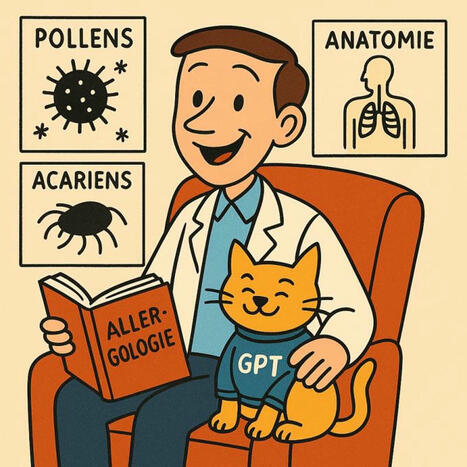
https://lnkd.in/eF54n794 Intelligence artificielle et allergologie : où en est on? (Pour les Parisiens je fais demain soir une intervention sur le sujet avec Paris-Allergie merci à Marmouz Farid Christian MARTENS
|
|
Scooped by
Gilbert C FAURE
August 28, 2:36 PM
|
Scoop.it!
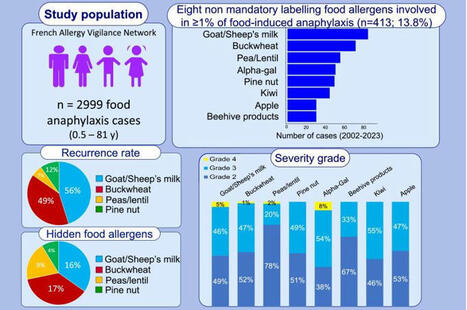
#allergies Le réseau d'allergovigilance souhaite rendre obligatoire, en Europe, la déclaration de quatre allergènes alimentaires émergents supplémentaires, sur la base d'une étude rapportée dans APMnews en décembre 2023, publiée dans Clinical & Experimental Allergy
https://lnkd.in/erY6v8_M?
|
|
Scooped by
Gilbert C FAURE
July 30, 4:30 AM
|
Scoop.it!
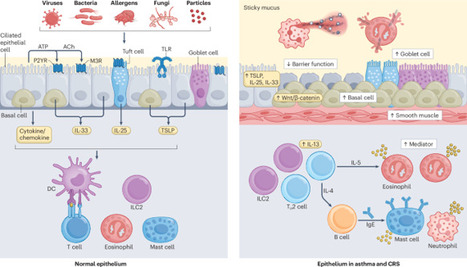

Asthma and chronic rhinosinusitis (CRS) are common chronic inflammatory diseases of the respiratory tract that have increased in prevalence over the past five decades. The clinical relationship between asthma and CRS has been well recognized, suggesting a common pathogenesis between these diseases. Both diseases are driven by complex airway epithelial cell and immune cell interactions that occur in response to environmental triggers such as allergens, microorganisms and irritants. Advances, including a growing understanding of the biology of the cells involved in the disease, the application of multiomics technologies and the performance of large-scale clinical studies, have led to a better understanding of the pathophysiology and heterogeneity of asthma and CRS. This research has promoted the concept that these diseases consist of several endotypes, in which airway epithelial cells, innate lymphoid cells, T cells, B cells, granulocytes and their mediators are distinctly involved in the immunopathology. Identification of the disease heterogeneity and immunological markers has also greatly improved the protocols for biologic therapies and the clinical outcomes in certain subsets of patients. However, many clinical and research questions remain. In this Review, we discuss recent advances in characterizing the immunological mechanisms of asthma and CRS, with a focus on the main cell types and molecules involved in these diseases. In this Review, Kato and Kita discuss the complex interactions between airway epithelial cells and immune cells that contribute to the development of asthma and chronic rhinosinusitis. They highlight recent advances in understanding the clinical heterogeneity of these diseases and explain the progress that has been made in developing new therapies.
|
|
Scooped by
Gilbert C FAURE
July 19, 8:06 AM
|
Scoop.it!
Type 2 #allergic #respiratory diseases are driven by a coordinated immune response that begins with epithelial cell activation and alarmin release, triggering innate lymphoid cells, dendritic cells, and macrophages, ultimately directing adaptive immune responses involving Th2 cells and IgE-producing B cells. Type 2 cytokines orchestrate the recruitment and activation of eosinophils, mast cells, and basophils, perpetuating inflammation and disrupting the epithelial barrier. Although biologic therapies targeting IL-4/IL-13, IL-5, and IgE pathways have demonstrated broad efficacy, the lack of response in some patients with severe disease highlights the need for more tailored, precision-based treatment approaches.
|
|
Scooped by
Gilbert C FAURE
Today, 6:47 AM
|
Scoop.it!

This is one paper to bookmark. This group is the international leader in antimicrobial allergy stewardship. Structured approach to delabeling and/or referral combined with simple and effective tools.
|
|
Scooped by
Gilbert C FAURE
December 13, 9:05 AM
|
Scoop.it!

The era of avoidance is over. Dr William Basco explains why early exposure is the new prevention and offers a protocol for introducing allergens at the 4- to 6-month mark.
|
|
Scooped by
Gilbert C FAURE
December 7, 3:54 AM
|
Scoop.it!

An anti-allergy vaccine protects mice from anaphylaxis for as long as one year, mRNA-ferrying nanoparticles treat fatty liver disease in animals and potentiate immunotherapy against liver tumors, and more this week in #ScienceTranslationalMedicine.
https://scim.ag/4pitecZ
|
|
Scooped by
Gilbert C FAURE
November 18, 4:27 AM
|
Scoop.it!

📢 Des algorithmes décisionnels sont disponibles dans votre espace ressources !
Pour accompagner les professionnels de santé dans leurs pratiques, nous mettons à disposition des algorithmes destinés à faciliter les démarches diagnostiques et thérapeutiques. Ces outils sont accessibles au fur et à mesure, enrichissant progressivement notre sélection.
En tant que membres de la SFA, n’hésitez pas à les consulter régulièrement. Pour profiter de ces ressources pratiques, rendez-vous sur notre site internet : https://lnkd.in/dwSN_Fqe
🔐 Pas encore membre ? Rejoignez la communauté pour bénéficier de l’ensemble des contenus : https://lnkd.in/d6-Hqdmr
#allergologie #allergies #algorithmes #adhesion
|
|
Scooped by
Gilbert C FAURE
October 2, 2:42 AM
|
Scoop.it!
✨✨✨ Nous sommes très heureux d’annoncer la publication des résultats de #AllergenChipChallenge dans la prestigieuse revue Journal of Allergy and Clinical Immunology https://lnkd.in/e_Mn4c73
Ce projet est le fruit d’un travail collectif remarquable, qui a rassemblé cliniciens, biologistes, data scientists et chercheurs autour d’un objectif commun : mieux comprendre et interpréter les données issues des puces à allergènes et de générer par #MachineLearning un #algorithme de prédiction des #allergies à partir d'un profil d'IgE et de données cliniques.
La base de données et l'algorithme sont en libre accès au bénéfice de la recherche et des patients allergiques.
Un grand merci 🙏 à Joana Vitte et Pascal Demoly pour avoir initié ce passionnant projet, la Société Française d'Allergologie - SFA, AllergoBioNet, Health Data Hub et Bpifrance pour leur soutien déterminant, ainsi qu’à toutes celles et ceux qui ont contribué à rendre cette aventure possible Guillaume Martinroche Amir Guemari Pol André APOIL Isabella Annesi-Maesano Eric Fromentin @Laurent Guilleminault Davide Caimmi Caroline Klingebiel @Céline Beauvillain Alain Didier Jeremy Corriger Lauriane Armand Agathe Delaune Trustii.io Naama BAK CHU de Bordeaux.
➡️ Ces avancées montrent la puissance de la collaboration et de l’ouverture des données pour faire progresser la recherche en allergologie et au-delà. Le projet continue.
#OpenData #Database #Allergie #Allergologie #Allergy #Immunologie #Recherche #IA #MachineLearning #SFA #GTESIA
|
|
Scooped by
Gilbert C FAURE
October 1, 10:12 AM
|
Scoop.it!

The report updates the AAP’s 2010 guidance and emphasizes a proactive role for pediatricians in collaborating to manage student food allergies.
|
|
Scooped by
Gilbert C FAURE
September 27, 5:56 AM
|
Scoop.it!
➡️ Le CNPA a finalisé l’actualisation du Référentiel Métier d’Allergologue.
Ce travail initié sous la présidence du Dr Sébastien LEFEVRE précise les compétences et missions de l’allergologue, sa place dans le parcours de soins du patient, ses liens avec les autres spécialités et professionnels de santé.
✅ L’Allergologie se structure pour répondre aux enjeux actuels, en particulier l’augmentation de la prévalence et de la sévérité des allergies.
Ce document témoigne de l’expertise médicale et de l’engagement de notre spécialité.
Merci à toute l'équipe de rédacteurs coordonnée par LEZMI Guillaume et celle des relecteurs coordonnée par Edouard Sève.
Bonne lecture !
|
|
Scooped by
Gilbert C FAURE
August 31, 9:17 AM
|
Scoop.it!

Glad to have contributed to this international 🌎🌍🌏effort to update the #Classification and #Diagnosis of #NSAIDs 💊 #Hypersensitivity
Available: https://lnkd.in/gWQtqFAN

|
Suggested by
LIGHTING
August 11, 4:46 AM
|
Scoop.it!

Aujourd’hui, je vais vous parler de la rhinite allergique.
« Non mais arrête, il a juste un rhume ! ». C’est vrai que cela peut paraître banal, sans intérêt, même les médecins ont tendance à banaliser le « rhume ». Un nez qui coule, un nez bouché, des éternuements ? Rien de bien méchant…ça encombre les consultations des médecins traitants qui ne savent souvent pas quoi en faire… Et pourtant…nombre de ces « rhumes » sont en réalité des rhinites allergiques et les négliger ce n’est pas vous (…) , actualités des allergies : publications scientifiques lues et analysées pour vous, annonce et compte-rendus d'événements sur les allergies.
|
|
Scooped by
Gilbert C FAURE
August 1, 3:34 AM
|
Scoop.it!

Nous avons uni notre expertise à celle de la SFAR pour co-construire un référentiel commun dédié au diagnostic et à la prise en charge des réactions d’hypersensibilité immédiate (HSI) en contexte périopératoire.
Découvrez quelques messages clés ci-dessous ou accédez à la ressource ici : https://lnkd.in/eKmfa9sj
|
|
Scooped by
Gilbert C FAURE
July 28, 9:48 AM
|
Scoop.it!

Have you already thought about how #terminology can influence #practice and #epidemiology? Here is a publication in #JAHD ❣️as a good example
#OccupationalHypersensitivity #HypersensitivityPneumonitis 🐦🐦⬛
|
|
Scooped by
Gilbert C FAURE
July 15, 10:42 AM
|
Scoop.it!
🚨 La T2A (Tarification à l’activité) a profondément transformé notre système de santé, mais pas toujours pour le mieux.
Résultat ? Des services d’urgence surchargés, souvent mobilisés pour des cas bénins ou des demandes sociales, faute d’outils accessibles pour comprendre les symptômes en amont.
Chez BrightNTech.AI, nous pensons qu’il est urgent d’outiller la population générale avec des assistants éthiques, capables de décoder les signaux du corps et de réorienter intelligemment vers le bon niveau de soins.
💡 C’est le rôle d’AllergIA™, notre assistant IA spécialisé en allergologie et immunologie :
✅ Analyse interactive des symptômes
✅ Aide à différencier allergies, intolérances, et autres causes
✅ Préparation d’un résumé structuré pour le pharmacien ou médecin
✅ Surtout : ne remplace jamais le diagnostic médical mais facilite un accès éclairé aux soins
📍 Ne pas saturer les urgences pour une “bobologie” n’est pas un jugement. C’est une urgence systémique. Il faut des ponts intelligents entre la technologie, le soin, et les citoyens.
👉 Découvrez #AllergIA™ ici :
https://lnkd.in/eXy5FGZ7
🔐 Développé dans le respect strict du RGPD, de l’éthique médicale et des normes européennes (MDR Class I - non diagnostic).
📋 En savoir plus sur notre approche de conformité et de santé publique : BrightNTech.AI





