Covering the last 90 days

History

History is active here as a set of arguments about authority, evidence and memory. In the last 90 days, selections have moved from UN reform and parliamentary diplomacy to Ancient Greece, Islamic scholarship, immunology pioneers, street lighting and dynastic records from Egypt and Babylonia.

The area is fed by 23 curators across 36 topics. Some maintain classroom collections for primary and secondary history. Others follow specialist lines: public lighting, the history of immunology, Ancient Greece, World War II and the Holocaust, Indigenous rights, archaeology and institutional history.

What is moving now is not one period but a pattern. Posts frame institutions as needing reinvention, treat modern crises as historical sequences, and return to ancient and medieval worlds through sites, records, scholars and technologies that still shape how the past is explained.

Key figures

  • 36 topics
  • 23 curators
  • 403971 views
  • October 5, 2026 last activity

Cross-cutting issues

1

Can multilateral institutions renew their authority in public?

Recent selections treat UN reform, high-level diplomacy and parliamentary action as parts of one unresolved legitimacy problem.
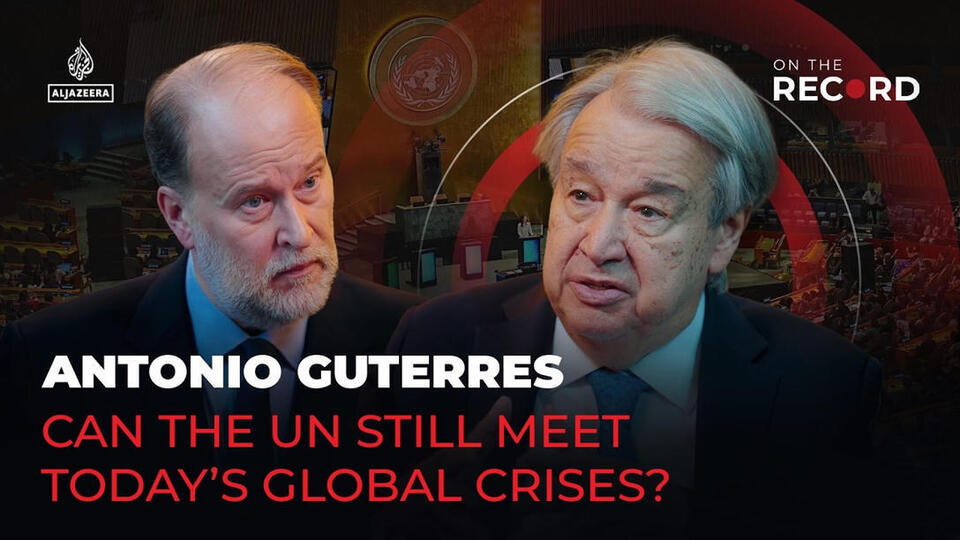
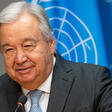
Antonio Guterres: Can the UN still meet today’s global crises? youtube.com

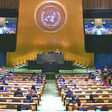
The topic UNGA, IPU, PAP, PARLIAMENTS follows institutional language closely. Its recent selections include a General Assembly president saying the United Nations must be urgently reinvented, another opening a session by calling a revitalized Assembly the route to a better future, and official activity around the 81st UNGA High-Level Week.

History resources for Teachers adds a public-facing pressure point. A video on whether Antonio Guterres can still make the UN meet today’s global crises brings the legitimacy question into a classroom-friendly format, where the institution is judged against visible wars, emergencies and stalled diplomacy.

The IPU posts widen the frame beyond the UN’s main chamber. Conversations about parliamentary action and a closing speech at the 152nd IPU Assembly place parliamentary diplomacy beside General Assembly reform, suggesting that the debate is not only about procedures but about who gets heard.

Taken together, the posts show multilateral history being written in real time. Reform is not treated as a technical update; it is presented as a test of whether postwar institutions can still organize dialogue under current pressure.

Further reading
2

Crisis history is stretching from civil war to space weapons

The current mix links classroom crisis timelines with infrastructure history, making upheaval appear as both event and environment.

Electric Moons: Lighting Los Angeles youtube.com

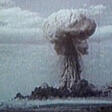
History resources for Teachers is moving through crisis as a sequence. Its recent videos jump from the English Civil War to the nuclear age, 9/11, the Russia-Ukraine war, warnings over weapons in space and a possible remaking of the old world order.

This approach makes period boundaries feel porous. A lesson on 1644 sits beside accounts of 1945-55 and current great-power rivalry, encouraging readers to see civil conflict, nuclear deterrence, terrorism and alliance-building as connected forms of political rupture.

Lighting in history brings in a different kind of transformation. Electric Moons: Lighting Los Angeles turns public lighting into a social and urban history, showing how infrastructure can also mark a modern break in how people live, move and govern at night.

The convergence is not that all change is catastrophe. It is that history topics are selecting stories where systems shift under pressure, whether through war, technology, surveillance, energy or public space.

Further reading

Curators to follow

  • Gilbert C FAURE

    This maintainer follows the history of immunology through pioneers, concepts and scientific lineages, including posts on Hilleman, Metchnikoff and Tonegawa.

  • LIGHTING

    This maintainer follows the history of street and public lighting, including recent material on electric lighting and Los Angeles.

  • KRII-KROTOASA RESEARCH-INTENSIVE INSTITUTE

    This maintainer tracks UNGA, PAP and IPU material through official institutional posts, high-level week updates and parliamentary diplomacy.

  • Andrew van Zyl

    This maintainer selects teacher-facing history videos on institutions, wars, nuclear politics, 9/11 and current geopolitical rivalry.

  • Michael Shepherd

    This maintainer follows Ancient Greece through archaeological discoveries and practical site-focused material for readers interested in visiting the past.

  • eBrand Me

    This maintainer selects recent material on ancient dynasties, Egyptian queens, Babylonia and royal annals.

Frequently asked questions

What does the History subject area cover on Scoop.it?

The History area brings together 36 topics selected by Scoop.it users. It ranges from ancient dynasties, Ancient Greece and Islamic scholarship to immunology, street lighting, World War II, Indigenous rights, Australian classroom history and multilateral institutions such as the UNGA, IPU and PAP.

Is this mainly a collection of history teaching resources?

Many topics are built for teachers, but the area is broader than classroom use. It includes teacher resources on primary history, World War I, the Industrial Revolution and British colonisation, alongside specialist topics on archaeology, immunology history, lighting, dynasties and contemporary institutional history.

What is currently moving in these History topics?

Recent selections emphasize living debates about the past: UN reform, high-level diplomacy, crisis timelines, Islamic knowledge transmission, Ancient Greece as a place to visit and uncover, and dynastic records from Egypt and Babylonia. The corpus covers the last 90 days and shows activity through 2026-10-05.

How should I judge the sources gathered here?

The sources are mixed. The most quoted include youtube.com, linkedin.com, samirabbasi83.blogspot.com, ipu.org and beyouteous.com, along with official or specialist sources such as press.un.org, au.int and archaeologymag.com. Readers should treat this page as a map of selected material, not as a single vetted bibliography.

Can I find primary sources and classroom-ready material here?

Yes. Several education topics point to primary sources, digitized materials, museum resources, encyclopedia entries and classroom inquiry tasks. Examples include World War I resources, Australian curriculum topics on colonisation and nationhood, Holocaust reference materials, and primary history topics built around historical investigation.

Who adds material to these History topics?

The page reflects contributions from 23 curators maintaining topics in this subject area. Some follow one specialist area, such as immunology history or lighting, while others maintain multiple history topics. Recent activity is especially visible around dynasties, immunology, UN institutions, Ancient Greece and teacher-facing video history.

Most quoted sources

  • youtube.com 5
  • linkedin.com 2
  • samirabbasi83.blogspot.com 1
  • ipu.org 1
  • beyouteous.com 1
  • data.ipu.org 1
  • lawrencejeanlouis.medium.com 1
  • archaeologymag.com 1
  • au.int 1
  • creators.spotify.com 1

This page was written by an AI from the public curation of Scoop.it topics. The posts, topics and curators it cites are real and linked directly.

Updated on October 6, 2026