Your new post is loading...

|
Scooped by
Gilbert C FAURE
February 10, 4:12 AM
|
In 1940, Karl Landsteiner made a discovery in his lab at Rockefeller with huge implications: his research revealed the Rh factor—an antigen on the surface of red blood cells that can cause severe complications during pregnancy.
If an Rh-negative pregnant woman has an Rh-positive fetus, her body may generate antibodies against the blood of the fetus. Thus, Landsteiner’s work at the university paved the way for screening tests and interventions, which today include the Rh factor shot inhibiting antibody formation, greatly improving the safety of many pregnancies.
Earlier in his career, Landsteiner's research on antibodies had led him to the simple but profound insight that not all human blood was the same; in fact, there were at least three major blood types, which he coined A, B, and C (later changed to O; the fourth type, AB, was found a year later).
He observed that when different blood types were mixed, they essentially had an allergic reaction to each other that released lethal toxins into a person’s bloodstream. This knowledge vastly improved the safety of transfusions and surgeries—from tonsillectomies to organ transplants.
While at Rockefeller, Landsteiner was awarded the Nobel Prize in 1930.
Throughout 2026, Rockefeller University is celebrating our 125th anniversary. Follow along as we share our top 25 discoveries, which have transformed science and the course of human health.
#125YearsofRockefeller
|
|
Scooped by
Gilbert C FAURE
December 18, 2025 4:50 AM
|
Major advances in metagenomic and biomolecular techniques have opened avenues for the recovery and sequencing of rare and highly fragmented DNA molecules from ancient biological samples, including those of pathogens that may persist in the remains of infected hosts long after their death. Initially consisting of relatively rare findings for a few disease-causing agents of historical importance, the field of ancient pathogen genomics is rapidly progressing towards genome-level analyses of larger sample sets encompassing a wider range of bacterial, viral and eukaryotic taxa. These advances have provided important insights into past pathogen distribution and genomic make-up, and the unprecedented opportunity to track their evolution ‘in action’ over large timescales. In this Review, we explore the major contributions of ancient DNA research to the understanding of pathogen evolution and its association with past epidemics, as well as human sociocultural and migration history, including numerous important studies that have been published in recent years. Moreover, we discuss existing limitations and future prospects of ancient pathogen genomics and the relevance of the field to current public health challenges. In this Review, Kocher, Krause and Spyrou explore how ancient pathogen genomics is providing new perspectives on the history and evolution of infectious agents. They show how ancient DNA has revealed the aetiology and unfolding of historic outbreaks, pathogen evolutionary timescales, patterns of dissemination and functional evolution, and discuss existing limitations and perspectives of the field.
|
|
Scooped by
Gilbert C FAURE
December 6, 2025 2:29 AM
|
There is a lot about the Dec 4-5 ACIP meeting that is disinformative, but after the presentation of lawyer Aaron Siri (you may have read about him before, how he petitioned the FDA in 2022 to revoke the polio vaccine), I wanted to share a story from the past about diphtheria.
Diphtheria was known as the "strangling angel" of children. It causes a thick membrane to form in the throats of the infected, suffocating them. In 1890, a therapy became possible (and was the basis of the first Nobel prize). The disease is caused by a bacterial toxin, and by injecting that toxin into horses, an antiserum could be harvested and used to treat patients, which brought the mortality down from about 50% to 10%. (Mr. Siri was showing data that diphtheria mortality fell long before the vaccine was widely available in the 1930's-- he didn't mention the antitoxin, but this is why.)
In 1925, a devastating diphtheria epidemic hit Nome, a remote town in Alaska. Five children died, dozens more were ill, and many more were vulnerable. The sparse medical team quickly ran out of the expired diphtheria antitoxin they had on hand. Air delivery of more was not possible because of the gale force winds and temperatures colder than -45°F. So, a relay was set up for teams of sled dogs to deliver the serum from Nenana to Nome, covering 674 miles in just over 5 days, a week faster than was thought possible, and the epidemic was brought under control.
The rescuers—mushers and dogs, who suffered from frostbite after the ordeal—became national heroes. Balto, the lead sled dog for the final delivery of the serum, is commemorated with a statue in New York City’s Central Park, (a move that was protested at the time by “serum foes” who insisted against evidence that the antitoxin didn’t work to stop disease). Though Togo was the head sled dog for the longest and most difficult part of the journey, he was less revered at the time, but this historical oversight has been recently corrected with a statue in NYC’s Seward Park.
Diphtheria should have remained in the past. We have the tools so that no one should have to suffer such loss. Instead, outbreaks are increasing in frequency.
|
|
Scooped by
Gilbert C FAURE
November 29, 2025 4:40 AM
|
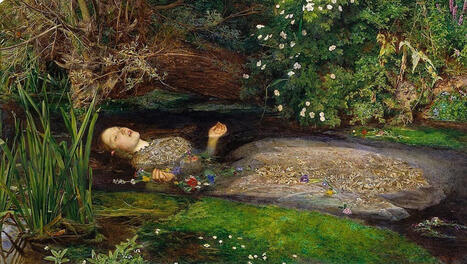
Dying for beauty: Tuberculosis (TB) shaped the Romantic ideal—delicate, ethereal and tinged with mortality. Examine how TB influenced Romantic Period fine arts and how that influence is felt today.
|
|
Scooped by
Gilbert C FAURE
November 9, 2025 3:58 AM
|
In 1900, 40% of children died before age five, and that number is now 3%. Since that time infant mortality has also dropped from 157/1000 to 5/1000. The most common killers of children in 1900? Infectious diseases.
That same year, the adult life expectancy was 47, and now is 78. Why the additional 30 years? Mostly advancements in public health as well as immunizations and other modern medicines.
Sure... eat a more natural diet with fewer processed foods and additives. But if you ignore the advances of modern medicine such as vaccines and other medicines you put your life and the lives of innocent children at unnecessary, premature risk.
#vaccinesandpublichealthadded30yrslife
|
|
Scooped by
Gilbert C FAURE
October 15, 2025 4:34 AM
|
Many thanks Joachim! Great NK day indeed!
|
|
Scooped by
Gilbert C FAURE
October 7, 2025 4:26 AM
|
|
|
Scooped by
Gilbert C FAURE
September 15, 2025 4:17 AM
|
|
|
Scooped by
Gilbert C FAURE
September 6, 2025 7:25 AM
|
💉✨ In 1967, a needle-free injection method called the jet injector was widely used for mass vaccinations.
This device delivered vaccines through a high-pressure stream that penetrated the skin without a traditional needle. ✅
🌍 It played a big role in large immunization drives like the smallpox eradication campaign, helping healthcare workers vaccinate hundreds of people quickly.
⚠️ However, safety concerns arose later — improper sterilization between uses sometimes led to the spread of bloodborne diseases. By the 1990s, most jet injectors were replaced with safer single-use needles.
🚀 Today, new and safer needle-free systems are being developed again!
#healthhistory #vaccination #jetinjector #needlefree #medicalinnovation #publichealth #medicalhistory #healthcare #doctorknowledge #diseaseprevention #doctorpreneur #healthfacts
|
|
Scooped by
Gilbert C FAURE
September 4, 2025 8:23 AM
|
How the measles virus was trapped and tamed in vaccinology’s wild West.
|
|
Scooped by
Gilbert C FAURE
August 12, 2025 7:51 AM
|
The scientists who fought pertussis, and what they lost before they won.
|
|
Scooped by
Gilbert C FAURE
August 11, 2025 2:18 PM
|
Timeline of major research and development milestones related to the microbiome
Here’s a snapshot of how we got from Antonie van Leeuwenhoek’s first look at microbes to the "multi-omics era" shaping personalized medicine today:
📜 1670s – Antonie van Leeuwenhoek observes microorganisms for the first time.
🌱 1729 – Pier Antonio Micheli pioneers fungal classification.
🦠 1880s–1900s – Robert Koch formalizes germ theory; Alfred Nissle isolates the first probiotic E. coli strain.
💊 1928 – Alexander Fleming discovers antibiotics.
🧫 1958 – Ben Eiseman reports success with fecal microbiota transplants (FMT) in treating C. difficile.
🧪 1972 – First germ-free mice raised to study host–microbe interactions.
🧬 1995 – First complete bacterial genome sequenced (Haemophilus influenzae).
🌍 2007 – Human Microbiome Project launched.
🔄 2013 – FMT enters modern clinical practice for recurrent C. difficile.
🧠 2016–2020 – Studies link microbiota to cancer therapy response, depression, and gut–brain signaling.
🧷 2022 – Metagenome-assembled genomes expand our catalog of microbial diversity; dietary flavonoids shown to alleviate depressive symptoms.
https://lnkd.in/gqrz3nUD
|
|
Scooped by
Gilbert C FAURE
August 9, 2025 8:28 AM
|
Happy 100th birthday to my PhD advisor Jack Leonard Strominger!!! 100 years of life. 74 years of running a lab. Words cannot describe how much of an inspiration you are to me and so many others. Carpe diem!
|
|
|
Scooped by
Gilbert C FAURE
January 26, 6:23 AM
|
|
|
Scooped by
Gilbert C FAURE
December 7, 2025 4:24 AM
|
- 👀Cette photo montre l'un des moments les plus incroyables de la médecine qui me donne la chair de poule à chaque fois.
- 📖Nous sommes en 1922 et nous nous trouvons dans un endroit triste, un endroit qui a vu des milliers de vies d'enfants se terminer au cours des derniers mois et années. Jusqu'à ce jour incroyablement poignant où des scientifiques de l'université de Toronto 🇨🇦 se sont rendus dans un centre hospitalier où des enfants gisaient dans le coma, mourant en rangs serrés d'une acidocétose diabétique.
- 🥺Imaginez une pièce remplie de parents assis désespérément au chevet de leur enfant, attendant la mort inévitable.
- 😳Et à ce moment-là, deux hommes sont allés de lit en lit pour injecter aux enfants un nouvel ingrédient actif appelé « Insuline d'extrait purifié ». Et au moment où ils injectent le dernier enfant comateux, le premier enfant commence à se réveiller. Puis un par un, ils se réveillent de leur coma diabétique.
- 🫶🙏Une pièce de mort, de désespoir et d'obscurité est devenue un lieu d'espoir et de joie euphorique en quelques minutes, qui a permit et qui continue de sauver des milliers de vies chaque jours .
- 🤩Merci pour cette incroyable réussite à toutes les équipes des « Dr. Banting et Dr.Best et le découvreur de l'insuline Nicolae Paulescu »
#horror #diabet #diabetes #diabetic #insuline #sucre #enfant #découverte #sauverdesvies #merci | 27 comments on LinkedIn
|
|
Scooped by
Gilbert C FAURE
December 5, 2025 7:08 AM
|
|
|
Scooped by
Gilbert C FAURE
November 10, 2025 5:05 AM
|
In the 1700's, smallpox was common in Europe's crowded cities. As a result, most Europeans contracted it in childhood. Those who survived were immune to the disease. Because vaccines had not yet been discovered, this observation led to the risky but effective practice of inoculation, a procedure that involved deliberately introducing pus from a smallpox patient into the skin of an uninfected individual. The disease that followed was sometimes difficult, but much less likely to be fatal than natural infection. Once the inoculated individual recovered, they had lifetime immunity to smallpox.
"In 1736, Benjamin Franklin’s 4-year-old son “Franky” died of smallpox. Because Franklin was a well-known advocate of inoculation, rumors swirled that it had caused Franky’s death. In response, the grieving father wrote the following in his newspaper, the Pennsylvania Gazette.
'Inasmuch as some People are, by that [rumor] ... deter’d from having that Operation perform’d on their Children,' he wrote, 'I do hereby sincerely declare, that he was not inoculated, but receiv’d the Distemper in the common Way of Infection...I intended to have my Child inoculated as soon as he should have recovered sufficient Strength from a Flux [diarrhea] with which he had been long afflicted.'
In Franklin’s diary, published posthumously, he wrote that he 'long regretted bitterly' his decision to wait." (essay below)
Today, vaccines are vastly safer than inoculation, yet highly effective. No parent should have to bear the grief and guilt Benjamin Franklin carried throughout his life. The best way to avoid that is to follow the American Academy of Pediatrics guidance and have your children vaccinated against deadly, disabling, and preventable childhood diseases.
#AAP #VaccinesWork #Prevention
https://lnkd.in/eMVj4qeq
|
|
Scooped by
Gilbert C FAURE
October 26, 2025 4:05 AM
|
ASM names the University of Pittsburgh a “Milestones in Microbiology” site, honoring Jonas Salk and his team's work in developing the first safe and effective polio vaccine.
|
|
Scooped by
Gilbert C FAURE
October 13, 2025 2:31 AM
|
COVID death toll… the USA represents 4.2% of the world population… And much more in terms of COVID deaths. Sadly..
|
|
Scooped by
Gilbert C FAURE
September 19, 2025 3:23 AM
|
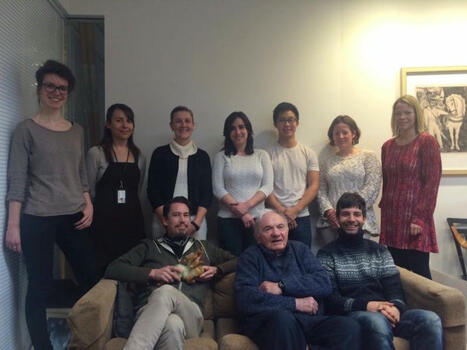
Ravie de partager avec Christine Berton quelques grands moments de l’épopée de la vaccination.
Cela marque le début de notre aventure commune, une idée un peu folle que nous n’avons pas manqué d’avoir avec Elisabeth Botelho-Nevers et la rotonde École des Mines de Saint-Étienne: une expo autour de la vaccination.
On commence par la plongée historique avant de foncer vers les innovations.
Institut PRESAGE (PREvention SAnté GlobalE) CHU de Saint-Etienne Université Jean Monnet Saint-Etienne
|
|
Scooped by
Gilbert C FAURE
September 7, 2025 5:51 AM
|
After 6,000 people died from whooping cough in 1932, three extraordinary women stepped forward to confront this deadly disease. The three women -- scientists Pearl Kendrick and Grace Eldering and their research assistant Loney Clinton Gordon -- who developed a vaccine for pertussis, also known as whooping cough, became public health legends who were honored with this sculpture at the Michigan State University Research Center.
With thousands of children dying annually from the disease -- more than from diphtheria, scarlet fever, tuberculosis, or polio -- "it’s difficult to explain just how desperate people were for a [whooping cough] vaccine at this time,” says historian Carolyn Shapiro-Shapin. When their vaccine was ready for field testing in 1934, parents volunteered their children in droves, hoping to protect them from the horrors of the deadly "100 day cough." It's estimated that today, the vaccine saves half a million lives annually.
To introduce today's kids to what used to be a common childhood disease prior to vaccinations, polio, we highly recommend the books "Blue" (https://lnkd.in/e-ghmhjz) and "Small Steps: The Year I Got Polio" (https://lnkd.in/eRynBQ5U), both for ages 9 and up
To introduce children to more pioneering women of public health, we highly recommend "Dr. Jo: How Sara Josephine Baker Saved the Lives of America's Children" for ages 5 to 9 (https://lnkd.in/e9gtwC8z) and "Never Give Up: Dr. Kati Karikó and the Race for the Future of Vaccines" for ages 6 to 9 (https://lnkd.in/ej5ywtbe)
For a fun picture book about a young rabbit who discovers the cure to a mysterious malady sickening her forest friends, check out "Charlotte the Scientist Finds A Cure" for ages 4 to 8 at https://lnkd.in/ekh7t3q7
There is also an excellent book about 21 trailblazing women in medicine, “Bold Women of Medicine" for ages 12 and up at https://lnkd.in/eG48smqb
For more children's books about pioneering women of science, visit our blog post, "60 Children's Books to Inspire Science-Loving Mighty Girls," at https://lnkd.in/ei9c2WKT
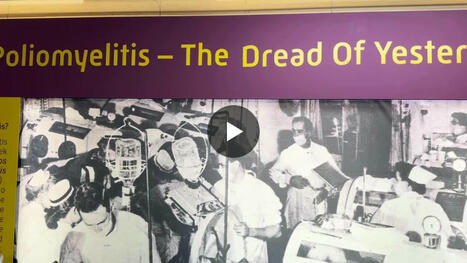
I shot this video at a history of polio museum in Joburg, South Africa at the University of the Witwatersrand
This is how dreadful things were before mass vaccination made this disease disappear
If quacks like RFK Jr had their way, we could see the return of polio!!
|
|
Scooped by
Gilbert C FAURE
August 12, 2025 7:52 AM
|
There should be billboards, social media posts, and advertisements on television and the Internet to remind us all what this looks like. Given what’s going on in the anti-VAX movement, this could easily happen again.
|
|
Scooped by
Gilbert C FAURE
August 12, 2025 2:10 AM
|
Despite centuries of examples, long-term maladies after flu and other viruses remain absent from mainstream policy
|
|
Scooped by
Gilbert C FAURE
August 11, 2025 4:41 AM
|
|