


Over the last couple of months I've found and written about a number of really great tools and resources to help improve our students' writing skills. This is a collection of links to reviews of ten of the best.
Via Nik Peachey, Jim Lerman

 Your new post is loading...
 Scoop.it! Over the last couple of months I've found and written about a number of really great tools and resources to help improve our students' writing skills. This is a collection of links to reviews of ten of the best. Via Nik Peachey, Jim Lerman 
Scoop.it!

Nik Peachey shares a few tools and tasks that you can use to help your students develop their ability to create their own stories through digital media. Via Nik Peachey, Jim Lerman

Presenters's curator insight,
October 5, 2017 11:18 AM
Una pequeña y breve entrada sobre cuatro herramientas para construir historias de forma más dinámica y visual
Scoop.it!
The good news is there is an abundance of multimedia resources available that support the creation and sharing of student storytelling products. This short list of tools and teaching suggestions can help educators integrate a variety of writing activities into their instructional designs. All are what I call Push / Pull tools, which teachers use to push content out to students and which students can also use to create content that teachers pull back in.
Scoop.it!

Free resource of educational web tools, 21st century skills, tips and tutorials on how teachers and students integrate technology into education Via Dr. Tom D'Amico (@TDOttawa)
Scoop.it!

We must represent ourselves and what we stand for accurately. At any hint of duplicity, relationships immediately go south. Those of us who are called to teaching have an internal compass that leads us to our core values and beliefs. It is key to remain true to ourselves while also finding mutual understanding with others. The struggle is figuring out how to keep our "true north," while creating an environment where others can do likewise. Even teachers who are staunch Republicans and Democrats can successfully work together if they focus on their shared values instead of becoming divided over their differences.
Scoop.it!

A blog about the use of educational technology in language learning and teaching Via Ana Cristina Pratas, Jim Lerman
Scoop.it!
Description by EdSurge
"Educator Glenn Wiebe says “there is an abundance of multimedia resources available that support the creation and sharing of student storytelling.” In this piece, he spotlights three teachers and the tech tools they are using to incorporate video, virtual reality and digital timelines into writing instruction."
Scoop.it!

"As a 6th grade writing teacher, I used peer editing to help students find voice in the editing process and decide for themselves and with each other what needed adjusting and enhancing in their writing process.
Scoop.it!

Art Teachers: This was made for y'all. Depending on where you are in your curriculum, pen-and-ink might not be the kind of exercise you'd do as a formal classroom assignment, but it could still be a great way to stretch your students. I know some artists who design a character (an alien? a pumpkin?) or pick a character to draw doing all of the #Inktober prompts. How would you have your alien doing "Swift?" "Squeak?" "Cloud?" "Mysterious?" ...or have them pick a favorite universe to draw in. Harry Potter, Star Wars, Adventure Time -- and have them still do the #Inktober prompts
Jim Lerman's insight: These prompts are excellent for writing as well. Via John Evans, Jim Lerman
Scoop.it!

"The purpose of this study is to examine the effect of Digital Storytelling (DST) on the (a) academic achievement, (b) attitude towards physics and (c) self efficacy perception of secondary school students. This study consists of an experimental group and a comparison group which are formed by equal number of students. The six-weeks study adopted a pretest and posttest experimental design involving 64 students in two physics classes taught by the same teacher. Digital story telling was additionally applied in experimental group. Nonparametric Tests have been used in the data analysis. Our findings indicate that DST participants performed significantly better than comparison group participants in terms of physics achievement. While in comparison group students‟ self-efficacy perceptions and attitudes toward physics decreased, in experimental group there was not any difference. "
Jim Lerman's insight: Positive impact of Digital Storytelling on high school physics students! Via THE OFFICIAL ANDREASCY, Jim Lerman

THE OFFICIAL ANDREASCY's curator insight,
March 4, 2017 2:06 AM
Digital storytelling is incredibly popular given the proliferation of new technologies. This paper discusses its use from the perspective of secondary students’ academic achievement, attitudes towards physics and self-efficacy perception. The findings from the experimental pretest and posttest design elicited important insights. DST participants seemed to benefit in terms of their physics performance. Students’ self-efficacy perceptions and attitudes towards physics did not show alteration for the experimental group.
Overall it appears that digital storytelling has a positive effect on learning and therefore more research is needed to explore and contribute to the field specifically in relation to critical, reflective and creative thinking and learning motivation and students’ engagement. 
Gemma Ballarín's curator insight,
March 4, 2017 3:25 PM
Digital Storytelling on Secondary School Students' Academic Achievement
Scoop.it!

This paper uses a case study of the drawings, early writings and imaginative role play of two children to illustrate how children use a variety of modes to make meaning in ways that are creative and beyond the design and expectation of adults. It aims to valorise the kinds of practices in which children routinely engage but which are often overlooked and de-valued by adults, both parents and teachers. Via THE OFFICIAL ANDREASCY, Jim Lerman
THE OFFICIAL ANDREASCY's curator insight,
July 26, 2017 5:46 AM
Creativity and multimodal ways of expression among children are the core concepts explored in this article, through undertaking a case study approach to children’s drawings, early writings and imaginative role play. It is impressive how children's multimodal literacy practices are creative beyond our imagination as adults. The authors' conceptualizations and interpretations of their findings are based on social semiotic theories, multimodal pedagogies and cognitive accounts of children's drawings. Interesting read! 
Andreas Christodoulou's curator insight,
July 26, 2017 6:06 AM
Interpreting children's drawings, written and oral text through a multimodal meaning making framework of thought.

Stephania Savva, Ph.D's curator insight,
July 26, 2017 5:31 PM
Exploring multimodal meaning making in children's drawings, play and writings.
Also of interest my thesis on multiliteracies and technology- enhanced, museum learning practices:
Scoop.it!

In order to meet writing objectives specified in the Common Core State Standards (CCSS), many teachers need to make significant changes in how writing is taught. While CCSS identified what students need to master, it did not provide guidance on how teachers are to meet these writing benchmarks. The current article presents research-supported practices that can be used to meet CCSS writing objectives in kindergarten to grade 8. We identified these practices by conducting a new meta-analysis of writing intervention studies, which included true and quasi-experiments, as well as single-subject design studies. In addition, we conducted a meta-synthesis of qualitative studies examining the practices of exceptional literacy teachers. Studies in 20 previous reviews served as the data source for these analyses. The recommended practices derived from these analyses are presented within a framework that takes into account both the social contextual and cognitive/motivational nature of writing.
Scoop.it!

I’ve said before the first 3 hours of your day can dictate how your life turns out. And this often begins with the very first thing that you decide to put in your brain. You can either start you day with junk food for the brain (the internet, distracting apps, etc) or you can start the day with healthy food for the brain (reading, meditation, journaling, exercising, etc). When you start the day with junk food for the brain, you put yourself at a self imposed handicap that inhibits your ability to get into flow and prevents you from doing deep work. When you start the day with health food for your brain, the exact opposite happens.
"Anytime I start my day with junk food for the brain, the quality of the day goes down. I’m less happy, focused, and productive. I spend a ton of time on the internet and don’t get any real work done. But if I start my day with health food for the brain, I find that my mood is better, I’m happier, more focused and productive."

Dr. Helen Teague's curator insight,
September 21, 2017 7:28 AM
I really need to read this entire post and think about making some changes... Jim Lerman, thank you for the wake-up call (literally), 
santina kerslake's curator insight,
August 25, 2020 1:52 PM
Don't start your day with Junk Food for your brain
|
Scoop.it!

Tighten Up Your Prose
Jim Lerman's insight: For 20 bucks, this app will polish up your writing so it reads better than a Ph.D. dissertation. Really, it's very good and well worth the investment. I almost never recommend an app that is not free. This one's an exception!
Scoop.it!

Coding and computer science have yet to make their way into every school curriculum in the U.S. But the country isn’t short on initiatives—such as Google’s Code Next program or the White House’s Obama era Computer Science For All campaign—which aim to change that. Via John Evans, Jim Lerman
Scoop.it!

Stories are powerful. Stories shape our ideas about what’s possible. What stories will your students choose to tell about the world? To expand your classroom toolkit of storytelling resources, try … Via Yashy Tohsaku
Scoop.it!
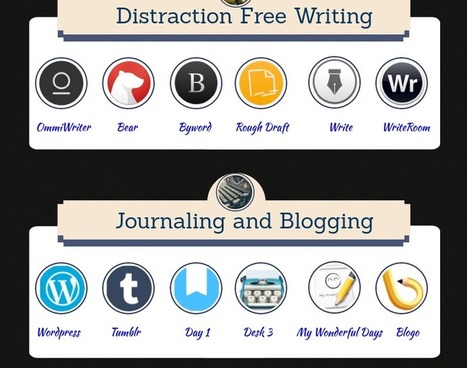
Free resource of educational web tools, 21st century skills, tips and tutorials on how teachers and students integrate technology into education Via Dr. Tom D'Amico (@TDOttawa) , Jim Lerman
Scoop.it!

Writing is complicated. Depending on the study you read, strong writing requires a mastery of 28, 34, or 47 distinct skills. The fact that researchers can’t even agree on how many traits go into writing illustrates just how complicated it is.
Scoop.it!
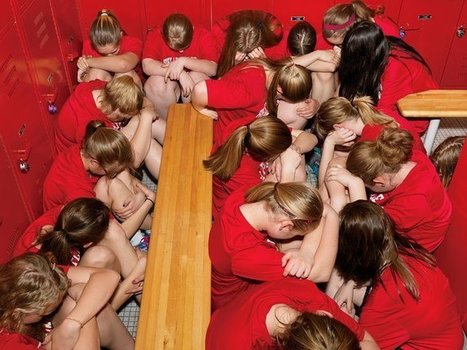
Free webinar with Nicholas Kristof on Oct. 10. Will be archived after the live session.
"How can writing change people’s understanding of the world? How can it influence public opinion? How can it lead to meaningful action?

Mary Reilley Clark's curator insight,
October 6, 2017 1:31 PM
There's so much here for teachers to explore!
Scoop.it!
"This strategy guide explains how you can employ peer review in your classroom, guiding students as they offer each other constructive feedback to improve their writing and communication skills.
Scoop.it!

Creative work is as challenging as it is engaging. Remarkably creative work is the only way to stand out in a fiercely competitive marketplace. But it comes at a cost. Dale Carnegie once said,… Via Jim Lerman
Scoop.it!

Click on the headline or image above to be taken to the full text of Baldwin's 1963 "Talk to Teachers," a consideration of the posture to be taken in the education of black (and also white) children in America. It is chilling to contemplate how completely contemporary is this piece that appeared 54 years ago. -JL Via Jim Lerman
Scoop.it!

How Digital Storytelling Transforms Education: Research Findings
Jim Lerman's insight: Excellent recap of the research on Digital Storytelling. A must read!
Scoop.it!

Student publishing is a topic Erin Murphy and I explore in-depth in Hack 10 of our upcoming book, Hacking Project Based Learning! (Update – The book is now available here!) Currently in my district we’ve had some preliminary talks regarding if/how digital portfolios could be implemented on a wide-scale. Of course, while the focus shouldn’t necessarily … Via Grant Montgomery, Jim Lerman
Scoop.it!

To determine whether formative writing assessments that are directly tied to everyday classroom teaching and learning enhance students’ writing performance, we conducted a meta-analysis of true and quasi-experiments conducted with students in grades 1 to 8. We found that feedback to students about writing from adults, peers, self, and computers statistically enhanced writing quality, yielding average weighted effect sizes of 0.87, 0.58, 0.62, and 0.38, respectively. We did not find, however, that teachers’ monitoring of students’ writing progress or implementation of the 6 + 1 Trait Writing model meaningfully enhanced students’ writing. The findings from this meta-analysis provide support for the use of formative writing assessments that provide feedback directly to students as part of everyday teaching and learning. We argue that such assessments should be used more frequently by teachers, and that they should play a stronger role in the Next-Generation Assessment Systems being developed by Smarter Balanced and PARCC.
|






Some links to free tools and resources for writing development.