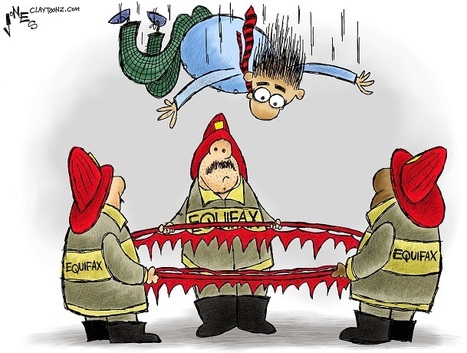
Probably like many of you, my family and I have been freaked out by the Equifax hack and have worked really hard to find out how to protect ourselves, and then do it.
The consensus view on basic protection is to:
1. Contact all 3 credit services and place a "Credit Freeze" on your account with them. Experian say, "a credit freeze makes it more difficult for an identity thief to open accounts in your name and also prevents new lenders from accessing your information unless you lift it." The credit freeze remains in place until you notify them to "thaw" (or remove) it.
TransUnion calls the "Credit Freeze" a "Security Freeze." Both Experian and Equifax call it a "Credit Freeze."
You have to contact each service individually. This freeze is free (as of 9/15/17)
2. Contact 1 of the credit services and file a "Fraud Alert." There are 3 types of Fraud Alerts, but the simplest to get is a Temporary Alert that lasts for 90 days. These alerts are renewable after the first 90 days. With such a Temporary Fraud Alert, the credit service (and/or creditor) has to contact you for permission before they can access your credit information.
You only have to notify 1 of the 3 credit services for this; the one you contact is required by law to notify the other 2. This service is free (as of 9/15/17).
There are other things you can do to protect yourself. For example, each of the 3 credit services offers Identity Theft Protection, for a price. There are also other companies that do this. The most well known of these is probably LifeLock. All these services can be helpful, but they are expensive. Each member of your family over 18 is charged individually for this service. At anywhere from $15-$30 per month per person, or more, this mounts up fast. Whether you decide to do this is up to you.
AAA also has a form of Identity Theft Protection built into membership at no extra cost.
SOME TIPS
1. The 3 credit services are Equifax, Experian, and TransUnion. You may contact them by phone, internet, mail, or fax (not all of them may accept faxes all the time).
Based on my experience over this past week, phone is by all means the easiest, fastest, and least expensive way to communicate with the 3 credit services. I was able to take care of all my business using my phone's touch keys -- did not have to talk to a human being at all! Each transaction only took a few minutes.
I found trying to do it online impossible. The lines are overloaded and the systems break down. I must have entered my information 50 times, to no avail. As time goes by, this will probably get easier as demand decreases, but right now, it's terrible. I actually spent several hours trying to get through this way.
Doing it by mail or fax requires you to supply more information than by phone and also copies of certain documents. This seems crazy to do unless there's a specific reason.
2. The credit services have a zillion phone numbers; which one should I call? Today, I received a mass email from one of my U.S. Senators which had the right numbers to use. Each one worked like a charm. These are the numbers that worked for me:
Equifax 800-685-1111
Experian 888-397-3742
TransUnion 800-680-7289
3. Even with taking all these steps, the "experts" say there is no way to be fully, 100% protected. That's really great. My wife heard on the news today that, 2 months ago, Equifax was considering a software defense package that was designed to head off this kind of first-world catastrophe. They declined to acquire it. :-( I wonder how much CEO Smith's bonus will be this Xmas?
On the other hand, what about our sisters and brothers in Texas and Florida?
Via
Jim Lerman


 Your new post is loading...



















A blog post about WritingSpark.