Your new post is loading...

|
Rescooped by
Yashy Tohsaku
from e-learning-ukr
October 6, 11:50 AM
|
This writing is a new iteration of the work I first sketched out last week, which talked about ‘Three Dimensions of Change’. Having lived with that for a few days, and spent some time illustrating around the ideas, I now find myself repositioning it slightly, to talk about three fundamental ‘Logics’. Each is a system…
Via Vladimir Kukharenko
AI tools are arriving in schools faster than research can evaluate them. Teachers are experimenting with new tools and districts are writing policies, all while students are already using AI both inside and outside the classroom. But for many education leaders, a basic question remains: What does rigorous research actually say about how AI affects teaching and learning? To help answer that question, we released a new report: The Evidence Base on AI in K-12: A 2026 Review. The report reviews the current research, focusing specifically on studies that convincingly estimate causal impact, meaning studies that can tell us whether an AI tool changed outcomes for students or educators.
Via Dr. Tom D'Amico (@TDOttawa)
|
|
Scooped by
Yashy Tohsaku
October 5, 7:16 PM
|
Discover how digital picture books for early readers give emerging readers, and multilingual learners independent access to real literature.
Understand your audience’s behavior and create learning opportunities that improve performance. The data tells the story; the AI dashboard tells the saga.
Via EDTECH@UTRGV
|
|
Scooped by
Yashy Tohsaku
October 5, 2:24 PM
|
The 2027 Top 10 reveals the most important issues higher education leaders are focusing on as they transform their institutions
|
|
Rescooped by
Yashy Tohsaku
from Mobile Learning
October 5, 11:26 AM
|
Parents, teachers and students were all surveyed as part of a new study looking at how screens are used in NSW schools.
Via Peter Mellow
What do Americans really know about their country? What do we mean when we think of "home"? When a father dies, what lessons does he leave for his son? And, was Andy Warhol a woman named Patricia? These topics – from fifth graders in Hewlett, N.Y., a high school student in Ann Arbor, Mich., an 11th grader in Cicero, Ill., and a middle schooler in Brooklyn – make up just a few of the many questions that students around the country turned into audio stories and sent us this year. Their answers to those questions are among our 2026 honorees as the best student podcasts in America. In its eighth year, the NPR Student Podcast Challenge received nearly 1,500 podcasts from students in 42 states and the District of Columbia. Our education team spent the summer listening to each of them, and from all those entries we've chosen the very best. We've listened to nearly 1,500 podcasts from all around the U.S. and narrowed them down to 10 middle school and 10 high school finalists.
Via Chuck Sherwood, Former Senior Associate, TeleDimensions, Inc
|
|
Scooped by
Yashy Tohsaku
October 5, 9:05 AM
|
Rather than focusing on catching students after the fact, educators need to consider what they are asking them to do, and is it actually worth doing?
|
|
Scooped by
Yashy Tohsaku
October 5, 9:01 AM
|
Explore an AI Ready AI Resistant mindset that balances responsible AI use with critical thinking, authentic learning, student voice, and human-centered teaching.
|
|
Rescooped by
Yashy Tohsaku
from Edumorfosis.it
October 4, 10:53 AM
|
La IA Gen está entrando de forma acelerada en las aulas y ya está modificando la manera en que los docentes preparan sus clases, elaboran materiales, evalúan trabajos y acompañan a los alumnos. Sin embargo, su integración no debería plantearse como una sustitución de la labor docente, sino como una herramienta subordinada a los objetivos pedagógicos y al criterio profesional del profesor. Esta es una de las principales conclusiones del nuevo informe de Cambridge Shaping AI Policy and Practice in English Language Teaching: Pioneering stories from classrooms around the world.
Via Edumorfosis
Gauth is an all-in-one AI study platform, purpose-built for education. It combines step-by-step problem solving, interactive AI tutoring, and personalized study tools into one experience, so students can solve problems, understand concepts, and prepare more effectively.
Via Nik Peachey
This MOOC offers a comprehensive approach to digital citizenship, geared especially towards the educational field. Throughout the course, topics such as the ethical use of artificial intelligence, disinformation, coexistence in digital environments, the protection of rights, democratic participation, and the development of critical thinking are addressed.
Via Dr. Tom D'Amico (@TDOttawa)
There is growing concern that AI can blunt memory and reasoning. But science shows ways to keep the brain sharp.
Via EDTECH@UTRGV
|
|
|
Rescooped by
Yashy Tohsaku
from e-learning-ukr
October 6, 11:50 AM
|
Today, we "Ask the Chefs" to consider what they might do differently with their open access strategy if they knew then what they know now.
Via Vladimir Kukharenko
|
|
Scooped by
Yashy Tohsaku
October 5, 7:30 PM
|
Explore digital storytelling through chatbots in Learning Management Systems, enhancing personalized learning experiences.
As AI features flood K-12 curricula, educators are left to filter proven quality from marketing hype.
Via EDTECH@UTRGV
People remember the moment they had to decide. Four rules for building scenarios that teach — and a 30-second mini scenario you can try inside the post.
Via EDTECH@UTRGV
For decades, U.S. colleges and universities have been regarded as among the best in the world. From the Ivy League to state research institutions, thousands of students and professors from around the globe flocked to America year after year to study, teach, and innovate. International students represented about 6 percent of all higher education students – that’s about 1.1 million. But last year, international student enrollment fell by a fifth compared to the year before. That’s the largest percentage change since the pandemic, according to federal data. And early data suggest that drop in enrollment continued this school year. How did the U.S. begin losing dominance in higher education? And what does this decline mean for students, faculty, and innovation in this country?
Via Chuck Sherwood, Former Senior Associate, TeleDimensions, Inc
|
|
Rescooped by
Yashy Tohsaku
from e-learning-ukr
October 5, 10:21 AM
|
Give students a clear reason to pay attention to your content. Here’s how to design courses to spark curiosity
Via Vladimir Kukharenko
|
|
Scooped by
Yashy Tohsaku
October 5, 9:04 AM
|
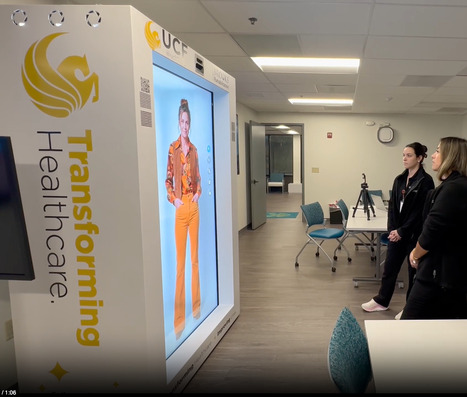
The combination of AI and hologram technology is proving a powerful one at the University of Central Florida
|
|
Scooped by
Yashy Tohsaku
October 4, 10:58 AM
|
The rapid integration of generative artificial intelligence into higher education has outpaced empirical understanding of its effects on fundamental l…
|
|
Rescooped by
Yashy Tohsaku
from e-learning-ukr
October 4, 10:53 AM
|
It’s a chaotic time in an industry that’s reshaping our lives – Guardian reporters and experts recommend the books that help explain how we got here, and where we’re heading. Have you been feeling trapped in an endless cycle of artificial intelligence hype and panic? You’re not alone. It’s a chaotic time to make sense of the industry that’s reshaping our lives, whether or not we like it. Last week, another AI company employee publicly resigned, warning the technology “could kill us all by the end of the decade”. Despite these dire warnings, AI companies have seen “otherworldly” surges in revenue and driven the US stock markets to new highs as they continue to push AI tools into everything from public school classrooms to law enforcement agencies, as well as rushing to put up new datacenters across the country. Thankfully, the Guardian’s tech reporters – and a few other tech experts we respect – are here to help. We’ve compiled an essential reading list of smart books that explain and critique the AI industry; books that, while flawed, illustrate key viewpoints in the AI debates; and a few books that provide deeper political and social context, including some works of speculative fiction.
Via Chuck Sherwood, Former Senior Associate, TeleDimensions, Inc
With school phone bans of various sorts now underway in 41 states and counting, debates on classroom screen time have shifted focus to the devices ostensibly being used for educational purposes: Chromebooks, iPads, and the like. In response to all the tech backlash, state policymakers are taking swift action, some of which is warranted, but much of which bears signs of legislative haste.
Via EDTECH@UTRGV
|