The OECD’s Digital Education Outlook 2026 argues there are many opportunities but also some risks related to GenAI. GenAI tools can support learning when guided by clear teaching goals or designed specifically for education. However, when AI removes the productive struggle essential for learning, students may complete tasks faster and achieve better immediate results, but their understanding may be less deeply consolidated. This can diminish cognitive stamina, deep reading, sustained attention and perseverance. Without a clear pedagogical purpose, GenAI can foster what researchers call “metacognitive laziness” and disengagement.
El Digital Education Outlook 2026 de la OCDE sostiene que existen muchas oportunidades pero también algunos riesgos relacionados con la GenAI. Las herramientas GenAI pueden apoyar el aprendizaje cuando están guiadas por objetivos claros de enseñanza o diseñadas específicamente para la educación. Sin embargo, cuando la IA elimina la lucha productiva esencial para el aprendizaje, los estudiantes pueden completar tareas más rápido y obtener mejores resultados inmediatos, pero su comprensión puede estar menos consolidada. Esto puede disminuir la resistencia cognitiva, la lectura profunda, la atención sostenida y la perseverancia. Sin un propósito pedagógico claro, GenAI puede fomentar lo que los investigadores llaman "pereza metacognitiva" y desvinculación.
Forget ChatGPT & Gemini — Here Are New AI Tools That Will Blow Your Mind Sharing only the best AI tools that actually fit into your daily workflow and genuinely boost your productivity. Let’s be …
“Unlock the Power of AI for Free on Your Desktop! 🚀”Are you ready to supercharge your productivity, creativity, and problem-solving skills? Meet ChatGPT—the AI tool that’s changing how we work, learn, and innovate. Best of all, you can access it for free right from your Windows desktop! In…
“Unlock the Power of AI for Free on Your Desktop! �”Are you ready to supercharge your productivity, creativity, and problem-solving skills? Meet ChatGPT—the AI tool that’s changing how we work, learn, and innovate. Best of all, you can access it for free right from your Windows desktop! In…
Este artículo plantea una reflexión crítica sobre el ritmo acelerado de los cambios impulsados por la inteligencia artificial (IA) y cómo esa aceleración puede superar nuestra capacidad para pensar de forma consciente, crítica y autónoma. El autor sostiene que la tecnología, especialmente la IA, no solo transforma procesos y tareas, sino que también influye profundamente en cómo percibimos, procesamos y reaccionamos ante la información en nuestra vida cotidiana. Tal intensidad de estímulos puede llevarnos a consumir contenido de forma automática, sin detenernos a cuestionar su significado o impacto. En este contexto, se propone la necesidad de un “#THINKReboot”, un reinicio del pensamiento que promueva la pausa, la reflexión y la crítica profunda antes de aceptar y reaccionar a los mensajes digitales. Esta idea conecta claramente con la alfabetización digital enseñada en educación, donde no basta con acceder a información, sino comprenderla, examinarla y cuestionar sus supuestos y efectos sociales y éticos. Relacionándolo con los contenidos de la asignatura de educación digital, esta propuesta enfatiza la importancia de desarrollar habilidades como el pensamiento crítico, la conciencia ética y la autonomía cognitiva. En un entorno donde algoritmos y plataformas moldean preferencias, decisiones y hasta comportamientos, formar estudiantes que puedan desacelerar, analizar y cuestionar es fundamental para evitar la pasividad y fomentar una participación digital responsable.
The OECD’s Digital Education Outlook 2026 argues there are many opportunities but also some risks related to GenAI. GenAI tools can support learning when guided by clear teaching goals or designed specifically for education. However, when AI removes the productive struggle essential for learning, students may complete tasks faster and achieve better immediate results, but their understanding may be less deeply consolidated. This can diminish cognitive stamina, deep reading, sustained attention and perseverance. Without a clear pedagogical purpose, GenAI can foster what researchers call “metacognitive laziness” and disengagement.
El Digital Education Outlook 2026 de la OCDE sostiene que existen muchas oportunidades pero también algunos riesgos relacionados con la GenAI. Las herramientas GenAI pueden apoyar el aprendizaje cuando están guiadas por objetivos claros de enseñanza o diseñadas específicamente para la educación. Sin embargo, cuando la IA elimina la lucha productiva esencial para el aprendizaje, los estudiantes pueden completar tareas más rápido y obtener mejores resultados inmediatos, pero su comprensión puede estar menos consolidada. Esto puede disminuir la resistencia cognitiva, la lectura profunda, la atención sostenida y la perseverancia. Sin un propósito pedagógico claro, GenAI puede fomentar lo que los investigadores llaman "pereza metacognitiva" y desvinculación.
Discover classroom management strategies to reignite student participation through inclusive, low-pressure participation structures. Explore this and more at TCEA TechNotes Blog, your go-to source for educational technology and teaching innovation.
"Teaching students to read images critically, to see them as constructed texts rather than neutral data, strengthens the same skills we rely on for strong reading comprehension: inference, evidence-based reasoning, and metacognitive awareness."
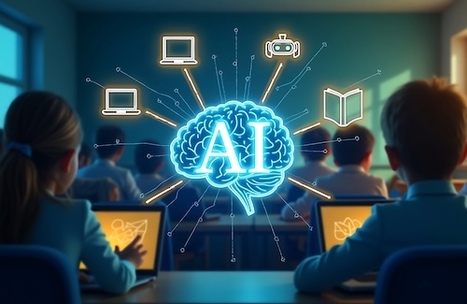
La IA ya está en las aulas. ¿Facilita el aprendizaje o erosiona la creatividad y el pensamiento crítico? Analizamos cómo se está integrando la IA en colegios y universidades, qué funciona, qué no, y qué reglas necesitan docentes y estudiantes. Recorremos el caso de Estonia, que incorpora ChatGPT Edu con lineamientos pedagógicos y protección de datos; vemos cómo profesores en Estados Unidos ponen límites claros para evitar plagios y convertir la IA en una herramienta de retroalimentación; y exploramos la apuesta de India por enseñar IA desde primaria y personalizar el aprendizaje con apps que ayudan a docentes con grupos numerosos. Pero ¿facilita esto el aprendizaje? ¿Prepara a los jóvenes para los trabajos del futuro? ¿O menoscaba su capacidad de pensar de forma crítica y creativa?
El uso de la IA en las actividades instruccionales es inevitable. Esto va más allá de dominar la simple arquitectura de los prompts. Se trata de un uso estratégico para cada materia o disciplina de estudio. No existen recetas únicas ni soluciones mágicas. Ya no se trata de mejorar la enseñanza docente, sino de expandir las capacidades de aprendizaje de los estudiantes.
Si preocupante es el uso de la IA Educativa, más preocupante es el uso y las conversaciones fuera del escenario académico. Gran parte de los modelos IA se utilzan para acceder información, analizar datos, crear contenidos, planificar, resolver problemas y realizar tareas rutinarias. Son tecnologías para aumentar la productividad, no para impulsar el desarrollo cognitivo. Aprender requiere esfuerzo, dedicación, incomodidad, fricción, dificultad... y los modelos IA se encargan de saltar los procesos cognitivos de alto nivel.
Es ahí en donde tenemos que centrarnos. Esto va más allá de la Educación. Esto tiene que transferirse al resto de la Sociedad. Un buen uso de la IA nos catapultará a niveles nunca antes imaginados, pero un mal uso nos llevará a la irrelevancia.
In today's diverse classrooms—with special education, ELLs, and more all in one classroom—it's important to use tech for educational equity. Explore this and more at TCEA TechNotes Blog, your go-to source for educational technology and teaching innovation.
McKinsey & Company has rapidly expanded its workforce with some 25,000 AI Agents. Bob Stenfels (CEO) says he wants an AI Agent working alongside all of its 40,000 employees. AI is rapidly changing both the work consultants do and how they do it. Sternfels said on the podcast that just a year and a half ago, the company only used a few thousand agents and hopes that in the next year and a half, every employee will be "enabled by at least one or more agents."
Este artículo confirma lo que se ha estado discutiendo en los pasado meses. El futuro laboral requerirá que los profesionales aprendan a co-laborar con Agentes IA. ¿Qué significa? Que IA se encargará de operar, mientras que el ser humano se encargará de dirigir. La 4ta Revolución Industrial está reemplazando la fuerza cognitiva humana. De ahora en adelante, los experton no son los que saben muchos temas o los que saben hacer trámites, procesos o procedimientos. Son los que saben conectar puntos de diferentes ángulos. Saber escribir prompts ya no es suficiente. El objetivo es que cada persona aprenda a desarrollar modelos de diseño con funciones y scripts que necesita un Agente IA para ejecutar una tarea. La verdadera carta de presentación de un profesional será su portafolio de problemas resueltos y su capacidad de aprendibilidad en tiempo real.
"When middle schoolers chatted with ELIZA, a 1960s chatbot, they uncovered how AI really works (and doesn’t). Along the way, they learned computational thinking and emotional intelligence."
To get content containing either thought or leadership enter:
To get content containing both thought and leadership enter:
To get content containing the expression thought leadership enter:
You can enter several keywords and you can refine them whenever you want. Our suggestion engine uses more signals but entering a few keywords here will rapidly give you great content to curate.


 Your new post is loading...



















El Digital Education Outlook 2026 de la OCDE sostiene que existen muchas oportunidades pero también algunos riesgos relacionados con la GenAI. Las herramientas GenAI pueden apoyar el aprendizaje cuando están guiadas por objetivos claros de enseñanza o diseñadas específicamente para la educación. Sin embargo, cuando la IA elimina la lucha productiva esencial para el aprendizaje, los estudiantes pueden completar tareas más rápido y obtener mejores resultados inmediatos, pero su comprensión puede estar menos consolidada. Esto puede disminuir la resistencia cognitiva, la lectura profunda, la atención sostenida y la perseverancia. Sin un propósito pedagógico claro, GenAI puede fomentar lo que los investigadores llaman "pereza metacognitiva" y desvinculación.