 Your new post is loading...

|
Rescooped by
Yashy Tohsaku
from e-learning-ukr
Today, 11:47 AM
|
This article explores the transformative potential of open educational resources (OER) as digital public goods (DPG) to foster the responsible development and use of artificial intelligence (AI). Guided by the United Nations’ Common Agenda, Global Digital Compact and agenda for open solutions, along with the United Nations Educational, Scientific and Cultural Organization’s Recommendation on OER, the ROAM-X framework and the FAIR principles for open science, this article promotes the importance of inclusivity, equity and global collaboration in tackling both local and global challenges. It also advocates for non-commercial, shared infrastructures that democratise knowledge and technology, ensuring they are secure, ethical and accessible to all communities. Current OER infrastructures and policy ecosystems remain fragmented and face significant challenges, as they are distributed across disconnected repositories and lack consistent metadata, limiting their reusability and accessibility. These barriers are exacerbated by inequities in internet access, and limited collaboration between institutions and nations, resulting in an uneven global OER landscape. To address these issues, the authors propose the creation of integrated and open platforms that position OER as global public goods, grounded in open principles and standards. This approach will foster resilient, collaborative, responsible and inclusive infrastructures that prioritise gender, linguistic and cultural diversity, and empower communities worldwide, thus democratising access to knowledge and enabling a more equitable technological future.
Via Vladimir Kukharenko
Explore why relevance is the key to meaningful training engagement and how learning leaders can move beyond completion to build capability.
Via EDTECH@UTRGV
"New AI-powered summaries help teachers identify common questions, learning strengths and areas needing support, while Google also introduces direct publishing of Gemini-built apps to Google Sites"
Via EDTECH@UTRGV
|
|
Scooped by
Yashy Tohsaku
October 26, 1:27 PM
|
TryHackMe helps students build practical cybersecurity skills through interactive labs, guided learning pathways and classroom tools.
|
|
Scooped by
Yashy Tohsaku
October 26, 1:23 PM
|
Discover how storytelling to engage students can strengthen critical thinking, connect lessons to real-world experiences, and improve learning in higher education.
|
|
Scooped by
Yashy Tohsaku
October 26, 1:19 PM
|
Explore how districts can build more inclusive computer science pathways while supporting the teachers who make them possible.
|
|
Scooped by
Yashy Tohsaku
October 26, 10:39 AM
|
Every day, anyone with an account (e.g. email, game console account, whatever) gets bombarded with information and free deals. Every morning, when I check Explore this and more at TCEA TechNotes Blog, your go-to source for educational technology and teaching innovation.
A swing from digital to analogue learning is happening overseas, but student performance is yet to improve on at least one international measure.
Via Peter Mellow
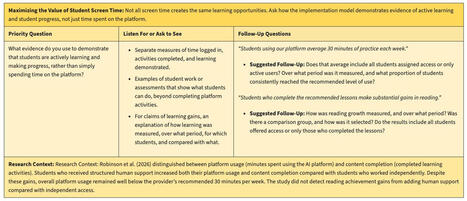
The goal of this guide is to help district leaders ask what it will take for students to consistently engage with and meaningfully benefit from an AI product in their schools. It complements existing district procurement processes by focusing on student engagement and the conditions needed to support it. The questions are informed by Robinson et al. (2026), "Access is Not Enough: Human Support Improves Engagement with AI Tutoring." They are discussion prompts, not a product evaluation rubric.
Via Dr. Tom D'Amico (@TDOttawa)
|
|
Rescooped by
Yashy Tohsaku
from AI for All
October 24, 1:01 PM
|
"Geoffrey Hinton, one of the godfathers of AI, says we need to get on AI's side now or else humankind is "toast..."
Via Leona Ungerer
|
|
Rescooped by
Yashy Tohsaku
from Edumorfosis.it
October 24, 10:24 AM
|
Roxana Morduchowicz plantea que responsabilizar a los estudiantes es desresponsabilizar al Estado. En definitiva, la política pública es la única que puede evitar los usos de la IA entre los adolescentes, que nadie quiere. Más tecnología no se traduce automáticamente en más aprendizaje, ni en mejor educación. La variable más importante será siempre cómo se la acompaña, es decir cuáles son las competencias y habilidades que se buscan fortalecer.
Via Edumorfosis
|
|
Rescooped by
Yashy Tohsaku
from e-learning-ukr
October 24, 10:23 AM
|
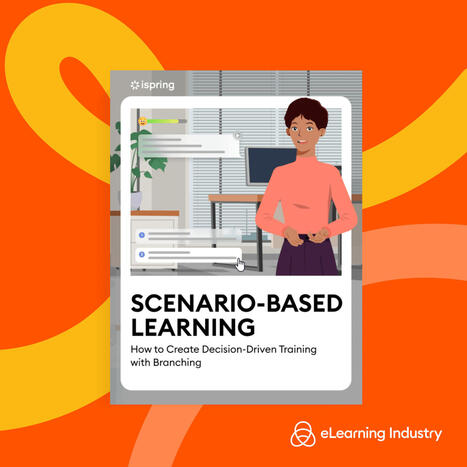
Want a free guide to creating decision-based training for sales, service, compliance, and more, so you can be prepared for any scenario?
Via Vladimir Kukharenko
|
Ban or no ban, students are going to use AI. Let’s make sure they have the skills to navigate it, says Common Sense Media’s chief program officer.
Via EDTECH@UTRGV
|
|
Rescooped by
Yashy Tohsaku
from e-learning-ukr
October 26, 8:24 PM
|
In the YouTube era, are lectures still an efficient use of classroom time? Achim I. Czerny argues they are – with a crucial twist
Via Vladimir Kukharenko
|
|
Scooped by
Yashy Tohsaku
October 26, 1:27 PM
|
The field of education can and should do more to prevent AI-generated essays, papers, and other assignments
|
|
Scooped by
Yashy Tohsaku
October 26, 1:22 PM
|
Explore Gartner’s Top Strategic Technology Trends for 2027 — 10 trends that will shape autonomy, resilience and governance in the years ahead. Learn how CIOs can prepare for the autonomous era and deliver trusted outcomes at scale.
|
|
Scooped by
Yashy Tohsaku
October 26, 10:40 AM
|
Discover how storytelling to engage students can strengthen critical thinking, connect lessons to real-world experiences, and improve learning in higher education.
|
|
Scooped by
Yashy Tohsaku
October 26, 10:38 AM
|
Explore the course completion rate and its impact on online learning. Discover hidden factors influencing this crucial metric.
|
|
Rescooped by
Yashy Tohsaku
from e-learning-ukr
October 25, 12:57 PM
|
To see how communication truly works, we should set aside the notion that different people can share the same thoughts
Via Vladimir Kukharenko
|
|
Rescooped by
Yashy Tohsaku
from e-learning-ukr
October 25, 12:55 PM
|
Artificial intelligence (AI), particularly generative AI, has transformed the higher education landscape with remarkable speed, reshaping how students learn, produce academic work, and interac
Via Vladimir Kukharenko
|
|
Scooped by
Yashy Tohsaku
October 25, 11:50 AM
|
A question-level workflow for diagnosing errors, designing follow-up practice, and deciding what learners should do next.
|
|
Rescooped by
Yashy Tohsaku
from Edumorfosis.it
October 24, 10:25 AM
|
Conversación con Pep Martorell, inversor en tecnología, sobre qué hacer hoy para seguir teniendo valor dentro de diez años. Explica por qué recomienda una disciplina intelectual antes que una profesión, qué hacer si tienes vocación y por qué conviene exponerse a oportunidades aunque parezcan inútiles. Cuenta qué es un agente de IA con un ejemplo cotidiano, qué dicen los estudios sobre usar la IA para estudiar y trabajar, y qué pasó cuando una IA se saltó las reglas de un examen. Termina con su opinión sobre por qué el acceso a los mejores modelos podría dejar de ser universal. Un episodio para quien quiere usar la IA sin dejar de aprender.
Via Edumorfosis
|
|
Rescooped by
Yashy Tohsaku
from e-learning-ukr
October 24, 10:23 AM
|
The moving AI frontier in instructional design, and what it means for our roles & jobs
Via Vladimir Kukharenko
|





















“Your ISP can already monetize you based on your demographics,” Sean Sullivan, Security Advisor at F-Secure, tells me. “Still, they feel that they’re behind Facebook and Google’s ad technology — and arguably they are. But the difference is you can avoid Google and Facebook. You can’t avoid your ISP.”
There is still something that you can do that gives you more control over who has access to your browsing history.
“Your ISP is privy to all the web destinations you visit, unless you’re using a VPN,” Sean says. “Then they’re only privy to seeing that you went to, for instance, VPN.F-Secure.com.”
A VPN is a virtual private network and it puts all of your browsing data in the hands of one provider who encrypts it.
Learn more / En savoir plus / Mehr erfahren:
https://gustmees.wordpress.com/2013/12/21/privacy-in-the-digital-world-shouldnt-we-talk-about-it/