 Your new post is loading...

|
Scooped by
Yashy Tohsaku
Today, 10:58 AM
|
The rapid integration of generative artificial intelligence into higher education has outpaced empirical understanding of its effects on fundamental l…
|
|
Rescooped by
Yashy Tohsaku
from e-learning-ukr
Today, 10:53 AM
|
It’s a chaotic time in an industry that’s reshaping our lives – Guardian reporters and experts recommend the books that help explain how we got here, and where we’re heading. Have you been feeling trapped in an endless cycle of artificial intelligence hype and panic? You’re not alone. It’s a chaotic time to make sense of the industry that’s reshaping our lives, whether or not we like it. Last week, another AI company employee publicly resigned, warning the technology “could kill us all by the end of the decade”. Despite these dire warnings, AI companies have seen “otherworldly” surges in revenue and driven the US stock markets to new highs as they continue to push AI tools into everything from public school classrooms to law enforcement agencies, as well as rushing to put up new datacenters across the country. Thankfully, the Guardian’s tech reporters – and a few other tech experts we respect – are here to help. We’ve compiled an essential reading list of smart books that explain and critique the AI industry; books that, while flawed, illustrate key viewpoints in the AI debates; and a few books that provide deeper political and social context, including some works of speculative fiction.
Via Chuck Sherwood, Former Senior Associate, TeleDimensions, Inc
With school phone bans of various sorts now underway in 41 states and counting, debates on classroom screen time have shifted focus to the devices ostensibly being used for educational purposes: Chromebooks, iPads, and the like. In response to all the tech backlash, state policymakers are taking swift action, some of which is warranted, but much of which bears signs of legislative haste.
Via EDTECH@UTRGV
Discover how AI-powered, hands-on cybersecurity education uses AI tools, vulnerability scanning, and microlearning to build students’ critical thinking and practical skills.
Via EDTECH@UTRGV
|
|
Rescooped by
Yashy Tohsaku
from e-learning-ukr
October 3, 2:06 PM
|
Let’s avoid teaching students that AI is a topic separate from the rest of the course content. Instead, embed it in course design. Find out how
Via Vladimir Kukharenko
|
|
Scooped by
Yashy Tohsaku
October 3, 12:52 PM
|
Consistency costs extra. If you want to buy machine screws or widgets that are exactly the same to five decimal points, you’ll pay a premium for that. In exchange, you’ll get parts that…
|
|
Scooped by
Yashy Tohsaku
October 3, 12:46 PM
|
The 7 AI Skills That You Need in 2026 Here are the best AI skills Click here to get my FREE Claude course (20+ lessons) Most people think they have a tool problem. They think the next model, the next …
|
|
Scooped by
Yashy Tohsaku
October 2, 3:37 PM
|
I use simple slash commands to get better answers from ChatGPT. Here are 10 shortcuts for more human, concise and useful responses.
|
|
Rescooped by
Yashy Tohsaku
from e-learning-ukr
October 2, 12:11 PM
|
|
|
Scooped by
Yashy Tohsaku
October 2, 11:41 AM
|
Researchers surveyed teens and adults on how well school cellphone policies were enforced over the course of a school year.
|
|
Scooped by
Yashy Tohsaku
October 2, 11:38 AM
|
The Simplest Roadmap to Learn AI By the End of 2026 Most people will spend the next 2 years consuming AI content. A small group will build with AI. That second group will quietly take the highest …
|
|
Scooped by
Yashy Tohsaku
October 2, 10:55 AM
|
Discover how AI-powered, hands-on cybersecurity education uses AI tools, vulnerability scanning, and microlearning to build students’ critical thinking and practical skills.
|
|
|
Rescooped by
Yashy Tohsaku
from Edumorfosis.it
Today, 10:53 AM
|
La IA Gen está entrando de forma acelerada en las aulas y ya está modificando la manera en que los docentes preparan sus clases, elaboran materiales, evalúan trabajos y acompañan a los alumnos. Sin embargo, su integración no debería plantearse como una sustitución de la labor docente, sino como una herramienta subordinada a los objetivos pedagógicos y al criterio profesional del profesor. Esta es una de las principales conclusiones del nuevo informe de Cambridge Shaping AI Policy and Practice in English Language Teaching: Pioneering stories from classrooms around the world.
Via Edumorfosis
Gauth is an all-in-one AI study platform, purpose-built for education. It combines step-by-step problem solving, interactive AI tutoring, and personalized study tools into one experience, so students can solve problems, understand concepts, and prepare more effectively.
Via Nik Peachey
This MOOC offers a comprehensive approach to digital citizenship, geared especially towards the educational field. Throughout the course, topics such as the ethical use of artificial intelligence, disinformation, coexistence in digital environments, the protection of rights, democratic participation, and the development of critical thinking are addressed.
Via Dr. Tom D'Amico (@TDOttawa)
There is growing concern that AI can blunt memory and reasoning. But science shows ways to keep the brain sharp.
Via EDTECH@UTRGV
|
|
Rescooped by
Yashy Tohsaku
from e-learning-ukr
October 3, 2:07 PM
|
Educators need agency, not just new rules AI is making student learning invisible to teachers. And it’s turning teachers into someone students look past rather than someone they go to. What if teachers could regain their sightlines by doing something they already know how to do — talking to their...
Via Dr. Tom D'Amico (@TDOttawa)
|
|
Scooped by
Yashy Tohsaku
October 3, 12:50 PM
|
Unlock your potential with techniques on how to write faster while maintaining clarity and accuracy in your work.
|
|
Scooped by
Yashy Tohsaku
October 2, 3:41 PM
|
Remove private or sensitive information permanently with our online Redact PDF tool. Fast, secure, and easy to use. GDPR compliant and ISO/IEC certified.
|
|
Scooped by
Yashy Tohsaku
October 2, 3:34 PM
|
In her followup to Grit, the psychologist offers a roadmap for better living.
|
|
Rescooped by
Yashy Tohsaku
from e-learning-ukr
October 2, 12:10 PM
|
We often assume that improving the quality of student work means slowing down and spending more time on a single project. But sometimes the opposite is true. Creating more can actually help students create better.
Via Vladimir Kukharenko
|
|
Scooped by
Yashy Tohsaku
October 2, 11:39 AM
|
Discover how AI-powered, hands-on cybersecurity education uses AI tools, vulnerability scanning, and microlearning to build students’ critical thinking and practical skills.
|
|
Scooped by
Yashy Tohsaku
October 2, 10:57 AM
|
Open-access resources from six nonprofits, helping educators in Allegheny and Westmoreland counties teach students about AI.
|


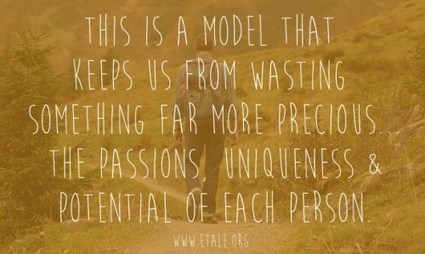




















This concept of connection with the community is an exciting and interesting part of the Wayfinding Academy. While there will be some core courses of study for each student, Michelle envisions learning experiences where you walk into the room and find it hard to tell who is professor, full-time student, and who is a community member participating for personal growth and interest. It is a vision for an open learning community, one that blurs the distinctions between what happens in the school and what happens in the community. Students will spend signficant time in the community, and community members will hopefully be engaged and present in the school. As I listened to Michelle explain this vision, I pictured a community where the role of teacher and student is played by all.
This concept of connection with the community is an exciting and interesting part of the Wayfinding Academy. While there will be some core courses of study for each student, Michelle envisions learning experiences where you walk into the room and find it hard to tell who is professor, full-time student, and who is a community member participating for personal growth and interest. It is a vision for an open learning community, one that blurs the distinctions between what happens in the school and what happens in the community. Students will spend signficant time in the community, and community members will hopefully be engaged and present in the school. As I listened to Michelle explain this vision, I pictured a community where the role of teacher and student is played by all.
This concept of connection with the community is an exciting and interesting part of the Wayfinding Academy. While there will be some core courses of study for each student, Michelle envisions learning experiences where you walk into the room and find it hard to tell who is professor, full-time student, and who is a community member participating for personal growth and interest. It is a vision for an open learning community, one that blurs the distinctions between what happens in the school and what happens in the community. Students will spend signficant time in the community, and community members will hopefully be engaged and present in the school. As I listened to Michelle explain this vision, I pictured a community where the role of teacher and student is played by all.