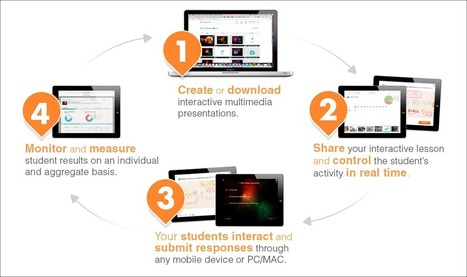
There are lots of great presentation tools for the classroom and these days they are being used by both students and teachers.


|
Scooped by
Yashy Tohsaku
onto Education 2.0 & 3.0 April 4, 2014 10:51 AM
|
 Scoop.it!
There are lots of great presentation tools for the classroom and these days they are being used by both students and teachers.
 Your new post is loading...
 Your new post is loading...
Your new post is loading...
Scoop.it!

An operational manual for district leaders to protect student cognition, eliminate automated shortcuts, and humanize instruction | Episode 83
Scoop.it!
From
blog

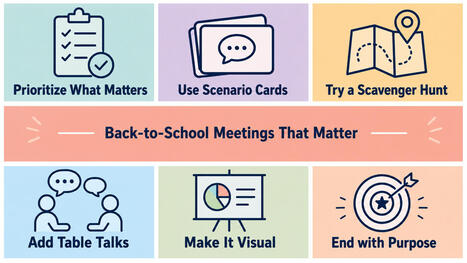
Principals have plenty of required information to share. These back-to-school meeting ideas help teachers stay engaged, process key details, and start the year feeling prepared. Help principals make back-to-school meetings more engaging and useful with practical strategies teachers can understand, remember, and apply right away.
Scoop.it!
From
flipquiz
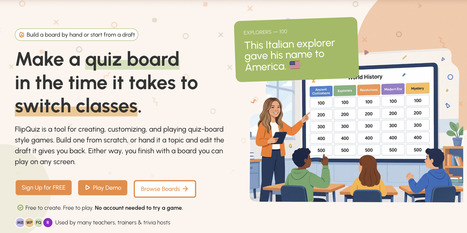
Build a board by hand or start from a draft Make a quiz board in the time it takes tobrew coffeeswitch classeswrite a hall pass. FlipQuiz is a tool for creating, customizing, and playing quiz‑board style games. Build one from scratch, or hand it a topic and edit the draft it gives you back. Via Ana Cristina Pratas
Scoop.it!

This article breaks down what L&D data access could mean for how training gets designed, measured, and improved. Via EDTECH@UTRGV 
EDTECH@UTRGV's curator insight,
July 20, 11:57 AM
"This article breaks down why that data goes unused, how conversational AI analytics changes the access model, and what it means for how training gets designed, measured, and improved."
Scoop.it!

Learn what good AI governance looks like in instructional design teams, from human review and quality controls to role clarity and risk management. Via EDTECH@UTRGV
EDTECH@UTRGV's curator insight,
July 20, 11:58 AM
"[T]he real question is not simply whether AI is allowed. The real question is whether AI is being used in ways that improve design quality, protect judgment, reduce avoidable risk, and build stronger professional practice over time."
Scoop.it!

Cohen: Transforming technology use in schools and classrooms is so hard that an intentional break may be the only way to truly adopt a better approach. Via EDTECH@UTRGV
EDTECH@UTRGV's curator insight,
July 21, 1:15 PM
"The tendency in education policy to overcorrect is as constant as it is frustrating."
Scoop.it!

What happens when a trillion-dollar capability is handed to everyone simultaneously, for free? Via EDTECH@UTRGV
EDTECH@UTRGV's curator insight,
July 21, 1:29 PM
"Everything schools have done about AI assumes AI is a service. Services have accounts, age gates, district contracts, content filters, audit logs. Services can be blocked at the firewall. On July 27, frontier intelligence stops being a service and becomes a file. You cannot firewall a file."
Scoop.it!

From
createmusicai
Create songs, beats, lyrics, and music videos with CreateMusicAI. Generate royalty-free AI music, then turn tracks into videos for TikTok, YouTube, and Reels. Via Ana Cristina Pratas
Scoop.it!

AI use in higher education is reshaping the future of universities with intelligent, personalized, and data-driven learning environments. Via Vladimir Kukharenko
Scoop.it!
A true digital campus experience requires leaders to think about how every technology decision contributes to the overall online journey. Via EDTECH@UTRGV
EDTECH@UTRGV's curator insight,
July 22, 12:06 PM
"Students move between disconnected systems, receive endless communications from multiple sources and search across numerous applications to complete tasks that should feel seamless."
Scoop.it!

From
www
This Week with EdSurge podcast examines what holds up when artificial intelligence moves fast. Via EDTECH@UTRGV
EDTECH@UTRGV's curator insight,
July 22, 12:11 PM
"[T]he value of a degree comes from something artificial intelligence cannot replicate."
Scoop.it!

This article explains why L&D's evaluation capabilities can finally measure behavior transfer and business impact. Via EDTECH@UTRGV
EDTECH@UTRGV's curator insight,
July 23, 10:49 AM
"Measuring behavior transfer requires comparing what employees do on the job before and after training—which means pulling data from performance management systems, CRMs, operational dashboards, or direct manager observation records. None of that data lives in the LMS." |
Scoop.it!

Learn how California's AI law shapes AI use in education and offers practical strategies for faculty to teach responsibly with AI.
Scoop.it!
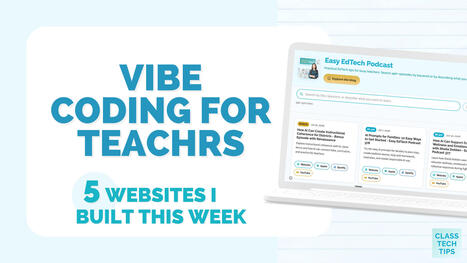
Vibe coding for teachers: see 5 websites I built with AI chatbots, plus a simple workflow you can try with no coding experience needed.
Scoop.it!
Screen time debates should center on if individual technologies, programs, and digital learning experiences support student growth. Via EDTECH@UTRGV
EDTECH@UTRGV's curator insight,
July 20, 11:53 AM
"With the growing movement to limit technology in schools, parents and educators are right to question how much time students spend on screens. But, as schools reconsider the role of technology in the classroom, an important distinction is often getting lost in the public conversation: Not all screen time is equal."
Scoop.it!
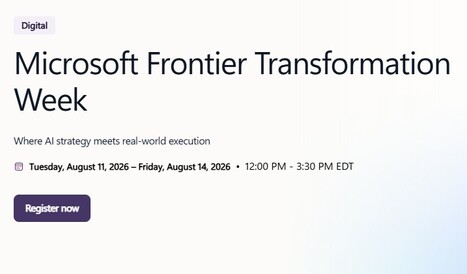
Turn AI strategy into action at Microsoft Frontier Transformation Week with real-world demos, expert insights, and practical next steps—Register today. Via Dr. Tom D'Amico (@TDOttawa)
Scoop.it!

Instructional vehicles need properly-trained drivers and a properly-designed institutional and pedagogical highway system. Via Vladimir Kukharenko
Scoop.it!

La presente investigación compendia una investigación de carácter fundamentalmente prospectivo y teórico, situada en la intersección crítica de la tecnología educativa, la epistemología y la ingeniería de sistemas. El trabajo, liderado por Juan Domingo Farnos, propone una tesis audaz y necesaria: la superación de la actual era probabilística de la Inteligencia Artificial, dominada por los Modelos de Lenguaje Grande (LLMs) y el aprendizaje profundo, hacia una nueva arquitectura cognitiva basada en la comprensión y la ejecución causal. Esta tesis no surge en el vacío, sino que se articula como una respuesta crítica a las limitaciones sistémicas de la IA contemporánea, al tiempo que busca anclarse en los desarrollos más sólidos de la ciencia de la inferencia causal. El objetivo de este prólogo es establecer el corpus científico real sobre el que se asientan estas discusiones, detallando las investigaciones de veinte autores clave que han definido el estado del arte de la causalidad, y contextualizando el trabajo de Farnos como una ambiciosa búsqueda de operacionalizar estos principios para transformar la educación. Via Edumorfosis
Scoop.it!

"They are simple and transparent, eliminate inherent bias and can clearly show whether version A or B of a product works best for students." Via EDTECH@UTRGV
EDTECH@UTRGV's curator insight,
July 21, 1:18 PM
"Randomized controlled trials are uniquely structured to determine whether a product’s impact is the result of the product itself or other factors."
Scoop.it!

From
revise
Tell Revise what changes you want, and watch it make suggestions in real-time. Review and accept them individually, or all at once. Via Nik Peachey 
Nik Peachey's curator insight,
July 22, 1:20 AM
Revise looks like a useful AI editing tool that acts a bit like a buddy, to help you review and improve what you have written https://revise.io/ It has a useable free subscription.
Scoop.it!
![AI Gap In Learning Tech [Exclusive Benchmark Report] | Education 2.0 & 3.0 | Scoop.it](https://img.scoop.it/P9f3XNo-pQtfG3cKQ3zPXzl72eJkfbmt4t8yenImKBVvK0kTmF0xjctABnaLJIm9)
Based on exclusive survey data from 500+ participants across the L&D market, this report examines the AI expectation gap in learning tech. Via Vladimir Kukharenko
Scoop.it!

From
www
How AI deprived my students of the reading struggle they needed to succeed — and five better ways to use it. Via EDTECH@UTRGV
EDTECH@UTRGV's curator insight,
July 22, 12:09 PM
"In our world of quick and snappy AI solutions, the leveled text shortcut is all too easy to take, but we should not give in to temptation."
Scoop.it!
From
www
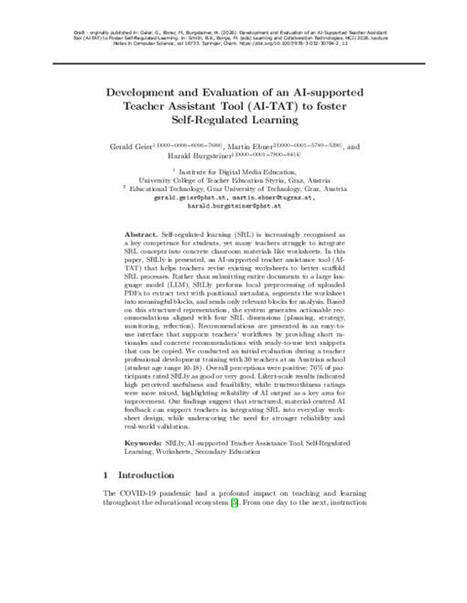
Self-regulated learning (SRL) is increasingly recognised as a key competence for students, yet many teachers struggle to integrate SRL concepts into concrete classroom materials like worksheets. In this paper, SRLly is presented, an AI-supported Via Vladimir Kukharenko |