 Your new post is loading...

|
Scooped by
Charles Tiayon
June 23, 2024 12:30 AM
|
New York cannot enforce the law on language access for immigrants; New York service centers do not provide translation '21.06.2024' Olga Feoktistova Every summer, City Hall hires a small team of interns who speak different languages. They come to service centers in the city and pretend that they don’t speak English. In this way, the mayor's office verifies that agencies provide services in all the languages they are required by city law. The results are disappointing: agencies completely violate language accessibility laws, reports The City. Secret inspectors come to the staff with a simple question. For example, they want to know if they qualify for certain benefits or participation in a program. The trick is that the inspectors ask about this in a language other than English and thus determine whether the agency has interpreting services available and the relevance of the documents that must be there according to the law. Disappointing conclusions Last month, the Mayor's Office of Immigrant Affairs released data on how various agencies fared in undercover audits. The data reflects 148 estimates for 2023 service centers across the city. As it turned out, more than half of the service centers in 2023 were in some way violating the New York City language access law, Local Law 30 (2008). This law requires that the center have information brochures in the 10 most widely spoken languages in the city, as well as the availability of interpretation. In addition to English, these are Spanish, Chinese, Russian, Bengali, Haitian Creole, Korean, Arabic, Urdu, French and Polish. In 2023, almost 40% of centers had no translated materials or brochures at all. A quarter of the centers did not provide interpretation services at all. The most common violation was the lack of documents translated into the 10 major citywide languages. 25% of undercover reviewers who were not provided with interpretation at all used Google Translate. In some centers they were simply told to “come back later” or “find a bilingual person in the waiting room.” The centers visited by undercover inspectors include city clinics and medical offices, where correct translation is vital. Two-thirds of the city Department of Health and Mental Hygiene facilities visited by undercover inspectors in 2023 were not in compliance with the language access law, new data shows. With nearly half of all New Yorkers speaking a language other than English at home and the number of migrants and asylum seekers rising, advocates say agencies can't meet people's needs using English alone. Francisco Navarro, a senior adviser in the Mayor's Office of Operations, has led the undercover program since its early days 14 years ago. “The program has led to internal improvements that make it easier for New Yorkers to use city resources, no matter what language they speak,” Navarro said. When the secret inspector reports that the service center does not meet the requirements, feedback from the mayor's office begins to work to improve the situation. The City has no regulatory or enforcement authority over these agencies. Local Law 30 requires each agency to create its own language access plan.Officials are working to create a community program that would provide in-person interpreter services to city agencies. Perhaps the city will fund the creation of the Language Justice Collaborative, a cooperative bank of translators that would be made up of multilingual community members who can translate for people who don't speak English.

Researchers across Africa, Asia and the Middle East are building their own language models designed for local tongues, cultural nuance and digital independence
"In a high-stakes artificial intelligence race between the United States and China, an equally transformative movement is taking shape elsewhere. From Cape Town to Bangalore, from Cairo to Riyadh, researchers, engineers and public institutions are building homegrown AI systems, models that speak not just in local languages, but with regional insight and cultural depth.
The dominant narrative in AI, particularly since the early 2020s, has focused on a handful of US-based companies like OpenAI with GPT, Google with Gemini, Meta’s LLaMa, Anthropic’s Claude. They vie to build ever larger and more capable models. Earlier in 2025, China’s DeepSeek, a Hangzhou-based startup, added a new twist by releasing large language models (LLMs) that rival their American counterparts, with a smaller computational demand. But increasingly, researchers across the Global South are challenging the notion that technological leadership in AI is the exclusive domain of these two superpowers.
Instead, scientists and institutions in countries like India, South Africa, Egypt and Saudi Arabia are rethinking the very premise of generative AI. Their focus is not on scaling up, but on scaling right, building models that work for local users, in their languages, and within their social and economic realities.
“How do we make sure that the entire planet benefits from AI?” asks Benjamin Rosman, a professor at the University of the Witwatersrand and a lead developer of InkubaLM, a generative model trained on five African languages. “I want more and more voices to be in the conversation”.
Beyond English, beyond Silicon Valley
Large language models work by training on massive troves of online text. While the latest versions of GPT, Gemini or LLaMa boast multilingual capabilities, the overwhelming presence of English-language material and Western cultural contexts in these datasets skews their outputs. For speakers of Hindi, Arabic, Swahili, Xhosa and countless other languages, that means AI systems may not only stumble over grammar and syntax, they can also miss the point entirely.
“In Indian languages, large models trained on English data just don’t perform well,” says Janki Nawale, a linguist at AI4Bharat, a lab at the Indian Institute of Technology Madras. “There are cultural nuances, dialectal variations, and even non-standard scripts that make translation and understanding difficult.” Nawale’s team builds supervised datasets and evaluation benchmarks for what specialists call “low resource” languages, those that lack robust digital corpora for machine learning.
It’s not just a question of grammar or vocabulary. “The meaning often lies in the implication,” says Vukosi Marivate, a professor of computer science at the University of Pretoria, in South Africa. “In isiXhosa, the words are one thing but what’s being implied is what really matters.” Marivate co-leads Masakhane NLP, a pan-African collective of AI researchers that recently developed AFROBENCH, a rigorous benchmark for evaluating how well large language models perform on 64 African languages across 15 tasks. The results, published in a preprint in March, revealed major gaps in performance between English and nearly all African languages, especially with open-source models.
Similar concerns arise in the Arabic-speaking world. “If English dominates the training process, the answers will be filtered through a Western lens rather than an Arab one,” says Mekki Habib, a robotics professor at the American University in Cairo. A 2024 preprint from the Tunisian AI firm Clusterlab finds that many multilingual models fail to capture Arabic’s syntactic complexity or cultural frames of reference, particularly in dialect-rich contexts.
Governments step in
For many countries in the Global South, the stakes are geopolitical as well as linguistic. Dependence on Western or Chinese AI infrastructure could mean diminished sovereignty over information, technology, and even national narratives. In response, governments are pouring resources into creating their own models.
Saudi Arabia’s national AI authority, SDAIA, has built ‘ALLaM,’ an Arabic-first model based on Meta’s LLaMa-2, enriched with more than 540 billion Arabic tokens. The United Arab Emirates has backed several initiatives, including ‘Jais,’ an open-source Arabic-English model built by MBZUAI in collaboration with US chipmaker Cerebras Systems and the Abu Dhabi firm Inception. Another UAE-backed project, Noor, focuses on educational and Islamic applications.
In Qatar, researchers at Hamad Bin Khalifa University, and the Qatar Computing Research Institute, have developed the Fanar platform and its LLMs Fanar Star and Fanar Prime. Trained on a trillion tokens of Arabic, English, and code, Fanar’s tokenization approach is specifically engineered to reflect Arabic’s rich morphology and syntax.
India has emerged as a major hub for AI localization. In 2024, the government launched BharatGen, a public-private initiative funded with 235 crore (€26 million) initiative aimed at building foundation models attuned to India’s vast linguistic and cultural diversity. The project is led by the Indian Institute of Technology in Bombay and also involves its sister organizations in Hyderabad, Mandi, Kanpur, Indore, and Madras. The programme’s first product, e-vikrAI, can generate product descriptions and pricing suggestions from images in various Indic languages. Startups like Ola-backed Krutrim and CoRover’s BharatGPT have jumped in, while Google’s Indian lab unveiled MuRIL, a language model trained exclusively on Indian languages. The Indian governments’ AI Mission has received more than180 proposals from local researchers and startups to build national-scale AI infrastructure and large language models, and the Bengaluru-based company, AI Sarvam, has been selected to build India’s first ‘sovereign’ LLM, expected to be fluent in various Indian languages.
In Africa, much of the energy comes from the ground up. Masakhane NLP and Deep Learning Indaba, a pan-African academic movement, have created a decentralized research culture across the continent. One notable offshoot, Johannesburg-based Lelapa AI, launched InkubaLM in September 2024. It’s a ‘small language model’ (SLM) focused on five African languages with broad reach: Swahili, Hausa, Yoruba, isiZulu and isiXhosa.
“With only 0.4 billion parameters, it performs comparably to much larger models,” says Rosman. The model’s compact size and efficiency are designed to meet Africa’s infrastructure constraints while serving real-world applications. Another African model is UlizaLlama, a 7-billion parameter model developed by the Kenyan foundation Jacaranda Health, to support new and expectant mothers with AI-driven support in Swahili, Hausa, Yoruba, Xhosa, and Zulu.
India’s research scene is similarly vibrant. The AI4Bharat laboratory at IIT Madras has just released IndicTrans2, that supports translation across all 22 scheduled Indian languages. Sarvam AI, another startup, released its first LLM last year to support 10 major Indian languages. And KissanAI, co-founded by Pratik Desai, develops generative AI tools to deliver agricultural advice to farmers in their native languages.
The data dilemma
Yet building LLMs for underrepresented languages poses enormous challenges. Chief among them is data scarcity. “Even Hindi datasets are tiny compared to English,” says Tapas Kumar Mishra, a professor at the National Institute of Technology, Rourkela in eastern India. “So, training models from scratch is unlikely to match English-based models in performance.”
Rosman agrees. “The big-data paradigm doesn’t work for African languages. We simply don’t have the volume.” His team is pioneering alternative approaches like the Esethu Framework, a protocol for ethically collecting speech datasets from native speakers and redistributing revenue back to further development of AI tools for under-resourced languages. The project’s pilot used read speech from isiXhosa speakers, complete with metadata, to build voice-based applications.
In Arab nations, similar work is underway. Clusterlab’s 101 Billion Arabic Words Dataset is the largest of its kind, meticulously extracted and cleaned from the web to support Arabic-first model training.
The cost of staying local
But for all the innovation, practical obstacles remain. “The return on investment is low,” says KissanAI’s Desai. “The market for regional language models is big, but those with purchasing power still work in English.” And while Western tech companies attract the best minds globally, including many Indian and African scientists, researchers at home often face limited funding, patchy computing infrastructure, and unclear legal frameworks around data and privacy.
“There’s still a lack of sustainable funding, a shortage of specialists, and insufficient integration with educational or public systems,” warns Habib, the Cairo-based professor. “All of this has to change.”
A different vision for AI
Despite the hurdles, what’s emerging is a distinct vision for AI in the Global South – one that favours practical impact over prestige, and community ownership over corporate secrecy.
“There’s more emphasis here on solving real problems for real people,” says Nawale of AI4Bharat. Rather than chasing benchmark scores, researchers are aiming for relevance: tools for farmers, students, and small business owners.
And openness matters. “Some companies claim to be open-source, but they only release the model weights, not the data,” Marivate says. “With InkubaLM, we release both. We want others to build on what we’ve done, to do it better.”
In a global contest often measured in teraflops and tokens, these efforts may seem modest. But for the billions who speak the world’s less-resourced languages, they represent a future in which AI doesn’t just speak to them, but with them."
Sibusiso Biyela, Amr Rageh and Shakoor Rather
20 May 2025
https://www.natureasia.com/en/nmiddleeast/article/10.1038/nmiddleeast.2025.65
#metaglossia_mundus
"Interpreters from across Canada work daily to preserve Indigenous languages.
As February marks Indigenous Languages Month, NNSL Media spoke with six interpreters at the NWT Legislative Assembly who make politics understandable in Inuinnaqtun, Inuktitut, Dene Suline, Sahtuot’ine and Dene Zhatie.
Necessity
Many found themselves interpreting out of necessity.
Tuppittia Qitsualik, a speaker of Inuinnaqtun, said that without her mother, she felt compelled to rise to the responsibility of interpreting for her unilingual father.
Dennis Drygeese, a speaker of Dene Suline Yatie, recalls that while growing up, his mother, a teacher, would travel often. As a result, he often stayed with his grandparents, who “didn’t speak a word of English.” If ever they needed help speaking to the Co-op manager, or to social services, Drygeese would be there to translate on their behalf.
Sarah Cleary, who is fluent in Sahtuot’ine Yati, began her translation in a similar way, saying, “When I was young, the Elders in my community always asked me to interpret, and I’d do my best. Sometimes I’d have to use sign language.”
Suzie Napayok-Short, an Inuktitut speaker, said, “As I was growing up, the Qallunaat — that’s the white man — had authority in pretty much everything our parents had to do, and as I grew I realized they really need to know exactly what is being said here.”
Preservation
Preservation of identity and culture are at the heart of many of the interpreters’ work.
Mary Jane Cazon, a speaker of Dene Zhatie, recalls her parents telling her that retaining her language and her culture would lead her into the future.
Drygeese shared a similar sentiment, stating: “My grandmother told me, ‘Hang on to your words, my boy, because one day it’s going to be really useful to you,’ so here I am.”
Regarding the importance of preserving one’s language, Joe Ototkiak, a speaker of Inuinnaqtun, said, “Language is a cornerstone. Without language, there’s really no identity.” He added, “I just hope and pray that Inuinnaqtun keeps thriving, it’s a language that was at the brink of disappearing.”
Information
Some translators the value that their work has in ensuring unilingual Elders fully understand the ways of western politics.
Otokiak said, “It’s about making sure our Elders have some idea of what’s going on around them, and informing them of new things on the horizon.”
Cleary recalled a time when her father, being a seasonal worker, was denied ration money. Sarah went to the local church with the goal of calling Yellowknife for assistance, but the church’s priest, on Sarah’s behalf, went and spoke with the agent that had denied her father the money for food. Sarah’s interpreting was able to help feed her family that winter.
Napayok-Short recalls that as a child, many of her community members didn’t fully understand the settler-imposed rules. She saw that as her opportunity to help her people and decided to take up the task of interpreting.
“I thought, ‘I can get really good at these languages if I keep listening and learning, so that’s what I’m gonna do — that’s going to be my way of helping my family.’”
Revitalization
Many interpreters remain hopeful and optimistic that their languages will be preserved, and even adopted more widely.
Cazon noted that she and her husband are both fluent in their mother tongue. They make an effort to speak the language in their home and around their grandchildren.
“One day, hopefully, they’ll really be able to pick it up and be able to be fluent, just like us,” she said.
Cleary envisions a future where, due to the officialization of so many Indigenous languages within the NWT, youth in Indigenous communities will be able to be educated in their mother tongue. “If they wanted to go south and enter a university, because our language is official, they would have their entrance requirement,” she said.
NWT News/North"
https://www.pentictonherald.ca/spare_news/article_30c6349e-06bb-5a33-8c56-c52e27823a6f.html
#Metaglossia
#metaglossia_mundus
#métaglossie
Rozenn Milin, historienne, sociologue et journaliste, parle de sa thèse intitulée : « La honte et le châtiment, ou l’interdiction de parler sa langue maternelle à l’école. L’exemple du breton et des langues africaines ».
"À Morlaix, l’historienne Rozenn Milin a présenté sa thèse sur l’interdiction des langues maternelles, notamment le breton, à l’école. Une politique linguistique née sous la Terreur et visant à imposer le français.
Rozenn Milin a présenté sa thèse sur les interdictions des langues maternelles, dont le breton.
Les enseignants de la filière bilingue (breton-français) du lycée Tristan-Corbière ont invité, jeudi 12 février, Rozenn Milin, historienne, sociologue et journaliste, à venir parler de sa thèse intitulée : « La honte et le châtiment, ou l’interdiction de parler sa langue maternelle à l’école. L’exemple du breton et des langues africaines ». Un sujet qui, comme l’a rappelé Jean Roualec-Quéré, enseignant, s’inscrit dans le thème étudié cette année par les élèves, sur l’appropriation et la transmission de l’identité bretonne. La conférence s’est tenue en français, car elle s’adressait également aux élèves et aux enseignants hors filière bilingue..."
https://www.letelegramme.fr/finistere/morlaix-29600/la-honte-et-le-chatiment-quand-lecole-interdisait-le-breton-et-les-langues-africaines-6983224.php
#Metaglossia
#metaglossia_mundus
#métaglossie

"Robbie Meredith
Education and arts correspondent, BBC News NI
Ellie-May is one of only three deaf pupils at her post-primary school
New sign language laws in Northern Ireland will have a "huge impact", a deaf teenager has said.
Ellie-May, 14, gave evidence at Stormont to assembly members on the Communities Committee as they scrutinised the Sign Languages Bill.
The bill's aim is to make information and services, including from government departments and public bodies, accessible to people from the deaf community.
The committee's scrutiny of the bill is now completed which means that it can now have its final stages in the assembly before becoming law.
Plans for a sign language bill for Northern Ireland have been in the pipeline for a number of years.
The Sign Language Bill (Northern Ireland) 2025 was subsequently introduced in the Assembly by Communities Minister Gordon Lyons in February 2025.
The Sign Language Bill (Northern Ireland) 2025 was introduced in the assembly by Communities Minister Gordon Lyons in February 2025
The bill would give official and equal recognition of British Sign Language (BSL) and Irish Sign Language (ISL) as languages of Northern Ireland and promote the use and understanding of sign languages.
It means that public bodies will have to, by law, "take reasonable steps to ensure that the sorts of information and services provided by it are as accessible to individuals in the deaf community as to those individuals who are not in the deaf community".
The Department for Communities estimated that at least 5000 people in Northern Ireland use either British Sign Language (BSL) or Irish Sign Language (ISL) as their preferred way to communicate.
'Very tough'
Ellie-May is one of only three deaf pupils at her post-primary school.
"It is very tough because you're deaf and you're surrounded by hearing people at a mainstream school, and you have a lot to concentrate on," she said.
"When you're lip reading you're absorbing information and your brain is processing differently from a hearing person."
Ellie-May would like to see more young people in school learn to sign.
"Sign language is very good because obviously you can communicate to people better and you can just sign," she said.
Gemma McMullan's two-year-old son George is deaf
Gemma McMullan, whose two-year old son George is deaf, said deaf children will "be recognised as part of the community" due to the new laws.
George was first identified as deaf at only eight weeks old and has been attending sign language classes at Action Deaf Youth.
"Sign language isn't just a communication tool, it's going to be recognised as an official language and that's really important," she said.
"Our deaf children are going to be seen and they're going to be recognised as part of the community and they're going to have more access to education, healthcare, things like that so it's really important that our children are recognised and using their own language as part of their identity."
Julie Graham from Action Deaf Youth, an organisation for deaf children and young people, said it is a "massive, a massive movement forward".
"What's crucial is particularly to look at deaf children and young people because this will transform their futures."
Julie Graham from Action Deaf Youth said it is a "massive" move forward
The British Deaf Association's Majella McAteer told BBC News NI that the finger spelling differs between the two sign languages.
"We spell out words with two hands in British Sign Language and with one hand in Irish Sign Language, but our numbers as well in BSL use one hand, but our numbers in ISL use two hands. So there are big differences," she said.
"Here in Northern Ireland it's something that's very unique to have two sign languages that are used and the majority of our deaf community will know both languages.
"Some will use British sign language, some will predominantly use ISL, it depends where you were educated."
"But we're really proud of it because it just shows the rich culture that we have here."
The committee chair, Sinn Fein MLA Colm Gildernew, said the bill was a landmark one.
"In practical terms it's going to mean that all public bodies will have to provide services to people in their first languages," he said.
"It gives official recognition to both BSL and ISL and it recognises that those languages are the first language of people when they're using services.""
https://www.bbc.com/news/articles/c20l6l9d4gwo
#Metaglossia
#metaglossia_mundus
#métaglossie

"Avant que le français ne prenne l’importance qu’on lui connaît aujourd’hui, les langues de l’écrit restent, au sortir de l’Antiquité, le latin et le grec. Les parlers vernaculaires, de racine romane, sont quant à eux multiples et complexes. Mais un tournant majeur s’opère à partir du XIIIe siècle. Le français devient alors l’une des langues les plus parlées de l’Occident, acquérant une forte valeur symbolique d’union à un moment de consolidation du pouvoir royal. C’est à cette période qu’émerge un nouveau genre littéraire, celui du roman arthurien, dont l’essor est remarquable dès son apparition. Cet attrait nouveau pour la fiction est illustré dans l’exposition par un précieux vestige répertoriant des extraits de romans du poète champenois Chrétien de Troyes. Réutilisés au XVIIIe comme reliures de dossiers d’un notaire, ces Fragments d’Annonay, datés de la fin du XIIe-début du XIIIe, constituent un témoignage émouvant de l’émergence du français à l’écrit.
L’usage de la langue continue d’évoluer au gré des goûts et des transformations sociales. Au XIVe siècle, le style courtois connaît un succès considérable, en lien avec le développement des milieux urbains et de cour. Les thèmes amoureux et légers investissent fables et poésies, jusque dans la forme même des manuscrits, comme l’illustre l’élégant Chansonnier cordiforme de Montchenu (vers 1475) dont les enluminures colorées et chantantes représentent un couple, vêtu à la mode de l’époque, absorbé dans une conversation galante.
L’écrit comme laboratoire de la créativité et de la connaissance
La Renaissance et les Temps modernes marquent un moment de stabilisation et d’institutionnalisation de la langue française. Le traité de Villers-Cotterêts, signé en 1539 dans l’ancien château de François Ier, impose par exemple l’usage du français dans les textes juridiques et administratifs. La langue devient alors un outil central pour penser le monde et diffuser les connaissances. Les philosophes des Lumières incarnent pleinement cette ambition, par leur volonté de passer la société au crible de la raison. On remarque avec plaisir les manuscrits autographes de Diderot et de Montesquieu, rares témoins matériels d’idéaux cherchant à éradiquer l’obscurantisme au profit de la vérité.
Si le XVIIIe siècle est celui des Lumières, le XIXe s’impose comme le siècle du roman. Les écrivains conservent davantage les traces de leurs travaux préparatoires, faisant du manuscrit un espace de réflexion et d’expérimentation. Graphie, mise en page, ratures ou reprises deviennent autant d’indices de la psyché de l’auteur et de sa manière de concevoir l’œuvre, de jouer avec les mots. Il est ainsi amusant de comparer l’écriture fluide et appliquée d’Alexandre Dumas ou de Colette au tâtonnement presque chaotique de Gustave Flaubert. Le théâtre n’est pas en reste et révèle lui aussi des pratiques d’écriture spécifiques. La langue s’y déploie sous la plume des dramaturges et l’on ne peut être qu’intrigué par la technique astucieuse et ingénieuse mise en œuvre par l’auteur libanais Wajdi Mouawad, dont les notes, présentées sous la forme d’un schéma, témoignent d’un rapport très fort entre écriture, intrigue et mise en scène.
L’écriture comme miroir de l’âme
Le manuscrit peut également se faire le témoin de réflexions plus personnelles, d’une quête de soi et du désir de coucher sur le papier des sentiments intimes, destinés à soi-même ou à des proches. L’exposition revient ainsi sur la pratique très codifiée de la correspondance au Moyen Âge, qui relève alors davantage d’un jeu intellectuel impersonnel, souvent dicté et retranscrit par un tiers. C’est au XVIIe siècle, dans le sillon de l’essor des salons littéraires, que la correspondance devient plus spontanée, plus personnelle. Les lettres écrites par Madame de Sévigné à sa fille, la comtesse de Grignan, conservent encore aujourd’hui le souvenir ému de leur séparation, ainsi que la trace sensible de la main de l’épistolière, quatre siècles plus tard, 2026 marquant les 400 ans de sa naissance...
Il a fallu attendre une période relativement récente pour que l’ego et l’intime deviennent de véritables sujets d’écriture et d’introspection. Les exemples les plus marquants dans l’exposition datent des XIXe et XXe siècles, à l’image du Journal de deuil de Roland Barthes (1977-1978), qui consigne, en 330 fiches, le cheminement intérieur d’un fils confronté à la perte de sa mère. Qu’ils soient le fait de grandes figures ou d’auteurs anonymes, tous ces écrits tissent un lien d’intimité puissant, presque familier, avec celles et ceux qui ont fait vivre et évoluer la langue de Molière.
« Trésors et secrets d’écriture. Manuscrits de la Bibliothèque nationale de France, du Moyen Âge à nos jours »
Cité internationale de la langue française, 1 Pl. Aristide Briand, 02600 Villers-Cotterêts
Jusqu’au 1er mars
https://www.connaissancedesarts.com/arts-expositions/tresors-de-la-bnf-plus-de-100-manuscrits-racontent-lhistoire-de-la-langue-francaise-au-chateau-de-villers-cotterets-11209938/
#Metaglossia
#metaglossia_mundus
#métaglossie

"
By Lindy-Ann Edwards-Alleyne, Public Information Assistant, UNIC Caribbean
Colonialism is often the starting point to explain the linguistic makeup of the wider Caribbean, but the true language landscape is much more diverse. According to the University of the West Indies (UWI) St. Augustine Department of Modern Languages and Linguistics, while European languages dominate the linguistic grouping of ‘official languages’, there is a plethora of others, including Amerindian, African, Creole, and Asian languages, which also contribute to the region’s linguistic diversity and heritage.
A multilingual Caribbean space relies heavily on translation services to facilitate written communication among speakers of different languages and transfers of knowledge within the public, private and academic sectors. At the University of the West Indies, there are Translation Bureaus at the St. Augustine, Mona and Cave Hill campuses, and post-graduate programmes that contribute to the sustained growth of a highly qualified cadre of professional translators. At the same time, online translation tools and applications, especially those powered by artificial intelligence, offer an alternative for accessing translation services. Tools like Google Translate or Chat GPT have become modern-day quick references for the translation of words, paragraphs and in some cases complete documents from one language into another. For our observance of International Translation Day earlier this year, UNIC Caribbean explored the impact of artificial intelligence translation tools on the practice of translation in the Caribbean.
We spoke with Dr. Rossana Herrero-Martín, Coordinator of the UWI Cave Hill Translation Bureau, Mr. Eric Maitrejean, Coordinator of the UWI St. Augustine Caribbean Interpreting and Translation Bureau and Mrs. Lyndell Logan-Salina, retired translator and interpreter about the world of professional translation and the impact of AI-powered tools on its relevance and sustainability.
Translation: the process and product
Herrero-Martín describes the process of translation as not merely the swapping of words from one language into another but rather a “purposeful, ethical act of intercultural communication: rendering meaning, intent, tone and function of a source text into a target language so it works for its new audience.” The skill set of a professional translator is underpinned by a perfect command of the target language, including an advanced-level understanding of style and register, as well as cultural nuance and contexts. The process of translation also includes background research, revision and proofreading so that the translated product adheres to international standards. According to Maitrejean and Logan-Salina, exposure to and familiarity with a broad range of topics and issues - including historical and current events - are assets for students of translation, enhancing their capacity to recognise and appropriately replicate topic-related or contextual nuance and references. Logan-Salina says the translator’s ability to weave together these various linguistic, cultural and contextual threads, is directly linked to the quality of the translated product.
The professional translator’s fluency also extends to the use of translation tools and technology, including machine and computer aides and software designed to support their work. Artificial intelligence within the context of translation studies, refers to the ability of computer systems to translate text from one language to another. Tools powered by this technology can potentially enhance the efficiency of the professional translator’s workflow, from drafting to revision, and even the inclusion of terminology options to convey appropriate nuance and context.
“But machines doing that now!”
Before she entered the profession, says Logan-Salina, many outside the field anticipated the imminent takeover of the translation process by computers. Since the turn of the century, artificial intelligence has enhanced the capacity and output of translation tools and applications. These tools have become widely available and accessible via online and mobile applications, making translating from one language into another not just easily available, but also cost effective for those purchasing this service.
So, does the availability of AI portend the demise of translation as a human endeavour? For Maitrejean and Herrero-Martín, as Coordinators of Caribbean Translation Bureaus, reinvention and evolution is what comes next for the profession of translation. According to Maitrejean, it is the responsibility of language professionals to upskill and improve their capacity to utilise AI tools as part of their professional toolkit, in order to add value in sectors where “a very simple phone app” can replace their services.
Herrero-Martín envisions translators as not merely remaining relevant but also leading the modern-day process and workflows that utilise these tools to ensure adherence to international standards of quality and compliance. Output that is rapidly (and often very cheaply) churned out by online translation tools still requires professional review and editing for linguistic, cultural or contextual nuance. This is where Herrero-Martín predicts a sustained and even increased demand for professional translators. She believes that despite the advances made by AI translation tools, core human skills – “judgement, ethics, cultural intelligence, writing craft” – will remain irreplaceable.
Translators and AI – preserving the multilingualism of the Caribbean
The linguistic landscape of the wider Caribbean includes many of what Herrero-Martín refers to as “under resourced” languages; that is, languages for which there are few or no resources that can be accessed by translators globally. Within the context of the 21st century, this lack of data available to train AI translation algorithms and models severely reduces the options for translation from and into these languages, potentially undermining the value of these languages as vehicles of knowledge and culture for their respective communities.
For Herrero-Martín, Logan-Salina and Maitrejean, professional translators possess a unique skillset as builders of corpora including, dictionaries, glossaries and other language resources. For them, this skillset is critical for curating the resources required to ensure these languages become potentially more visible to AI-powered algorithms, and therefore more accessible globally. Herrero-Martín says it is imperative that this resource-building and curation prioritize community language sovereignty and the safeguarding of this intangible heritage:
When carried out responsibly and in close collaboration with language communities, translation can be a powerful instrument of preservation, revitalization, and visibility for Caribbean languages, including indigenous languages.” The unique role of professional translators as community partners, language curators and potential facilitators of resource access to AI-powered algorithms and models should be considered “not just a technical act but an act of cultural justice.
The expert contributions of qualified translators working in the Caribbean facilitates communication while preserving the region’s multilingual identity. Artificial intelligence technology has transformed the process of translation and offers translators tools to enhance their professional experience while continuing to practice the art of translation. By keeping pace with the advantages offered by AI and adopting and adapting its tools to address the linguistic needs of the region, Caribbean translators strengthen their roles as protectors of the region’s multiple language identities and linguistic diversity.
https://www.un.org/ht/node/239755
#Metaglossia
#metaglossia_mundus
#métaglossie

"Quand la traduction scientifique réveille l’arabe comme langue de savoir
Rabat a accueilli un colloque international mettant en lumière le rôle central de la langue arabe dans la traduction scientifique et, plus largement, dans l’acquisition et la transmission du savoir. Organisée sur 2 jours par l’instance académique supérieure de traduction relevant de l’Académie du Royaume du Maroc, cette rencontre s’est tenue sous le thème « Acquérir et transmettre les savoirs : le rôle de l’arabe dans la traduction scientifique ».
Les intervenants ont insisté sur l’importance de s’approprier les méthodologies scientifiques pour garantir une traduction de qualité vers l’arabe. Dans ce cadre, Abdelfattah Lahjomri, coordinateur de l’instance académique supérieure de traduction, a souligné que l’accès au savoir suppose un cheminement complet, allant de la donnée brute à l’innovation. Il a également rappelé que la traduction scientifique appréhende la science comme un « acte civilisationnel », permettant aux sociétés de passer de la consommation à la production, et de la science apprise à celle enseignée, développée et innovante.
Le programme de cette rencontre prévoit plusieurs séances consacrées, notamment, à l’histoire de la traduction scientifique au Maghreb arabe, à l’analyse du transfert de la technologie et de la traduction aux XVIIe et XVIIIe siècles, ainsi qu’aux traductions scientifiques rédactionnelles au Maroc au XIXe siècle.
Une autre séance porte sur la traduction médicale et pharmaceutique, à travers l’évolution de la terminologie médicale et la confrontation de travaux de Constantin l’Africain (XIIIe siècle) et de Lucien Leclerc (XIXe siècle). Au-delà de la précision lexicale, les échanges ont mis en avant la traduction scientifique de et vers l’arabe comme un levier majeur pour reconstituer et réécrire l’histoire des sciences.
Un panel est également prévu mercredi autour des approches historiques et dialogiques entre l’arabe et d’autres langues, des enjeux de la traduction arabe d’œuvres astronomiques de Ptolémée, ainsi que de l’apprentissage des mathématiques en arabe et en turc à l’époque ottomane.
Ce colloque réunit des chercheurs venus du Maroc, de Tunisie, de France, des États-Unis, de Turquie et d’Égypte, appelés à mettre en exergue le rôle structurant de la traduction et de la langue arabe dans l’enrichissement des connaissances scientifiques et leur circulation à travers l’histoire."
11 février 2026
https://www.infomediaire.net/traduction-scientifique-arabe-colloque-international-rabat/
#Metaglossia
#metaglossia_mundus
#métaglossie

"Translating Cultural Landscapes: From the World of UNESCO to the Reality of China
Dr Su Yin will give the ICCHA China Night seminar on 26 Feb, exploring how the UNESCO concept of cultural landscapes is translated into Chinese heritage practice, from West Lake to Longjing Village.
Translating Cultural Landscapes: From the World of UNESCO to the Reality of China
26 Feb 2026, 18:00 – 19:30
612
31-34 Gordon Square
London
WC1H 0PY
United Kingdom
Information alert banner.
China Night Seminar Series – Term 2
This event is part of the International Centre for Chinese Heritage and Archaeology (ICCHA) China Night Seminar Series.
We are delighted to continue Term Two with a talk by Dr Su Yin, whose research explores how cultural landscapes are understood and managed in China.
In Translating Cultural Landscapes: From the World of UNESCO to the Reality of China, Dr Yin examines the concept of cultural landscape, introduced as a heritage category by the World Heritage Committee in 1992, and its translation within Chinese heritage policy and practice. Using West Lake and Longjing Village as case studies, she considers how cultural landscapes are addressed at different scales and how approaches to heritage can move beyond simply managing sites to engaging with their social, ecological, and more-than-human dimensions.
Drawing on her doctoral research at the UCL Institute of Archaeology, Dr Yin reflects on Traditional Villages as living archives of community knowledge and cultural interaction, highlighting the potential of cultural landscape approaches to support conservation that is dynamic, inclusive, and attuned to both human and non-human perspectives.
Su Yin
Teaching Assistant
UCL Institute of Archaeology
Su Yin is a heritage researcher with a PhD from UCL, specialising in traditional villages, cultural landscapes, and more-than-human heritage in China. Based in London, she has taught and guest lectured at UCL. Her research examines how heritage policy translates cultural landscapes into practice, with particular attention to community knowledge, conservation, and more-than-human perspectives."
https://www.ucl.ac.uk/social-historical-sciences/events/2026/feb/translating-cultural-landscapes-world-unesco-reality-china
#Metaglossia
#metaglossia_mundus
#métaglossie

"This study examines the influence mechanism of cover design in English translations of Chinese children’s picture books on cultural transmission from a multimodal metaphor perspective. By analyzing representative picture books, such as The Water Dragon, and Reunion, it becomes clear that a complex interplay exists among visual symbols, color metaphors, and typography, collectively constructing a metaphorical system for cross-cultural communication. Research indicates that successful cover designs often achieve a creative translation of multimodal metaphors, preserving Chinese cultural characteristics while adapting to the cognitive habits of international readers. From the ideological perspective, such designs skillfully integrate translation strategies of domestication and foreignization. This paper proposes that cover designs for English translations of Chinese children’s picture books should emphasize the modern reconfiguration of symbols, the cross-cultural adaptation of colors, the visual treatment of text, and the distillation of universal themes. This approach maximizes cultural transmission during the initial visual impression stage"
A Multimodal Metaphor Perspective on the Globalization of English Translations of Chinese Children’s Picture Books: A Case Study of Book Covers
Chen Yang
School of Culture and Education, Shaanxi University of Science and Technology, Xi’an, China.
DOI: 10.4236/oalib.1114867 PDF HTML XML 2 Downloads 74 Views
Abstract
Open Access Library Journal > Vol.13 No.2, February 2026
https://www.scirp.org/journal/paperinformation?paperid=149575
#Metaglossia
#metaglossia_mundus
#métaglossie
"Formulating segments or strings of text of varying length flanked by pauses of different durations is integral to the writing and translation processes. In recent years, these strings of texts produced within pauses, thereafter referred to as bursts of written language, have become the object of detailed analysis in both writing and translation, two sub-categories of text production. Although the linguistic units contained within these bursts have been the subject of extensive research, to date, their analysis has mostly built on traditional grammatical categories, and their linguistic properties remain only partially defined. This paper suggests a new analytical framework that can be deployed for the analysis of pause placement in bursts of writing in translation at the product-process interface. The study builds on a corpus of product and process data of English-to-French translations of a biotechnology text by L1 French translation students. It focuses on coding and analyzing keylogging data corresponding to similar translation renditions to explore patterns in pause placement. The new analytical framework contributes to a better understanding of how meaning unfolds in translation and how pause placement patterns can indicate translation difficulty.
Data availability
The raw anonymized data used in this study is drawn from the "The Pro-TEXT French Translation Sub-corpus of keystroke logs and final texts" (Vandaele et al., 2017), the translation sub-corpus of the Pro-TEXT project (Cislaru & Sfeir, in press; Miletic et al., 2022). The datasets generated and/or analysed during the current study are available upon reasonable request by contacting the authors."
Article
Open access
Published: 13 February 2026
An analysis of pause placement in bursts of writing in translation: a product- and process-oriented approach
Maya Sfeir, Sylvie Vandaele & Georgeta Cislaru
Humanities and Social Sciences Communications , Article number: (2026)
https://www.nature.com/articles/s41599-026-06683-5
#Metaglossia
#metaglossia_mundus
#métaglossie

21 Chinese postgraduate students majoring in translation, many with strong technical backgrounds, translate color words in technical, promotional, and literary contexts, and what cognitive and cultural considerations drive their strategy choices. Participants, recruited from
"Color words present a persistent translation challenge because they function as both perceptual descriptors and carriers of conceptual meaning, and translators must decide which dimension to foreground across genres. Grounded in conceptual metaphor theory, this study investigates how 21 Chinese postgraduate students majoring in translation, many with strong technical backgrounds, translate color words in technical, promotional, and literary contexts, and what cognitive and cultural considerations drive their strategy choices. Participants, recruited from six universities in Shaanxi Province with strong technical profiles, were all experienced in translating technical texts. The findings reveal that students’ treatment of color words varies according to the text type: in technical texts, they predominantly draw on the metaphorical schema of COLOR AS PHYSICAL ATTRIBUTE, prioritizing visual precision and literal meaning. In contrast, in literary or promotional texts, they tend to activate the schema of COLOR AS CONCEPTUAL ATTRIBUTE, focusing on cultural and symbolic meanings. Their translation strategies, ranging from literal rendering to free translation and selective annotation, are shaped by the communicative function and symbolic significance of color words. This study demonstrates that color words serve both as perceptual phenomena and carriers of culturally embedded conceptual meanings, and that translators must actively navigate these dimensions to produce functional and culturally appropriate translations. These results contribute a schema-based explanation of genre-sensitive metaphor regulation in color-word translation and inform translator education by recommending differentiated training that balances precision with cultural resonance.
Citation: Wang H, Lv G, Tian X (2026) Color as physical/conceptual attribute: Color word translation by Chinese postgraduate students. PLoS One 21(2): e0342447. doi:10.1371/journal.pone.0342447
Editor: Wei Lun Wong, National University of Malaysia Faculty of Education: Universiti Kebangsaan Malaysia Fakulti Pendidikan, MALAYSIA
Received: June 27, 2025; Accepted: January 22, 2026; Published: February 10, 2026
Copyright: © 2026 Wang et al. This is an open access article distributed under the terms of the Creative Commons Attribution License, which permits unrestricted use, distribution, and reproduction in any medium, provided the original author and source are credited..."
Hui Wang, Guangsheng Lv, Xiaoming Tian
Abstract
https://journals.plos.org/plosone/article?id=10.1371/journal.pone.0342447
#Metaglossia
#metaglossia_mundus
#métaglossie

...translates live phone calls into more than 50 languages.
"T-Mobile is preparing to test a new AI feature that translates live phone calls into more than 50 languages. Live Translation is launching in beta “this Spring,” according to a press release, with registration for eligible T-Mobile customers available starting today.
“Some of the biggest barriers wireless customers face are the simplest ones — like being able to understand each other,” said T-Mobile CEO Srini Gopalan. “By bringing real-time AI directly into our network, we’re delivering more than connectivity — turning conversations into community, starting with Live Translation.”
Enabling it at the network level means users don’t need specific apps or devices to use the service. The only requirement is that translation must be initiated by a T-Mobile network user. The feature will be available on the carrier’s 5G Advanced network, but T-Mobile President of Technology and CTO John Saw told The Verge that Live Translation works over both 4G LTE and 5G:
“The key requirement is a Voice over LTE (VoLTE) connection, which allows the service to operate reliably across a wide range of devices and network conditions,” said Saw. “That flexibility is important because it ensures Live Translation works for customers wherever they are, not just when they’re on the latest network technology. Live Translation works over VoLTE, VoNR, and VoWiFi.”
T-Mobile says that beta participants can activate Live Translation “for as long as they need” by dialing 87, at no additional cost during the beta period. T-Mobile has not mentioned if Live Translation will be paywalled when it launches to the general public this year. Beta participants will also be able to activate Live Translation by saying “Hey T-Mobile” later this spring.
It’s worth flagging that the feature only works during an active call, and that T-Mobile won’t save call recordings or transcripts. “The service is designed to translate conversations in real time and then move on, without storing the content of those calls,” Saw said."
https://www.theverge.com/tech/877008/t-mobile-live-translation-languages-ai-network
#Metaglossia
#metaglossia_mundus
#métaglossie

"Despite the common misconception that Buddhism neglects emotion, the four noble truths—the very foundation of the Buddha’s teaching—centers around emotion: that we feel and that we can affect how we feel.
On February 26, professor Maria Heim will join us to discuss the emphasis on emotion in early Buddhist teachings, evident in her new translations of sections of the Connected Discourses (Samyutta Nikaya) in the Pali Canon. Using contemporary research in psychology and neuroscience to reinforce the value of mindfulness, Heim shows us the enduring, subtle, and also playful quality of these texts, and the practices and teachings within. The Buddha showed us that with mindful attention we can interpret and work with our emotions, instead of being controlled by them.
Join us to learn more about the way these early teachings were presented, the art of translation, and the often-overlooked significance of emotion in Buddhism.
Speakers
Maria Heim
Maria Heim is the George Lyman Crosby 1896 & Stanley Warfield Crosby Professor in Religion at Amherst College and a Guggenheim fellow. Her books include The Bloomsbury Research Handbook of Emotions in Classical Indian Philosophy and The Forerunner of All Things: Buddhaghosa on Mind, Intention, and Agency. She lives in Amherst, Massachusetts.
DETAILS
Date: February 26, 2026
Time: 11 a.m.–12 p.m. ET
Format: Zoom webinar
Price: Premium subscribers: Free // General admission: $10"
https://tricycle.org/events/emotions-in-translation/
#Metaglossia
#metaglossia_mundus
#métaglossie

"Countries at the UN rights body protested a decision to suspend accessibility and limit interpretation services for meetings as the UN struggles with a liquidity crunch.
The United Nations’ financial troubles look set to continue wreaking havoc in Geneva this year. Meeting times are being sliced, speakers' time cut short, while travel restrictions and the hiring freeze remain in place.
Weeks away from its first regular session of the year, the Human Rights Council approved on Monday another round of cost-cutting measures – the third year in a row. The move is driven by a widening financial gap caused mainly by the US, but also by other states failing to pay their dues on time.
Measures include cutting back meeting time by 10 per cent, including by placing a cap on speakers’ interventions of one and a half minutes. But one decision taken by the UN secretariat drew particular outcry.
‘This is exclusion’
Monica Varela García, chief of the interpretation service at the UN Geneva Office’s division of conference management, told member states at the meeting that the UN would not be providing accessibility services and would scale back interpretation and translation until further notice.
The UN typically offers interpretation for international sign language and live captioning for videos, which allow people with disabilities to follow and take part in the council’s discussions.
The measures prompted pushback from a range of states, including Mexico, New Zealand, Canada, Spain, Japan and Thailand.
“If there is no accessibility for interactive dialogues and panels on the Rights of Persons with Disabilities here in the Human Rights Council, this is exclusion,” said Spanish ambassador to the UN, Marcos Gómez Martínez. “A lack of accessibility for an important segment of the population is entirely unacceptable.”
Mexico’s ambassador, Francisca Méndez Escobar, also called for multilingualism and the six official languages – a foundational principle of the United Nations – to be upheld.
Calling it an “unprecedented situation”, Varela García said her office had received no funds at all for non-post costs, which total $27 million*. That includes sign language interpretation, which relies entirely on external hires, and backup for translation and interpretation during intense periods.
“Staff capacity in the division of conference management is insufficient to meet mandated activities,” she said, noting that her division was already struggling after losing 90 posts during last year’s budget cut.
Asked if technology alternatives had been considered, Varela García replied that the human-centred communication remained key in such settings where “trustworthiness, understanding and clarity are crucial”.
The council president, Indonesia’s ambassador, Sidharto Reza Suryodipuro, said he would send a letter to UN chief António Guterres, “requesting that accessibility services be provided”.
Investigations hampered
The human rights work that underpins the diplomatic agenda is also taking a hit this year. Nada Al-Nashif, deputy high commissioner for human rights, whose office is in charge of overseeing tasks of the council, painted a bleak picture. “The liquidity crisis has affected every aspect of our work. All mandated activities, both thematic and country-specific, have been and will continue to be delivered in a significantly reduced form,” she said at the meeting.
The UN Human Rights Office has only received 20 per cent of its UN budget allocation from New York to last until April, she added. This year’s budget was already $25m less than last year’s, following a 16 per cent cut proposed by Guterres and taken up by states late last year.
Al-Nashif also said a technical advisory body to the UN’s budget committee, comprised of member states in New York, had recommended further cuts, bringing the number of abolished posts to 117. The committee also rejected seven of the 11 new posts requested to carry out mandates assigned by member states themselves. The body has been accused of blocking human rights work by refusing to grant the necessary resources.
Among the initiatives affected, according to Al-Nashif, are a working group set up to craft a new treaty on the rights of older people, work on the human rights impact of sea level rise and another one aimed at fighting inequality through the promotion of economic, social and cultural rights.
Budget cuts have also meant most temporary staff – on whom the office relies heavily – have seen their contracts expire, further straining the workforce.
“The UN’s already meagre budget for human rights has been further slashed while human rights crises continue to grow globally,” Raphael Viana David, programme manager at the International Service for Human Rights, said reacting to the budget cuts in a statement last month.
The financial crunch continues to strain experts mandated by the council to monitor and report back on rights abuses across countries and thematic topics. Investigative bodies, according to Al-Nashif, are operating at staffing levels of 60 per cent or lower.
Some of the bodies have seen a tangible impact on their work. The Commission of Inquiry on the Occupied Palestinian Territories was unable to deliver three reports over the last year whose mandates have now expired and would require new resolutions for them to carry over, she said.
A commission requested by the Democratic Republic of the Congo to investigate violations in the war-torn east of the country is also still having trouble getting off the ground despite initial steps to begin operations.
Al-Nashif also noted that the new investigative mechanism on Afghanistan, established last summer with a voluntary trust fund, had yet to receive any donations.
Special rapporteurs will be limited to one country visit per year, as last year, though without translation services, which Varela García said are needed in the majority of countries.
Last week, UN rights chief Volker Türk said his office was “in survival mode”. He launched a $400m appeal for voluntary donations for 2026 – $100m less than the previous year.
*This article has been updated with the correct figures regarding the amount allocated for non-post funds cited by the Division of Conference Management
Published on February 09, 2026 17:58. / Updated on February 10, 2026 12:25.
Cuts to sign language and interpretation spark pushback at UN rights council
By Michelle Langrand
https://genevasolutions.news/human-rights/cuts-to-sign-language-and-interpretation-spark-pushback-at-un-rights-council
#Metaglossia
#metaglossia_mundus
#métaglossie

"PARIS, Feb 9 - Migrants deported from Britain to France under a new "one-in one-out" scheme did not have enough access to translators, legal advice or information about what would happen to them next, inspectors said in a report published on Monday.
Twenty people removed on a flight in November were offered a translator who spoke Arabic and French, but hardly any of them knew those languages, the UK prison inspectorate said in its first report on the scheme that was launched in July.
The deportees knew they were being taken to France but did not know what would happen to them there, "which increased anxiety for some," it said.
They were given law firms' phone numbers, but many said the solicitors did not want to take their cases, it added.
Under the agreement, a person who comes to Britain on a small boat can be detained and returned to France, and an equal number of migrants are then authorised to travel from France to Britain via a new legal route.
The stated aim is to persuade migrants not to risk the dangerous and illegal crossing from France.
In response to the report, a spokesperson for Britain's Home Office (interior ministry), said: "The welfare of people detained is of the utmost importance and we are committed to ensuring that detention and removal are carried out with dignity.
Detainees are offered information leaflets in 26 languages, they added.
Rights groups have said the "one-in one-out" scheme is arbitrary, lacks due process and disregards migrants' wellbeing.
A group of UN experts, including seven Special Rapporteurs, called for the end of the programme last year in a letter to the British and French governments, saying it "may result in serious violations of international human rights law".
The French Ministry of the Interior did not immediately reply to requests for comment.
British interior minister Shabana Mahmood said last week that 305 people have been removed from the UK and 367 brought in under the scheme. REUTERS"
https://www.straitstimes.com/world/europe/migrants-deported-under-uk-france-scheme-lacked-translators-and-advice-report-says
#Metaglossia
#metaglossia_mundus
#métaglossie

"What is Public Writing? The Humanities in Translation
Ragini Tharoor Srinivasan, Rice University
Feb 12 | HG1010 | 1:30-2:30 PM
“Public writing” has long been an aspiration in the academic humanities. But to what public does the phrase refer, and what transformations must our writing undergo in order to reach it? How can practices of public writing extend and amplify the work we do in classrooms, research, and institutional life? And what role might public writing play for graduate students and early-career scholars navigating uncertain academic futures?
This presentation offers a practical framework for understanding hybrid genres that sit between academic, public, and semi-public writing. Drawing on her background in ethnic media, freelance journalism, academic and trade publishing, memoir writing, and editorial work, Ragini Tharoor Srinivasan will dispel common myths about public writing and focus instead on the work of translation: translating humanistic scholarship across audiences, genres, and platforms. Participants will leave with tools to identify appropriate venues and occasions for the circulation of their own academic work.
Ragini Tharoor Srinivasan is Assistant Professor of English at Rice University, where she teaches Asian American and South Asian Anglophone literature and cultural studies. A former ethnic media editor and freelance essayist, she writes widely on contemporary literature, media, and politics. She is co-editor of the award-winning Thinking with an Accent (2023), co-author of the epistolary memoir The End Doesn’t Happen All at Once (2025), and author of Overdetermined: How Indian English Literature Becomes Ethnic, Postcolonial, and Anglophone (2025) and What is We? (2025). Her editorial work spans volumes on the legacies of 1990s theory, the fate of the postcolonial, the Asian Century, and pandemic fiction.
This event is part of the Applied & Translational Humanities Initiative and is co-sponsored by the International Center for Writing and Translation and Graduate Futures."
https://www.humanities.uci.edu/events/what-public-writing-humanities-translation
#Metaglossia
#metaglossia_mundus
#métaglossie

"Chronic shortage of Tamil translators continues to undermine access to State services
“Language brings with it an identity and a culture, or at least the perception of it. A shared language says, ‘We’re the same.’ A language barrier says, ‘We’re different.’”
South African comedian, writer, producer, and political commentator Trevor Noah makes this observation in his memoir ‘Born a Crime,’ reflecting on how language can either bind communities together or deepen divisions. In Sri Lanka, that distinction is not abstract or philosophical. It is political, historical, and deeply lived.
For decades, language has remained one of the country’s most sensitive fault lines. The privileging of one language over others through the Sinhala Only policy embedded linguistic hierarchy into the State itself, leaving long-lasting consequences for governance, public administration, and social cohesion.
Yet, despite its centrality to equality, dignity, and access to public services, language policy is often pushed aside in favour of what are framed as more urgent crises, most notably, the economy.
The consequences of that neglect were once again laid bare in the aftermath of Cyclone Ditwah. In the critical first days of the disaster, key institutions such as the Disaster Management Centre (DMC) and the Department of Irrigation issued official warnings and press releases only in Sinhala. It was only after public backlash that communications began appearing in Tamil and English as well. The episode exposed a persistent structural weakness – the acute shortage of Tamil translators and bilingual officials across State institutions.
A judicial rebuke
That same structural failure was confronted directly by the Supreme Court of Sri Lanka, which sharply criticised the continued use of Sinhala in Police investigations and court proceedings in Tamil-speaking Mullaitivu. Describing the situation as an “unsatisfactory state of affairs,” the court ordered corrective action to be taken within six months.
The observations were made during the hearing of a Fundamental Rights application (SC/FR No. 326/2024), which examined an investigation conducted by the Mullaitivu Special Crimes Investigations Unit. The court found that Police had recorded complaints and statements in Sinhala even though the complainant, suspects, and witnesses were all Tamil speakers with no working knowledge of the language.
The bench further noted that the initial B report submitted to the Mullaitivu Magistrate’s Court had been prepared and signed in Sinhala, despite the presiding Magistrate, the suspects, and the lawyers appearing in the case being Tamil speakers. Such practices, the court observed, directly undermined constitutionally guaranteed language rights and obstructed access to justice in Tamil-speaking areas.
In a written order, Justice Yasantha Kodagoda stressed that Police procedures must comply with Chapter IV of the Constitution and the State’s official languages policy. The court directed the Inspector General of Police to ensure that Tamil-speaking suspects, victims, and witnesses are interviewed in their own language and that statements are recorded accordingly. In regions where Tamil is the language of administration, primary court documents including B reports must be prepared in Tamil, with Sinhala or English translations allowed only where strictly necessary.
The court also ordered the Police to establish adequate interpretation and translation mechanisms across the Northern and Eastern Provinces and to fully implement these measures within six months.
Policy and implementation gaps
Sri Lanka’s trilingual policy, launched in 2011–2012 as a 10-year national initiative, was intended to address precisely these failures. Designed to promote national reconciliation, social cohesion, and economic opportunity in the post-war context, the policy mandated proficiency in Sinhala and Tamil as official languages, alongside English as a link language for education and employment.
Under the policy, Sinhala and Tamil were to be used in administration, legislation, and education, while English was positioned as a tool for economic mobility and global engagement.
Implementation measures included training teachers in all three languages, strengthening translation and interpretation services, and building multilingual capacity within the public service. Educational initiatives encouraged instruction in the mother tongue while ensuring students learnt the other official language and English, supported by institutions such as the National Institute of Language Education and Training (NILET).
More than a decade on, however, implementation gaps remain stark.
A systemic shortage
The Mullaitivu case is not an isolated failure but part of a broader, structural problem: a chronic shortage of Tamil translators and bilingual public officers across State institutions.
This deficit has been repeatedly flagged by the Official Languages Commission (OLC). According to its 2023 annual report, monitoring activities revealed a severe lack of Sinhala-Tamil translators across the public sector, particularly for complex legal and financial documents such as bank loan agreements, which are often issued only in English or a single official language.
The commission itself has not been immune. As of 31 December 2023, it reported having no officers in its approved Translator (Tamil/English) and Translator (Sinhala/Tamil) positions, leaving these essential roles entirely vacant.
Language audits conducted by the OLC exposed widespread institutional gaps. Many divisional secretariats lack translation capacity, resulting in birth, death, and marriage certificates being issued in only one language. Police stations continue to record complaints from Tamil-speaking citizens in Sinhala due to the absence of Tamil-proficient officers.
In sensitive units, including Children and Women’s Bureaux, reliance on third parties for translation has raised serious concerns about confidentiality. In the healthcare sector, complaints have highlighted instances where services are provided exclusively in Sinhala, creating significant barriers for Tamil-speaking patients.
The commission has observed that even where officers have formally acquired a second language, their proficiency is often insufficient for delivering public services. This is partly rooted in the education system, where many officers learnt only their mother tongue and English, rather than the second official language. Frequent transfers further weaken institutional capacity, making it difficult to retain bilingual officers where they are most needed.
During 2023, the commission received 168 complaints relating to violations of language rights. While a portion including unresolved complaints from previous years was addressed, investigations into the remainder were referred to relevant institutions. Complaints ranged from red notices issued only in Sinhala by the Ceylon Electricity Board to bank loan agreements prepared solely in English. In several cases, steps were taken to issue documents in all three languages.
The commission has also flagged widespread language errors in name boards, instruction boards, notices, forms, and official websites. Recognising limited public awareness of language rights, it has conducted awareness programmes through print, electronic, and social media, alongside online training for divisional and district secretariat officials.
As a short-term measure, the commission has proposed recruiting at least two bilingual officers for every Government institution, while long-term solutions focus on strengthening trilingual proficiency through education reforms.
Parliament not exempt
The language gap extends to the Legislature itself. In 2025, parliamentary sources reported a serious shortage of translators at Parliament’s Language Translation Division, with around 12 vacancies affecting operations. Eight of these were for English and Tamil translators, out of an approved cadre of 40.
Despite interviews being called on three occasions, suitable candidates reportedly failed to present themselves. Parliamentary officials have attributed the shortage largely to low remuneration, warning that it has disrupted both parliamentary sittings and committee work.
Recruitment and political assurances
Against this backdrop, President Anura Kumara Dissanayake, during a visit to Jaffna in January last year, called on Tamil-speaking youth to apply for vacancies in the Sri Lanka Police. Addressing the Jaffna District Coordination Committee, he said Tamil-speaking applicants would be given greater opportunities in Police recruitment and encouraged young people in the north to come forward.
According to the President’s Media Division, a committee has identified some 30,000 vacancies across State institutions to be filled through established recruitment processes, including opportunities for graduates. Recruitment in the Northern Province, he said, would take place without political interference, with the aim of strengthening public service delivery in the region. As of now, however, no tangible progress has been publicly reported.
The Malaiyaha reality
The consequences of linguistic exclusion are felt most acutely by the Malaiyaha Tamil community, among the most marginalised groups in Sri Lanka. Errors in birth registration, employment documentation, and official records often stemming from language barriers have had lifelong repercussions.
Activist and Centre for Policy Alternatives Researcher Selvaraja Rajasegar recalled a case he encountered in Badulla. A school Principal had informed him of two children whose names had been effectively mistranslated during birth registration. Tamil words spoken by the parents had been mistakenly recorded by Sinhala-speaking officials as the children’s names, one translating roughly to ‘don’t smile’ and the other to ‘male child.’ “This is a classic example of how language barriers translate into administrative violence,” Rajasegar said.
Such errors, he noted, had prevented estate workers from accessing entitlements such as the Employees’ Provident Fund, as personal details in official forms were often incorrectly recorded and never rectified.
Whether political assurances and policy frameworks translate into sustained institutional reform remains to be seen. What is clear, however, is that language is not a peripheral administrative concern. As the Supreme Court’s intervention underscores, it lies at the heart of equality before the law, access to justice, and the credibility of the State itself."
https://www.themorning.lk/articles/X7Tvhp29vPVxuppD9mJK
#Metaglossia
#metaglossia_mundus
#métaglossie

“The Winter Warriors” is a new novel by author Olivier Norek and translated by Nick Caistor.
"The book’s translator, Nick Caistor, in the United Kingdom, responded to questions via email.
Q. Would you share your impressions of Olivier Norek’s novel?
I had translated four of his books previously, but was impressed here by Olivier’s adventure into very different territory, and the depth of his research into such a unique story. Translating it was a real pleasure.
Q. What were the challenges of translating this book?
Olivier tried successfully to get the reader to understand how a gentle young man could come to kill more than a thousand people, and so capturing the tone and empathetic portrayal not only of Simo Häyhä and his colleagues but also of the often-bewildered Russian soldiers was essential.
Q. Your translation feels both accurate to its time and contemporary, too. How did you achieve that?
Yes, I made a great effort to keep the English as neutral as possible – this was greatly helped by the fantastic precision of Olivier’s original French.
Q. What’s something about the book and your translation you’d like people to know?
The book, of course, is a very timely reminder of what we are witnessing right now – the dreadful consequences of the blind belief that might is right, however many people’s lives are destroyed."
https://www.montereyherald.com/2026/02/08/why-olivier-noreks-winter-warriors-is-a-timely-book-says-its-translator/
#Metaglossia
#metaglossia_mundus
#métaglossie

Le Commissariat aux langues officielles a retiré le mot «queue» de sa publication dans le cadre de sa campagne de Saint-Valentin.
Quelques heures après avoir publié la publicité, l'organisme gouvernemental a d'abord décidé de remplacer les mots Ma queue par Mes médias sociaux
"...Si certaines personnes se sont amusées du double sens induit par l'utilisation du mot queue, d'autres y ont vu une erreur de traduction de la version en anglais de la publicité vers le français.
Le ministre responsable de la région l'Outaouais, Mathieu Lacombe, a d'ailleurs réagi à la publication du Commissariat.
Nous vous assurons aussi que toutes nos publications sont rédigées et révisées par de véritables traducteurs-réviseurs francophones et anglophones professionnels, a répondu le Commissariat aux langues officielles à l'un des commentaires sous sa publication Facebook.
Quelques heures après avoir publié la publicité, l'organisme gouvernemental a d'abord décidé de remplacer les mots Ma queue par Mes médias sociaux..."
Lire la suite👇🏿👇🏿👇🏿
https://ici.radio-canada.ca/nouvelle/2226569/commissariat-langues-officielles-saint-valentin
#Metaglossia
#metaglossia_mundus
#métaglossie
"Les patients ne maîtrisant pas les langues nationales peuvent, dans les hôpitaux, recourir à des médiateurs interculturels. En 2024, ce dispositif a représenté une dépense de 7,666 millions d’euros pour l’État fédéral, selon des chiffres communiqués par le ministre des Affaires sociales Frank Vandenbroucke (Vooruit) en réponse à une question du sénateur Vlaams Belang Klaas Slootmans.
Au total, 127 médiateurs interculturels étaient actifs dans les hôpitaux en 2024, pour 136.518 interventions. Le système a été utilisé pour un large éventail de langues, principalement le turc, l’arabe et le berbère. Le russe et le bulgare figurent également parmi les langues fréquemment rencontrées, relève Klaas Slootmans.
« Ces chiffres montrent une nouvelle fois comment la Belgique évolue de plus en plus vers un État multiculturel de facilités, où le multilinguisme est financé de manière structurelle, tandis que la population propre se retrouve de plus en plus souvent, littéralement et figurativement, laissée dans le froid », réagit le sénateur. « Cela contraste fortement avec la situation des néerlandophones, qui dans les hôpitaux bruxellois ne sont même pas aidés dans leur propre langue. »
Les dépenses ont fortement augmenté au cours de la dernière décennie. En 2013, 74 médiateurs avaient réalisé 80.760 interventions pour un coût de 2,662 millions d’euros. En 2019, le dispositif comptait 117 médiateurs, avec 114.060 interventions et une facture de 3,822 millions d’euros. Pendant la période du Covid (2020-2021), le nombre de médiateurs est resté stable à 117, tandis que les coûts sont montés à 4,049 millions d’euros puis à 5,102 millions d’euros.
En 2024, 127 médiateurs ont effectué 136.518 interventions, pour un coût total de 7,666 millions d’euros.
« En à peine dix ans, le coût a donc presque triplé, ce qui est manifestement la conséquence directe d’une politique migratoire fédérale défaillante, qui impose à la Flandre des factures exorbitantes. Alors que nos hôpitaux ploient sous les pénuries de personnel et les listes d’attente, nous injectons des millions dans des interprètes pour ceux qui refusent de s’adapter », fustige Klaas Slootmans."
https://www.medi-sphere.be/fr/actualites/les-couts-lies-a-la-traduction-dans-les-hopitaux-ont-presque-triple-en-dix-ans.html
#Metaglossia
#metaglossia_mundus
#métaglossie

"Google, in partnership with African research institutions, has launched WAXAL, a large-scale open speech dataset designed to enhance artificial intelligence tools for African languages, writes Delight Sunny for Techpoint Africa.
The dataset includes speech data for 21 Sub-Saharan African languages, such as Hausa, Yoruba, Igbo, Luganda, Swahili and Acholi. According to Google, WAXAL is designed to support over 100 million speakers who have largely been left out of voice-based technologies due to a lack of quality language data.
“The ultimate impact of WAXAL is the empowerment of people in Africa. This dataset provides the critical foundation for students, researchers and entrepreneurs to build technology on their own terms, in their own languages, finally reaching over 100 million people,” Aisha Walcott-Bryant, head of Google Research Africa, says."
Techpoint Africa 06 February 2026
Whatsapp
https://www.universityworldnews.com/post-mobile.php?story=20260206102126739
#Metaglossia
#metaglossia_mundus
#métaglossie

"Nida’s Functional Equivalence Theory and Koller’s Equivalence Theory have formed two representative theoretical paradigms centered around the issue of “equivalence”, exerting a profound influence on the development and practice of translation theory. This article attempts to introduce Nida’s “Analysis-Transfer-Restructuring-Testing” model of Functional Equivalence Theory and the multi-level equivalence types of Koller’s Equivalence Theory, which include “denotative, connotative, text-normative, pragmatic, and formal-aesthetic” aspects, as well as to compare the connections and differences between Nida’s and Koller’s translation theories. The aim is to help readers gain a deeper understanding of Nida’s and Koller’s translation theories and to provide some reference for the more reasonable and flexible selection and application of translation theories in practice.
Keywords
Nida’s Functional Equivalence Theory, Koller’s Equivalence Theory, Comparative Study"
Advances in Applied Sociology > Vol.16 No.2, February 2026
A Comparative Study of Nida’s and Koller’s Translation Theories
Yan Li
School of Language and Cultures, Youjiang Medical University for Nationalities, Baise, China.
DOI: 10.4236/aasoci.2026.162005
Abstract
https://www.scirp.org/journal/paperinformation?paperid=149427
#Metaglossia
#metaglossia_mundus
#métaglossie

"Freelance Simultaneous and Conference Interpreter Required Copy
Conference IPs
Homebased
Freelance/Self-Employed
About Clear Voice
Clear Voice are a fast-growing language services provider operating in the Public and Private Sector and attracting clients needing simultaneous and conference interpreting services.
We are seeking highly skilled Freelance Simultaneous and Conference Interpreters both in the UK and Overseas to provide high-level language interpretation services (in person and video remote interpreting) in live, multilingual environments. This is a self-employed, contract-based opportunity to support our clients’ needs.
Clear Voice is an equal opportunities organisation and welcomes applications from all suitably qualified persons regardless of their race, sex, disability, religion/belief, sexual orientation or age.
Assignments include but are not limited to:
Commercial/Business
Events
Asylum and Refugee Services
Modern Day Slavery
Social Housing / Social Security
Legal
Medical
Employment / Education
Academic
Retail/e-commerce
Marketing
Media & Broadcasting
What we expect from our linguists
Essential Skills
Native or near-native fluency in both source and target languages
Proficiency in English language (when appropriate to supply evidence)
Ability to provide accurate, real-time interpretation from the source language to the target language and vice versa
Experience in interpreting in various formats including booth interpreting, remote simultaneous interpreting and whispered interpreting
Collaboration with event organisers, Clear Voice, technical staff, and other interpreters to ensure smooth delivery
Knowledge and understanding of simultaneous interpreting
Ability to maintain confidentiality and impartiality at all times
Ability to prepare for assignments by reviewing terminology, briefings, and materials
Adherence to professional ethics and standards of practice
Familiarity with interpretation equipment and Remote Simultaneous Interpreting (RSI) platforms such as Interprefy, Zoom, Kudo, or similar
Qualifications and Experience
Minimum 2 years’ proven professional experience in simultaneous and/or conference interpreting
Accreditation or certification from a recognised interpreting body (e.g., NAATI, AIIC, ATA, UN, EU, or equivalent).
Master’s degree in Interpreting or conference interpreting
Post-graduate qualification in conference interpreting
Full qualified membership of a relevant professional body is desirable, but not essential.
You must be also able to provide:
Evidence that you are eligible to work in the UK, if UK based
2 Professional References
Provision of a valid DBS certificate (if UK based) or Police"
https://careers.clearvoice.org.uk/job/7IE7c2dazkXRZfP5pa0tsL
#Metaglossia
#metaglossia_mundus
#métaglossie

"Bad Bunny’s Super Bowl halftime show will be the first time a Super Bowl performance will be interpreted in Puerto Rican Sign Language, also known as LSPR.
Puerto Rican partially deaf performer Celimar Rivera Cosme will make history while interpreting the performance. Rivera Cosme of Puerto Rico, who will lead a “multilingual signing program” during Bad Bunny’s Super Bowl halftime performance, will prove that Puerto Rican Deaf culture has a place on one of music’s biggest stages.
LSPR incorporates Spanish and is a dialect of American Sign Language. It comes with its own grammar, rhythm, and cultural identity inspired by Puerto Rico’s history and Deaf community.
Three sisters react after welcoming babies only months apart
“In a historic first, the signed rendition of the Apple Music Halftime Show will feature a multilingual signing program incorporating Puerto Rican Sign Language, led by Deaf Puerto Rican performer Celimar Rivera Cosme,” an NFL release said.
Ahead of her performance, Rivera Cosme told ABC News through an interpreter in Spanish, “I feel incredibly proud because everything that Bad Bunny is doing is making history. And it means that sign language is also going to make history there.”
“The most important thing is to emphasize that we have our own language, our own identity and our own culture.”
Rivera Cosme does more than interpretation as she puts in a lot of emotion and storytelling while doing her work, making sure that deaf audiences have almost the same experience as other fans while at concerts.
“Interpretation is one thing, but I’m not going there to interpret, I’m going to perform. In Puerto Rico, we’re very used to seeing interpreters everywhere,” she said to ABC News. “But the Super Bowl is different — you have to add your flow, your vibe, your style, and your attitude, and bring all of that together with the interpretation. The body’s movement is different.”
She recounted how shocked she was when she got the call from the NFL for the job.
“I said, ‘Well, this means a great responsibility for me, especially for my deaf community, because it’s great that they chose me, but I want to shine, and I want the Puerto Rican deaf community to shine with me too,'” she said.
But this will not be the first time Rivera Cosme will be interpreting for Bad Bunny. In 2022, while the deaf community in Puerto Rico was advocating to have interpreters at concerts, it asked the team of Bad Bunny if they could include interpreters at his world tour stop in Puerto Rico. He agreed and Rivera Cosme was brought on board for his 2022 World’s Hottest Tour, where she earned acclaim. She also interpreted during Bad Bunny’s El Choli residency in Puerto Rico, a cultural celebration of Puerto Rican identity.
“But the Super Bowl is a very big stage where many people will have their eyes on this event, and I’m very proud of that and of representing our Puerto Rican Sign Language,” Rivera Cosme said.
The Super Bowl LX will be played at Levi’s Stadium in Santa Clara, California, on February 8, with Bad Bunny headlining the halftime show and becoming the first solo Spanish performer. Jay-Z had to come to the defense of Bad Bunny recently after a section of people, including President Donald Trump, expressed displeasure with the Puerto Rican musician being selected to headline the Halftime Show.
Bad Bunny, whose real name is Benito Antonio Martínez Ocasio, performs in Spanish and has a global fanbase. The 31-year-old is also a vocal Trump critic, so it came as no surprise that the president and other Conservatives condemned his selection."
by Mildred Europa Taylor
February 05, 2026,
https://face2faceafrica.com/article/meet-the-puerto-rican-deaf-interpreter-set-to-make-history-during-bad-bunny-super-bowl-halftime-show
#Metaglossia
#metaglossia_mundus
#métaglossie

...the prosecution argued that the accused does not require a Malayalam interpreter, as the court continues to face difficulty securing two interpreters for the language.
"WOODLAND, Calif. — During a hearing Wednesday in Superior Court of California in Yolo County, the prosecution argued that the accused does not require a Malayalam interpreter, as the court continues to face difficulty securing two interpreters for the language.
Judge Paul K. Richardson opened the trial readiness conference by underscoring the shortage of Malayalam interpreters, saying, “The people that help schedule interpreters here in Yolo County have indicated that there are not sufficient numbers of interpreters in the (accused’s) requested language,” which complicates scheduling future court dates and has the potential to prolong the case.
“Maybe if we can secure the interpreters, knowing that we’re gonna need two to alternate, and then set the case,” Deputy Public Defender Vincent Maher said.
After a brief discussion about the scheduling conflict, Deputy District Attorney Aloysius Patchen said, “There were approximately six court dates without an interpreter and (the accused) testified in English for an entire day at the last hearing.”
Patchen went on to reference the accused’s ex-wife, who is also the victim in the domestic abuse case, stating that during their relationship they spoke only English and that the accused had “studied in English since grade school all the way to his master’s.”
“I think it’s highly inappropriate for people, especially the prosecutor, to be commenting on my client’s need,” Maher said.
Maher added, “Nobody is in a better position than me to determine my client’s understanding of legalese or the nuances of the English language; I really am at a loss that a prosecutor at every single appearance can make derogatory remarks about somebody who needs an interpreter.”
Maher emphasized that it was ludicrous to “berate (his) client as a fraud because he wants to have an interpreter that speaks his native language.”
Following further discussion, Richardson said two Malayalam interpreters would be present at the next court hearing, despite the difficulty in securing them and the prosecution’s insistence that the accused understands English and does not need a Malayalam interpreter.
The trial-setting conference is scheduled for March 4 at 9 a.m."
By Nancy Carrillo
February 5, 2026
https://davisvanguard.org/2026/02/court-struggles-with-interpreters/
#Metaglossia
#metaglossia_mundus
#métaglossie
|


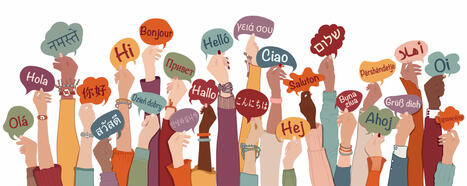







"New York cannot enforce the law on language access for immigrants; New York service centers do not provide translation
'21.06.2024'
Olga Feoktistova
Every summer, City Hall hires a small team of interns who speak different languages. They come to service centers in the city and pretend that they don’t speak English. In this way, the mayor's office verifies that agencies provide services in all the languages they are required by city law. The results are disappointing: agencies completely violate language accessibility laws, reports The City.
Secret inspectors come to the staff with a simple question. For example, they want to know if they qualify for certain benefits or participation in a program. The trick is that the inspectors ask about this in a language other than English and thus determine whether the agency has interpreting services available and the relevance of the documents that must be there according to the law.
Disappointing conclusions
Last month, the Mayor's Office of Immigrant Affairs released data on how various agencies fared in undercover audits. The data reflects 148 estimates for 2023 service centers across the city.
As it turned out, more than half of the service centers in 2023 were in some way violating the New York City language access law, Local Law 30 (2008). This law requires that the center have information brochures in the 10 most widely spoken languages in the city, as well as the availability of interpretation. In addition to English, these are Spanish, Chinese, Russian, Bengali, Haitian Creole, Korean, Arabic, Urdu, French and Polish.
In 2023, almost 40% of centers had no translated materials or brochures at all. A quarter of the centers did not provide interpretation services at all.
The most common violation was the lack of documents translated into the 10 major citywide languages. 25% of undercover reviewers who were not provided with interpretation at all used Google Translate. In some centers they were simply told to “come back later” or “find a bilingual person in the waiting room.”
The centers visited by undercover inspectors include city clinics and medical offices, where correct translation is vital. Two-thirds of the city Department of Health and Mental Hygiene facilities visited by undercover inspectors in 2023 were not in compliance with the language access law, new data shows.
With nearly half of all New Yorkers speaking a language other than English at home and the number of migrants and asylum seekers rising, advocates say agencies can't meet people's needs using English alone.
Francisco Navarro, a senior adviser in the Mayor's Office of Operations, has led the undercover program since its early days 14 years ago.
“The program has led to internal improvements that make it easier for New Yorkers to use city resources, no matter what language they speak,” Navarro said.
When the secret inspector reports that the service center does not meet the requirements, feedback from the mayor's office begins to work to improve the situation. The City has no regulatory or enforcement authority over these agencies. Local Law 30 requires each agency to create its own language access plan.Officials are working to create a community program that would provide in-person interpreter services to city agencies.
Perhaps the city will fund the creation of the Language Justice Collaborative, a cooperative bank of translators that would be made up of multilingual community members who can translate for people who don't speak English."
#metaglossia_mundus