

A director’s brief for my Hyperlinked Library course (LIBR 287) . This brief explains digital content curation via services like Scoop.it and advocates for its implementation in a public library.

Notebook or My Personal Learning Network
21.0K views |
+1 today

a personal notebook since summer 2013, a virtual scrapbook
Curated by
Gilbert C FAURE
 Your new post is loading...
 Scoop.it! 
Excerpt from article written and curated by Robin Good and first published on MasterNewMedia:
Via Giuseppe Mauriello, juandoming 

Debbie Elicksen 's curator insight,
December 20, 2013 4:49 PM
Scooping this to basically reference it for more tips on curating. We are all works in progress. 
Russell Yardley's curator insight,
December 25, 2013 4:01 PM
With billions of people connected through social media and directly connected with email traditional curators of news and other content have had their business models destroyed but it has not surprisingly taken many years for better models to emerge.
The widsom of crowds is well known but so is their stupidity (stock market crashes, group think, lowest common denominator in election outcomes...). Better curating tools and systems are beginning to show that valuable curators of the worlds content are able to find their audience and enrich the world with deep insight that replace the extremely low numbers of curators of the past (news paper barons).
Some of these curators will be paid and others do it just for the joy of it. Collectively they will reshape thinking and ultimately the world.
Scoop.it!

For almost everyone who is a part of the online world coming up with fresh content consistently is a big challenge. Practically every guideline advises that content should be engaging, informative and relevant every single time. Consequently, content curation has taken off in a big way. Simply put, content curation is the process of curating relevant and interesting content from various sources on the web and putting them together and publishing them on a personal site or blog. As a result of the popularity of the content curation process, a number of content marketing tools have been introduced. These tools are meant to help in the process of content marketing and SEO and facilitate the process of curation... Via Lauren Moss, Alfredo Corell
Gilbert C FAURE's insight:
of course

Dillon Thomas's curator insight,
February 1, 2014 5:55 PM
SCOOPS -- I began using Scoop when I was defining myself a LITE FEET DANCER. There was no single source of info about Lite Feet dance, a NYC Born Battle dance phenom and YouTube Sensation. I created LITE FEET SCOOP TO reference for my own resume but also to provide anyone interested a link to the multitude of YOUTUBE Channels, Sound Cloud and personal sites dedicated to this unique art form and the talented dancers who participate.

Annie 's curator insight,
December 5, 2014 8:18 PM
Scoop.it helps with the process of curating content. This is a must for your social media.
Scoop.it!

5 Secret & Disruptive Content Curation Tools
Via Thomas Faltin
Scoop.it!
#ScoopitBDay, Scoop.it a deux ans et j'écris cette article pour souhaiter un joyeux anniversaire à ce service de curation et partage de veille de contenus. Via Hélène Brevet

Daniel Morgenstern's comment,
November 6, 2013 11:17 AM
Merci à Hélène de remercier la communauté française. Alors à quand une version entièrement francisée de Scoop-it pour la récompenser de son dynamisme ?

Joëlle Walraevens-de Luzy's comment,
November 8, 2013 2:50 PM
Happy birtday Scoop it! Encore de belles années et bougies à souffler pour ce bel outil de curation
Scoop.it!
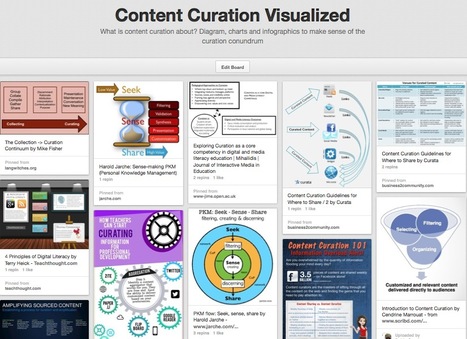
What is content curation about? Diagram, charts and infographics to make sense of the curation conundrum Via Robin Good, Kim Flintoff, catspyjamasnz, Paula Silva
Gilbert C FAURE's insight:
pour une présentation ultérieure

Jeff Domansky's curator insight,
September 1, 2014 11:53 PM
Valuable collection of the art of curation from Robin Good.
Scoop.it!
|


|
Rescooped by
Gilbert C FAURE
from Implementing e-Learning
October 12, 2013 7:47 AM
|
Scoop.it!

Gilbert C FAURE's insight:
55 websites to explore
|
|
Rescooped by
Gilbert C FAURE
from Content Curation World
October 5, 2013 1:49 AM
|
Scoop.it!
"...I consume a lot of information across an incredibly wide spectrum of disciplines and sources, always aiming to synthesize the meaningful and connect it with something else for a larger portrait of what matters in the world."
Via Robin Good
Gilbert C FAURE's insight:
scoop.it : curation for curiosity
but how to stimulate or induce curiosity in students or researchers without innate one?

Randy Bauer's comment,
October 5, 2013 1:43 PM
Thanks Robin, I am a fan of Brain Pickings. and of your curation as well.


Brian Kirby's curator insight,
October 11, 2013 4:41 PM
How to sift through large amounts of information...
|
|
Scooped by
Gilbert C FAURE
September 22, 2013 3:44 AM
|
Scoop.it!

Gilbert C FAURE's insight:
nice summary
|
|
Rescooped by
Gilbert C FAURE
from Vallées d'Aure & Louron - Pyrénées
September 1, 2013 3:06 PM
|
Scoop.it!
E-tourisme : pourquoi et comment gérer votre réputation et votre visibilité sur le web ?
Via Jean Luc Boulin, Scoop.it Aure Louron

Scoop.it Aure Louron's comment,
July 22, 2013 3:00 AM
Scoop.it étant né à Toulouse, on aurait apprécié disposer d'une interface en Français.

Serge Dielens * e-Reputation * Influence * Inbound Marketing Communication expert @ EdgeCommunication.be *'s comment,
August 21, 2013 7:00 AM
N'hésitez pas à suivre http://www.scoop.it/t/tout-sur-le-tourisme

|
|
Rescooped by
Gilbert C FAURE
from Immunology and Biotherapies
August 17, 2013 9:39 AM
|
Scoop.it!

Why Use Scoopit?
At the end of the day, you’re “doing” a lot actually simply by using a technology like scoopit. You’re modeling the proper use of social media, can help students understand writing for an audience, keywords and vocabulary understanding (and the aforementioned audience awareness), exploration and gathering of online resources, image and element impact, collaboration and community environments.
Via AnneMarie Cunningham, NLafferty, Gilbert C FAURE

Duncan Cole's curator insight,
May 8, 2013 3:35 PM
Nice summary of the benefits of using Scoop.it with students and
educators.
|
|
Rescooped by
Gilbert C FAURE
from Content Curation World
July 27, 2013 3:19 AM
|
Scoop.it!

Fiona Harvey's curator insight,
October 8, 2013 2:22 AM
Useful for educators - key digital literacy skill

johanna krijnsen's curator insight,
December 4, 2013 2:00 PM
content curation and critical thinking skills

|
|
Scooped by
Gilbert C FAURE
December 17, 2013 1:55 PM
|
Scoop.it!
Haiku Deck of 5 cool content curation tools including: Haiku Deck, Paper.li, Pinterest, Scoop.it, GooglePlus
|
|
Rescooped by
Gilbert C FAURE
from Designing Instruction for Significant Learning
December 14, 2013 2:30 PM
|
Scoop.it!

In practice a successful online learning experience is likely to result in a mix of curation and creation. The relative amounts of each will depend on the subject matter and what is already available.
Via Mercedes Kamijo
|
|
Rescooped by
Gilbert C FAURE
from Curation, Veille et Outils
November 29, 2013 4:56 AM
|
Scoop.it!

curation Drôle de mot que celui de curation quand on parle d'Internet. On est plutôt habitués aux anglicismes et néologismes composés de termes techniques un peu abscons alors que curation est un vieux mot qui nous vient ...
Via JC Dichant, Veille digitale
Gilbert C FAURE's insight:
simplifié mais mis en mots

JC Dichant's curator insight,
November 28, 2013 8:23 AM
Si vous aviez encore besoin de comprendre l'intérêt de la curation
#curation

Veille digitale's curator insight,
November 29, 2013 1:47 AM
L'auteur répond à une dizaine de questions sur la curation.

Mickael Ruau's curator insight,
January 16, 2014 5:38 AM
"Si la curation n’était que du transfert d’information on pourrait dire que retweeter un article ou re-publier une information sur son mur Facebook est de la curation, ce qui est inexacte.
Pour faire une curation de qualité il faut je pense ajouter de la valeur. D’abord bien sélectionner ses sources, les vérifier et choisir celles qui ont une vraie valeur ajoutée car elles sont des créations originales et pas déjà le produit d’une agrégation.
Ensuite, l’intérêt va résider dans le classement de cette information, son éditorialisation et dans sa redistribution.
La vraie plus-value d’une curation est le classement et ce que je vais rajouter à l’information, un titre original, qui dit quelques chose de notre avis ou de notre opinion sur l’information, une critique ou un angle un peu provocateur fait pour déclencher un débat avec ceux qui nous suivent, bref, une touche personnelle qui rajoute notre propre valeur à l’information partagée.
Mieux vaut publier peu mais avec de la valeur ajoutée."
|
|
Rescooped by
Gilbert C FAURE
from Curation, Social Business and Beyond
November 9, 2013 11:20 AM
|
Scoop.it!


janlgordon's curator insight,
November 9, 2013 11:10 AM
Angela Dunn has written a great piece on one of my favorite topics, curation - it was the lead post on our launh of Curatti last night.
What makes a good curator?
"You need to have the eye of an editor, a sense of taste like a chef, and your own unique Point of View. It is this Point of View – your taste – that can lead to authority and influence".
Jan Gordon:
Curators who are driven by passion and purpose will be very important to the business community in their chosen niche - it's crucial that we preserve this information for the future. That is why the future of curation is definitely evergreen.
Here are some highlights that caught my attention:
The amount of content is growing exponentially, but our time is limited. Curators are our filters for information overload – the editors of chaos.
The slew of content curation tools that emerged gave way to algorithms. Can a machine have a Point of View? Machines can influence your Point of View. The danger is they can also create a filter bubble.
It is human insight coupled with machine results that can define the very best information edited from a trusted curator’s Point of View.
Evergreen posts, such as “Curating Content for Thought Leadership”,, written by Angela in 2010 are important in that they stand the test of time. All good blogs need some such articles.
The above, along with all of Angela's posts on the now defunct Postereus, have evergreen links due to a new tool for archiving the web – Permamarks.
Selected by Jan Gordon for Curatti covering Curation, Social Business and Beyond
Read more here: [http://bit.ly/1ewOFR1]
|
|
Scooped by
Gilbert C FAURE
October 30, 2013 3:40 PM
|
Scoop.it!

Three research and content curation tools for content creators, researchers and copywriters to build your authority.
Gilbert C FAURE's insight:
Scoop.it en troisième ligne, mais en première en science et recherche!

Ally Greer's curator insight,
October 29, 2013 4:17 PM
Thanks, Courtney Ramirez, for including Scoop.it here.
Our goal is precisely that: to maintain a "better quality-to-noise ratio" by maintaining expert-curated content as well as an internal social network filled with engaging content.
|
|
Rescooped by
Gilbert C FAURE
from Content Curation World
October 15, 2013 1:30 PM
|
Scoop.it!

Deanna Dahlsad's curator insight,
October 15, 2013 3:59 PM
Robin Good of Content Curation World breaks the findings down thus:
a) what people curate as relevant is not generally among the top ranked results according to popular metrics. Good stuff is not the same as what is considered normally popular or authoritative stuff.
b) content curation allows a community to synchronize around specific issues and subjects (as anticipated by Clay Shirky)
c) better and more appreciated curation is of the "structured" kind, providing additional info, meta-data and categorization.
d) curators that are highly appreciated are characterized by consistent activity and by a variety of interests (or viewpoints under the same theme) that they are capable to cover.
This is rather my experience; however, I usually explain it to my clients this way:
a) You can be doing an excellent job, but never receive the recognition, popularity, or traffic you deserve.That doesn't mean you won't be appreciated greatly by the smaller group of people who do find/read your curated works.
b) No matter the popularity of your curation, you can build and have conversations -- but remember, community cultivation not only requires additional time, but a different skill set.
c) If you're going to do it, do it well. Use tools, such as labels and tags, and *always* provide context as well as proper credits and links.
d) Consistent activity is nearly as important as showing some personality along with your knowledge. Your topic may be narrowly focused, but offer additional topics and information about you personally (not just professionally) so that people get a sense of you.

Carmenne Kalyaniwala's curator insight,
October 16, 2013 2:17 AM
A research paper by Zhong, Shah, Sundaravadivelan and Sastry, King's college London, 2013

AnneMarie Cunningham's curator insight,
October 17, 2013 8:28 AM
See the excellent notes from Robin Good below. Interesting to see more work emerging in this field.
|
|
Rescooped by
Gilbert C FAURE
from Implementing e-Learning
October 13, 2013 4:23 AM
|
Scoop.it!
RT @Prospecteer: Content Curators check this out! http://t.co/I4oVBamACh Seven Tools for Finding Great Content to Share #content #curation
Via Mario Zidar
Gilbert C FAURE's insight:
scoop it at the forefront again
|
|
Rescooped by
Gilbert C FAURE
from Content curation trends
October 9, 2013 3:04 PM
|
Scoop.it!

Curate or be curated — that’s the new face of digital content in the always-on world.
Via Robin Good, Guillaume Decugis
Gilbert C FAURE's insight:
5 laws to reuse to explain to naive laypeople


Julie Groom's curator insight,
October 23, 2013 4:48 AM
Curating - how to manage it. And curation experts already exist - they're called Librarians!
|
|
Rescooped by
Gilbert C FAURE
from Content Curation World
October 1, 2013 2:24 PM
|
Scoop.it!

Federico Guerrini's comment,
October 2, 2013 5:06 AM
Actually, I believe it will become more and more important, as an issue, as newsrooms cut staff, especially foreign correspondents

socialNONmente's curator insight,
October 2, 2013 6:54 AM
La "Content Curation" è una nuova forma di giornalismo? Se lo è chiesto un giornalista freelance italiano specializzato in tecnologia, Federico Guerrini, in una ricerca commissionata dal Reuters Institute for the Study of Journalism

David Sallinen (WAN-IFRA)'s curator insight,
October 3, 2013 4:48 PM
newsroom curators to engage readers !
|
|
Rescooped by
Gilbert C FAURE
from barcamps, educamps. opencourses, moocs
September 8, 2013 3:52 AM
|
Scoop.it!

Scoop.it is a great online curation tool that enables us to share relevant information with students in a visually appealing, easy to use format. ”Creative consumption” according to the folks at Scoop.it. Previously I’ve shared links to websites with students via koodle/wiki/email but Scoop.it enables creators to “scoop” several sites onto one page (or online magazine). It pays to show students the page to pique their interest.
Via Heiko Idensen

Guillaume Decugis's curator insight,
September 7, 2013 11:59 PM
Nice review of Scoop.it in an education context.

Gilbert C FAURE's comment,
September 8, 2013 3:45 AM
it helps sharing relevant information with students who have less time than teachers to look for information. It allows those are curious enough to go further in a topic with the help of others. It may awaken those who have a "research" profile to go further into the information frontier.
|
|
Rescooped by
Gilbert C FAURE
from Immunology
August 17, 2013 11:48 AM
|
Scoop.it!
Guillaume Decugis's comment,
May 9, 2013 11:30 AM
@Larry: isn't that what our "create a newsletters" function does? To see it go to one of your topics and click on Manage.

Gilbert C FAURE's curator insight,
May 25, 2013 3:08 AM
from current contents and reprint requests to now!
eugene garfield, what do you think of changes of scientific virtual networking?
|
|
Scooped by
Gilbert C FAURE
August 16, 2013 3:58 PM
|
Scoop.it!

Web platforms may one day catch up to traditional institutions like the Library of Congress in their ability to collect and organize millions of documents, according to an infographic by content curation platform Scoop.it.




