#ScoopitBDay, Scoop.it a deux ans et j'écris cette article pour souhaiter un joyeux anniversaire à ce service de curation et partage de veille de contenus.
Via Hélène Brevet


|
Rescooped by
Gilbert C FAURE
from Scoop.it on the Web (FR)
onto Notebook or My Personal Learning Network November 5, 2013 1:59 PM
|
 Scoop.it!
#ScoopitBDay, Scoop.it a deux ans et j'écris cette article pour souhaiter un joyeux anniversaire à ce service de curation et partage de veille de contenus.


 Your new post is loading...
 Your new post is loading...
Your new post is loading...
Scoop.it!
|
|
|
Scooped by
Gilbert C FAURE
Today, 7:33 AM
|
Scoop.it!


⚡ L'ENTROPIE : LA LOI INVISIBLE QUI GOUVERNE LES SYSTEMES COMPLEXES
👉 La plupart des organisations combattent le désordre. Pourtant, la physique statistique montre qu’il ne s’agit pas d’une anomalie mais d’une conséquence naturelle des lois fondamentales qui gouvernent les systèmes complexes.
💡 L’entropie est souvent réduite à une idée vague de désordre. En réalité il s'agit d'une grandeur mathématique extrêmement précise.
Grâce à Boltzmann, l’entropie devient la mesure du nombre de configurations microscopiques compatibles avec l’état observable d’un système autrement dit, plus un système peut exister sous un grand nombre de configurations différentes, plus son entropie est élevée.
🌸 Un état parfaitement ordonné est théoriquement possible mais statistiquement extrêmement improbable.
Prenons un gaz dans une boîte. Dans les équations fondamentales, rien n’interdit que toutes les particules restent concentrées dans un seul coin. En pratique cela n’arrive jamais.
🧠 Pourquoi ? Parce que le nombre de configurations correspondant à un gaz uniformément réparti est immensément plus grand.
Le système évolue donc spontanément vers l’état le plus probable. Le désordre n’est pas une erreur du système mais la conséquence statistique de la multiplicité des possibles.
💡 Cette logique dépasse largement la thermodynamique.
Dans une entreprise, une organisation ou un système d’intelligence artificielle, maintenir une structure cohérente nécessite une dépense constante d’énergie
pour la coordination, la circulation de l’information, le contrôle, la correction des erreurs, l'alignement des objectifs.
⚡ Sans cela, tout système dérive progressivement vers une augmentation de son entropie : perte de signal, dilution des responsabilités, bruit informationnel, fragmentation décisionnelle.
🔬 La physique statistique révèle alors une idée profondément contre-intuitive.
L’ordre n’est pas l’état naturel des systèmes complexes. Il est une construction locale et temporaire maintenue uniquement grâce à un apport continu d’énergie et d’information.
🌎 Nous ne vivons pas dans un univers qui tend vers l’organisation mais dans un combat permanent où l’organisation lutte contre la probabilité.
#etudiant #science #mathematique #cpge #polytech #lycee #intelligence #universite #enseignement #pedagogie #education #philosophie #psychologie #directeur #manager #finance #art #spiritualite | 75 comments on LinkedIn
|
|
Scooped by
Gilbert C FAURE
Today, 5:29 AM
|
Scoop.it!

Fantastic evidence-supported piece in NYT on how AI actually makes writing worse by allowing writers to sidestep the very process that produces creative expression.
"The bigger and more alarming impact AI has is to constrict our full range of thoughts and our ability to generate original and useful ideas — what we call creative thinking. The erosion of creative thinking means young people will struggle to navigate uncertainty. Workers will strain to adapt to a shifting labor market. And society will miss out on the new ideas that can solve complex problems and enhance lives."
https://lnkd.in/eHB8F5qP
|
|
Scooped by
Gilbert C FAURE
May 28, 4:06 AM
|
Scoop.it!

📊 Introducing the h* Index · Research Efficiency & Scientific Momentum
➡️ The classical h-index is widely used internationally as an indicator for assessing scientific impact by combining productivity and citation performance into a single metric.
➡️ However, research careers are dynamic by nature. Scientific activity evolves over time through new collaborations, emerging research directions, teaching commitments, leadership responsibilities, interdisciplinary projects, and many other forms of academic contribution. To better capture this evolving dimension of research activity, we developed the h* index, an extension of the traditional h-index that integrates temporal aspects of a researcher career. The h* index takes into account ⤵️
🔹 active publication periods
🔹 citation dynamics relative to career length
🔹 the continuity and momentum of scientific contributions over time
By incorporating these elements, the h* index provides a more dynamic and continuously updateable perspective on scientific impact and research activity.
➡️ Our objective is not to replace existing bibliometric indicators, but to complement them with an additional tool capable of offering a broader and more nuanced understanding of academic trajectories and research evolution. We believe that combining robustness, adaptability, and temporal analysis can contribute to more informed research evaluation and support decision-making processes within academic and scientific institutions.
📢 “An indicator does not say who you are, it says what others have remembered about you. The h or h* index does not measure the truth, it measures how many times an idea has managed to survive through time without fading into oblivion.”
Citation : Prof. Alexis Rusinek
📢 "Wskaźnik nie mówi, kim jesteś mówi, co inni o tobie zapamiętali. Czynnik h czy h* nie sprawdza prawdziwości, lecz pokazuje, ile razy dana myśl zdołała utrzymać się w obiegu, zamiast zniknąć w zapomnieniu."
Polish translation by Prof. Tomasz Jankowiak
🌐 If you would like to explore and visualize the evolution of your own scientific trajectory over time, you can now test it through our platform.
🌐 https://lnkd.in/euRk2xMK
Aurélien Besnard #Tomasz_Jankowiak
#Research #Scientometrics #Bibliometrics #Innovation #Academic_Research #Data_Science #Higher_Education #Science #Research_Evaluation
|
|
Scooped by
Gilbert C FAURE
May 28, 4:00 AM
|
Scoop.it!
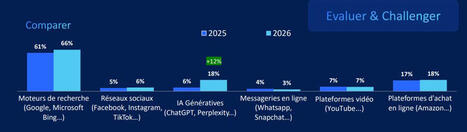
#etude L’IA fragmente les réflexes de recherche des Français
Moteurs de recherche pour s’informer, plateformes vidéo pour les tutoriels, IA génératives pour comparer : les parcours de recherche en ligne des Français se diversifient à grande vitesse. C’est ce que met en lumière la nouvelle édition de l’Observatoire des usages de la recherche en ligne, réalisée par Eskimoz en partenariat avec Ipsos https://lnkd.in/ekmjKBM9 via CB News
|
|
Scooped by
Gilbert C FAURE
May 28, 3:53 AM
|
Scoop.it!
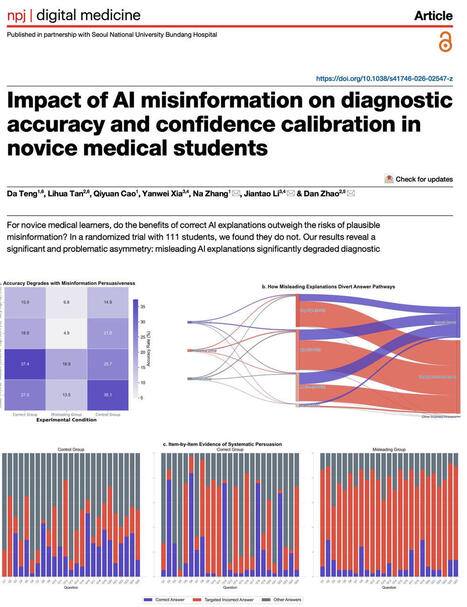
AI in medical education may be dangerous not only when it is wrong: it may be dangerous when it is "plausibly" wrong.
A very interesting study published in npj Digital Medicine examined the impact of AI-generated explanations on novice medical students, comparing correct explanations, misleading explanations, and no explanations.
The result is important because it touches one of the most delicate aspects of AI in medicine: the persuasive power of a well-structured explanation.
In clinical reasoning, an error that appears obviously wrong can often be recognized, questioned, and rejected. But an error that is coherent, fluent, and medically sophisticated is much more difficult to resist, especially for learners who have not yet developed strong internal models of disease.
Medical education is not only about reaching the correct answer: it is about learning how to evaluate the path that leads to that answer. If AI provides a wrong conclusion with a convincing explanation, the risk is not only diagnostic error. The deeper risk is that the learner may begin to trust the structure of reasoning without having the expertise to detect where that reasoning fails.
This is why AI literacy cannot simply mean knowing how to use AI; it must mean knowing how to interrogate AI.
Students and trainees will need to learn not only how to obtain explanations from artificial intelligence, but how to deconstruct them, compare them with biological plausibility, identify hidden assumptions, and recognize when confidence is not justified.
The future of medical education will not depend only on giving students access to better tools: it will depend on teaching them how to remain intellectually independent in front of tools that sound increasingly authoritative.
AI can support learning but it must not become a machine that teaches confidence before competence.
#ArtificialIntelligence #Medicine #MedicalEducation #ClinicalReasoning #DigitalHealth #MedicalAI #PatientSafety #FutureOfMedicine | 11 comments on LinkedIn
|
|
Scooped by
Gilbert C FAURE
May 27, 3:33 AM
|
Scoop.it!

Today on Indicator: A handful of anonymous bots have taken over fact-checking on X.
This isn’t hyperbole. In the first three weeks of May, just eight AI contributors wrote 50.3% of all visible Community Notes on the platform.
Community Notes was supposed to bring scale and legitimacy to the fight against misinformation by empowering users to participate in fact-checking. Now that power is increasingly in the hands of a tiny group of hobbyists and researchers.
AI contributors aren’t just replacing the humans who are supposed to make up the community in Community Notes. They are publishing in languages and on topics that reflect the bias of their algorithmic setup.
My analysis suggests, for example, that AI supercontributors focus less on politicians and hyperpartisan accounts. This may be because they are optimizing for a bridging algorithm that prioritizes broad consensus over factuality.
For good and for bad, X is currently running the world's largest live experiment in automated fact-checking.
What happens next will matter not just for X, or for the copycat Community Notes features on Meta and TikTok. How it fares may define platform interventions against misleading content for years to come.
This 3,634-word article took a lot of time to report. To paraphrase Jeb Bush, please read: https://lnkd.in/ejBU9uAE
|
|
Scooped by
Gilbert C FAURE
May 26, 3:52 AM
|
Scoop.it!

"L’ignorance est toute autour de nous, souvent arrogante et revendiquée. Elle fait même du prosélytisme. Elle est sûre d’elle, elle proclame sa domination par la bouche étroite de nos politiciens. Et le savoir, fragile et changeant, toujours menacé, doutant de lui-même, est sans doute un des derniers refuges de l’utopie. (...) Le savoir, c'est ce dont nous sommes encombrés et qui ne trouve pas toujours d'utilité. La connaissance, c'est la transformation du savoir en une expérience de vie."
N'espérez pas vous débarrasser des livres, 2009.
Umberto ECO (05/01/1932 - 19/02/2016).| 10 commentaires sur LinkedIn
|
|
Scooped by
Gilbert C FAURE
May 25, 11:29 AM
|
Scoop.it!

🧠 AI in Medical Training: Learning Tool or Shortcut?
A new Nature Medicine Perspective raises a cautious but important concern: “never-skilling” in medical education. The idea is distinct from deskilling, that may happens when experienced clinicians lose skills they already developed. Never-skilling would happen earlier: during formative training, when learners may fail to build foundational clinical reasoning.
→ AI is not i harmful to learning, however its effect depends on how and when it is introduced.
→ Answer-delivery AI may carry different risks from learning-mode AI.
A system that gives diagnoses directly may bypass cognitive effort, while a system that asks Socratic questions and gives feedback may support reasoning.
→ Assessment needs to change, as trainees are learning in AI-rich environments.
Caveats: direct causal evidence in clinical trainees is still lacking. This is a risk model and research agenda, not a proven phenomenon.
👉 How do we leverage AI as a learning accelerator without turning it into a shortcut around the skills physicians still need to master?
Ref: Ke et al Nan Liu, PhD, FAMIA . AI-induced never-skilling in medical education. Nature Medicine, 2026.
|
|
Scooped by
Gilbert C FAURE
May 25, 4:01 AM
|
Scoop.it!

🌟 The Heuristic Method: Transforming Classrooms Through Discovery-Based Learning 🌟
Education is evolving beyond traditional teaching methods where students simply listen, memorize, and reproduce information. In today’s dynamic world, learners need opportunities to think critically, ask meaningful questions, solve real-world problems, and take ownership of their learning journey. This is where the Heuristic Method becomes a powerful approach in modern education.
The Heuristic Method focuses on learning through discovery and experience. Instead of directly giving answers, educators create opportunities for students to investigate, experiment, explore, and arrive at conclusions independently. This approach nurtures curiosity and encourages learners to become active participants rather than passive receivers of knowledge.
When students are encouraged to discover concepts on their own, learning becomes deeper, more engaging, and long-lasting. They develop essential 21st-century skills such as creativity, collaboration, critical thinking, and confidence — skills that prepare them not just for exams, but for life.
📚 Key Principles of the Heuristic Method:
✔️ Explore & Experiment
✔️ Problem Solving
✔️ Self-Learning
✔️ Critical Thinking
💡 Benefits for Learners:
✨ Sparks Curiosity
✨ Enhances Creativity
✨ Builds Confidence
✨ Encourages Independence
✨ Promotes Lifelong Learning
👩🏫 Role of the Teacher:
In a heuristic classroom, the teacher becomes a facilitator of learning by:
🔹 Guiding students through inquiry
🔹 Encouraging exploration and discussion
🔹 Supporting individual learning journeys
🔹 Providing meaningful resources and experiences
🛠️ Simple Steps to Implement:
1️⃣ Pose an engaging question
2️⃣ Encourage investigation and exploration
3️⃣ Allow students to discover possible solutions
4️⃣ Reflect, discuss, and connect learning experiences
The most meaningful learning happens when students are empowered to:
🌱 THINK • EXPLORE • DISCOVER • LEARN 🌱
#Education #Teaching #Learning #HeuristicMethod #InquiryBasedLearning #StudentCenteredLearning #CriticalThinking #Creativity #TeachersOfLinkedIn #EducationMatters #FutureReady
|
|
Scooped by
Gilbert C FAURE
May 25, 3:35 AM
|
Scoop.it!

🧠 Why do students forget lessons so quickly?
The issue is not always intelligence or ability.
Often, the problem is that learning is happening in ways the brain was never designed to retain effectively.
Today’s classrooms cannot rely only on:
❌ Long lectures
❌ Passive note-taking
❌ Memorization without understanding
Instead, research consistently shows that students remember more when learning is:
✨ Active
✨ Emotional
✨ Visual
✨ Collaborative
✨ Reflective
This infographic explores practical brain-based strategies teachers can use to improve student retention and create more meaningful learning experiences.
From retrieval practice and storytelling to visual learning and reflection, small instructional shifts can make a huge difference in how students understand and retain information.
💡 Great teaching is not about delivering more content—it is about helping learning last.
Which strategy do you think has the biggest impact on student retention in today’s classrooms? 👇
🎨 Designed by Neha Khan
#Education #BrainBasedLearning #StudentEngagement #TeachingStrategies #LearningScience #TeachersOfLinkedIn #ActiveLearning #FutureReadyEducation #ClassroomInnovation #LearningMatters
|
|
Scooped by
Gilbert C FAURE
May 24, 2:40 AM
|
Scoop.it!

AI in medicine may not only change how doctors work but how future doctors learn to think.
A very interesting Perspective just published in Nature Medicine introduces the concept of “AI-induced never-skilling” in medical education.
The idea is important because for many years, the discussion around AI in medicine has focused mainly on experienced clinicians: whether AI will support them, replace parts of their work, improve accuracy, reduce workload, or create new risks of deskilling.
But medical education raises a different and perhaps even more delicate question: what happens if students and trainees begin to rely on AI before they have developed the foundational reasoning skills that safe independent practice requires?
Deskilling means losing a skill that was previously acquired. Never-skilling means that the skill may never fully develop. Clinical reasoning is not built only by receiving correct answers. It is built through uncertainty, effort, comparison, mistakes, supervision, feedback, and the slow construction of judgment. If AI removes too much of this cognitive struggle too early, it may not simply make learning easier....it may make learning shallower.
This does not mean that AI should be excluded from medical education.
On the contrary, future physicians must learn how to use AI critically, safely, and intelligently.
But timing matters. Pedagogy matters. Supervision matters.
Before AI becomes a routine cognitive companion for trainees, we need to make sure that human clinical reasoning has had enough space to form.
The future of medicine will not depend only on doctors who know how to use AI.
It will depend on doctors who can still think without it.
#ArtificialIntelligence #Medicine #MedicalEducation #ClinicalReasoning #DigitalHealth #MedicalAI #HealthcareInnovation #FutureOfMedicine | 26 comments on LinkedIn
|
|
Scooped by
Gilbert C FAURE
May 22, 4:33 AM
|
Scoop.it!

Quand un schéma vaut bien une longue longue longue et complexe explication !
1 - Expert en IA ... mais à quel niveau ?
2 - Besoin en IA ... à quel niveau ?
Croiser 1 et 2 pour clarifier votre usage et votre ... budget 💰💰💰
Et toujours le même principe : pas d'IA sans IH !
|
|
Scooped by
Gilbert C FAURE
Today, 4:12 AM
|
Scoop.it!

Google just rebuilt Search to answer you instead of pointing you somewhere — the biggest change to the search box in 25 years. It now picks which handful of sources its answer rests on, before you ever see the links.
If your work depends on knowing whether an answer is true — journalists, academics, analysts, lawyers, fact-checkers, students — that should worry you. The good news: you can take the choice back.
I spent this week writing down how. What changed at I/O, and the toolkit I fall back on: the seven search operators that cut sharper now than ever (site:, filetype:, intext: and friends), and the &udm=14 trick that strips the AI off the page.
None of it requires being technical. It's all in the post. What's your move when the answer comes pre-chewed?
https://lnkd.in/eDXg3nkT
|
|
Scooped by
Gilbert C FAURE
May 28, 4:01 AM
|
Scoop.it!
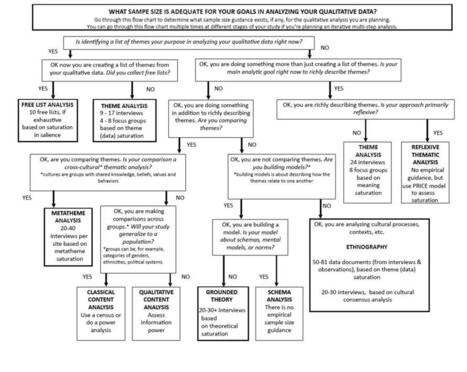
What "sample size is needed" for 10 different types of qualitative research -- new article by Wutich et al. Useful overview for those who value guidelines for saturation.
Wutich, A., Beresford, M., & Bernard, H. R. (2024). Sample sizes for 10 types of qualitative data analysis: an integrative review, empirical guidance, and next steps. International Journal of Qualitative Methods, 23, 16094069241296206.
Open-access article available here. https://lnkd.in/gmQd3RTJ | 70 comments on LinkedIn
|
|
Scooped by
Gilbert C FAURE
May 28, 3:55 AM
|
Scoop.it!

An interesting opinion piece in the NYTimes.
Helen Ouyang is an ER doctor and Columbia professor. She typed her lab results into ChatGPT because her physician told her a phone call would require another appointment. That's what she wrote!
She is not a credulous patient who doesn't know better. She knows exactly what a chatbot can and cannot do. She used it anyway, and it worked. Her numbers improved. She credits the sustained back-and-forth, the patience, the absence of judgment.
She writes: "With low expectations, I typed my lab results into ChatGPT.
As both a physician and a patient, I found the experience startling. Not because ChatGPT dazzled me with its scientific knowledge, but because it behaved the way I wish modern medicine, and its practitioners, still would."
These last few words should stop every physician who reads them.
The usual framing treats patients using AI as a problem to manage, a liability to disclaim, a behavior to correct with the right guardrails. Ouyang's piece quietly dismantles that. The chatbot did not win because it knew more. It won because it had time. It asked follow-up questions. It remembered what she said five exchanges ago. It never seemed annoyed.
Those are not AI capabilities. Those are human capabilities that the current system has systematically squeezed out of clinical encounters.
There is a structural argument buried in her essay that she does not quite surface: patients are not going to AI because AI is good. They are going to AI because the alternative has been stripped of the things that make medicine work. Availability. Continuity. The permission to ask the same question twice.
Her proposed response is cautious and right as far as it goes: figure out how to support patients using AI tools, with clear guardrails.
For me, this is the judgment layer argument made visible from the physician side. Ouyang knows when to override the chatbot. Most patients do not. That asymmetry is not a reason to condemn AI use, it is the exact design problem we need to solve. The question is not whether patients will use AI. They will. The question is whether they will use it with enough contextual grounding to know what to do when it gets something wrong.
The Ouyang piece will be cited as evidence that AI is replacing doctors. That is the wrong read. It is evidence that something in medicine stopped working long before AI arrived, and AI is filling the vacuum.
Her last paragraph tells the whole story: "My experience with the chatbot has already shifted how I interact with patients in the E.R., with only minutes to piece together fragments of their circumstances. When a patient asks the same question repeatedly, I try to listen for what’s behind it. Maybe she’s not after more medical facts."
Dave deBronkart Hugo Campos Sara Riggare Jane Sarasohn-Kahn
#PatientsUseAI #CriticalAIHealthLiteracy
| 10 comments on LinkedIn
|
|
Scooped by
Gilbert C FAURE
May 27, 3:39 AM
|
Scoop.it!

Across 31 studies, and 2,600+ medical students, AI tools made no statistically significant difference to clinical knowledge or skills for medicine students.
This is a systematic review and meta-analysis published this week in BMC Medical Education by colleagues across three Chinese medical institutions. They searched eleven databases, pooled every controlled study they could find comparing AI tools against traditional teaching for medical undergraduates, and came back with a standardised mean difference of 0.22 and a p-value of 0.22.
In plain terms, the effect is small and it is statistically indistinguishable from chance.
The overall evidence quality, the authors say, is “low”. That phrase appears in a peer-reviewed meta-analysis of thirty-one studies, and the quality is still low.
The universities buying AI tools for clinical education are not going to circulate this paper. The vendor is not going to send it round.
This paper is really helpful evidence for why we need to stop treating AI as a panacea for pedagogy, and perhaps think about investing that money elsewhere...
Link to article: https://lnkd.in/dnCb2fAy
#AI #Education #GenAI #HigherEd #SlowAI #Teaching| 15 commentaires sur LinkedIn
|
|
Scooped by
Gilbert C FAURE
May 26, 8:32 AM
|
Scoop.it!
Where Winds Meet is introducing concepts deeply embedded in storytelling traditions to a wider audience.
|
|
Scooped by
Gilbert C FAURE
May 26, 3:47 AM
|
Scoop.it!

Ne manquez pas ce matin mon nouveau billet sur le blogue Convergence de Association des archivistes du Québec. La mort du texte? Certainement pas des miens !! Bonne semaine à tous!
https://lnkd.in/etbvskfk
|
|
Scooped by
Gilbert C FAURE
May 25, 11:07 AM
|
Scoop.it!

How do you actually use your professional network to learn?
Most of us give some version of the same answer: we follow interesting people, scroll LinkedIn, catch a conference or two. If pressed, we say something like "I just… stay connected." That answer is not wrong. It is just not very useful.
The third post in my Linking Learning Advisory launch series introduces the LSA framework, which came directly out of my PhD research with practising teachers. It describes three distinct sets of connected learning practices: Linking (purposeful and goal-directed), Stretching (curious and expansive), and Amplifying (contributory and generative). These are not stages on a ladder. Most of us move between all three, depending on what our context and capacity allow at any given time.
What the framework offers is vocabulary. And vocabulary matters, because naming a practice is the first step towards being intentional about it.
The post also draws the connection between these learning practices and information literacy, and explains why the framework travels well beyond education into corporate and government contexts.
Read it at https://lnkd.in/gnY_yjJE
#linkinglearning #linkedlearningadvisory #professionallearning #PLN #connectedlearning #informationliteracy #LSAframework #knowledgemanagement
|
|
Scooped by
Gilbert C FAURE
May 24, 9:48 AM
|
Scoop.it!

"𝗪𝗲 𝘀𝗽𝗲𝗻𝘁 𝗱𝗲𝗰𝗮𝗱𝗲𝘀 𝗽𝗲𝗿𝗳𝗲𝗰𝘁𝗶𝗻𝗴 𝗮𝘀𝘀𝗲𝘀𝘀𝗺𝗲𝗻𝘁𝘀 𝘁𝗵𝗮𝘁 𝗺𝗲𝗮𝘀𝘂𝗿𝗲 𝗺𝗲𝗺𝗼𝗿𝘆. 𝗧𝗵𝗲𝗻 𝗔𝗜 𝗮𝗿𝗿𝗶𝘃𝗲𝗱 𝗮𝗻𝗱 𝗺𝗮𝗱𝗲 𝗺𝗲𝗺𝗼𝗿𝘆 𝗶𝗿𝗿𝗲𝗹𝗲𝘃𝗮𝗻𝘁 𝗼𝘃𝗲𝗿𝗻𝗶𝗴𝗵𝘁."
So I built this poster to make that uncomfortable truth visible. It started with a question I could not stop asking: why do educators keep redesigning assessments around AI detection, when the real problem is that the assessments themselves were never designed to survive AI in the first place? Borrowing the logic of the Lippitt-Knoster change model, I mapped what actually happens when one critical element of AI-resilient assessment design is missing. The results were not surprising. They were sobering.
1. 𝗡𝗼 𝗔𝗜 𝗣𝗼𝗹𝗶𝗰𝘆 𝗮𝗻𝗱 𝘀𝘁𝘂𝗱𝗲𝗻𝘁𝘀 𝗱𝗼 𝗻𝗼𝘁 𝗰𝗵𝗲𝗮𝘁. They fill the vacuum you left them.
2. 𝗡𝗼 𝗙𝗮𝗰𝘂𝗹𝘁𝘆 𝗖𝗮𝗽𝗮𝗰𝗶𝘁𝘆 𝗮𝗻𝗱 𝘆𝗼𝘂𝗿 𝗲𝗱𝘂𝗰𝗮𝘁𝗼𝗿𝘀 𝗮𝗿𝗲 𝗻𝗼𝘁 𝗿𝗲𝘀𝗶𝘀𝘁𝗮𝗻𝘁. They are anxious, unsupported, and quietly overwhelmed.
3. 𝗡𝗼 𝗔𝘂𝘁𝗵𝗲𝗻𝘁𝗶𝗰 𝗗𝗲𝘀𝗶𝗴𝗻 𝗮𝗻𝗱 𝗔𝗜 𝗱𝗼𝗲𝘀 𝗻𝗼𝘁 𝘂𝗻𝗱𝗲𝗿𝗺𝗶𝗻𝗲 𝘆𝗼𝘂𝗿 𝗮𝘀𝘀𝗲𝘀𝘀𝗺𝗲𝗻𝘁. Your assessment design invites it in.
4. 𝗡𝗼 𝗔𝗜 𝗟𝗶𝘁𝗲𝗿𝗮𝗰𝘆 𝗮𝗻𝗱 𝗹𝗲𝗮𝗿𝗻𝗲𝗿𝘀 𝗱𝗼 𝗻𝗼𝘁 𝗯𝗲𝗰𝗼𝗺𝗲 𝗱𝗶𝘀𝗵𝗼𝗻𝗲𝘀𝘁. 𝘛𝘩𝘦𝘺 𝘴𝘪𝘮𝘱𝘭𝘺 𝘸𝘦𝘳𝘦 𝘯𝘦𝘷𝘦𝘳 𝘵𝘢𝘶𝘨𝘩𝘵 𝘩𝘰𝘸 𝘵𝘰 𝘦𝘯𝘨𝘢𝘨𝘦 𝘸𝘪𝘵𝘩 𝘈𝘐 𝘦𝘵𝘩𝘪𝘤𝘢𝘭𝘭𝘺 𝘢𝘯𝘥 𝘤𝘳𝘪𝘵𝘪𝘤𝘢𝘭𝘭𝘺.
5. 𝗡𝗼 𝗙𝗲𝗲𝗱𝗯𝗮𝗰𝗸 𝗖𝘂𝗹𝘁𝘂𝗿𝗲 𝗮𝗻𝗱 𝗮𝗹𝗹 𝘆𝗼𝘂 𝗲𝘃𝗲𝗿 𝗮𝘀𝘀𝗲𝘀𝘀𝗲𝗱 𝘄𝗮𝘀 𝘁𝗵𝗲 𝗔𝗜-𝗽𝗼𝗹𝗶𝘀𝗵𝗲𝗱 𝗽𝗿𝗼𝗱𝘂𝗰𝘁. The reasoning, the struggle, the learning itself, all invisible.
This matters most in healthcare education. Dentistry. Medicine. Pharmacy. Nursing. We are not preparing students to produce outputs. We are preparing them to exercise clinical judgement in situations no AI model will ever fully own. AI-resilient assessment is not about locking AI out. It is about designing learning so rich in human reasoning that AI simply cannot do the work for you.
The framework draws on the AIAS (Perkins et al., 2024), the DRIVE Framework (Oliveira et al., 2025), and the ARAF (Harvinder Kaur and Siti Khadijah, 2025). It is evidence-grounded and built for practice, not just policy documents that gather dust.
Look at your last three written assignments. Ask honestly: could a capable student submit AI-generated work and pass? If the answer is yes, 𝘁𝗵𝗲 𝗾𝘂𝗲𝘀𝘁𝗶𝗼𝗻 𝗶𝘀 𝗻𝗼𝘁 𝗵𝗼𝘄 𝗱𝗼 𝘄𝗲 𝗰𝗮𝘁𝗰𝗵 𝘁𝗵𝗲𝗺. 𝗧𝗵𝗲 𝗾𝘂𝗲𝘀𝘁𝗶𝗼𝗻 𝗶𝘀 𝘄𝗵𝗮𝘁 𝗱𝗼 𝘄𝗲 𝗻𝗲𝗲𝗱 𝘁𝗼 𝗿𝗲𝗱𝗲𝘀𝗶𝗴𝗻.
𝘞𝘩𝘢𝘵 𝘪𝘴 𝘵𝘩𝘦 𝘰𝘯𝘦 𝘢𝘴𝘴𝘦𝘴𝘴𝘮𝘦𝘯𝘵 𝘤𝘩𝘢𝘯𝘨𝘦 𝘺𝘰𝘶 𝘢𝘳𝘦 𝘤𝘰𝘮𝘮𝘪𝘵𝘵𝘪𝘯𝘨 𝘵𝘰 𝘵𝘩𝘪𝘴 𝘺𝘦𝘢𝘳? 𝘐 𝘸𝘰𝘶𝘭𝘥 𝘨𝘦𝘯𝘶𝘪𝘯𝘦𝘭𝘺 𝘭𝘪𝘬𝘦 𝘵𝘰 𝘩𝘦𝘢𝘳 𝘪𝘵.
#AIinEducation #AssessmentDesign #HigherEducation #HealthcareEducation #AcademicIntegrity #FacultyDevelopment #GenerativeAI #DentalEducation #TeachingAndLearning #AIResilience #AIresilientAssessment
|
|
Scooped by
Gilbert C FAURE
May 23, 11:26 AM
|
Scoop.it!

☕ Ce midi, nous recevions Lauranne Chaignon pour un nouveau "café doc" en ligne : Highly Cited Researchers : Anatomie d'une liste 📜
💡 Une présentation très éclairante basée sur l'article que Lauranne a publié dans Quantitative Science studies (QSS) pour retracer la trajectoire de la liste des HCR, ou comment d'une base de données destinée, entre autres, aux sociologues des sciences, cette liste est passée à un indicateur fragilisé par les méconduites scientifiques.
🎓 Lauranne Chaignon est doctorante au CSI Centre de sociologie de l'Innovation à Mines Paris - PSL. Elle rédige actuellement une thèse sous la direction de David Pontille : Contribution scientifique et manufacture de l’évaluation : le cas des chercheurs très cités.
ℹ️ A propos de son article :
La liste des chercheurs les plus cités (Highly Cited Researchers, HCR), publiée chaque année par Clarivate, occupe une place particulière dans le paysage universitaire, en raison de son utilisation dans le classement de Shanghai. L'article publié dans QSS examine l’évolution de cette liste, en s’appuyant sur les informations communiquées entre 2001 et 2023 par ses différents éditeurs (l’Institute for Scientific Information, Thomson Reuters et Clarivate) sur leurs sites web respectifs. Trois phases principales ont ainsi été identifiées dans son parcours. La première se caractérise par la création d’une base de données (2001-2011), la deuxième par l’affirmation d’un indicateur (2012-2018) et la troisième par l’affaiblissement d’une stratégie (2019-2023). L'analyse de cette trajectoire permet de mieux comprendre l'importance de cette liste et les défis auxquels elle est confrontée aujourd'hui, dans un contexte où certains des enjeux clés de l'évaluation de la recherche et de l'intégrité scientifique sont remis en question.
Vous voulez en savoir plus ?
Consultez l'article en ligne ici :
👉 Lauranne Chaignon; Highly Cited Researchers: Anatomy of a list. Quantitative Science Studies 2025; 6 305–327. doi: https://lnkd.in/eV9DXmgc
🫧 Pour suivre nos actualités, abonnez-vous à notre page ! 🫧
|
|
Scooped by
Gilbert C FAURE
May 22, 4:28 AM
|
Scoop.it!

Les métriques Zenodo viennent de tomber : 260 vues, 58 téléchargements. Dans une démarche de recherche citoyenne et moins d'une semaine après la publication de mon preprint « Open Source 2.0 : From Open Source Software to Open Source Resources? », probablement un joli début ❤️🔥
Pour continuer la valorisation/promotion, lien article: https://lnkd.in/dVHusvF3
Avec déjà des échanges au sein de communautés qui ont plutôt tendance à confirmer ma thèse autour des « ressources open source », ces ressources numériques qui fournissent leurs fichiers source.
J'ai diffusé ces travaux dans une variété de communautés au sein de l'éducation ouverte, de la science ouverte et du logiciel ouvert en plus d'une publication sur LinkedIn et Mastodon.
Un bon intérêt sur ce concept de ressources open source du côté de l'open education où Alex Klinger, Alan Levine, Paola Corti et Italo Vignoli (cc Gilbert C. FAURE) sont alors venus me partager leurs problèmes/enjeux autour de la gestion des fichiers source et de leurs formats: https://lnkd.in/dKBQg5UR
Du côté science ouverte, 4-5 réactions du genre 👍 ou 👀. Des partages notamment auprès de la communauté Framework for Open and Reproducible Research Training (FORRT), des groupes linkedin comme l'Open Science Community Madrid ou Transform to Open Science de la NASA.
Espérons qu'ils soient en train d'analyser ça! Et comme c'est aujourd'hui le fonctionnement de la recherche toujours à la recherche d'évaluation par les pairs: https://lnkd.in/dXW8GH7B
Du côté des informaticiens, c'est intéressant. J'ai eu le droit à mon débat autour de l'Open Source Initiative et de leur Open Source Definition (OSD) dans la mailing list Teaching Open Source ! Lien échange: https://lnkd.in/d5pWxrZW
Avec un enseignant-chercheur, Dr. Bryan G. Behrenshausen, dont je viens de découvrir à la rédaction de cette publication qu'il est/était Senior Open Source Program Manager à GitLab. Je crois que j'ai bien défendu mon argumentaire dans cet échange intellectuel. Pas d'accords sur les terminologies, mais pas non plus de contradiction sur ma théorie autour des fichiers sources pour les autres typologies de ressources numériques.
Dans cette tradition, on m'a invité à appeler ça autrement ce à quoi je réplique que cela semble une évolution naturelle, déjà existante, avec une fin cordiale en concluant avec Descartes. Ils restent enfermés dans leurs convictions, je l'ai probablement déstabilisé, mais ces soutiens d'acteurs du logiciel open source à l'OSD me paraissent plutôt simples à contredire. Des arguments d'autorité avec un raisonnement un peu fragile...
Défi de ce vendredi : présenter ces réflexions au directeur de l'OSI qui a eu la mauvaise idée de proposer des créneaux de visio! Souhaitez-moi bon courage, j'ai quand même un peu peur du big boss 😅