
"Description : La fiche présente divers outils de veille, et leurs fonctionnalités : sélectionner/classer, partager/éditer, veille automatisée. Ces fonctionnalités sont à mettre en lien avec les ob...
Via LaLIST


|
Rescooped by
Gilbert C FAURE
from LaLIST Veille Inist-CNRS
onto Notebook or My Personal Learning Network November 26, 2013 2:39 PM
|
 Scoop.it!
"Description : La fiche présente divers outils de veille, et leurs fonctionnalités : sélectionner/classer, partager/éditer, veille automatisée. Ces fonctionnalités sont à mettre en lien avec les ob...


 Your new post is loading...
 Your new post is loading...
Your new post is loading...
Scoop.it!
|
|
|
Scooped by
Gilbert C FAURE
Today, 11:07 AM
|
Scoop.it!


How do you actually use your professional network to learn?
Most of us give some version of the same answer: we follow interesting people, scroll LinkedIn, catch a conference or two. If pressed, we say something like "I just… stay connected." That answer is not wrong. It is just not very useful.
The third post in my Linking Learning Advisory launch series introduces the LSA framework, which came directly out of my PhD research with practising teachers. It describes three distinct sets of connected learning practices: Linking (purposeful and goal-directed), Stretching (curious and expansive), and Amplifying (contributory and generative). These are not stages on a ladder. Most of us move between all three, depending on what our context and capacity allow at any given time.
What the framework offers is vocabulary. And vocabulary matters, because naming a practice is the first step towards being intentional about it.
The post also draws the connection between these learning practices and information literacy, and explains why the framework travels well beyond education into corporate and government contexts.
Read it at https://lnkd.in/gnY_yjJE
#linkinglearning #linkedlearningadvisory #professionallearning #PLN #connectedlearning #informationliteracy #LSAframework #knowledgemanagement
|
|
Scooped by
Gilbert C FAURE
May 24, 9:48 AM
|
Scoop.it!

"𝗪𝗲 𝘀𝗽𝗲𝗻𝘁 𝗱𝗲𝗰𝗮𝗱𝗲𝘀 𝗽𝗲𝗿𝗳𝗲𝗰𝘁𝗶𝗻𝗴 𝗮𝘀𝘀𝗲𝘀𝘀𝗺𝗲𝗻𝘁𝘀 𝘁𝗵𝗮𝘁 𝗺𝗲𝗮𝘀𝘂𝗿𝗲 𝗺𝗲𝗺𝗼𝗿𝘆. 𝗧𝗵𝗲𝗻 𝗔𝗜 𝗮𝗿𝗿𝗶𝘃𝗲𝗱 𝗮𝗻𝗱 𝗺𝗮𝗱𝗲 𝗺𝗲𝗺𝗼𝗿𝘆 𝗶𝗿𝗿𝗲𝗹𝗲𝘃𝗮𝗻𝘁 𝗼𝘃𝗲𝗿𝗻𝗶𝗴𝗵𝘁."
So I built this poster to make that uncomfortable truth visible. It started with a question I could not stop asking: why do educators keep redesigning assessments around AI detection, when the real problem is that the assessments themselves were never designed to survive AI in the first place? Borrowing the logic of the Lippitt-Knoster change model, I mapped what actually happens when one critical element of AI-resilient assessment design is missing. The results were not surprising. They were sobering.
1. 𝗡𝗼 𝗔𝗜 𝗣𝗼𝗹𝗶𝗰𝘆 𝗮𝗻𝗱 𝘀𝘁𝘂𝗱𝗲𝗻𝘁𝘀 𝗱𝗼 𝗻𝗼𝘁 𝗰𝗵𝗲𝗮𝘁. They fill the vacuum you left them.
2. 𝗡𝗼 𝗙𝗮𝗰𝘂𝗹𝘁𝘆 𝗖𝗮𝗽𝗮𝗰𝗶𝘁𝘆 𝗮𝗻𝗱 𝘆𝗼𝘂𝗿 𝗲𝗱𝘂𝗰𝗮𝘁𝗼𝗿𝘀 𝗮𝗿𝗲 𝗻𝗼𝘁 𝗿𝗲𝘀𝗶𝘀𝘁𝗮𝗻𝘁. They are anxious, unsupported, and quietly overwhelmed.
3. 𝗡𝗼 𝗔𝘂𝘁𝗵𝗲𝗻𝘁𝗶𝗰 𝗗𝗲𝘀𝗶𝗴𝗻 𝗮𝗻𝗱 𝗔𝗜 𝗱𝗼𝗲𝘀 𝗻𝗼𝘁 𝘂𝗻𝗱𝗲𝗿𝗺𝗶𝗻𝗲 𝘆𝗼𝘂𝗿 𝗮𝘀𝘀𝗲𝘀𝘀𝗺𝗲𝗻𝘁. Your assessment design invites it in.
4. 𝗡𝗼 𝗔𝗜 𝗟𝗶𝘁𝗲𝗿𝗮𝗰𝘆 𝗮𝗻𝗱 𝗹𝗲𝗮𝗿𝗻𝗲𝗿𝘀 𝗱𝗼 𝗻𝗼𝘁 𝗯𝗲𝗰𝗼𝗺𝗲 𝗱𝗶𝘀𝗵𝗼𝗻𝗲𝘀𝘁. 𝘛𝘩𝘦𝘺 𝘴𝘪𝘮𝘱𝘭𝘺 𝘸𝘦𝘳𝘦 𝘯𝘦𝘷𝘦𝘳 𝘵𝘢𝘶𝘨𝘩𝘵 𝘩𝘰𝘸 𝘵𝘰 𝘦𝘯𝘨𝘢𝘨𝘦 𝘸𝘪𝘵𝘩 𝘈𝘐 𝘦𝘵𝘩𝘪𝘤𝘢𝘭𝘭𝘺 𝘢𝘯𝘥 𝘤𝘳𝘪𝘵𝘪𝘤𝘢𝘭𝘭𝘺.
5. 𝗡𝗼 𝗙𝗲𝗲𝗱𝗯𝗮𝗰𝗸 𝗖𝘂𝗹𝘁𝘂𝗿𝗲 𝗮𝗻𝗱 𝗮𝗹𝗹 𝘆𝗼𝘂 𝗲𝘃𝗲𝗿 𝗮𝘀𝘀𝗲𝘀𝘀𝗲𝗱 𝘄𝗮𝘀 𝘁𝗵𝗲 𝗔𝗜-𝗽𝗼𝗹𝗶𝘀𝗵𝗲𝗱 𝗽𝗿𝗼𝗱𝘂𝗰𝘁. The reasoning, the struggle, the learning itself, all invisible.
This matters most in healthcare education. Dentistry. Medicine. Pharmacy. Nursing. We are not preparing students to produce outputs. We are preparing them to exercise clinical judgement in situations no AI model will ever fully own. AI-resilient assessment is not about locking AI out. It is about designing learning so rich in human reasoning that AI simply cannot do the work for you.
The framework draws on the AIAS (Perkins et al., 2024), the DRIVE Framework (Oliveira et al., 2025), and the ARAF (Harvinder Kaur and Siti Khadijah, 2025). It is evidence-grounded and built for practice, not just policy documents that gather dust.
Look at your last three written assignments. Ask honestly: could a capable student submit AI-generated work and pass? If the answer is yes, 𝘁𝗵𝗲 𝗾𝘂𝗲𝘀𝘁𝗶𝗼𝗻 𝗶𝘀 𝗻𝗼𝘁 𝗵𝗼𝘄 𝗱𝗼 𝘄𝗲 𝗰𝗮𝘁𝗰𝗵 𝘁𝗵𝗲𝗺. 𝗧𝗵𝗲 𝗾𝘂𝗲𝘀𝘁𝗶𝗼𝗻 𝗶𝘀 𝘄𝗵𝗮𝘁 𝗱𝗼 𝘄𝗲 𝗻𝗲𝗲𝗱 𝘁𝗼 𝗿𝗲𝗱𝗲𝘀𝗶𝗴𝗻.
𝘞𝘩𝘢𝘵 𝘪𝘴 𝘵𝘩𝘦 𝘰𝘯𝘦 𝘢𝘴𝘴𝘦𝘴𝘴𝘮𝘦𝘯𝘵 𝘤𝘩𝘢𝘯𝘨𝘦 𝘺𝘰𝘶 𝘢𝘳𝘦 𝘤𝘰𝘮𝘮𝘪𝘵𝘵𝘪𝘯𝘨 𝘵𝘰 𝘵𝘩𝘪𝘴 𝘺𝘦𝘢𝘳? 𝘐 𝘸𝘰𝘶𝘭𝘥 𝘨𝘦𝘯𝘶𝘪𝘯𝘦𝘭𝘺 𝘭𝘪𝘬𝘦 𝘵𝘰 𝘩𝘦𝘢𝘳 𝘪𝘵.
#AIinEducation #AssessmentDesign #HigherEducation #HealthcareEducation #AcademicIntegrity #FacultyDevelopment #GenerativeAI #DentalEducation #TeachingAndLearning #AIResilience #AIresilientAssessment
|
|
Scooped by
Gilbert C FAURE
May 23, 11:26 AM
|
Scoop.it!

☕ Ce midi, nous recevions Lauranne Chaignon pour un nouveau "café doc" en ligne : Highly Cited Researchers : Anatomie d'une liste 📜
💡 Une présentation très éclairante basée sur l'article que Lauranne a publié dans Quantitative Science studies (QSS) pour retracer la trajectoire de la liste des HCR, ou comment d'une base de données destinée, entre autres, aux sociologues des sciences, cette liste est passée à un indicateur fragilisé par les méconduites scientifiques.
🎓 Lauranne Chaignon est doctorante au CSI Centre de sociologie de l'Innovation à Mines Paris - PSL. Elle rédige actuellement une thèse sous la direction de David Pontille : Contribution scientifique et manufacture de l’évaluation : le cas des chercheurs très cités.
ℹ️ A propos de son article :
La liste des chercheurs les plus cités (Highly Cited Researchers, HCR), publiée chaque année par Clarivate, occupe une place particulière dans le paysage universitaire, en raison de son utilisation dans le classement de Shanghai. L'article publié dans QSS examine l’évolution de cette liste, en s’appuyant sur les informations communiquées entre 2001 et 2023 par ses différents éditeurs (l’Institute for Scientific Information, Thomson Reuters et Clarivate) sur leurs sites web respectifs. Trois phases principales ont ainsi été identifiées dans son parcours. La première se caractérise par la création d’une base de données (2001-2011), la deuxième par l’affirmation d’un indicateur (2012-2018) et la troisième par l’affaiblissement d’une stratégie (2019-2023). L'analyse de cette trajectoire permet de mieux comprendre l'importance de cette liste et les défis auxquels elle est confrontée aujourd'hui, dans un contexte où certains des enjeux clés de l'évaluation de la recherche et de l'intégrité scientifique sont remis en question.
Vous voulez en savoir plus ?
Consultez l'article en ligne ici :
👉 Lauranne Chaignon; Highly Cited Researchers: Anatomy of a list. Quantitative Science Studies 2025; 6 305–327. doi: https://lnkd.in/eV9DXmgc
🫧 Pour suivre nos actualités, abonnez-vous à notre page ! 🫧
|
|
Scooped by
Gilbert C FAURE
May 22, 4:28 AM
|
Scoop.it!

Les métriques Zenodo viennent de tomber : 260 vues, 58 téléchargements. Dans une démarche de recherche citoyenne et moins d'une semaine après la publication de mon preprint « Open Source 2.0 : From Open Source Software to Open Source Resources? », probablement un joli début ❤️🔥
Pour continuer la valorisation/promotion, lien article: https://lnkd.in/dVHusvF3
Avec déjà des échanges au sein de communautés qui ont plutôt tendance à confirmer ma thèse autour des « ressources open source », ces ressources numériques qui fournissent leurs fichiers source.
J'ai diffusé ces travaux dans une variété de communautés au sein de l'éducation ouverte, de la science ouverte et du logiciel ouvert en plus d'une publication sur LinkedIn et Mastodon.
Un bon intérêt sur ce concept de ressources open source du côté de l'open education où Alex Klinger, Alan Levine, Paola Corti et Italo Vignoli (cc Gilbert C. FAURE) sont alors venus me partager leurs problèmes/enjeux autour de la gestion des fichiers source et de leurs formats: https://lnkd.in/dKBQg5UR
Du côté science ouverte, 4-5 réactions du genre 👍 ou 👀. Des partages notamment auprès de la communauté Framework for Open and Reproducible Research Training (FORRT), des groupes linkedin comme l'Open Science Community Madrid ou Transform to Open Science de la NASA.
Espérons qu'ils soient en train d'analyser ça! Et comme c'est aujourd'hui le fonctionnement de la recherche toujours à la recherche d'évaluation par les pairs: https://lnkd.in/dXW8GH7B
Du côté des informaticiens, c'est intéressant. J'ai eu le droit à mon débat autour de l'Open Source Initiative et de leur Open Source Definition (OSD) dans la mailing list Teaching Open Source ! Lien échange: https://lnkd.in/d5pWxrZW
Avec un enseignant-chercheur, Dr. Bryan G. Behrenshausen, dont je viens de découvrir à la rédaction de cette publication qu'il est/était Senior Open Source Program Manager à GitLab. Je crois que j'ai bien défendu mon argumentaire dans cet échange intellectuel. Pas d'accords sur les terminologies, mais pas non plus de contradiction sur ma théorie autour des fichiers sources pour les autres typologies de ressources numériques.
Dans cette tradition, on m'a invité à appeler ça autrement ce à quoi je réplique que cela semble une évolution naturelle, déjà existante, avec une fin cordiale en concluant avec Descartes. Ils restent enfermés dans leurs convictions, je l'ai probablement déstabilisé, mais ces soutiens d'acteurs du logiciel open source à l'OSD me paraissent plutôt simples à contredire. Des arguments d'autorité avec un raisonnement un peu fragile...
Défi de ce vendredi : présenter ces réflexions au directeur de l'OSI qui a eu la mauvaise idée de proposer des créneaux de visio! Souhaitez-moi bon courage, j'ai quand même un peu peur du big boss 😅
|
|
Scooped by
Gilbert C FAURE
May 22, 4:02 AM
|
Scoop.it!

Le meilleur prédicteur du succès d’un article scientifique n’est pas le prestige de l'université, l'expérience du chercheur, la méthodologie utilisée, ni même le talent de vos collaborateurs.
Le meilleur prédicteur... c'est les personnes que vous remerciez à la fin.
Cette découverte étonnante vient de paraître dans PNAS. Les chercheurs ont mesuré l'impact de 130 000 articles publiés par 86 000 chercheurs (à l'aide de différentes mesures comme le H-index ou le score Euclide).
Résultat : le meilleurs prédicteur de succès, c'est le réseau des gens qui apparaissent dans les remerciements – ce petit “merci à Jean-Michel pour ses précieux commentaires” que personne ne lit à la fin.
C'est interessant car ça montre à quel point les discussions de couloir, les retours rapides sur une intuition, les conseils donnés après un séminaire ou les échanges à la machine à café sont importants.
Je m'étais déjà fait la remarque à titre personnel. Ces petits bavardages informels, c'est comme une couche invisible de soutien intellectuel qui circule en dehors des structures officielles et qui fait émerger les meilleurs idées.
Bref, veillez sur votre réseau informel, c’est une véritable infrastructure cognitive. | 58 comments on LinkedIn
|
|
Scooped by
Gilbert C FAURE
May 21, 10:47 AM
|
Scoop.it!

Congressman Greg Murphy, MD wrote: “ Unless our Medical Schools do a better job screening admissions candidates, we won’t have any doctors. If you don’t want to practice FULL time for at least 20-25 years, pick another profession.”
His comment was in response to a new study which shows 20% of physicians quit after 5 years.
My dad practiced gastroenterology for more than 40 years. His physician friends mostly did the same. Some talked about retiring for a decade. Some retired and came back multiple times. Some “cut back” to a schedule that still looked suspiciously like full time. You could not get them to stop.
That older model of medicine clearly had pride, purpose, identity, and endurance built into it.
But something has changed.
Maybe younger physicians are less willing to sacrifice their whole lives for the job. Maybe the job itself has become harder to recognize. Maybe full-time clinical medicine now includes so much inbox work, administrative friction, moral injury, and corporate pressure that comparing generations misses the point.
I don’t think the answer is simply screening medical students for who will tolerate the most pain.
The better question is why so many talented people are leaving so early.
What changed: the doctors, the job, or the deal medicine made with them?
Nisha Mehta, MD | 293 comments on LinkedIn
|
|
Scooped by
Gilbert C FAURE
May 21, 4:14 AM
|
Scoop.it!

Mapify transforme tout contenu en carte mentale. Idéal pour synthétiser un cours ou organiser une recherche. Lisez l’article pour des exemples concrets et une prise en main rapide.
|
|
Scooped by
Gilbert C FAURE
May 20, 6:24 AM
|
Scoop.it!

Holy crap. This bizarre graphic looks like the nastiest possible conspiracy view of scientific corruption, with multiple pathways for fabricated or irrelevant citations to get through all the filters and into the literature and even review articles. But if you read this post, it's not fictional: it's actually documented. And it has significantly expanded since the arrival of LLM's. What the heck can we do about this? Peer review and tough editors were supposed to save us but that clearly is not working. Now what??
Peter Frishauf Charlotte Blease, PhD Amy Price MS, MA, MS, DPhil
|
|
Scooped by
Gilbert C FAURE
May 19, 4:29 AM
|
Scoop.it!

📣 L’AUF Moyen-Orient signale que l’Université Saint-Joseph de Beyrouth - USJ met à disposition des ressources libres relatives à la pédagogie universitaire, accessibles à travers le lien https://lnkd.in/drPMfiiS
🗒️ Ces ressources portent sur de nombreuses thématiques pédagogiques dans le contexte de l’enseignement supérieur, notamment sur l’usage de l’intelligence artificielle centré sur le développement des compétences.
Beaucoup d’entre elles ont été produites grâce au soutien de l’AUF, comme le Manuel de pédagogie universitaire et le Guide d’évaluation des compétences.
Une sélection de références et liens utiles est également mise à disposition.
🔗 Découvrez-les via ce lien : https://lnkd.in/dfT6yR9k
|
|
Scooped by
Gilbert C FAURE
May 17, 5:33 AM
|
Scoop.it!
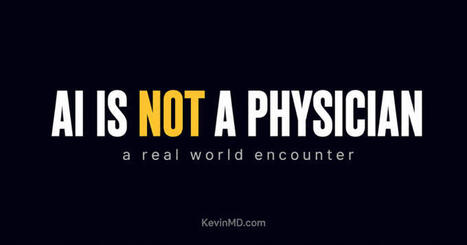
The promise of AI in medicine is real. So are the risks.
In my latest KevinMD op-ed, I describe my own brief encounter with an AI health platform that was polite, fast, and superficially reassuring, but did not do what physicians are trained to do: interrogate uncertainty, synthesize context, and assume responsibility for clinical judgment.
The experience raised larger questions about autonomous AI in health care. If a system can renew prescriptions, suggest diagnoses, and present itself as an “AI doctor,” then convenience is not enough. We need clear standards for validation, scope of practice, supervision, transparency, and accountability.
AI can assist clinicians. It can streamline care. It may help expand access. But "speaking" fluently does not demonstrate competence, and passing along information does not replace the application of seasoned judgment.
Until autonomous clinical AI is held to standards commensurate with the authority it seeks, patients and physicians should remain cautious about confusing speed with care.
“AI Clinical Judgment is What AI Chatbots Still Lack.” Read it below.
#ArtificialIntelligence #AIinMedicine #HealthcareAI #ClinicalJudgment #PatientSafety #DigitalHealth #MedicalEthics #HealthPolicy #PhysicianLeadership #KevinMD
|
|
Scooped by
Gilbert C FAURE
May 16, 2:35 AM
|
Scoop.it!

🚨 EARLY GIVEAWAY ALERT 🚨
We are giving you a head start to celebrate UNESCO #lightday2026 with our shareable banner! 🎨
Download them from our website and share them on your socials tomorrow and join the celebration of light science and technology worldwide 💡🎊
Remember to tag us, as you share your events
and outreach updates on socials💥
May 16 Banner
➡️ https://lnkd.in/enEDRWqZ
Official hashtag: #lightday2026
🎯 9th edition focus theme: Light for a Sustainable Future
📣 It’s never too late to register your event, every effort matters!
➡️https://lnkd.in/ev9_FA8a
Best wishes all 🤩
Team IDL2026
#lightday2026 #eventoutreach
📸May 16 Banner Credits: Carmen Daalman | ASTRON
Thank you Carmen🤩
|
|
Scooped by
Gilbert C FAURE
Today, 11:29 AM
|
Scoop.it!

🧠 AI in Medical Training: Learning Tool or Shortcut?
A new Nature Medicine Perspective raises a cautious but important concern: “never-skilling” in medical education. The idea is distinct from deskilling, that may happens when experienced clinicians lose skills they already developed. Never-skilling would happen earlier: during formative training, when learners may fail to build foundational clinical reasoning.
→ AI is not i harmful to learning, however its effect depends on how and when it is introduced.
→ Answer-delivery AI may carry different risks from learning-mode AI.
A system that gives diagnoses directly may bypass cognitive effort, while a system that asks Socratic questions and gives feedback may support reasoning.
→ Assessment needs to change, as trainees are learning in AI-rich environments.
Caveats: direct causal evidence in clinical trainees is still lacking. This is a risk model and research agenda, not a proven phenomenon.
👉 How do we leverage AI as a learning accelerator without turning it into a shortcut around the skills physicians still need to master?
Ref: Ke et al Nan Liu, PhD, FAMIA . AI-induced never-skilling in medical education. Nature Medicine, 2026.
|
|
Scooped by
Gilbert C FAURE
Today, 4:01 AM
|
Scoop.it!

🌟 The Heuristic Method: Transforming Classrooms Through Discovery-Based Learning 🌟
Education is evolving beyond traditional teaching methods where students simply listen, memorize, and reproduce information. In today’s dynamic world, learners need opportunities to think critically, ask meaningful questions, solve real-world problems, and take ownership of their learning journey. This is where the Heuristic Method becomes a powerful approach in modern education.
The Heuristic Method focuses on learning through discovery and experience. Instead of directly giving answers, educators create opportunities for students to investigate, experiment, explore, and arrive at conclusions independently. This approach nurtures curiosity and encourages learners to become active participants rather than passive receivers of knowledge.
When students are encouraged to discover concepts on their own, learning becomes deeper, more engaging, and long-lasting. They develop essential 21st-century skills such as creativity, collaboration, critical thinking, and confidence — skills that prepare them not just for exams, but for life.
📚 Key Principles of the Heuristic Method:
✔️ Explore & Experiment
✔️ Problem Solving
✔️ Self-Learning
✔️ Critical Thinking
💡 Benefits for Learners:
✨ Sparks Curiosity
✨ Enhances Creativity
✨ Builds Confidence
✨ Encourages Independence
✨ Promotes Lifelong Learning
👩🏫 Role of the Teacher:
In a heuristic classroom, the teacher becomes a facilitator of learning by:
🔹 Guiding students through inquiry
🔹 Encouraging exploration and discussion
🔹 Supporting individual learning journeys
🔹 Providing meaningful resources and experiences
🛠️ Simple Steps to Implement:
1️⃣ Pose an engaging question
2️⃣ Encourage investigation and exploration
3️⃣ Allow students to discover possible solutions
4️⃣ Reflect, discuss, and connect learning experiences
The most meaningful learning happens when students are empowered to:
🌱 THINK • EXPLORE • DISCOVER • LEARN 🌱
#Education #Teaching #Learning #HeuristicMethod #InquiryBasedLearning #StudentCenteredLearning #CriticalThinking #Creativity #TeachersOfLinkedIn #EducationMatters #FutureReady
|
|
Scooped by
Gilbert C FAURE
Today, 3:35 AM
|
Scoop.it!

🧠 Why do students forget lessons so quickly?
The issue is not always intelligence or ability.
Often, the problem is that learning is happening in ways the brain was never designed to retain effectively.
Today’s classrooms cannot rely only on:
❌ Long lectures
❌ Passive note-taking
❌ Memorization without understanding
Instead, research consistently shows that students remember more when learning is:
✨ Active
✨ Emotional
✨ Visual
✨ Collaborative
✨ Reflective
This infographic explores practical brain-based strategies teachers can use to improve student retention and create more meaningful learning experiences.
From retrieval practice and storytelling to visual learning and reflection, small instructional shifts can make a huge difference in how students understand and retain information.
💡 Great teaching is not about delivering more content—it is about helping learning last.
Which strategy do you think has the biggest impact on student retention in today’s classrooms? 👇
🎨 Designed by Neha Khan
#Education #BrainBasedLearning #StudentEngagement #TeachingStrategies #LearningScience #TeachersOfLinkedIn #ActiveLearning #FutureReadyEducation #ClassroomInnovation #LearningMatters
|
|
Scooped by
Gilbert C FAURE
May 24, 2:40 AM
|
Scoop.it!

AI in medicine may not only change how doctors work but how future doctors learn to think.
A very interesting Perspective just published in Nature Medicine introduces the concept of “AI-induced never-skilling” in medical education.
The idea is important because for many years, the discussion around AI in medicine has focused mainly on experienced clinicians: whether AI will support them, replace parts of their work, improve accuracy, reduce workload, or create new risks of deskilling.
But medical education raises a different and perhaps even more delicate question: what happens if students and trainees begin to rely on AI before they have developed the foundational reasoning skills that safe independent practice requires?
Deskilling means losing a skill that was previously acquired. Never-skilling means that the skill may never fully develop. Clinical reasoning is not built only by receiving correct answers. It is built through uncertainty, effort, comparison, mistakes, supervision, feedback, and the slow construction of judgment. If AI removes too much of this cognitive struggle too early, it may not simply make learning easier....it may make learning shallower.
This does not mean that AI should be excluded from medical education.
On the contrary, future physicians must learn how to use AI critically, safely, and intelligently.
But timing matters. Pedagogy matters. Supervision matters.
Before AI becomes a routine cognitive companion for trainees, we need to make sure that human clinical reasoning has had enough space to form.
The future of medicine will not depend only on doctors who know how to use AI.
It will depend on doctors who can still think without it.
#ArtificialIntelligence #Medicine #MedicalEducation #ClinicalReasoning #DigitalHealth #MedicalAI #HealthcareInnovation #FutureOfMedicine | 26 comments on LinkedIn
|
|
Scooped by
Gilbert C FAURE
May 22, 4:33 AM
|
Scoop.it!

Quand un schéma vaut bien une longue longue longue et complexe explication !
1 - Expert en IA ... mais à quel niveau ?
2 - Besoin en IA ... à quel niveau ?
Croiser 1 et 2 pour clarifier votre usage et votre ... budget 💰💰💰
Et toujours le même principe : pas d'IA sans IH !
|
|
Scooped by
Gilbert C FAURE
May 22, 4:27 AM
|
Scoop.it!

Longévité : la science valide (enfin) ce que nous constatons sur le terrain.
Une étude récente des chercheurs d'Oxford met en lumière la méthode « S-MEDS », un acronyme qui résume les 5 piliers incontournables pour vivre plus longtemps et, surtout, en meilleure santé :
👉 Sleep (Le #sommeil)
👉 Meditation (La gestion du #stress)
👉 Exercise (Le #mouvement)
👉 Diet (L'#alimentation)
👉 Social interaction (Le lien social)
Si les quatre premiers piliers relèvent souvent de choix individuels, le dernier – le #liensocial – est une responsabilité collective. L’isolement accélère la vulnérabilité, tandis que le #lien social protège et prolonge la vie.
En tant qu’acteurs de l’économie sociale et solidaire ou de l’#urbanisme, nous ne pouvons pas ignorer cette réalité scientifique.
Pour que nos #aînés activent ce levier de longévité, nos territoires doivent concevoir un habitat qui favorise la rencontre, brise l’#isolement et maintient chaque individu pleinement intégré au cœur de la cité.
C’est précisément tout l’enjeu des projets d'#habitat #inclusif que nous devons porter dans nos #communes. Le logement ne doit plus être un simple toit isolé, mais un vecteur d'animation, de #mixité et d'échange. Permettre à une #personneâgée ou fragile de rester actrice du #bourg, consultée et entourée, c'est directement agir sur sa #santé globale.
La #longévité ne dépend pas uniquement de la #médecine, elle dépend de notre capacité à créer des environnements inclusifs.
#SilverEconomie #S_MEDS #Sante #Inclusion #LienSocial #ESS #Oxford #smeds #senior
|
|
Scooped by
Gilbert C FAURE
May 22, 4:02 AM
|
Scoop.it!

The impact of AI is already producing a massive flood of content in so many creative industries--I don't know how we are going review or evaluate all this stuff. The peer review system was already at a breaking point.
https://lnkd.in/eQzDUrEQ | 13 comments on LinkedIn
|
|
Scooped by
Gilbert C FAURE
May 21, 4:53 AM
|
Scoop.it!

Lego was losing $1 million a day. 💸
Warehouses were overflowing.
Costs were out of control.
Even billion-dollar franchises like Star Wars and Harry Potter couldn’t save them once the movie hype wore off.
By 2003, Lego was staring bankruptcy in the face.
Then in 2004, something radical happened:
They hired Jørgen Vig Knudstorp — the first non-family CEO in Lego’s history.
And he made bold, uncomfortable moves most leaders would avoid:
• Cut Lego’s unique bricks from nearly 12,000 down to less than 7,000.
• Slashed the product development cycle from 2 years to 1.
• Sold off theme parks, clothing lines, and video games.
• Shut down factories and cut 1,000 jobs — saving $600M in two years.
• Outsourced manufacturing so the company could focus on design.
• Introduced “war room” accountability: every product head posted results and action steps for all to see.
The message was simple:
Stop chasing distractions.
Get back to the brick.
But Knudstorp didn’t just cut — he rebuilt Lego’s culture around fans and innovation.
• Superfans were invited into R&D through programs like LEGO Ideas (where fans could submit and vote on new sets).
• Expensive, over-engineered parts like micro-motors and fiber optics were scrapped.
• Creativity, not complexity, became the guiding principle.
The results were staggering.
Within 5 years, Lego was profitable again.
By 2015, it had overtaken Mattel to become the #1 toy company in the world. 🚀
And then came The Lego Movie in 2014.
What could’ve been a 90-minute commercial turned into a global cultural hit — spawning sequels, spin-offs, and billions in new sales.
The lesson?
Turnarounds don’t always come from doing more.
Sometimes they come from doing less.
From stripping back to your core.
From focusing on what made you great in the first place.
Because the thing that saves your business might already be in your hands.
#Leadership #BusinessGrowth #TurnaroundStory | 1,335 comments on LinkedIn
|
|
Scooped by
Gilbert C FAURE
May 21, 3:49 AM
|
Scoop.it!

The Chinese translation of Metaliteracy: Reinventing Information Literacy to Empower Learners, the first book introducing the metaliteracy model that I co-authored with Trudi Jacobson, has been published (https://lnkd.in/gNxkpnii). Many thanks to Wu Changhong (Bella Wu) at Northeast Normal University for initiating and completing the translation, and to ALA Editions for supporting the project. This new translation expands the global reach of metaliteracy among students and educators across academic and library communities in China. #metaliteracy #infolit #InformationLiteracy #HigherEducation #AcademicLibraries #GlobalLearning #DigitalLearning
|
|
Scooped by
Gilbert C FAURE
May 19, 4:39 AM
|
Scoop.it!

Five friends and Ebola veterans sat down to talk about Bundibugyo. The operational details are where this gets scary.
|
|
Scooped by
Gilbert C FAURE
May 18, 3:51 AM
|
Scoop.it!

“The concern isn’t that AI will produce obviously bad papers. It’s that it will produce, at scale and at speed, the kind of papers that are already crowding the journals: technically adequate, marginally novel, epistemically forgettable, those “modal” papers that get a handful of citations throughout their lives.”
https://lnkd.in/eVqiqbND
|
|
Scooped by
Gilbert C FAURE
May 16, 2:38 AM
|
Scoop.it!

The domestic cat may be a far more recent arrival to Europe than previously thought, arriving roughly 2000 years ago and not because of the Paleolithic expansion of Near East farmers.
The findings in Science offer new insight into one of humanity’s most enigmatic animal companions and identify North Africa as the cradle of the modern housecat.
Learn more during #NationalPetMonth: https://scim.ag/4f44pPw
|
|
Scooped by
Gilbert C FAURE
May 16, 2:23 AM
|
Scoop.it!
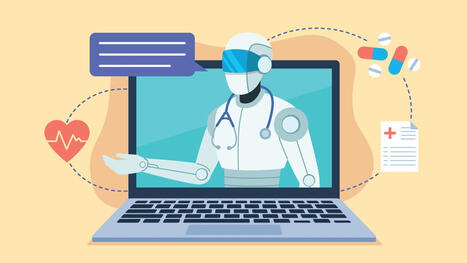
As more people turn to chatbots for medical guidance, the technology is revealing both its promise and its risks





