Notebook or My Personal Learning Network
21.2K views | +52 today
Notebook or My Personal Learning Network
a personal notebook since summer 2013, a virtual scrapbook
Your new post is loading...
Scooped by Gilbert C FAURE
November 7, 2014 12:29 AM
Scoop.it!

Where'd you get that great idea?

Where'd you get that great idea? | Notebook or My Personal Learning Network | Scoop.it
Is it better to 'think outside the box,' or to build on something more closely related to the problem one is trying to solve? Researchers have collected surprising evidence that nearer is better.
No comment yet.
Scooped by Gilbert C FAURE
November 2, 2014 11:21 AM
Scoop.it!

The top 100 papers

The top 100 papers | Notebook or My Personal Learning Network | Scoop.it
Nature explores the most-cited research of all time.
No comment yet.
Scooped by Gilbert C FAURE
November 1, 2014 4:06 PM
Scoop.it!

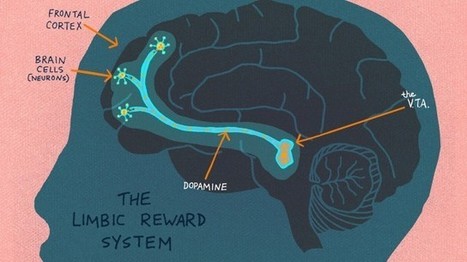
What’s Going on Inside the Brain Of A Curious Child?

What’s Going on Inside the Brain Of A Curious Child? | Notebook or My Personal Learning Network | Scoop.it
New research suggests that curiosity triggers chemical changes in the brain that help students better understand and retain information.
No comment yet.
Rescooped by Gilbert C FAURE from Le tourisme pour les pros
October 31, 2014 7:06 AM
Scoop.it!

Deux nouveaux Carnets du Développement - Professionnels du tourisme - CRDT Auvergne

Deux nouveaux Carnets du Développement - Professionnels du tourisme - CRDT Auvergne | Notebook or My Personal Learning Network | Scoop.it
CRDT Auvergne â Espace Pro

Via Gengembre Dominique
Gilbert C FAURE's insight:

remarquable état des lieux et des besoins

pas encore beaucoup de curation, mais...

Gengembre Dominique's curator insight, October 31, 2014 3:05 AM

Le carnet « Sports et loisirs de nature » a pour ambition d’offrir, aux territoires et prestataires d’activités auvergnats, les clés pour structurer et organiser l’offre de pleine nature, indispensable pour gagner en attractivité.

Gengembre Dominique's curator insight, October 31, 2014 3:51 AM

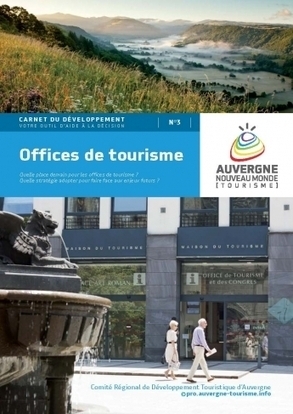
Le carnet « Offices de tourisme » a pour objectif de mieux cerner l’évolution importante que rencontrent depuis plusieurs années les offices de tourisme (OT) et d’en dresser le portrait afin de mettre en évidence les enjeux fondamentaux à venir.

Rescooped by Gilbert C FAURE from Moodle and Web 2.0
October 26, 2014 6:54 AM
Scoop.it!

64 Positive Things to Say to Kids

64 Positive Things to Say to Kids | Notebook or My Personal Learning Network | Scoop.it
Encouraging Kids - Eighteen years after my dad died, I can still hear him, when I get too serious saying, "Lighten up, Lissy!

Via RJ Lavallee, Suvi Salo, Evdokia Roka, Juergen Wagner
No comment yet.
Suggested by LIGHTING
October 22, 2014 1:25 PM
Scoop.it!

In his final piece for Ars, Dave Girard talks about life with depression. - Ars Technica

In his final piece for Ars, Dave Girard talks about life with depression. - Ars Technica | Notebook or My Personal Learning Network | Scoop.it
In his final piece for Ars, Dave Girard talks about life with depression.
No comment yet.
Rescooped by Gilbert C FAURE from François MAGNAN Formateur Consultant
October 21, 2014 3:24 PM
Scoop.it!

Manuel de formation sur la veille informationnelle

Manuel de formation sur la veille informationnelle | Notebook or My Personal Learning Network | Scoop.it

Netvibes, Diigo, Pearltrees, Scoop.it !, Visualping et j’en passe, autant de noms sur lesquels nous sommes déjà tombés au gré de nos « pérégrinations » sur la toile. Mais, savons-nous seulement ce à quoi ils servent ? Ou même comment procéder pour assurer une veille efficace ? Quelles en sont les étapes clés ? Quels sont les outils nécessaires ? Autant de questions et bien d’autres dont les réponses se trouve dans chacune des 26 pages de ce document particulièrement précis et bien élaboré, illustrations et captures d’écran à l’appui.


Via FrancoisMagnan
No comment yet.
Scooped by Gilbert C FAURE
October 20, 2014 8:27 AM
Scoop.it!

Scandinavian Energy Usage

Scandinavian Energy Usage | Notebook or My Personal Learning Network | Scoop.it

Which countries consume the most electricity per person? You might guess the United States would top the World Bank’s list, but the Nordic countries of Iceland, Norway, Finland, and Sweden are actually at or near the top. Icelanders consume an average of 52,374 kilowatt hours per person per year, Norwegians 23,174 kilowatt hours, Finns 15,738 kilowatt hours, and Swedes 14,030 kilowatt hours. Americans are not far behind, with an average consumption of 13,246 kilowatt hours per person. The Japanese consume 7,848 kilowatt hours.


This image is part of a global composite assembled from data acquired by the Suomi National Polar-orbiting Partnership (Suomi NPP) satellite in 2012. The nighttime view of Earth was made possible by the “day-night band” of the Visible Infrared Imaging Radiometer Suite. VIIRS detects light in a range of wavelengths from green to near-infrared and uses filtering techniques to observe dim signals such as city lights, wildfires, and gas flares. The city lights of several major Nordic cities are visible in the imagery, including Stockholm, Sweden (population 905,184); Oslo, Norway (634,463); Helsinki, Finland (614,074), and Reykjavik, Iceland (121,490).


Tags: Europe, energy, remote sensing, development, Sweden, Finland, Iceland, Norway.

Lena Minassian's curator insight, February 18, 2015 7:17 PM

This articles discusses which countries use the most electricity and believe it or not, the Nordic countries are at the top of the list. It shows two satellite images in the nighttime for you to get a better visual as to which areas of these countries use the most electricity. There are multiple factors that go into these countries consuming this much energy. One factor that is interesting is the high demand for electricity because of the long winters in these countries. 

Kevin Cournoyer's curator insight, May 6, 2015 9:34 AM

These images are really interesting and expose just how much electricity the Scandinavian countries actually use. It is surprising to think of these nations as large energy consumers because of their general reputation as progressive, clean, and liberal places. This brief article is an excellent example of how maps and satellite images can be misleading, though. As opposed to places like the U.S. or China, energy consumption in the Scandinavian countries actually produces only small amounts of greenhouse gases and is based on renewable energy sources. 


This shows an interesting and not immediately apparent geographic distinction between the Scandinavian countries and places such as China and the U.S. Chinese and United States energy consumption is enormous because of those countries' ability and desire to produce large amounts of goods quickly. Household energy use is also high because of the widespread use of electronics such as televisions, computers, and appliances. The Scandinavian countries, on the other hand, have a need for increased energy use because of their geographic location: long, dark winters mean an increased need for electricity and for longer periods. Also, Scandinavia is able to produce energy at lower costs due to its use of renewable energy sources. So though those countries may consume much more energy than their non-Scandinavian counterparts, they are doing so responsibly and for a reason. 

Katie Kershaw's curator insight, February 22, 2018 11:41 AM
This map of Scandinavian energy usage holds a lot of insight to what this region of the world is like.  Shockingly, Scandinavians all use more electricity per person per hour than the U.S.  The people in Iceland use the most electricity of any other country and they use more than double the next closest consumer, at 52,374 kw/hour.  This made me scratch my head a bit at first, because when I think of large energy consumers I think of Americans with huge t.v.s with surround sound, central air, and more useless kitchen appliances than anywhere else.  However, the article goes on to explain the conditions that contribute to Scandinavians high power usage.  First of all, they are located in a region with a very harsh climate.  They must use tons of electricity to heat their buildings.  Additionally the months of darkness in some regions require lights to be in constant use.  Another regional factor that leads to high electricity usage is manufacturing.  Since the region is abundant in natural resources like aluminum, a lot of electricity is needed to turn these resources into usable goods.  The natural resources in Scandanavia also keeps electricity prices cheap, so people are more likely to use high amounts.  Despite the high electricity usage by Scandanavians make minimal pollution because the sources of power they use are renewable resources.  This makes sense because these countries are able to harness a lot of hydropower with their access to the ocean and waterfalls. 
Scooped by Gilbert C FAURE
October 16, 2014 2:25 PM
Scoop.it!

| UPtv, la WebTV de l'Université de Poitiers

| UPtv, la WebTV de l'Université de Poitiers | Notebook or My Personal Learning Network | Scoop.it
Colloques, conférences, reportages : l'Université de Poitiers vous propose la retransmission des évènements marquants de l'établissement.
No comment yet.
Rescooped by Gilbert C FAURE from Metaglossia: The Translation World
October 13, 2014 4:39 AM
Scoop.it!

How English became language of science

How English became language of science | Notebook or My Personal Learning Network | Scoop.it
Two Norwegian scientists have won the Nobel Prize for physiology or medicine - for work published in the English language. Historian of science Michael Gordin explains why they wrote in the language of Dickens and Twain rather than Ibsen and Hamsun.

Permafrost, oxygen, hydrogen - it all looks like science to me.

But these terms actually have origins in Russian, Greek and French.

Today, though, if a scientist is going to coin a new term, it's most likely in English. And if they are going to publish a new discovery, it is most definitely in English.

Look no further than the Nobel Prize awarded for physiology and medicine to Norwegian couple May-Britt and Edvard Moser. Their research was written and published in English.

Continue reading the main story
“
Start Quote

The story of the 20th Century is not so much the rise of English as the serial collapse of German as the up-and-coming language of scientific communication”

Michael Gordin
Princeton University
This was not always so.

"If you look around the world in 1900, and someone told you, 'Guess what the universal language of science will be in the year 2000', you would first of all laugh at them. It was obvious that no one language would be the language of science, but a mixture of French, German and English would be the right answer," says Princeton University's Rosengarten professor of modern and contemporary history Michael Gordin.

Gordin's upcoming book, Scientific Babel, explores the history of language and science. He says that English was far from the dominant scientific language in 1900. The dominant language was German.

"So the story of the 20th Century is not so much the rise of English as the serial collapse of German as the up-and-coming language of scientific communication," Gordin says.

You may think of Latin as the dominant language of science. And for many, many years it was the universal means of communication in Western Europe - from the late medieval period to the mid-17th Century. Then it began to fracture. Latin became one of many languages in which science was done.

The first person to publish extensively in his native language, according to Gordin, was Galileo. Galileo wrote in Italian and was then translated to Latin so that more scientists might read his work.


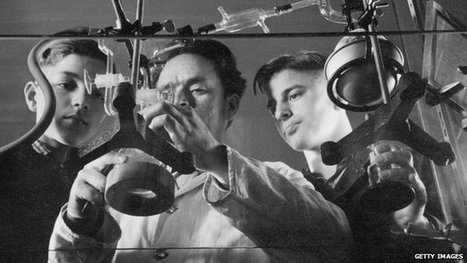
Two boys watch a scientist perform an experiment in a Bayer Group laboratory in Germany
Fast forward to the 20th Century. How did English come to dominate German in the realm of science?

"The first major shock to the system of basically having a third of science published in English, a third in French and a third in German - although it fluctuated based on field, and Latin still held out in some places - was World War One, which had two major impacts," Gordin says.

After World War One, Belgian, French and British scientists organised a boycott of scientists from Germany and Austria. They were blocked from conferences and weren't able to publish in Western European journals.

"Increasingly, you have two scientific communities, one German, which functions in the defeated [Central Powers] of Germany and Austria, and another that functions in Western Europe, which is mostly English and French," Gordin explains.

It's that moment in history, he adds, when international organisations to govern science, such as the International Union of Pure and Applied Chemistry, were established. And those newly established organisations begin to function in English and French. German, which was the dominant language of chemistry, was written out.


Hear more

List to the original radio broadcast on PRI's The World, a co-production with the BBC.


The second effect of World War One took place in the US. Starting in 1917 when the US entered the war, there was a wave of anti-German hysteria that swept the country.

"At this moment something that's often hard to keep in mind is that large portions of the US still speak German," Gordin says.

In Ohio, Wisconsin and Minnesota there were many, many German speakers. World War One changed all that.

"German is criminalised in 23 states. You're not allowed to speak it in public, you're not allowed to use it in the radio, you're not allowed to teach it to a child under the age of 10," Gordin explains.

The Supreme Court overturned those anti-German laws in 1923, but for years they were the law of the land. What that effectively did, according to Gordin, was decimate foreign language learning in the US.


German-born physicist Albert Einstein taught and researched in the US
"In 1915 Americans were teaching foreign languages and learning foreign languages about the same level as Europeans were," Gordin says. "After these laws go into effect, foreign language education drops massively. Isolationism kicks in in the 1920s, even after the laws are overturned, and that means people don't think they need to pay attention to what happens in French or in German."

This results in a generation of future scientists who come of age with limited exposure to foreign languages.

That was also the moment, according to Gordin, when the American scientific establishment started to take over dominance in the world.

"And you have a set of people who don't speak foreign languages," said Gordin, "They're comfortable in English, they read English, they can get by in English because the most exciting stuff in their mind is happening in English. So you end up with a very American-centric, and therefore very English-centric, community of science after World War Two."

You can see evidence of this world history embedded into scientific terms themselves, Gordin says.

Via Charles Tiayon
No comment yet.
Rescooped by Gilbert C FAURE from Power of Content Curation
October 6, 2014 10:22 AM
Scoop.it!

Content Curation Survey 2014 #contentcuration #stats

The results of the content curation survey 2014. Get the insights on the content curation industry. 282 people took part in this survey.


Via Brian Yanish - MarketingHits.com
Gilbert C FAURE's insight:

Scoop.it is first! but too few researchers, teachers, studants are still using it

Brian Fanzo's curator insight, October 6, 2014 2:14 PM

Great Data here.. embrace the power of Content Curation! 

Rescooped by Gilbert C FAURE from ICT
October 5, 2014 5:01 AM
Scoop.it!

GeoGuessr - Let's explore the world!

GeoGuessr - Let's explore the world! | Notebook or My Personal Learning Network | Scoop.it
GeoGuessr is a geography game which takes you on a journey around the world and challenges your ability to recognize your surroundings.

Via Seth Dixon, Mike Busarello's Digital Storybooks, Suvi Salo
Matleena Laakso's curator insight, October 5, 2014 4:55 AM

Tämä on hauska, muutaman kerran on tullut "pelattua".

Alex Smiga's curator insight, September 7, 2015 4:36 PM

Cool game that drops you down somewhere random in the world on street view, then asks you to guess where in the world you are

Christopher Galindo's curator insight, September 3, 2023 10:07 PM

Una herramienta muy divertida para enseñar a los alumnos acerca de la geografía del mundo. Este juego utiliza los mapas de Google para mostrar lugares icónicos que los estudiantes reconocen y los reta a ubicar en un mapa dónde están localizados.


#Geografía #Mapas #Secundaria  #Gamificación

Scooped by Gilbert C FAURE
October 4, 2014 3:31 AM
Scoop.it!

What the Heck is Scoop.it?

What the Heck is Scoop.it? | Notebook or My Personal Learning Network | Scoop.it

It’s a user-friendly content curation tool with a social component, creating a one-stop environment for learning, sharing and connecting. (...)
There are many things about Scoop.it that I love. Its Pinterest-like boards provide the headline, image and the first few lines of copy, allowing for a quick scan of content. Scoop.it’s suggested content is always spot on (...) it’s easy (and the integration with other social networks is great)."

Marc Rougier's curator insight, October 4, 2014 3:12 AM

Thanks much Stacy Firth for this description of Scoop.it (and thanks for the positive comments!). Very accurate.


And yes Marketers are the number one users of Scoop.it!


As a complement, integration with Wordpress, branding (up to white lable) and analytics are probably the most popular benefits of the premium plans.


Indeed there is a social component to Scoop.it: the community of curators is leveraged to discover content and engage with like-minded people. It's secondary to the prime mission (publishing-by-curation platform), but we'll take into account the remarks about upgrading this social dimension. Noted!


PS: I like the title and the concept of this series :)

Rescooped by Gilbert C FAURE from Cartographie sémantique
November 4, 2014 7:46 PM
Scoop.it!

AcademyScope | The National Academies Press

AcademyScope | The National Academies Press | Notebook or My Personal Learning Network | Scoop.it
AcademyScope is a visualization of all of the reports that are available on NAP.edu, allowing you to browse through the reports of the National Academies by topic area and see relationships between titles.

Via François Christiaens
No comment yet.
Rescooped by Gilbert C FAURE from Information Science
November 2, 2014 9:25 AM
Scoop.it!

Sign in to read: Goodbye, paper: What we miss when we read on screen - tech - 29 October 2014 - New Scientist

Sign in to read: Goodbye, paper: What we miss when we read on screen - tech - 29 October 2014 - New Scientist | Notebook or My Personal Learning Network | Scoop.it

Via Afroditi Fragkou
Gilbert C FAURE's insight:

Digital technology is transforming the way we read and write. Is it changing our minds too – and if so, for better or worse?

WE READ more than ever – three times as much as we did in 1980, according to one study. But we're reading differently. Take a look around a train carriage full of commuters nowadays and you'll probably see more people perusing text on phones and tablets than in newspapers and books.

We're writing differently, too. Not so long ago people at meetings and lectures scribbled away furiously with their pens as they took notes. Today, talks and presentations are accompanied by the manic click-clack of laptop keyboards.

Hurrah, some say. Our smartphones and tablets are expanding our worlds. We now have access to vast libraries literally at our fingertips. Good riddance to shoulder-wrenching textbooks, teetering towers of dusty papers, leaky ...

To continue reading this article, subscribe to receive access to all of newscientist.com, including 20 years of archive content.

No comment yet.
Rescooped by Gilbert C FAURE from Open-Up Public Science!
November 1, 2014 12:05 PM
Scoop.it!

Why Experts Reject Creativity

People think they like creativity. But teachers, scientists, and executives are biased against new ways of thinking.

Knowledge doesn’t just turn us into critical thinkers. It maybe turns us into over-critical thinkers.


Via Bernard Rentier
Gilbert C FAURE's comment, November 1, 2014 12:07 PM
and even more dangerous, professional evaluators, particularly in a harsh financial environment reject anything that is not in their own field....
Rescooped by Gilbert C FAURE from LaLIST Veille Inist-CNRS
October 28, 2014 4:45 AM
Scoop.it!

Scopus h-index being updated to include content from 1970 to the present

Scopus h-index being updated to include content from 1970 to the present | Notebook or My Personal Learning Network | Scoop.it
"The Scopus Cited Reference Expansion, announced in March, is well on its way. Our October 23 release saw the expansion of the h-index publication window to 1970. The previous publication window wa...

Via LaLIST
Gilbert C FAURE's insight:

toute une génération va voir son index h augmenter!

dommage, la plupart s'en vont

No comment yet.
Rescooped by Gilbert C FAURE from Implementing e-Learning
October 24, 2014 4:45 AM
Scoop.it!

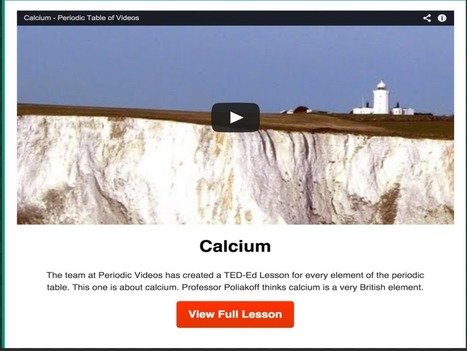
TED-Ed New Interactive Periodic Table With Video Lessons for Every Element

TED-Ed New Interactive Periodic Table With Video Lessons for Every Element | Notebook or My Personal Learning Network | Scoop.it
October, 2014
Today, TED-Ed launched a clickable periodic table with videos on every element. This work is a fruit of a partnership between TED-Ed and Brady Haran, the creator of the popular YouTube...

Via Mario Zidar
Gilbert C FAURE's insight:

la table des éléments en video youtube

No comment yet.
Suggested by LIGHTING
October 22, 2014 1:25 PM
Scoop.it!

In a Bookstore in Paris - Vanity Fair

In a Bookstore in Paris - Vanity Fair | Notebook or My Personal Learning Network | Scoop.it
Chronicling the life of its late owner, Bruce Handy meets Shakespeare’s greatest asset in the age of Amazon: George Whitman’s daughter, Sylvia.
No comment yet.
Scooped by Gilbert C FAURE
October 21, 2014 10:31 AM
Scoop.it!

Online tools for researchers

Online tools for researchers | Notebook or My Personal Learning Network | Scoop.it
Here you will find a list of online "web 2.0" tools, designed for researchers. The list will be updated progressively as this blogs explores the different services out there. I - Using "the crowd" ...
No comment yet.
Rescooped by Gilbert C FAURE from CME-CPD
October 18, 2014 2:59 AM
Scoop.it!

10 Reasons Why Students Aren't Using eTextbooks - OnlineUniversities.com

10 Reasons Why Students Aren't Using eTextbooks - OnlineUniversities.com | Notebook or My Personal Learning Network | Scoop.it

Here are several reasons why students aren't yet warming up to the idea of e-textbooks today.


Via Bernard Rentier, Gilbert C FAURE
No comment yet.
Rescooped by Gilbert C FAURE from Scientific social network
October 14, 2014 2:56 PM
Scoop.it!

Researchers in the cloud by Thomas Crouzier

Researchers in the cloud by Thomas Crouzier | Notebook or My Personal Learning Network | Scoop.it
When I was doing my PhD some 3 years ago, the only collaborative tool we used was Google Docs. Today there are many amazing new websites and tools for research. A recent review covered the emerging tools “that are changing (or have the potential of changing) the way researchers do and communicate their work." From the ability of cloud-based tools to connect researchers,...

Via MyScienceWork
Gilbert C FAURE's insight:

The first point discussed by Thomas Crouzier is the potential of cloud-based services for scalabity and rapid exchange of large amounts of information. The author lists research management tools such as Labguru, as well as multidisciplinary social-media platforms (including MyScienceWork, of course). There is also a nice list of specialized and thematic services that will update our own list of digital tools for research (Addgene, PlasmID, Protocol.io, Slideshare and Figshare, etc.)

No comment yet.
Rescooped by Gilbert C FAURE from Metaglossia: The Translation World
October 12, 2014 7:54 AM
Scoop.it!

How many scholarly papers are on the Web? At least 114 million, professor finds | Penn State University

How many scholarly papers are on the Web? At least 114 million, professor finds | Penn State University | Notebook or My Personal Learning Network | Scoop.it
How many scholarly papers are on the Web? At least 114 million, professor finds
Stephanie Koons
October 9, 2014
UNIVERSITY PARK, Pa. -- Lee Giles, a professor at Penn State’s College of Information Sciences and Technology (IST), has devoted a large portion of his career to developing search engines and digital libraries that make it easier for researchers to access scholarly articles. While numerous databases and search engines track scholarly documents and thus facilitate research, many researchers and academics are concerned about the extent to which academic and scientific documents are available on the Web as well as their ability to access them. As part of an effort to make the process of accessing documents more efficient, Giles recently conducted a study of two major academic search engines to estimate the number of scholarly documents available on the Web.

“How many scholarly papers are out there?” said Giles, who is also a professor of computer science and engineering (CSE), a professor of supply chain and information systems, and director of the Intelligent Systems Research Laboratory. “How many are freely available?”

Giles and his advisee, Madian Khabsa, a doctoral candidate in CSE, presented their findings in “The Number of Scholarly Documents on the Public Web,” which was published in the May 2014 edition of PLOS ONE, a peer-reviewed scientific journal published by the Public Library of Science. The paper was also mentioned twice in Nature, a prominent interdisciplinary scientific journal, as well as various blogs and websites.

In their paper, Giles and Khabsa report that they estimated the number of scholarly documents available on the Web by studying the overlap in coverage of two major academic search engines: Google Scholar and Microsoft Academic Search. By scholarly documents, they refer to journal and conference papers, dissertations and master’s degree theses, books, technical reports and working papers. Google Scholar is a freely accessible Web search engine that indexes the full text of scholarly literature across an array of publishing formats and disciplines. Microsoft Academic Search is a free public search engine for academic papers and literature, developed by Microsoft Research for the purpose of algorithms research in object-level vertical search, data mining, entity linking and data visualization. Using statistical methods, Giles and Khabsa estimated that at least 114 million English-language scholarly documents are accessible on the Web, of which Google Scholar has nearly 100 million. They estimate that at least 27 million (24 percent) are freely available since they do not require a subscription or payment of any kind. The estimates are limited to English documents only.

Giles’ and Khabsa’s study, Giles said, is the “first to use statistical, rigorous techniques in doing these estimations.” The researchers conducted their study using capture-recapture methods, which were pioneered in ecology and derive their name from censuses of wildlife in which several animals are captured, marked, released and subject to recapture. The technique examines the degree of overlap between two or more methods of ascertainment and uses a simple formula to estimate the total size of the population. Since their study was not longitudinal, Giles said, he and Khabsa plan to do another capture in the future to verify their results.

Giles’ interest in determining the number of scholarly documents on the Web was inspired by more than just curiosity — as a developer of various novel search engines and digital libraries, there are practical implications for his research. CiteSeer, a public search engine and digital library for scientific and academic papers, primarily in the fields of computer and information science, was created by Giles, Kurt Bollacker and Steve Lawrence in 1997 while they were at the NEC Research Institute (now NEC Labs), in Princeton, New Jersey, CiteSeer's goal was to actively crawl and harvest academic and scientific documents on the Web and use autonomous citation indexing to permit querying by citation or by document, ranking them by citation impact. CiteSeer, which is often considered to be the first automated citation indexing system, was considered a predecessor of academic search tools such as Google Scholar and Microsoft Academic Search. Released in 2008, CiteSeerX was loosely based on the previous CiteSeer search engine and digital library and is built with a new open source infrastructure, SeerSuite, and new algorithms and their implementations. While CiteSeerX has retained CiteSeer’s focus on computer and information science, it has recently been expanding into other scholarly domains such as economics, medicine and physics. One of the motivations for determining the number of scholarly documents on the Web, Giles said, is to increase the number of papers in CiteSeerX.

A significant finding in their study, Giles and Khabsa wrote in their paper, is that almost one in four of Web accessible scholarly documents are freely and publicly available. The researchers used Google Scholar to estimate this percentage because Scholar provides a direct link to the publicly available document next to each search result where a link is available. The findings are important, Giles said, because publicly available documents carry more weight in the research community. Governments, especially those in Europe, fund a lot of scientific research and don’t want papers not to be freely available. In addition, he said, it's been shown that freely available papers are much more likely to be cited than those that are not.

By having an idea of how many scholarly documents are on the Web as well as how many are freely available, Giles said, researchers can be better equipped to manage scholarly document research and related projects.

"It was surprising to see how many scholarly documents were digitized and how many were freely available,” Giles said. “But keep in mind, these estimates were only for those written in English. How many are there in other languages, more or less than English?"

SHARE THIS ST

Via Charles Tiayon
No comment yet.
Rescooped by Gilbert C FAURE from Professional Learning for Busy Educators
October 5, 2014 12:25 PM
Scoop.it!

6 Great tools for content curation - Daily Genius

6 Great tools for content curation - Daily Genius | Notebook or My Personal Learning Network | Scoop.it

"I read recently that content curation is dead. I have a few different arguments against this concept, but for now, I’ll keep it short and sweet: Content curation is not dead, and while the debate over curating content online vs creating new content will rage on and on, curating content for other reasons is still going strong.

 That said, there are a lot of different ways to go about content curation, so we’ve test driven a few different tools so you can figure out which might work best for you whether you’re curating content for work projects, assigning it as a school project, for your own professional development, or personal interests."


Via John Evans
Kathy Lynch's curator insight, October 5, 2014 2:30 PM

Thx John Evans

magnus sandberg's curator insight, October 6, 2014 3:31 AM

I'm rescooping this for three reasons. First, the term "curation" is fairly new to me and it is nice to see how different forms it can take. Secondly, I read so many blogposts entitled "10 tools for this" or "35 reasons for that". It is nice too see one of those where all of the 6 tools are actually great. Third, the fact that I actually have experience with three of the six tools makes me feel good. So enjoy :) 

Olga Boldina's curator insight, October 6, 2014 6:42 AM

добавить свой понимание ...

Scooped by Gilbert C FAURE
October 4, 2014 8:08 AM
Scoop.it!

Le site du gouvernement fait peau neuve - 01net

Le site du gouvernement fait peau neuve - 01net | Notebook or My Personal Learning Network | Scoop.it
01net Le site du gouvernement fait peau neuve 01net Epurée, très visuelle et responsive design (pour une meilleure consultation sur les terminaux mobiles), l'interface met en valeur le contenu qui, lui, repose sur les rubriques traditionnelles que...
Gilbert C FAURE's insight:

technologie scoop.it pour la curation?!!

No comment yet.