




Immunol Rev. 2016 May;271(1):230-45. doi: 10.1111/imr.12400. Research Support, N.I.H., Extramural; Research Support, Non-U.S. Gov't; Review

 Your new post is loading...
 Scoop.it!
Immunol Rev. 2016 May;271(1):230-45. doi: 10.1111/imr.12400. Research Support, N.I.H., Extramural; Research Support, Non-U.S. Gov't; Review

No comment yet.
Sign up to comment
Scoop.it!

This case report describes a man in his 80s with a history of dermatitis herpetiformis not controlled by gluten-free diet, dapsone, and conventional immune-supp
Scoop.it!

The upper respiratory tract (URT) is the major entry site for human pathogens and strategies to activate this network could lead to new vaccines capable of preventing infection with many pathogens.
Scoop.it!
IgA nephropathy (IgAN) is a common chronic glomerular disease that, in most patients, slowly progresses to ESRD. The immune and autoimmune responses that characterize IgAN indicate a potential benefit for corticosteroids. The 2012 Kidney Disease Improving Global Outcome (KDIGO) guidelines suggest giving corticosteroids to patients with rather preserved renal function (GFR>50 ml/min per 1.73 m2) and persistent proteinuria >1 g/d, despite 3–6 months of optimized supportive care with renin-angiotensin system blockers. However, the evidence supporting this guideline was considered of low quality. More recent results from large cohort studies and randomized, controlled trials have provided conflicting messages about the benefits of corticosteroid treatment over supportive care alone, mostly involving optimized renin-angiotensin system blockade, which might generate further uncertainty in the therapeutic choice. Overall, these results indicate that corticosteroids are a powerful tool for treating patients with IgAN; however, treatment success is not universal and mostly occurs in patients who are highly proteinuric with early CKD. In patients with advanced CKD, the side effects of corticosteroids increase, and the renal protection decreases. This brief review aimed at integrating the findings of these recently published reports to provide balanced advice for clinicians as well as suggestions for future trials.
Scoop.it!

OHSU AIDS vaccine candidate appears to completely clear virus from the b https://t.co/jVSbmvirGo
Via Krishan Maggon
Scoop.it!

Diurnal oscillations in microbial localization and metabolite production in the gut
Scoop.it!

Mucosal Immunology is the official publication of the Society of Mucosal Immunology (SMI). It aims to provide a forum for both basic and clinical scientists to discuss all aspects of immunity and inflammation involving mucosal tissues. The journal reflects the interests of scientists studying gastrointestinal, pulmonary, nasopharyngeal, oral, ocular, and genitourinary immunology through the publication of original research articles, scholarly reviews, and timely commentaries, editorials and letters.
Gilbert C FAURE's insight:
Abstract Epithelial tuft cells (also known as “brush” cells in the airway) were first identified morphologically, almost six decades ago in the trachea and gastro-intestinal tract, but their function remained mysterious until three almost simultaneous reports recently revealed their essential role in the initiation of immune type 2 responses. This is a new and exciting example of cooperation between the epithelial and haematopoietic compartments for the management of enteric parasite infections. Here we review tuft cell functions and markers, and anchors epithelial tuft cells within the current paradigm of type 2 immune responses.
Scoop.it!

When Is the Ideal Window for Gut Microbiota Manipulation to Optimize the Humoral Immunity in Early Infancy? Gut microbial colonization in infants may begin in utero as bacteria from the placenta and amniotic fluid colonize the fetal intestinal epithelia [18].
Scoop.it!

This Viewpoint describes early observations about the human microbiota and what research might tell us about the benefits and vulnerabilities of an individual’s
Gilbert C FAURE's insight:
again
Scoop.it!
Curr HIV/AIDS Rep. 2016 Feb;13(1):53-63. doi: 10.1007/s11904-016-0305-0. Research Support, N.I.H., Extramural; Research Support, Non-U.S. Gov't; Review
Scoop.it!

Regulatory T (T reg) cell deficiency causes lethal, CD4+ T cell–driven autoimmune diseases. Stem cell transplantation is used to treat these diseases, but this procedure is limited by the availability of a suitable donor. The intestinal microbiota drives host immune homeostasis by regulating the differentiation and expansion of T reg, Th1, and Th2 cells. It is currently unclear if T reg cell deficiency–mediated autoimmune disorders can be treated by targeting the enteric microbiota. Here, we demonstrate that Foxp3+ T reg cell deficiency results in gut microbial dysbiosis and autoimmunity over the lifespan of scurfy (SF) mouse. Remodeling microbiota with Lactobacillus reuteri prolonged survival and reduced multiorgan inflammation in SF mice. L. reuteri changed the metabolomic profile disrupted by T reg cell deficiency, and a major effect was to restore levels of the purine metabolite inosine. Feeding inosine itself prolonged life and inhibited multiorgan inflammation by reducing Th1/Th2 cells and their associated cytokines. Mechanistically, the inhibition of inosine on the differentiation of Th1 and Th2 cells in vitro depended on adenosine A2A receptors, which were also required for the efficacy of inosine and of L. reuteri in vivo . These results reveal that the microbiota–inosine–A2A receptor axis might represent a potential avenue for combatting autoimmune diseases mediated by T reg cell dysfunction.
|
Scoop.it!
J Infect Dis. 2016 Dec 23. pii: jiw598. doi: 10.1093/infdis/jiw598. [Epub ahead of print]
Scoop.it!
Genet Epidemiol. 2016 Dec 26. doi: 10.1002/gepi.22030. [Epub ahead of print]
Scoop.it!
Cell Microbiol. 2016 May;18(5):645-51. doi: 10.1111/cmi.12588. Review
Scoop.it!
IgA nephropathy (IgAN) is the most common form of primary GN and an important cause of kidney failure. Characteristically, patients with IgAN have increased serum levels of undergalactosylated IgA1 (gd-IgA1). To assess the degree to which serum gd-IgA1 levels are genetically determined in healthy individuals, we determined serum IgA and gd-IgA1 levels by ELISA in a sample of 148 healthy female twins, including 27 monozygotic and 47 dizygotic pairs. Using the classic twin model, we found the heritability of serum gd-IgA1 and IgA levels to be 80% (95% confidence interval, 66% to 89%) and 46% (95% confidence interval, 15% to 69%), respectively. These data indicate that serum gd-IgA1 levels are highly heritable. Elucidating the genetic basis of this heritability will be important in understanding the pathogenesis of IgAN.
Scoop.it!
In humans, parturition is currently viewed as an intrauterine outbreak of inflammation, accompanied by a massive release of proinflammatory cytokines at the maternal–fetal interface that comprises the maternal decidua, placenta, and fetal membranes. At term, fetal membranes overlying the cervix, the future site of rupture, show altered morphology and are termed the zone of altered morphology (ZAM). These alterations occur in normal fetal membranes during late pregnancy, in preparation for labor. In this study, transcriptome, flow cytometry, electron microscopy, and immunohistochemistry analyses collectively highlight a local shift in gene expression and lymphocyte activation in the ZAM. Just before labor, we show that highly polymorphic HLA-A, -B, and -C determinants of fetal origin are selectively exposed in the ZAM to the maternal immune system. A graft rejection-like program occurs in the ZAM, which involves 1) the activation of cytotoxic decidual NK cells, and 2) the decline of decidual immunotolerant M2-like macrophages. Comparison with a prior cohort of fetal membranes shows that acute inflammation only takes place after these first steps of immune modifications. Our results therefore strongly argue in favor of local immune remodeling at the onset of parturition.
Scoop.it!

Mucosal Immunology is the official publication of the Society of Mucosal Immunology (SMI). It aims to provide a forum for both basic and clinical scientists to discuss all aspects of immunity and inflammation involving mucosal tissues. The journal reflects the interests of scientists studying gastrointestinal, pulmonary, nasopharyngeal, oral, ocular, and genitourinary immunology through the publication of original research articles, scholarly reviews, and timely commentaries, editorials and letters.
Gilbert C FAURE's insight:
Abstract Triggering receptor expressed on myeloid cells-1 (TREM-1) is expressed on neutrophils and monocyte/macrophages and amplifies Toll-like receptor-mediated inflammation during infection. TREM-1 also exists in an antagonistic soluble form (sTREM-1) that has been used as a peripheral biomarker in sepsis, though the mechanisms of its release are not entirely clear. The requirement of TREM-1 in single microbial infections is controversial, with some studies showing a protective role and others a contribution to immunopathology. Furthermore, the role of membrane-bound and sTREM-1 in polygenic infections is currently unknown. In a mouse co-infection model where preceding viral infection greatly enhances bacteria co-infection, we now determine a mechanisms for the striking increase in sTREM-1 and the loss of TREM-1 on surface of neutrophils. We identified a matrix metalloproteinase (MMP)-9 cleavage site in TREM-1 and that the increase of MMP-9 in bronchoalveolar lavage fluid mirrors sTREM-1 release. In vitro studies with neutrophils and MMP-9 and the reduction of sTREM-1 in vivo after MMP-9 inhibition verifies that this enzyme cleaves TREM-1. Intriguingly, MMP-9 inhibition significantly reduces bacterial load and ensuing immunopathology in a co-infection model. This highlights MMP-9 inhibition as a potential therapeutic via blocking cleavage of TREM-1.
Scoop.it!
Gilbert C FAURE's insight:
Abstract CD8αα TCRαβ+ intestinal intraepithelial lymphocytes play a critical role in promoting intestinal homeostasis, although mechanisms controlling their development and peripheral homeostasis remain unclear. In this study, we examined the spatiotemporal role of Bim in the thymic selection of CD8αα precursors and the fate of these cells in the periphery. We found that T cell–specific expression of Bim during early/cortical, but not late/medullary, thymic development controls the agonist selection of CD8αα precursors and limits their private TCRβ repertoire. During this process, agonist-selected double-positive cells lose CD4/8 coreceptor expression and masquerade as double-negative (DN) TCRαβhi thymocytes. Although these DN thymocytes fail to re-express coreceptors after OP9-DL1 culture, they eventually mature and accumulate in the spleen where TCR and IL-15/STAT5 signaling promotes their conversion to CD8αα cells and their expression of gut-homing receptors. Adoptive transfer of splenic DN cells gives rise to CD8αα cells in the gut, establishing their precursor relationship in vivo. Interestingly, Bim does not restrict the IL-15–driven maturation of CD8αα cells that is critical for intestinal homeostasis. Thus, we found a temporal and tissue-specific role for Bim in limiting thymic agonist selection of CD8αα precursors and their TCRβ repertoire, but not in the maintenance of CD8αα intraepithelial lymphocytes in the intestine.
Scoop.it!

Lactic acid bacteria (LAB) form a major component of gut microbiota and are often used as probiotics for fermented foods, such as yoghurt. In this study, we aimed to evaluate immunomodulatory activity of LAB, especially that of Lactobacillus bulgaricus ME-552 (ME552) and Streptococcus thermophilus ME-553 (ME553). In vivo/in vitro assay was performed in order to investigate their effects on T cell function. After oral administration of ME553 to C57BL/6 mice, the amount of both interferon γ (IFN-γ) and interleukin 17 (IL-17) produced by cluster of differentiation (CD) 4+ T cells from Peyer’s patches (PPs) were significantly enhanced. On the other hand, ME552 only up-regulated the production of IL-17 from PP cells. The extent of induction for IFN-γ production differed between ME552 and ME553. These results suggest that LAB modulate T cell effector functions and mucosal immunity.
Scoop.it!
J Interferon Cytokine Res. 2016 Apr;36(4):215-25. doi: 10.1089/jir.2015.0124. Epub 2016 Jan 27. Research Support, Non-U.S. Gov't; Review
Scoop.it!
Mucosal Immunol. 2016 Dec 21. doi: 10.1038/mi.2016.115. [Epub ahead of print]
Scoop.it!
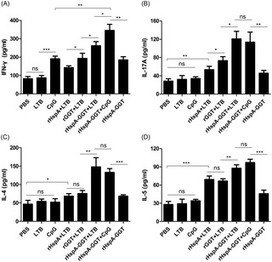
The human gastric pathogen Helicobacter pylori (H. pylori) is a successful colonizer of the stomach. H. pylori infection strongly correlates with the development and progression of chronic gastritis, peptic ulcer disease, and gastric malignances. Vaccination is a promising strategy for preventing H. pylori infection. In this study, we evaluated the candidate antigens heat shock protein A (HspA) and H. pylori γ-glutamyl transpeptidase (GGT) for their effectiveness in development of subunit vaccines against H. pylori infection. rHspA, rGGT, and rHspA-GGT, a fusion protein based on HspA and GGT, were constructed and separately expressed in Escherichia coli and purified. Mice were then immunized intranasally with these proteins, with or without adjuvant. Immunized mice exhibited reduced bacterial colonization in stomach. The highest reduction in bacterial colonization was seen in mice immunized with the fusion protein rHspA-GGT when paired with the mucosal adjuvant LTB. Protection against H. pylori colonization was mediated by a strong systemic and localized humoral immune response, as well as a balanced Th1/Th2 cytokine response. In addition, immunofluorescence microscopy confirmed that rHspA-GGT specific rabbit antibodies were able to directly bind H. pylori in vitro. These results suggest antibodies are essential to the protective immunity associated with rHspA-GGT immunization. In summary, our results suggest HspA and GGT are promising vaccine candidates for protection against H. pylori infection.
|






