Your new post is loading...

|
Scooped by
Gilbert C FAURE
December 3, 2025 3:48 AM
|
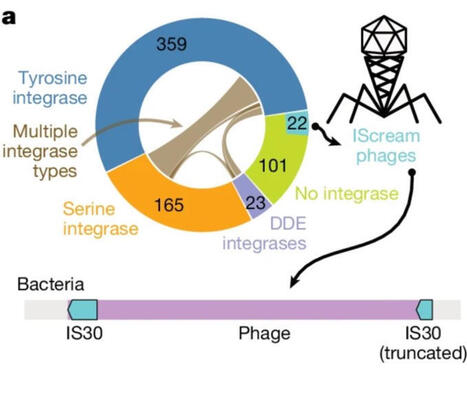
Gut Phageome: A New Frontier for Clinicians
A new Nature study using long-read metagenomics reveals that the human gut microbiome is far more dynamic than we thought
https://lnkd.in/dnVnetzX
Most gut bacteriophages (phages) are integrated in bacterial genomes, but a meaningful fraction are gained, lost, or even jump across bacterial species over time.
This means the gut microbiome is not just a community of bacteria - it’s an evolving genetic ecosystem shaped by phage–bacteria interactions.
Why it matters for clinical practice
Emerging evidence suggests that phage dynamics can influence:
• microbiome stability and dysbiosis
• inflammation and immune tone
• responses to antibiotics, diet, and microbiome-targeted therapies
Phage-aware diagnostics and therapeutics (including targeted phage cocktails) are already entering early clinical and translational research.
Take-home for clinicians:
1. The virome matters: Gut phages may become essential in interpreting microbiome results and understanding dysbiosis.
2. Therapies will evolve: Next-generation probiotics, FMT, and phage therapy will likely consider phage–bacteria interactions.
3. Expect personalization: Phage patterns may soon help stratify patients and guide individualized microbiome interventions.
Understanding the phageome is becoming a key part of understanding our gut
|
|
Scooped by
Gilbert C FAURE
November 20, 2025 9:40 AM
|
I believe this is one of the most important papers in microbiome science.
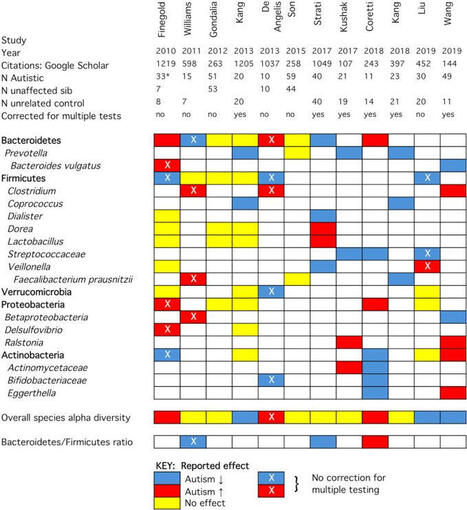
This new review in Neuron (Mitchell et al, 2025) systematically dismantles the gut microbiome-autism hypothesis through a critical assessment of published papers.
I was honestly shocked by the numbers: Despite 100+ papers per year and $20-25M in annual NIH funding since 2018, the most cited studies have tiny sample sizes (n=20 for some), uncorrected multiple testing, and contradictory findings. Some report higher microbial diversity in autism, others lower, many find no difference. The taxa they report are inconsistent. When properly analyzed with sibling controls and adequate statistical power, associations largely disappear.
The mouse model data is equally troubling. For example, a 2019 Cell paper claimed fecal transplants from autistic donors induced "autism-like behaviors" in mice. But when reanalyzed with proper statistics, the effects vanished. And it is really not clear how mouse behavior can model human autism.
And these are not obscure papers - they are published in the most high profile journals and have thousands of citations each.
Maybe it is not surprising that randomized controlled trials of probiotics show no consistent benefit for autism.
As a result, we're watching well-intentioned science fuel a billion dollar "wellness" industry selling unproven interventions to vulnerable families.
As a microbiome scientist, this really troubles me. Excellent research IS being done, and the microbiome holds real promise as a diagnostic and therapeutic tool. But these overhyped, methodologically weak studies cast a shadow over our entire field.
The solution, in my opinion – and completely I agree with the authors on this – is to adopt the rigor that transformed human genomics: pre-specified hypotheses, adequate power, standardized protocols and pipelines, large sample sizes, statistical robustness, replication, and above all: resisting the hype machine.
#microbiome #autism #scientificrigor #reproducibility #clinicaltrials | 36 comments on LinkedIn
|
|
Scooped by
Gilbert C FAURE
November 19, 2025 4:55 AM
|
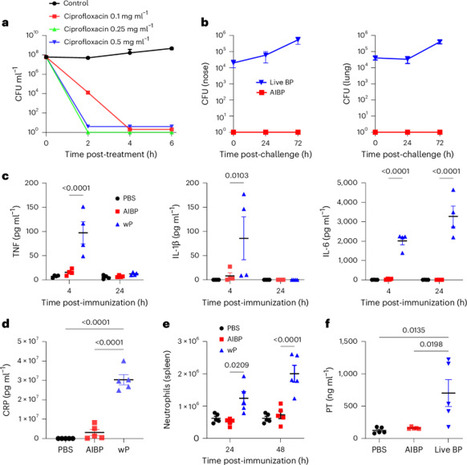
The Gram-negative bacterium Bordetella pertussis causes whooping cough (pertussis), a severe respiratory disease, especially in young children, which is resurgent despite high vaccine coverage. The current acellular pertussis vaccine prevents severe disease but does not prevent nasal infection with B. pertussis. This parenterally delivered vaccine induces potent circulating antibody responses but limited respiratory tissue-resident memory T cells and IgA responses. Here we developed a vaccine approach based on respiratory delivery of antibiotic-inactivated B. pertussis (AIBP). Ciprofloxacin-treated B. pertussis potently activated antigen-presenting cells to drive T cell responses. AIBP immunization via aerosol or intranasal administration conferred a high level of protection against lung and nasal infection. The AIBP vaccine induced B. pertussis-specific interleukin (IL)-17-producing CD4 tissue-resident memory T cells that recruited neutrophils to the respiratory tract. Protection was abrogated by depletion of CD4 T cells or neutralization of IL-17 in mice. Unlike a parenterally delivered whole-cell pertussis vaccine, which induced high levels of serum IL-1β, IL-6, tumour necrosis factor and C-reactive protein, aerosol immunization with the AIBP vaccine did not promote systemic pro-inflammatory responses. We present preclinical evidence of a safe and effective respiratory-delivered vaccine platform for inducing T cell-mediated sterilizing immunity against a respiratory pathogen. In this preclinical study, the authors find that respiratory immunization with an antibiotic-treated bacterial vaccine is a highly effective approach for inducing tissue-resident memory T cells that protect against lung and nasal infection with Bordetella pertussis.
|
|
Scooped by
Gilbert C FAURE
November 18, 2025 7:29 AM
|
|
|
Scooped by
Gilbert C FAURE
November 13, 2025 6:22 AM
|
A team of Trinity College Dublin researchers has developed a new form of vaccine that could transform how we are protected from respiratory infections and reduce the chance of passing on whooping cough.
It could mean a whooping cough vaccine, currently given by way of injection, could be administered nasally to children and young babies whose lives are more at risk from the disease.
The research was led by Prof Kingston Mills (pictured) and Dr Seyed Davoud Jazayeri from the college's School of Biochemistry and Immunology. “We’ve applied our understanding of protective immune pathways to engineer a fundamentally different kind of vaccine. By stimulating immunity where infections begin, we can offer stronger protection and potentially interrupt community transmission,” Prof Mills said
Whoopingcough can sound like an old fashioned disease but Ireland has had a resurgence in whooping cough, with a record 713 cases reported last year. More than one in four of those infected needed hospital treatment.
The landmark study, published in Nature Microbiology, found the experimental vaccine in pre-clinical studies managed complete protection against infection of the lungs and nasal cavity. The research was initially funded through a Research Ireland and is now advancing under the Arc Hub for Therapeutics.
Read a summary here: https://lnkd.in/e8XcN3RF
Read the full story here: https://lnkd.in/e_wnmS-E
|
|
Scooped by
Gilbert C FAURE
November 8, 2025 2:54 AM
|
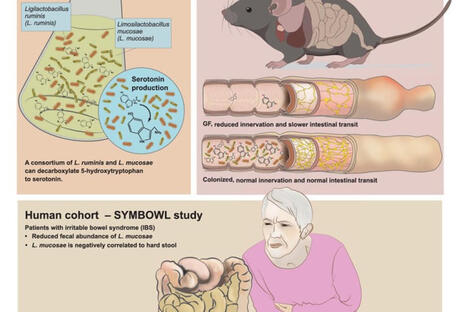
IBS, Irritable Bowel Syndrome, is a common gastrointestinal disorder, more common, in women, with symptoms such as abdominal pain, constipation or diarrhea. The cause of the disease is not clear, but the intestinal environment including the gut microbiota and serotonin appear to be important...
|
|
Scooped by
Gilbert C FAURE
October 31, 2025 8:46 AM
|
Expression of CRB3 in the AJC of IECs and generation of Villin-Cre-ERT2 inducible Crb3-KO (Crb3ERΔIEC) mice. To explore the spatial localization of intestinal epithelial CRB3 in the crypt-luminal axis, we first immunolocalized CRB3 in murine colonic tissue sections.
|
|
Scooped by
Gilbert C FAURE
October 15, 2025 4:46 AM
|
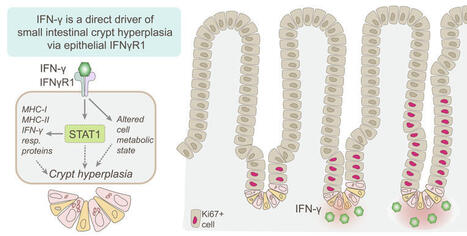
Crypt hyperplasia is a key feature of celiac disease and several other small intestinal inflammatory conditions. Analysis of the gut epithelial crypt zone by mass spectrometry-based tissue proteomics revealed a strong interferon-γ (IFN-γ) signal in active celiac disease.
|
|
Scooped by
Gilbert C FAURE
October 13, 2025 4:57 AM
|
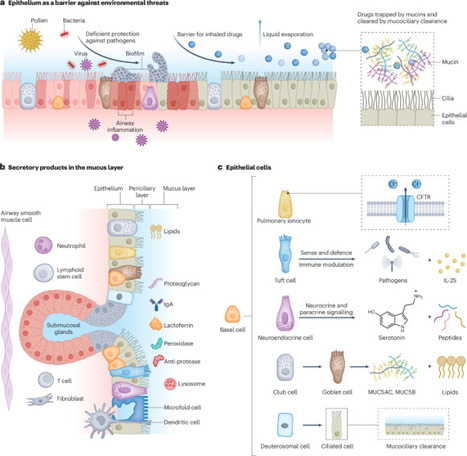
Airway mucus has a crucial role in protecting against inhaled pathogens and regulating water homeostasis, but it can also diminish the efficacy of therapeutic pulmonary delivery. Recent development in inhalable materials and biologics has introduced strategies to modify mucus properties, strengthening mucosal protection, advancing drug delivery and targeting and supporting effective water regulation. In this Review, we thoroughly examine the structure and function of airway mucus, along with the challenges and opportunities it presents for inhaled treatments. We explore new methods that enhance the protective role of mucus through physical reinforcement, pathogen neutralization, muco-trapping and rehydration, as well as strategies that overcome the mucus barrier to improve drug delivery, including physical modulation, mucoadhesive design, muco-penetrating design, mucolytics and active targeting. Finally, we discuss the clinical implications of these promising strategies, emphasizing the need to balance mucosal function with optimized therapeutic delivery. We seek to explore prospective ways to improve inhalation therapies for both infectious and chronic lung diseases by reviewing recent progress in inhalable materials and biologics. Airway mucus complicates treatment of respiratory disease by both defending the lungs and hindering inhaled drugs to cross the barriers. This Review explores translational advances in inhalable materials and biologics that enhance mucus protection or drug penetration.
|
|
Scooped by
Gilbert C FAURE
October 7, 2025 4:28 AM
|
“A fog droplet isn’t a bad environment to live in"
|
|
Scooped by
Gilbert C FAURE
October 6, 2025 2:00 AM
|
Cervical epithelial cells are far from passive bystanders in the body's immune system. New research shows they actually play an active and highly coordinated role in detecting and fighting infections.
|
|
Scooped by
Gilbert C FAURE
September 26, 2025 12:52 PM
|
CSL Vifor and Travere Therapeutics, Inc., (NASDAQ: TVTX) support the recent publication of the updated clinical practice guidelines for the treatment of IgA Nephropathy (IgAN), Kidney Disease: Improving Global Outcomes (KDIGO) 2025 clinical practice guideline for the management of IgA Nephropathy...
|
|
Scooped by
Gilbert C FAURE
September 13, 2025 1:46 PM
|
|
|
|
Scooped by
Gilbert C FAURE
November 29, 2025 5:07 AM
|
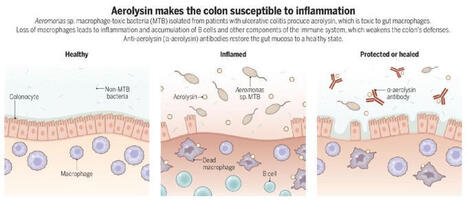
A toxin-secreting gut bacterium may fuel ulcerative colitis by killing protective immune cells that maintain intestinal homeostasis, according to a new study in Science.
The findings suggest potential for new treatment strategies.
📄: https://scim.ag/4oXOowT
#SciencePerspective: https://scim.ag/4a69oN6
|
|
Scooped by
Gilbert C FAURE
November 19, 2025 6:31 AM
|
|
|
Scooped by
Gilbert C FAURE
November 18, 2025 8:13 AM
|
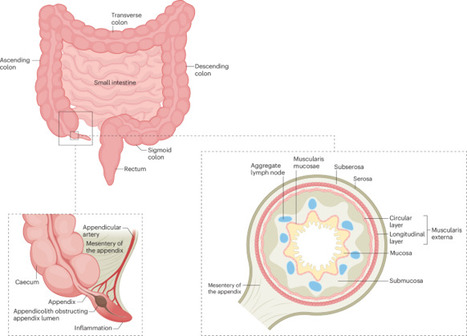
The appendix is a small, worm-like diverticulum of the caecum, potentially having a role in regulating intestinal microbiota and immunology. Inflammation of the appendix, acute appendicitis, is one of the most common reasons for acute abdominal pain in children and adults and surgical emergency visits worldwide. The pathophysiology of appendicitis is still poorly understood. During the past decade, evidence has overturned the long-lasting dogma that all appendicitis cases have a clinical course inevitably progressing to perforation and life-threatening peritonitis unless operated upon in a timely manner. Instead, this natural course occurs only in a smaller proportion of patients, for whom emergency appendectomy remains mandatory. Advances in diagnostic accuracy following utilization of clinical scoring systems and imaging has enabled more accurate pre-interventional assessment of appendicitis disease severity. While some patients still require urgent surgery, the majority can be treated successfully with antibiotics, and in some the disease has even been shown to resolve spontaneously. This has confirmed the notion of at least two different forms of appendicitis: non-perforating and perforating, often referred to as uncomplicated and complicated appendicitis. Unified definitions of these forms are still undergoing rigorous research and debate, hampering both comparison of different studies and the establishment of unified treatment guidelines. The current knowledge on the safe and effective outcomes of non-operative treatment alternatives has further underlined the need for standardized uniform definitions of appendicitis severity and assessment of the success of two fundamentally different treatment options. Inflammation of the appendix, acute appendicitis, is one of the most common reasons for acute abdominal pain in children and adults and surgical emergency visits worldwide. In this Primer, Salminen and colleagues review the epidemiology, pathophysiology, diagnosis and management of appendicitis, and discuss future research areas.
|
|
Scooped by
Gilbert C FAURE
November 16, 2025 4:46 AM
|
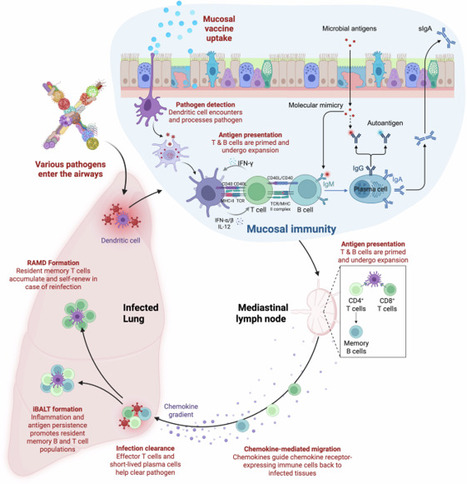
Advances and prospects of respiratory mucosal vaccines: mechanisms, technologies, and clinical applications - npj Vaccines
|
|
Scooped by
Gilbert C FAURE
November 12, 2025 10:00 AM
|
|
|
Scooped by
Gilbert C FAURE
November 7, 2025 12:32 PM
|
|
|
Scooped by
Gilbert C FAURE
October 28, 2025 4:35 AM
|
|
|
Scooped by
Gilbert C FAURE
October 15, 2025 4:44 AM
|
|
|
Scooped by
Gilbert C FAURE
October 7, 2025 10:55 AM
|
Inflammatory bowel diseases (IBD) have traditionally been considered T cell-driven disorders; however, accumulating evidence challenges this view and …
|
|
Scooped by
Gilbert C FAURE
October 6, 2025 6:05 AM
|
|
|
Scooped by
Gilbert C FAURE
October 3, 2025 4:03 AM
|
Horowitz A, et al. Paracellular permeability and tight junction regulation in gut health and disease. Nat Rev Gastroenterol Hepatol. 2023;20(7):417–432.View this article via: CrossRef PubMed Google Scholar Turpin W, et al.
|
|
Scooped by
Gilbert C FAURE
September 19, 2025 10:52 AM
|
Event by Novo Nordisk Foundation Science Cluster Conference: Harnessing airway immunity for next-gen vaccines The 32nd Science Cluster Conference, "Harnessing airway immunity for next-gen vaccines", will feature world leaders exploring the latest advancements in airway immunity and innovative...
|