


Sci Rep. 2016 Oct 13;6:35216. doi: 10.1038/srep35216.

Mucosal Immunity
34.5K views |
+4 today
 Your new post is loading...
 Scoop.it! 
While made up of bacteria that are invisible to the naked eye, biofilms themselves can be much bigger, ranging from less than an inch to several hundred feet in size. 
Scoop.it!

Abstract Respiratory syncytial virus (RSV) remains a significant cause of morbidity and mortality in infants and young children, immunocompromised patients and the elderly. Despite the high disease burden, an effective and safe vaccine is lacking, although several candidates are currently in development. Current treatment for RSV infection remains largely supportive and RSV-specific options for prophylaxis are limited to palivizumab. In the past few years, novel therapeutic options including nanobodies, polyclonal and monoclonal antibodies have emerged and there are several products in preclinical and Phase-I, -II or -III clinical trials. The major target for antiviral drug development is the surface fusion (F) glycoprotein, which is crucial for the infectivity and pathogenesis of the virus. Solving the structures of the two conformations of the RSV F protein, the prefusion and postfusion forms, has revolutionized RSV research. It is now known that prefusion F is highly superior in inducing neutralizing antibodies. In this section we will review the stages of development and availability of different antibodies directed against RSV for the prevention and also for treatment of acute RSV infections. Some of these newer anti-RSV agents have shown enhanced potency, are being explored through alternative routes of administration, have improved pharmacokinetic profiles with an extended half-life, and may reduce design and manufacturing costs. Management strategies will require targeting not only high-risk populations (including adults or immunocompromised patients), but also previously healthy children who, in fact, represent the majority of children hospitalized with RSV infection. Following treated patients longitudinally is essential for determining the impact of these strategies on the acute disease as well as their possible long-term benefits on lung morbidity. Via Krishan Maggon
Gilbert C FAURE's insight:
http://www.scoop.it/t/mucosal-immunity?q=syncytial
for other references to RSV

Krishan Maggon 's curator insight,
January 10, 2017 8:49 AM
Vaccine Volume 35, Issue 3, 11 January 2017, Pages 496–502
Scoop.it!
Sci Rep. 2015 Jun 2;5:10443. doi: 10.1038/srep10443. Research Support, N.I.H., Extramural; Research Support, Non-U.S. Gov't; Research Support, U.S. Gov't, Non-P.H.S.
Scoop.it!

Am J Respir Cell Mol Biol. 2017 Jan 6. doi: 10.1165/rcmb.2016-0024OC. [Epub ahead of print]
Scoop.it!
Ismé M. de KleercorrespondenceinformationemailMirjam Kool, Marjolein J.W. de Bruijn, Monique Willart, Justine van Moorleghem, Martijn J. Schuijs, Maud Plantinga, Rudi Beyaert, Emily Hams, Padraic G. Fallon, Hamida Hammad, Rudi W. Hendriks, Bart N. Lambrecht8, 8Lead Contact DOI: http://dx.doi.org/10.1016/j.immuni.2016.10.031
Gilbert C FAURE's insight:
Highlights •There is spontaneous accumulation of type 2 immune cells in the developing lung •Perinatal type 2 immunity depends on IL-33 and not on T or B cells •Postnatal lung DCs are very scarce yet very efficient at inducing Th2 cell adaptive immunity •The IL-33 axis is more important for asthma development at young age
Scoop.it!
Methods Mol Biol. 2017;1559:267-278. doi: 10.1007/978-1-4939-6786-5_18.
Scoop.it!
Methods Mol Biol. 2017;1559:255-265. doi: 10.1007/978-1-4939-6786-5_17.
Scoop.it!
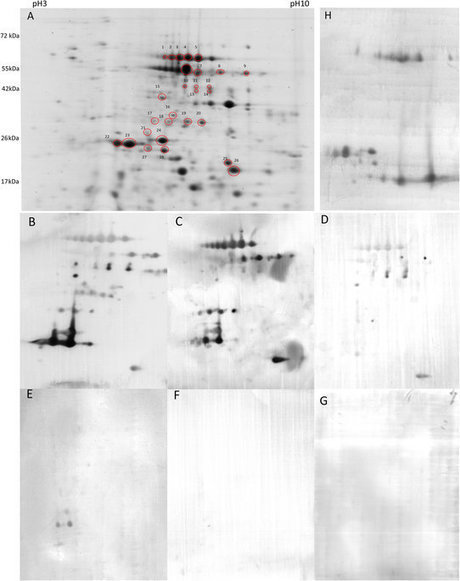
Brachypodium distachyon, a small annual grass with seed storage globulins as primary protein reserves was used in our study to analyse the toxic nature of non-prolamin seed storage proteins related to celiac disease.
Scoop.it!
Mucosal Immunol. 2017 Jan 4. doi: 10.1038/mi.2016.113. [Epub ahead of print]
Scoop.it!

Author Summary In this study, we investigate how respiratory viral infection interferes with the anti-inflammatory actions of glucocorticoid (GC) drugs, which are a highly effective group of anti-inflammatory agents widely used in the treatment of chronic inflammatory airway diseases, including asthma and chronic obstructive pulmonary disease (COPD). Exacerbations of both asthma (“asthma attacks”) and COPD are often caused by viral infection, which does not respond well to GC therapy. Patients are often hospitalized placing a large burden on healthcare systems around the world, with the young, elderly, and those with a poor immune system particularly at risk. We show that viral infection of airway epithelial cells causes increased expression and activity of transforming growth factor-beta (TGF-β), which interferes with GC drug action. Importantly, we have shown for the first time that inhibiting TGF-β activity in the airways could serve as a new strategy to prevent and/or treat viral exacerbations of chronic airway diseases.
Scoop.it!

Group 3 innate lymphoid cells (ILC3), defined by expression of the transcription factor retinoid‐related orphan receptor γt, play key roles in the regulation of inflammation and immunity in th
Gilbert C FAURE's insight:
Summary Group 3 innate lymphoid cells (ILC3), defined by expression of the transcription factor retinoid-related orphan receptor γt, play key roles in the regulation of inflammation and immunity in the gastrointestinal tract and associated lymphoid tissues. ILC3 consist largely of two major subsets, NCR+ ILC3 and LTi-like ILC3, but also demonstrate significant plasticity and heterogeneity. Recent advances have begun to dissect the relationship between ILC3 subsets and to define distinct functional states within the intestinal tissue microenvironment. In this review we discuss the ever-expanding roles of ILC3 in the context of intestinal homeostasis, infection and inflammation – with a focus on comparing and contrasting the relative contributions of ILC3 subsets.
Scoop.it!
Official Full-Text Publication: The effects of prebiotics on microbial dysbiosis, butyrate production and immunity in HIV-infected subjects on ResearchGate, the professional network for scientists.
|
Scoop.it!

There were few related studies aiming to severe IgA nephropathy (IgAN) which could progress rapidly to end stage renal disease (ESRD) within ten years. To find valuable clinical or pathological factors and promising precautions is essential. A single center case–control study was performed. Fifty ESRD patients with the primary cause of IgAN and a short renal survival time of less than ten years after diagnose were enrolled in the case group. One hundred IgAN patients with a renal survival time of more than ten years were enrolled in the control group. IgA Oxford classification scores, clinical data at baseline and during the follow-up were collected. Multivariate logistic regression was used to investigate factors associated with the development of ESRD. There were significant differences in baseline clinical data between these two groups, as well as the constituent ratio of Oxford MEST-score. Distinct differences were observed in time-average uric acid(TA-UA), time-average hemoglobin(TA-Hb), time-average albumin(TA-Alb), time-average total cholesterol(TA-TC) and time-average urinary protein(TA-P) during the follow-up. In multivariate logistic models, IgA Oxford score M1(OR = 5.10, P = 0.018) and eGFR(OR = 0.97, P = 0.039) at biopsy, TA-UA (OR = 2.06, P = 0.026) and TA-Hb (OR = 0.53, P = 0.022) during the follow-up were identified independent factors for developing ESRD. IgAN patients with pathological assessment of M1, low baseline eGFR, TA-Hb and high TA-UA were more likely to progress to ESRD, and should be paid more attention. Appropriate regulations of UA, Hb and urine protein after diagnose may be a promising treatment.
Scoop.it!
Choi et al. demonstrate that mast cells mediate bladder epithelial cell (BEC) exfoliation,
Scoop.it!
Dig Dis Sci. 2016 Dec 29. doi: 10.1007/s10620-016-4426-5. [Epub ahead of print]
Scoop.it!
Mucosal Immunol. 2017 Jan 4. doi: 10.1038/mi.2016.118. [Epub ahead of print]
Scoop.it!
IgA #nephropathy is probably triggered by the aberrant glycosylation of IgA1, which is recognized as an autoantigen… https://t.co/AxVBdPriCg
Scoop.it!
J Cell Sci. 2017 Jan 6. pii: jcs.193482. doi: 10.1242/jcs.193482. [Epub ahead of print] Review
Scoop.it!

From
vimeo

Join the web’s most supportive community of creators and get high-quality tools for hosting, sharing, and streaming videos in gorgeous HD with no ads.
Scoop.it!

Mucosal-associated invariant T cells (MAIT) are innate T cells restricted by major histocompatibility related molecule 1 (MR1) presenting riboflavin metabolite ligands derived from microbes. Specificity to riboflavin metabolites confers MAIT cells a broad array of host-protective activity against gram-negative and -positive bacteria, mycobacteria, and fungal pathogens. MAIT cells are present at low levels in the peripheral blood of neonates and gradually expand to relatively abundant levels during childhood. Despite no anti-viral activity, MAIT cells are depleted early and irreversibly in HIV infected adults. Such loss or impaired expansion of MAIT cells in HIV-positive children may render them more susceptible to common childhood illnesses and opportunistic infections. In this study we evaluated the frequency of MAIT cells in perinatally HIV-infected children, their response to antiretroviral treatment and their associations with HIV clinical status and related innate and adaptive immune cell subsets with potent antibacterial effector functions. We found HIV+ children between ages 3 to 18 years have significantly decreased CD8+ MAIT cell frequencies compared to uninfected healthy children. Remarkably, CD8 MAIT levels gradually increased with antiretroviral therapy, with greater recovery when treatment is initiated at a young age. Moreover, diminished CD8+ MAIT cell frequencies are associated with low CD4:CD8 ratios and elevated sCD14, suggesting a link with HIV disease progression. Last, CD8+ MAIT cell levels tightly correlate with other antibacterial and mucosa-protective immune subsets, namely, neutrophils, innate-like T cells, and Th17 and Th22 cells. Together these findings suggest that low frequencies of MAIT cells in HIV positive children are part of a concerted disruption to the innate and adaptive immune compartments specialized in sensing and responding to pathogenic or commensal bacteria.
Scoop.it!
RT @GMFHx: "Microbiota and lifestyle interactions through the lifespan":
https://t.co/ZynP5AO6vi from @ELSfoodscience
Scoop.it!

Rafael Di Marco Barros, Natalie A. Roberts, Robin J. Dart, Pierre Vantourout, Anett Jandke, Oliver Nussbaumer, Livija Deban, Sara Cipolat, Rosie Hart, Maria Luisa Iannitto, Adam Laing, Bradley Spencer-Dene, Philip East, Deena Gibbons, Peter M. Irving, Pablo Pereira, Ulrich Steinhoff, and Adrian Hayday A conserved biology emerges linking mucosal and skin intraepithelial lymphocyte (IEL) biology …
Scoop.it!

Editorial: HLA-G-Mediated Immune Tolerance: Past and New Outlooks
|




