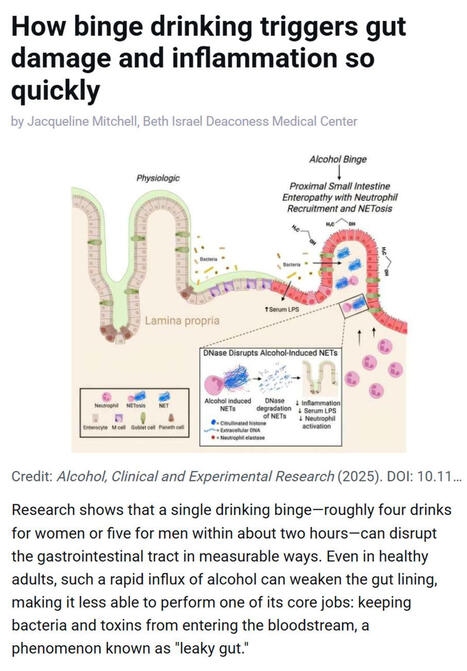
Research shows that even a single episode of binge drinking - about four drinks for women or five for men within two hours - can weaken the gut barrier, allowing #bacteria and #toxins to enter the bloodstream and trigger #inflammation, a process often referred to as “leaky gut.”
▫️ Investigators at Beth Israel Deaconess Medical Center (BIDMC), in work published in Alcohol: Clinical and Experimental Research, found that short bursts of high-dose #alcohol recruit immune cells called #neutrophils to the upper small intestine, where they release damaging structures known as NETs that disrupt the gut lining.
▫️ NETs stands for Neutrophil Extracellular Traps. They are web-like structures made of #DNA, histones, and antimicrobial proteins that are released by neutrophils to trap and kill #microbes. While NETs are part of the body’s innate immune defense, they can also damage surrounding tissues when produced excessively or inappropriately - such as after binge alcohol exposure - by disrupting barriers like the gut lining, promoting inflammation, and allowing bacteria or toxins to leak into the bloodstream.
▫️ The study, led by Scott Minchenberg, MD, PhD, a clinical fellow in #gastroenterology and #hepatology at BIDMC, showed that breaking down these NETs with an enzyme reduced gut damage and bacterial leakage.
▫️ As noted by senior author Gyongyi Szabo MD, PhD, Chief Academic Officer at BIDMC and Beth Israel Lahey Health, these findings highlight an early inflammatory pathway linking binge drinking to gut and liver injury.
It appeared less than 40 years ago, while systemic immunity exploded 60 years ago.
It is still a minor part of Immunology teaching and research, while the mucosal immune system is at the frontline of encounters with germs, antigens... in other words the environment.
2️⃣ 0️⃣ years ago, a #microbiota analysis of samples from patients with #Crohn's disease turned up something consistent: one bacterium was missing in patients who relapsed, who progressed to surgery, who failed biologics. #Faecalibacterium prausnitzii. And this bacterium exhibited anti-inflammatory effects in vitro and in mice!
What followed was two decades of mechanistic work: ✅ MAM protein blocking NF-κB (https://lnkd.in/eWa9rU6P) ✅ CD4+CD8αα+ regulatory T cells specific for F. prausnitzii (https://lnkd.in/e5EUCAXY), ✅ and CD14+ monocytes rewired toward anti-inflammatory energy metabolism (https://lnkd.in/eREPZy93).
By 2016, that body of evidence was strong enough to build a company. Exeliom Biosciences was founded that year to turn the science into a drug (https://lnkd.in/efAgpyT9).
▶️ The MAINTAIN study is where that bet was tested in humans for the first time.
🦠 After induction with corticosteroids, eight patients with mild-to-moderate Crohn's disease received oral EXL01 (10¹⁰ bacteria/day) for up to 24 weeks. No treatment-related adverse events. EXL01 was recovered in up to 42.8% of stool samples during treatment.
🧬 Ileal transcriptomics detected upregulation of energy metabolism and mucosal immune pathways, without broad compositional shifts in the microbiome. The bacterium acts on host cells directly, not by remodeling the community. The two patients who flared showed markedly higher CRP and platelets at baseline. Before EXL01 was started, suggesting that the corticoid treatment did not work for them.
A phase 2 randomized controlled trial is ongoing to evaluate the effect of EXL01 in preventing postoperative recurrence in CD (NCT06925061) with Groupe REMIND
With Perle Guarino-Vignon, Edouard Louis, Hang Phuong PHAM, Geert DHaens, Philippe Langella, Nathalie Rolhion and all co-authors.
Faculté de Santé de Sorbonne Université INSERM INRAE Greater Paris University Hospitals - AP-HP Crsa Paris Exeliom Biosciences FHU GLIMMER "Gut, Liver & Microbiome Research" Groupe REMIND | 11 comments on LinkedIn
Can a woman with an optimal vaginal microbe donate and thereby resolve molecular vaginal dysbiosis in another woman???
We wanted to answer the question in this first randomised controlled trial - It was one of the studies in Tine Wrønding PhD - she organised more than 900 clinical visits to make this possible and it has been a remarkable team effort - huge thanks to everybody involved💪🙏
Although some women experienced donor microbiome engraftment - especially after pre-treatment - and although we learned a lot about the vaginal microbiome - this is a negative trial - going forward we need to explore who will benefit vaginal microbiome transplantation or find alternative ways to treat vaginal dysbiosis 🔬
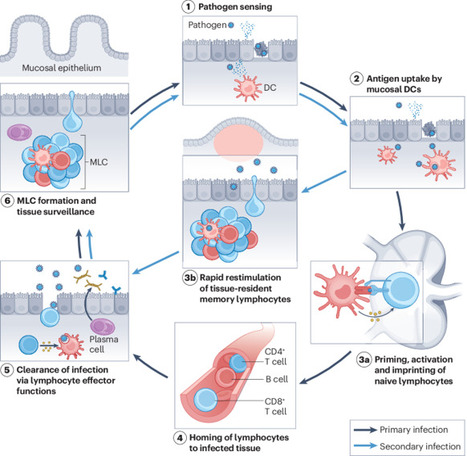
Most pathogens don’t wait for an invitation, they enter through our mucosal surfaces.
A recent paper in Nature Reviews Immunology highlights a critical gap in how we think about vaccines: while traditional injected vaccines are excellent at preventing severe disease, they often fall short at the body’s frontlines; the respiratory, gastrointestinal, and urogenital mucosa.
🔬 Key takeaway: To truly control infections (and not just reduce symptoms), we need to design vaccines that generate strong mucosal immunity.
Here’s why this matters:
• Mucosal tissues are the first point of contact for most pathogens • Local immune defenses (like IgA and tissue-resident memory cells) can stop infections before they start • Current systemic vaccines don’t always induce strong protection at these sites • Mucosal vaccines (e.g., nasal or oral) could help block transmission, not just disease
💡 The future of vaccination may lie in integrated strategies: Systemic priming + mucosal boosting = broader, more effective protection
This shift is especially relevant for respiratory and emerging zoonotic diseases, where stopping transmission is just as important as treating illness.
As we continue to rethink vaccine design, one thing is clear; the protection at the entry point could change the game.
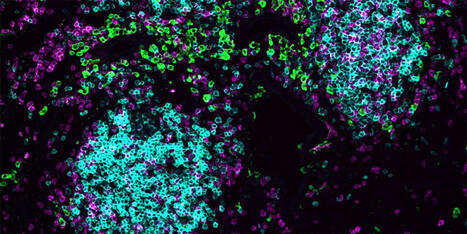
When a virus enters the lungs, the immune system must respond immediately. The King lab, Jean de Lima as first author, at the Department of Biomedicine and the Universität Basel has now identified a specialized group of CD4⁺ T cells that coordinate a local immune defense directly within the lung.
These T cells produce a molecule called HIF-1α, which is typically known as a cellular stress sensor but can also be activated by immune signals. Using advanced imaging methods, the team mapped how these cells position themselves at the outer edges of small immune hubs and release interleukin-21 (IL-21) to activate neighboring cells. When HIF-1α was switched off in the T cells, the local immune network collapsed, leaving the lungs poorly equipped to fight off a second infection with a different influenza strain.
The same HIF-1α-driven T cells were also found in a mouse model of lung cancer, where they supported the immune system’s fight against tumor cells. This suggests that the lung maintains its own immune ecosystem — a coordinated community of cells with distinct roles in tissue defense.
This discovery provides important insight for developing inhalable mucosal vaccines that protect the lungs where viruses first enter, and it may also inform new strategies for tissue-targeted immunotherapies.
🧬 Programming lung immunity through mucosal vaccination
A new Science Magazine study shows how intranasal vaccination can induce broad protection against diverse respiratory threats in mice.
Using an intranasal liposomal formulation combining TLR4 and TLR7/8 agonists with antigen, the authors demonstrate durable protection against multiple viral and bacterial respiratory infections, as well as allergic airway inflammation.
Multi-omic profiling of lung tissue reveals several key features of this response:
🔹 Durable tissue-resident T cell immunity Intranasal vaccination induces persistent antigen-specific CD4⁺ and CD8⁺ tissue-resident memory T cells (TRM) in the lung that remain detectable for months.
🔹 Epigenetic reprogramming of alveolar macrophages Single-cell transcriptomic and chromatin accessibility analyses reveal sustained transcriptional and epigenomic remodeling of alveolar macrophages, enhancing antigen presentation, phagocytosis, and antiviral responses.
🔹 T cell–innate cell cross-talk via RANKL signaling Memory T cells imprint macrophage function through RANKL-mediated signaling, establishing a feed-forward circuit between adaptive and innate immunity within lung tissue.
🔹 Rapid spatial immune organization upon infection Following challenge, vaccinated lungs rapidly form tertiary lymphoid structures, enabling accelerated pathogen-specific T- and B-cell responses.
These findings support the concept of “integrated organ immunity” - a coordinated network of tissue-resident immune and structural cells that can provide broad protection against diverse respiratory threats.
💡 The study also highlights how integrating spatial transcriptomics, single-cell RNA-seq, and chromatin accessibility profiling enables detailed mapping of immune programming directly within lung tissue microenvironments.
📄 Zhang et al., Science (2026) Mucosal vaccination in mice provides protection from diverse respiratory threats
Glycans are essential components of homeostatic networks, acting as fine tuners of immunological responses, and are therefore promising targets for manipulating immune tolerance. Glycans shield the entire gut mucosa surface, contributing to epithelial barrier integrity. Moreover, most microorganisms expose glycoconjugates on their surfaces, making glycans essential molecules in the crosstalk between host immune response and the gut microbiota. The vast amount of biological information encoded by mucosal glycans is deciphered by a variety of glycan-binding proteins that translate glycan recognition into either pro-inflammatory or anti-inflammatory responses. Current evidence from inflammatory bowel disease (IBD) has highlighted the prominent role of glycans in establishing and regulating key cellular and molecular pathways underlying the transition from health to intestinal inflammation, with implications for understanding IBD immunopathogenesis and for IBD prediction and prevention. In this Review, we discuss current advances, emerging challenges and future prospects in exploiting the power of the mucosal glycocalyx and the glycome as master coordinators of the immunoregulatory networks in IBD from the preclinical phase to established diagnosis. We discuss the clinical utility of the glycome as a serological biomarker with diagnostic, prognostic and predictive value, and as a potential new target for preventive intervention strategies in IBD. Glycans are essential components of the gut mucosa that modulate epithelial barrier integrity, host–microbiota interactions and gut immune response. This Review discusses the role of mucosal glycans in gut homeostasis, in intestinal inflammation and their therapeutic potential for inflammatory bowel disease.
Un grand merci à Biologiste365 d’avoir permis un débat ouvert et utile autour de “Microbiote intestinal : de la recherche à la clinique”. Les échanges (et le replay) sont ici : https://lnkd.in/ev3hj_HC Pour la Société Française de Microbiologie et son GT MicMaC, le message reste constant, déjà porté dans notre tribune (Le Monde, 2023 – https://lnkd.in/ekh2EgXC) : oui à la recherche encadrée sur le microbiote, mais non aux raccourcis, potentiellement dangereux pour les patients. L’étude portée par MicMaC (Pichon et al., Gut 2025 – https://lnkd.in/eYCweCfW) l’a objectivé : à partir d’un même échantillon de selles standardisé, des offres d’analyse du microbiote “en libre accès” auprès des particuliers produisent à l’heure actuelle des résultats et des interprétations très variables, donc non fiables, et d’aucune utilité. Quand le rendu dépend du laboratoire, ce n’est pas un biomarqueur clinique, et cela ne doit pas guider des décisions de santé. Ce que nous défendons est simple et pragmatique : · standardiser (pré-analytique, analytique, bioinformatique) · valider (recherche clinique, cohortes, réplication, impact clinique) · encadrer l’interprétation (s’appuyer sur des connaissances médicales et le dialogue clinico-biologique, pas de sur-promesses) La SFM continuera à pousser une approche exigeante, transparente et centrée sur le patient, pour faire du microbiote un vrai progrès clinique.
Harnessing Mucosal Immunity for Protective Vaccines -
A thorough review on mucosal immunity, the type of responses elicited, the unique anatomical and immunological features of the mucosal surfaces of the body, and the challenges associated with the generation of protective immunity via mucosal vaccines.
Sperm have long been thought of as streamlined DNA delivery vehicles, carrying little more than a father’s genes to the egg.
But a new study shows that in mice, sperm may transmit the father’s influence in another way.
During their passage through the epididymis, the coiled tube where they mature after leaving the testes, sperm pick up messenger RNAs (mRNAs), RNA transcripts of genes that contain the genetic instructions for making proteins.
These mRNAs seem to be transferred to the fertilized egg, where they may affect the developing embryo.
Your nose may be the gateway to a stronger immune system. 👃
At the moment, an influenza vaccine called FluMist is the only licensed intranasal vaccine approved for use in humans. The vaccine is administered through a spray of fluid in the nose, rather than with an injection.
FluMist has proven effective in children, and is licensed for adults—but for a long time there has been no measurable “correlate of protection.” Scientists saw no sign of influenza-fighting immune cells circulating in the blood after adults received FluMist.
Now scientists at La Jolla Institute for Immunology (LJI) have discovered that FluMist can trigger an immune response directly in nasal tissue in adults. The vaccine trains immune cells in the upper nasal passages to recognize and fight influenza virus infection. This immune response stays in the upper airways and can’t be detected via blood samples.
How do intranasal vaccines work? Can flu vaccines be better? Thrilled to announce our newest paper is out, demonstrating memory B cell responses in human upper airway after immunization with the intranasal flu vaccine (Flumist). Great findings by dedicated scientist Dr. Hannah Stacey in the lab, leveraging clever sampling techniques from Dr. Sydney Ramirez. La Jolla Institute for Immunology Science Magazine https://lnkd.in/gtRiyMdS
Since the start of this year, EUFOREA has partnered with 30+ international medical societies and patient organizations across pulmonology, allergology, and rhinology 🤝. By breaking the silos between specialties, we’re working together to improve outcomes for patients affected by multimorbidities in the upper and lower airways.
At the 2026 Respiratory Summit 🫁, partners will gather at the Royal Society of Medicine, London, with one mission: redefining chronic respiratory diseases as preventable. The summit kicks off with a keynote from Mr. José Luis Castro, WHO Special Envoy for CRDs, on the urgent need for change in the field.
Together with our academic and non-profit partners across Europe, the US, and the Middle East, we’re committed to tackling key unmet needs and raising the bar for global respiratory care. 💙
The lung microbiome is increasingly recognized as a key contributor to the development and progression of chronic airway diseases. While these conditions are typically associated with reduced microbial diversity and pathogen overgrowth, emerging evidence suggests that non-pathogenic bacteria may...
Asthme : prévention, vaccination… et entretien pharmaceutique
On parle souvent des risques infectieux chez les patients asthmatiques — grippe, pneumocoque — et de l’importance de la vaccination pour éviter des exacerbations sévères.
Mais un levier reste encore sous-exploité : l’entretien asthme. 👉 Un moment clé pour évaluer le contrôle de la maladie 👉 Un espace pour vérifier l’observance et la bonne utilisation des dispositifs 👉 Une opportunité pour sensibiliser à la prévention, notamment vaccinale 👉 Un point de contact régulier dans le parcours de soins
C’est un dispositif puissant… à condition qu’il soit réellement activé. Aujourd’hui, le défi n’est plus seulement d’informer, mais de structurer et de systématiser ces interactions.
C’est là que la technologie peut faire la différence.
Chez Apodis, nous travaillons à : ✔️ Identifier les patients éligibles à l’entretien asthme ✔️ Aider les pharmaciens à structurer leurs interventions ✔️ Intégrer la prévention vaccinale dans chaque échange ✔️ Suivre l’impact dans le temps
L’entretien asthme ne doit plus être une opportunité ponctuelle, mais un véritable outil de pilotage du parcours patient.
Et si chaque passage en pharmacie devenait un point d’activation de la prévention ?
#Immunology | 𝗧 𝗖𝗲𝗹𝗹𝘀 𝗣𝗼𝘀𝗶𝘁𝗶𝗼𝗻 𝗧𝗵𝗲𝗺𝘀𝗲𝗹𝘃𝗲𝘀 𝗶𝗻 𝗟𝗼𝘄-𝗢𝘅𝘆𝗴𝗲𝗻 𝗭𝗼𝗻𝗲𝘀 𝘁𝗼 𝗖𝗼𝗺𝗺𝗮𝗻𝗱 𝗟𝘂𝗻𝗴 𝗗𝗲𝗳𝗲𝗻𝘀𝗲 | University of Basel researchers led by Jean de Lima found that specialized helper T cells migrate to oxygen-scarce edges of immune hubs during lung infection. There, they produce the so-called HIF-1α protein and release interleukin-21, directing macrophages, B cells, and natural killer cells into coordinated responses against respiratory pathogens. Using advanced imaging in influenza-infected mice and inducible knockout models, the team mapped how these cells position at hub boundaries to orchestrate defense networks.
The findings show tissue-resident immune hubs function as command centers for on-site protection rather than antibody factories. Professor Carolyn King's group validated the mechanism across secondary influenza infections and lung cancer models, showing broad therapeutic potential. This breakthrough enables design of inhalable vaccines that build immune defense directly in airways where viruses enter, potentially transforming respiratory disease prevention. The spatial coordination strategy also opens perspectives for tissue-targeted therapies that use the body's natural positioning systems to strengthen local immune responses at infection sites.
👇 Learn more & read the original publication: link in the comments 👇
🇨🇭 Follow #ScienceSwitzerland for the latest news and emerging trends on Swiss science, technology, education, and innovation >> swissinnovation.org Follow us >> Science-Switzerland #Science | #Education | #Research | #Innovation
Pre-eclampsia is often described as a disease of the placenta, but at its core it is also a disease of immune balance. When the maternal immune system becomes overactivated, the delicate vascular architecture of the placenta can begin to fail.
Recent data showing rising pre-eclampsia rates after the pandemic has prompted renewed interest in immune-vascular triggers. If spike protein interacts with macrophages and endothelial cells in the placenta, understanding that mechanism could become a crucial piece of the puzzle in protecting maternal and fetal health.
======================================================== Your Gut Readiness Assessment https://lnkd.in/ezPm4wht ========================================================
The global vaccine landscape may be entering a new phase — and oral vaccines are quickly becoming one of the most discussed innovations in infectious disease prevention. In recent industry conversations across biotech and pharmaceutical research communities in the U.S., more attention is shifting toward oral vaccine platforms. Unlike traditional injections, oral vaccines could simplify distribution, improve patient compliance, and make large-scale immunization campaigns far more accessible — especially in regions where healthcare infrastructure is limited. Several biotechnology companies are now accelerating research around oral delivery systems, mucosal immunity, and next-generation vaccine platforms. The idea is not only to prevent disease more effectively, but also to rethink how vaccines are manufactured, distributed, and administered globally. For pharmaceutical companies and healthcare systems, this shift could represent more than just a scientific breakthrough. It may reshape public health logistics, vaccine accessibility, and global pandemic preparedness in the coming decade. The question many people in the industry are asking now is: If oral vaccines become widely scalable, could they fundamentally change the way the world approaches infectious disease prevention? Curious to hear perspectives from people working across biotech, healthcare, and public health.
A very insightful review from the Akiko Iwasaki's group on the potential to harness mucosal immunity in next-generation vaccine development. While the rapid deployment of intramuscular mRNA vaccines was a landmark achievement in preventing severe COVID-19, intramuscular shots often fall short of providing sterilizing immunity. Mucosal immunity represents a particularly promising avenue for improving vaccines against respiratory viruses, as it enables immune protection to be established directly at the site of viral entry and early replication. Mucosal tissues, such as the respiratory tract, host locally regulated specialized immune cells that are functionally and spatially distinct. Reduction of infection and transmission requires engaging the mucosal immune response: a coordinated process beginning with epithelial pathogen sensing and culminating in the establishment of tissue-resident memory T (TRM) and B (BRM) cells, alongside robust local secretory IgA (SIgA) production. Unlike systemic IgG, nasal SIgA has demonstrated superior virus-neutralizing activity and greater breadth against antigenically drifted variants. A promising strategy for advancing vaccine design is the heterologous prime-boost approach. Research suggests that intramuscular priming (to establish peripheral memory pools) followed by an intranasal boost can effectively "pull" memory cells to the respiratory mucosa. However, the so-called 'mucosal' vaccines requires navigating complex physiological constraints, such as the mucociliary clearance system and the anionic mucus layer. Moreover, the regulatory path for mucosal vaccines is primarily hindered by the lack of validated correlates of protection, making it difficult to predict efficacy and guide clinical trial designs. Additionally, the anatomical proximity of the nasal mucosa to the central nervous system necessitates rigorous safety evaluations to prevent neuro-olfactory spillover or unintended neuro-inflammation. https://lnkd.in/eb5ZUMY4
Nasal spray vaccine could ‘replace multiple jabs every year’Bookmark popoverRemoved from bookmarksClose popoverScientists at Stanford Medicine have developed a universal vaccine formula, tested on mice, that offers broad protection against various respiratory threats. The vaccine, delivered as a nasal spray, could protect against cold, flu, Covid, allergies, respiratory viruses, sepsis-causing bacteria, and even house dust mites. It works by mimicking the signals immune cells use to communicate during an infection, rather than targeting specific parts of a pathogen. If developed for humans, this vaccine could replace multiple annual jabs for winter respiratory infections and potentially protect against new pandemic bugs. While lead author Dr Bali Pulendran estimates human availability within five to seven years, other experts caution that a truly universal vaccine is still some way off due to safety considerations and the diversity of the human population.
Une avancée importante en recherche vaccinale pour les 6 mois à 5 ans
Une équipe dirigée par Guy Boivin, professeur au Département de pédiatrie et chercheur au Centre de recherche du CHU de Québec – Université Laval, a développé un vaccin expérimental administré par voie intranasale afin de protéger les jeunes enfants contre deux virus respiratoires majeurs : le métapneumovirus humain et le virus respiratoire syncytial (VRS). Ces deux agents infectieux sont responsables chaque année de nombreuses bronchiolites et pneumonies chez les jeunes enfants.
Les premières études menées sur des modèles animaux montrent des résultats très encourageants. Cette avancée repose sur une plateforme vaccinale qui permet d’intégrer rapidement des éléments de différents virus pour créer de nouveaux candidats vaccins. Découvrez tous les détails :
To get content containing either thought or leadership enter:
To get content containing both thought and leadership enter:
To get content containing the expression thought leadership enter:
You can enter several keywords and you can refine them whenever you want. Our suggestion engine uses more signals but entering a few keywords here will rapidly give you great content to curate.




 Your new post is loading...