Moodle and Web 2.0
176.9K views | +0 today
Moodle and Web 2.0
The use of ITC in the foreign language classroom
Curated by Juergen Wagner
Your new post is loading...
Rescooped by Juergen Wagner from Medien – Unterrichtsideen
May 9, 2019 3:52 AM
Scoop.it!

Virtuelles Lernen : Machen Computerspiele Schüler besser? | 

Virtuelles Lernen : Machen Computerspiele Schüler besser? |  | Moodle and Web 2.0 | Scoop.it
Spiele am Computer oder auf dem Handy bringen Spaß in die Bildung. Aber lernen Schüler dadurch mehr – und werden die Noten besser?

Via Guido Knaus
No comment yet.
Rescooped by Juergen Wagner from Creative teaching and learning
May 9, 2019 3:50 AM
Scoop.it!

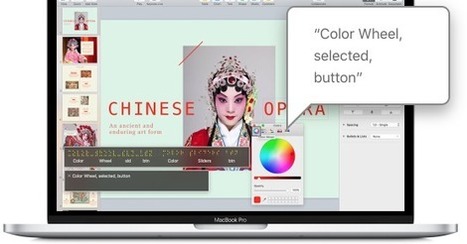
Accessibility features every teacher using Apple products must know about

Accessibility features every teacher using Apple products must know about | Moodle and Web 2.0 | Scoop.it

"In today's post we are highlighting the various accessibility features Apple products provide for its users. Not all teachers using these products are fully aware of these features depriving thus their students of important learning possibilities ..."

  1. Accessibility features built into Mac
  2. Accessibility features built into iPad
  3. Accessibility features built into iPhone
  4. Accessibility features built into Watch

Via Leona Ungerer
No comment yet.
Rescooped by Juergen Wagner from TIC & Educación
May 7, 2019 3:12 AM
Scoop.it!

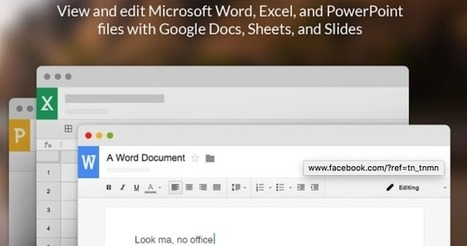
Here Is How to Edit, Download and Convert Office Files to Google Docs, Sheets, or Slides

Here Is How to Edit, Download and Convert Office Files to Google Docs, Sheets, or Slides | Moodle and Web 2.0 | Scoop.it
In this post, we are showing you how to work on your Office files using Google Drive. More specifically, you will learn how to edit, download, and convert Microsoft Office files in Google Docs, Sheets, and Slides. There are two ways to edit Office files: you can either edit them using Office Compatibility Mode (OCM) or convert them to a Google Drive compatible format (e.g., Docs, Slides, Sheets).

Via Gumersindo Fernández
No comment yet.
Rescooped by Juergen Wagner from Education 2.0 & 3.0
May 7, 2019 3:10 AM
Scoop.it!

What's in Your Digital Footprint?

Students to learn to think carefully before posting and sharing in this video from Common Sense Media about the Digital Footprint we leave behind online

Via Ana Cristina Pratas, Yashy Tohsaku
No comment yet.
Rescooped by Juergen Wagner from Learning & Technology News
May 6, 2019 9:32 AM
Scoop.it!

How Learning Happens - Video Series

How Learning Happens - Video Series | Moodle and Web 2.0 | Scoop.it
We think these techniques will resonate with educators everywhere: They are focused on taking advantage of the incredible opportunity to help children reach their full potential by creating positive relationships, experiences, and environments in which every student can thrive.

Via Nik Peachey
Nik Peachey's curator insight, May 6, 2019 5:34 AM

An interesting series of videos.

Hamza Yousaf's comment, May 6, 2019 3:10 PM
Your phone gets overheat sometimes, here is the easiest step to prevent your phone from overheating
https://bit.ly/2Wsgi6T
Scooped by Juergen Wagner
May 6, 2019 9:30 AM
Scoop.it!

ASCD: Guidelines for Creating Rubrics

ASCD: Guidelines for Creating Rubrics | Moodle and Web 2.0 | Scoop.it
Bryan Goodwin and Elizabeth Ross Hubbell's new book The 12 Touchstones of Good Teaching: A Checklist for Staying Focused Every Day includes a chapter on how to clarify performance expectations for students. Rubrics are an essential tool for delineating the criteria that distinguishes between novice and mastery-level work. Here are a few brief guidelines Goodwin and Hubbell recommend for creating rubrics, as well as a list of online tools to support your work:
Kristi Newgarden's curator insight, May 7, 2019 8:22 AM

The title caught my attention.  The online rubric resources are linked from the ASCD website.  

Rescooped by Juergen Wagner from iPads, MakerEd and More in Education
May 6, 2019 9:29 AM
Scoop.it!

Getting Started with Design Thinking - Getting Smart

Getting Started with Design Thinking - Getting Smart | Moodle and Web 2.0 | Scoop.it

"In the old days (like three years ago), you had to tell computers what to do. They are increasingly figuring it out on their own. The rise of artificial intelligence (AI), code that learns, is reshaping life and work. We’re a couple of years into a new era driven by exponential technology. Everyone is experiencing high rates of change—and things will continue to speed up for our kids. That makes three new literacies more important than ever:

     * Design thinking skills: an iterative problem-solving approach;


     * Entrepreneurship skills: taking initiative and learning to deliver value; and


     * Social skills: collaborating on diverse teams.


For those new to design thinking, it’s a mindset and methodology for dealing with complexity. We’ve assembled articles, podcasts and case studies to help you and your community get started. Design thinking is similar to computational thinking (which has roots in Computer Science) so we added a few resources on that as well."


Via John Evans
CaseyPaz's curator insight, May 24, 2019 10:39 AM
Design Thinking: it’s a mindset and methodology for dealing with complexity.
Rescooped by Juergen Wagner from E-Learning-Inclusivo (Mashup)
May 6, 2019 3:12 AM
Scoop.it!

I Have a Dream: Authentic Learning

I Have a Dream: Authentic Learning | Moodle and Web 2.0 | Scoop.it
I wrote a post earlier this year entitled, Authentic Learning Experiences. Some of the characteristics of authentic learning I identified are summarized in this graphic: The Task Learners, 4th through 6th graders in my gifted education language arts class, were given the task of composing and then recording their own I Have a Dream speeches.…

Via juandoming
No comment yet.
Rescooped by Juergen Wagner from Medien – Unterrichtsideen
May 5, 2019 9:14 AM
Scoop.it!

Jugendliche zu Lesern machen - Der «Spick» gibt neu eine Wochenzeitung heraus - News - SRF

Jugendliche zu Lesern machen - Der «Spick» gibt neu eine Wochenzeitung heraus - News - SRF | Moodle and Web 2.0 | Scoop.it
Das Schülermagazin «Spick» lanciert eine Wochenzeitung für Jugendliche. Nun sind die «Spick News» erstmals erschienen.

Via Guido Knaus
No comment yet.
Rescooped by Juergen Wagner from iGeneration - Humane Use of Technology in an AI world (Pedagogy & Digital Innovation)
May 5, 2019 3:11 AM
Scoop.it!

Two Great Google Drive Extensions for Teachers via Educators' tech 

Two Great Google Drive Extensions for Teachers via Educators' tech  | Moodle and Web 2.0 | Scoop.it
Free resource of educational web tools, 21st century skills, tips and tutorials on how teachers and students integrate technology into education

Via Dr. Tom D'Amico (@TDOttawa)
No comment yet.
Rescooped by Juergen Wagner from iGeneration - Humane Use of Technology in an AI world (Pedagogy & Digital Innovation)
May 5, 2019 3:11 AM
Scoop.it!

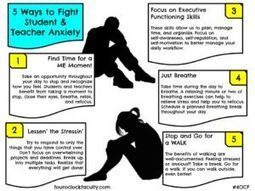
5 Ways to Fight Student & Teacher Anxiety – via 4 O'clock faculty

5 Ways to Fight Student & Teacher Anxiety – via 4 O'clock faculty | Moodle and Web 2.0 | Scoop.it


Feeling stressed and anxious? Are your students feeling stressed and anxious? Try these strategies to help yourself and your

Via Dr. Tom D'Amico (@TDOttawa)
No comment yet.
Rescooped by Juergen Wagner from Education 2.0 & 3.0
May 5, 2019 3:10 AM
Scoop.it!

Could Social Learning Change PD? – by Holly Clark

Holly Clark

Via Dr. Tom D'Amico (@TDOttawa) , Yashy Tohsaku
No comment yet.
Rescooped by Juergen Wagner from E-Learning-Inclusivo (Mashup)
May 4, 2019 9:41 AM
Scoop.it!

Virtual Reality and eLearning – Figuring the Right Fit

Virtual Reality and eLearning – Figuring the Right Fit | Moodle and Web 2.0 | Scoop.it
Virtual Reality has came swooping into the eLearning industry. Interested to know how Virtual Reality can be used in eLearning? This blog has the answers.

Via juandoming
Luke Flint's curator insight, May 8, 2019 4:45 AM
Virtual reality opens up a world of options for teachers and students. Gone are the days of sketching and drawing on paper, 3-dimensional spaces can be created where students have full control over the environment. A movie storyboard fore example suddenly comes to life when taken from the page and developed with VR.
Rescooped by Juergen Wagner from iGeneration - Humane Use of Technology in an AI world (Pedagogy & Digital Innovation)
May 9, 2019 3:51 AM
Scoop.it!

How the Mystery Skype Game Helps Kids Learn Geography and Connect with Others Globally by Amanda Morris

How the Mystery Skype Game Helps Kids Learn Geography and Connect with Others Globally by Amanda Morris | Moodle and Web 2.0 | Scoop.it
Teachers are using a game called Mystery Skype to teach geography and connect with classes around the country and world.

Via Dr. Tom D'Amico (@TDOttawa)
Emilie Fowkes's curator insight, May 12, 2019 11:54 PM
Skype Geography is a teaching strategy created by Amanda Morris (2019) that increases cultural exposure and builds global relationships in the classroom, while students develop mapping and geography skills. Our 21st-century learners are innovative, creative and social adolescents that learn best when in control of their learning and can have social circles that are nation-wide (Sparks and Honey, 2014). This strategy allows learners to collaborate with peers, interact at a global level, and use innovative and creative skills to display their mapping journey. The Skype Geography activity lasts between thirty to forty-five minutes per session, and the students are in groups, that are in a video chat via Skype with another group in a different classroom, somewhere around the world. The students collaborate in their groups to decipher questions that will retrieve the location of the other classroom. Students can only ask yes or no questions. The groups exchange questions until the classrooms are located and later document the coordinates and methods to retrieve the destination. In my mathematics classroom, students will split into groups and be provided with a template of the world map. Students will have five minutes to access online world maps and also to prepare underlying base questions they might ask: Are you below the equator? Are you south-east of Darwin? Students are required to retrieve the town that the other classroom is in, remembering we can only ask yes or no questions. Students will have multiple map resources available to help with decision-making and problem-solving processes to collaborate with team members to effectively retrieve the desired destination. After the Skype session is over, students will document coordinates of their starting point, key ideas throughout the process and the final destination. After three or four sessions, groups will identify the decision-making and problem-solving skills used to make the process more efficient. This strategy allows learners to collaborate with peers, interact at a global level, and use innovative and creative skills to display their mapping journey. This strategy can be used to transform learning in my classroom by increasing cultural exposure and building global relationships in the classroom, while students effectively develop mapping and geography skills.
Rescooped by Juergen Wagner from Educational Technology News
May 7, 2019 3:13 AM
Scoop.it!

How we created a comprehensive drone curriculum

How we created a comprehensive drone curriculum | Moodle and Web 2.0 | Scoop.it

"Drone curricula offer authentic learning experiences to prepare students for the modern-day workforce"


Via EDTECH@UTRGV
No comment yet.
Rescooped by Juergen Wagner from Education 2.0 & 3.0
May 7, 2019 3:11 AM
Scoop.it!

Digital Transformation in the Education Sector - A Guide to Education Technology

Digital Transformation in the Education Sector - A Guide to Education Technology | Moodle and Web 2.0 | Scoop.it
Since much of the digital transformation in the education sector is rather new, many are still unaware of EdTech and how it has changed the face of education forever. So a guide to education technology, as well as to the digital transformation in the education sector, would be prudent.

Via Yashy Tohsaku
No comment yet.
Rescooped by Juergen Wagner from iGeneration - Humane Use of Technology in an AI world (Pedagogy & Digital Innovation)
May 7, 2019 3:10 AM
Scoop.it!

7 Things That Can Spoil Your Relationships With Your Students by Kate Kohm

7 Things That Can Spoil Your Relationships With Your Students by Kate Kohm | Moodle and Web 2.0 | Scoop.it

Via Dr. Tom D'Amico (@TDOttawa)
No comment yet.
Rescooped by Juergen Wagner from iGeneration - Humane Use of Technology in an AI world (Pedagogy & Digital Innovation)
May 6, 2019 9:31 AM
Scoop.it!

Getting Organized with Google - free self-paced course by John Sowash

Getting Organized with Google - free self-paced course by John Sowash | Moodle and Web 2.0 | Scoop.it

Via Dr. Tom D'Amico (@TDOttawa)
No comment yet.
Rescooped by Juergen Wagner from Technology in Education
May 6, 2019 9:29 AM
Scoop.it!

Save Hours: Pull The Tables

Save Hours: Pull The Tables | Moodle and Web 2.0 | Scoop.it
Pull Student Responses From a Google Doc I’ve said many times, I would rather hit myself in the head with a brick than open 30 Google Docs (or Slides, or Sheets…). My rule of thumb is to only assign individual student work that I have to open 20% of the time or less. For those …
Via Felix Jacomino
Maria Vizoso's curator insight, May 7, 2019 4:48 AM
Share your insight
Rescooped by Juergen Wagner from iPads, MakerEd and More in Education
May 6, 2019 3:14 AM
Scoop.it!

Is Coding Over? Why Learning to Code Is Really About Learning to Learn. | EdSurge News

Is Coding Over? Why Learning to Code Is Really About Learning to Learn. | EdSurge News | Moodle and Web 2.0 | Scoop.it
We are now living in a technological world and the future of work is this: Tech workers will no longer solely work in the tech industry. Every field will hire employees with strong digital skills, and this trend will only continue to accelerate.

To prepare for this reality, there are a growing number of learn-to-code organizations exposing students as young as Kindergarten to computer science education. And it makes sense. The hypothesis operates like something of an “if-then” statement, a mainstay of computer science: If coding is the language of tech, and tech is the future of work, then young people need to learn this language in order to succeed in their upcoming careers. In essence, coding is a ticket into the party—being able to tell the computer what to do is an entryway into our technological world and, therefore, a path to upward mobility.

Simply knowing how to code does not guarantee a lucrative career. Because knowing how to code today does not mean you will know how to code tomorrow.
This is certainly true to a degree. But simply knowing how to code does not guarantee a lucrative career. Why? Because knowing how to code today does not mean you will know how to code tomorrow.

Via John Evans
No comment yet.
Rescooped by Juergen Wagner from iGeneration - Humane Use of Technology in an AI world (Pedagogy & Digital Innovation)
May 6, 2019 3:10 AM
Scoop.it!

How Can Institutions Prepare Students to Become Global Citizens? - EdTechReview by Ananya Debroy

How Can Institutions Prepare Students to Become Global Citizens? - EdTechReview by Ananya Debroy | Moodle and Web 2.0 | Scoop.it
INSIGHT Ananya Debroy

Via Dr. Tom D'Amico (@TDOttawa)
Rescooped by Juergen Wagner from E-Learning-Inclusivo (Mashup)
May 5, 2019 3:12 AM
Scoop.it!

Learn How AI Is Shaping Learning And Workforce Readiness For IT Professionals

Learn How AI Is Shaping Learning And Workforce Readiness For IT Professionals | Moodle and Web 2.0 | Scoop.it
Discover how to shape Learning And Workforce Readiness for IT professionals, using AI as the driving force in the modern workplace.

Via juandoming
No comment yet.
Rescooped by Juergen Wagner from Education 2.0 & 3.0
May 5, 2019 3:11 AM
Scoop.it!

35 Multimodal Learning Strategies and Examples

35 Multimodal Learning Strategies and Examples | Moodle and Web 2.0 | Scoop.it
Multimodal learning offers a full educational experience that works for every student. Use these strategies, guidelines and examples at your school today!

Via Yashy Tohsaku
No comment yet.
Rescooped by Juergen Wagner from iGeneration - Humane Use of Technology in an AI world (Pedagogy & Digital Innovation)
May 5, 2019 3:10 AM
Scoop.it!

What the debate over homework is getting wrong By: Chelsea Waite

What the debate over homework is getting wrong By: Chelsea Waite | Moodle and Web 2.0 | Scoop.it
By: Chelsea Waite

Via Dr. Tom D'Amico (@TDOttawa)
No comment yet.
Rescooped by Juergen Wagner from Creative teaching and learning
May 5, 2019 3:09 AM
Scoop.it!

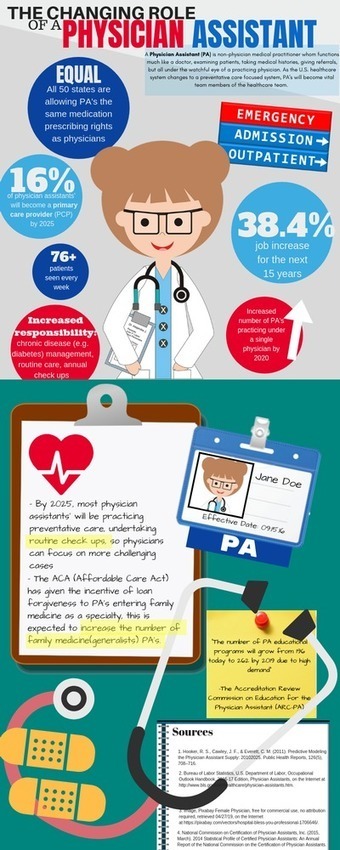
elearn Magazine: Enhancing and impacting the online classroom environment with infographics

elearn Magazine: Enhancing and impacting the online classroom environment with infographics | Moodle and Web 2.0 | Scoop.it

"Throughout history, civilizations have used images to convey their stories. The phrase “A picture is worth a thousand words,” is a manifestation of the power of visual communication. An image can create a sense of clarity by translating knowledge and meaning [1]. An infographic (short for information graphic) is a type of picture that blends data with design ..."


Via Leona Ungerer
Naomi Jehle's curator insight, May 7, 2019 10:35 PM
Creating infographics is visual and appeals to many different students and different learning styles. Visual - is worth a thousand words and can make reading a lot of information far easier on the eyes. 

There are many different ways in which visual elements can be created; although infographics are valuable as they incorporate different elements: words, visual, symbols, and colours. 

The article goes into some detail on how to create effective infographics, which is so valuable. 
Pamela Alaniz's curator insight, May 13, 2019 9:22 PM
This article did mention the use of online classrooms, not Google classrooms per say, but I found it interesting as it noted that learning through infographics was kind of the new way to use graphics with text. I never paid much attention to how I would learn when it came to reading as I would always read the information and answer questions as I was growing up. Now the information I retained was because I was taught and smart enough to retain in my memory, however had it not been for my graduate studies in which I am learning that learning through the use of pictures and simple text is actually getting better retained in my long term memory. This is especially important for teachers who are constructing lessons or multimedia presentations for their students, and come to think of it would help many of the social studies teachers teach objectives to world history if they would use infographics with the use of text versus just text through power points. This would be one way I would change curriculum to help students retain information and not feel to much of a cognitive overload when working, which is another topic this article discusses. This helps readers understand how people learn.
Emily Harvey's curator insight, May 22, 2019 5:06 AM
They say "a picture is worth thousand words"... an infographic must say much more! 
A great visual tool to enhance the classroom environment.