 Your new post is loading...

|
Scooped by
Pôle Veille AgroParisTech
September 9, 2025 5:37 AM
|
Veille IPCI : Ingénierie de Produits à l'interface Cuisine-industrie
|
|
Scooped by
Pôle Veille AgroParisTech
July 1, 7:42 AM
|
Dans le cadre de son dossier sur les arômes, Process Alimentaire fait le point sur les tendances de l’année. Dans cet article d’introduction, zoom sur les saveurs exotiques, pimentées et réconfortantes (partie 1/5).
|
|
Scooped by
Pôle Veille AgroParisTech
June 30, 5:53 AM
|
Savez-vous que tout ce qui s’appelle citron n’est pas forcément un citron ?
Qu’on peut en cuisiner les feuilles ? Que dans les tableaux nordiques, un citron pelé symbolise la résurrection de l’âme ? Qu’au-delà du triste quartier trop souvent accolé au poisson, il y a un monde de goûts et de textures à découvrir et à cuisiner ? Découvrez tout cela et bien plus encore dans ces nouvelles miscellanées consacrées au citron. Numéros précédents consacrés au Poivre, Pomme, Huile d'Olive, Cholocat et Gingembre
|
|
Scooped by
Pôle Veille AgroParisTech
June 30, 5:46 AM
|
Xavier Le Louër, pouvez-vous nous décrire votre parcours et votre poste actuel ?
|
|
Scooped by
Pôle Veille AgroParisTech
June 24, 8:01 AM
|
L’association stérilisation UHT/conditionnement aseptique est-elle la solution la plus qualitative pour les produits hyperprotéinés ? Les dernières générations d’autoclaves peuvent-elles se poser en alternative ?
La Fromagerie Dongé, fabricant et affineur de Brie de Meaux AOP depuis 1930, annonce le lancement d’une innovation de rupture : Le Végé du Fromager. Forte de plus de 100 ans d’excellence dans la fabrication de fromages au lait cru, la maison familiale propose une spécialité fermentée à base de protéines laitières et végétales. À déguster comme un yaourt ou un fromage blanc, Le Végé du Fromager répond à une exigence inchangée de goût et de respect du vivant.
|
|
Scooped by
Pôle Veille AgroParisTech
June 24, 7:50 AM
|
The growing demand for sustainable, functional, and nutritionally enhanced foods has intensified the search for alternative ingredients capable of meeting both technological and health-related requirements. In this context, mushrooms have emerged as promising multifunctional resources due to their nutritional composition, bioactive compounds, and techno-functional properties. This review provides a critical analysis of mushroom-based ingredients, focusing on the relationship between fractionation, structure, and techno-functionality, and their role in innovative food products.
|
|
Scooped by
Pôle Veille AgroParisTech
June 24, 7:47 AM
|
Highlights • Non-thermal gels offer alternatives to traditional thermal gels.
• pH, enzymes, ions, and shear can structure oils without thermal treatment.
• Templated and porous-based gels broaden non-thermal fat design routes.
• Non-thermal methods reduce oxidative damage caused by thermal.
• Sorbent-based systems suit foods needing oil retention and structure.
|
|
Scooped by
Pôle Veille AgroParisTech
June 19, 4:40 AM
|
Journal of Food Science and Technology, has just published its latest issue Volume 63, Issue 7. You’ll find the new articles, including article titles, authors, and direct links, listed below.
|
|
Scooped by
Pôle Veille AgroParisTech
June 17, 8:08 AM
|
... mechanisms, structure-function relationships, modification strategies, and emerging food applications Highlights • Clarifies thermal and non-thermal gelation mechanisms and key interactions.
• Examines intrinsic and extrinsic factors governing multiscale gel network formation.
• Reviews physical, chemical, and biological strategies for improving gel properties.
• Links gel structure to functionality and summarizes diverse food applications.
• Discusses future directions including modeling and cross-disciplinary innovations.
|
|
Scooped by
Pôle Veille AgroParisTech
June 17, 8:03 AM
|
The raw materials behind emulsifiers are becoming increasingly expensive. At the same time, industry experts say consumers are seeking cleaner label alternatives and ingredients. As some brands choose to reformulate away from their least “label-friendly” emulsifiers, Cargill, Fiberstar, and Ingredion are taking different routes. The result is that the emulsifier, a category most shoppers never think about, has become a reformulation battleground.
|
|
Scooped by
Pôle Veille AgroParisTech
June 17, 8:00 AM
|
Although nondairy yogurt alternatives may offer environmental advantages over conventional dairy products, their broader adoption is often constrained by textural limitations, which remain a major barrier to consumer acceptance. Addressing texture deficiencies requires strategic ingredient selection and optimized processing techniques.
|
|
Scooped by
Pôle Veille AgroParisTech
June 11, 4:36 AM
|
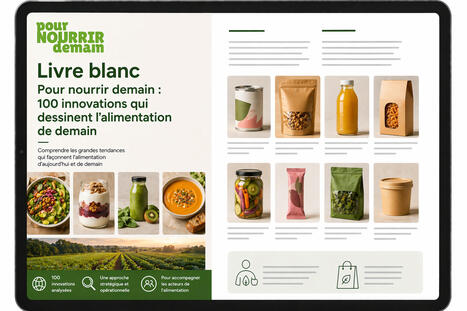
À travers une sélection de 100 produits agroalimentaires observés ces derniers mois en France et à l’international, Pour nourrir demain propose une lecture structurée des dynamiques qui façonnent l’alimentation actuelle.
Regroupées en 10 grandes tendances, ces analyses offrent aux acteurs du secteur des clés concrètes pour comprendre les évolutions du marché et anticiper les attentes des consommateurs.
|
|
|
Scooped by
Pôle Veille AgroParisTech
July 7, 8:29 AM
|
La veille part en vacances
La veille part en vacances ... Avant de vous retrouver à la rentrée, nous vous souhaitons un bel été !
|
|
Scooped by
Pôle Veille AgroParisTech
July 1, 7:16 AM
|
Le concours international de cuisine de synthèse (« note à note ») revient pour une quatorzième édition ! Les concurrents sélectionnés devront réaliser des plats sur le thème « Reduce production costs and time, reduce calories, but mind the flavour ! ». La finale aura lieu le vendredi 4 septembre sur le campus Agro Paris-Saclay.
|
|
Scooped by
Pôle Veille AgroParisTech
June 30, 5:49 AM
|
Le “bien-manger” est devenu une injonction. (...) Pourtant, le hamburger prospère. Trop gras, trop salé, trop transformé, il manque d’éthique, se soucie peu d’écologie, sans perdre de son succès. Comment ce symbole de la malbouffe a-t-il réussi à survivre à une époque qui le condamne ?Artisanal, local, éthique, il devient “gourmet”. Il se réinvente et se justifie, à travers six stratégies d’adaptation, entre transparence, discours de la preuve et construction d’imaginaires. À la croisée de la sociologie, de l’histoire et de l’analyse marketing, se révèle ici le parcours d’un plat emblématique, capable d’évoluer avec son temps et de se glisser dans les codes du “bien-manger”.
|
|
Scooped by
Pôle Veille AgroParisTech
June 30, 5:45 AM
|
Functional beverages are increasingly expanding beyond wellness claims, with consumers demanding hydration, energy, protein, and gut health benefits from drinks — seeking “more per sip.” For beverage manufacturers, maintaining taste while keeping labels simple remains an ongoing challenge.
|
|
Scooped by
Pôle Veille AgroParisTech
June 24, 7:59 AM
|
Foodvalley has published an updated practical guide to support F&B manufacturers in reformulating more nutritious products. The guide comes amid mounting pressure on companies to deliver healthier and more sustainable products without taste and price compromises.
|
|
Scooped by
Pôle Veille AgroParisTech
June 24, 7:51 AM
|
A few years ago, much of the discussion around dairy alternatives was framed as plant-based versus dairy, but many companies are now taking a more flexible approach. This is happening against a backdrop of consumers increasingly identifying as flexitarian and seeking out a mix of dairy and plant-based products. Success in the alternative dairy space is no longer measured by replacing dairy entirely, as the market is evolving toward diversification of protein sources.
|
|
Scooped by
Pôle Veille AgroParisTech
June 24, 7:49 AM
|
Highlights • Early research aimed to define universal principles for the ‘ideal’ pairing.
• Over time, the search for an ‘ideal’ pairing was replaced by context-specific suitability.
• Successful pairings create memorable emotional experiences, not just sensory harmony.
• Recent studies show successful pairings are deeply cultural, not universal.
• Pairing local food and wine is a key trend for sustainability and authenticity.
|
|
Scooped by
Pôle Veille AgroParisTech
June 24, 7:32 AM
|
Changes in eating behavior toward a more plant-forward and sustainable diet may be enhanced by preparing vegetables with tastes, especially umami, which humans crave but plants generally lack due to fundamental plant biology. The traditional Japanese food cultures have over millennia developed ways to umamify vegetables in meals with little or no meat. This reflection paper explores how elements of traditional Japanese food cultures may facilitate a green dietary transition by promoting the use of umami-rich seasonings and condiments to umamify plant foods, increase their palatability, minimize food waste, and hence support sustainability. By enhancing umami and flavor attributes (koku), Japanese culinary practices demonstrate how dishes with little or no meat still can provide satisfying and flavorful meals.
|
|
Scooped by
Pôle Veille AgroParisTech
June 17, 8:09 AM
|
New consumer research reveals that people who are initially hesitant to sample insect-based foods — increasingly positioned as a sustainable protein source — may enjoy the experience more than they expect and could even prefer it to a regular cereal bar. Authors of the paper suggest that direct exposure, such as tasting samples, could play an important role in reducing consumer hesitation around insect-based foods and helping them grow more comfortable with the idea
|
|
Scooped by
Pôle Veille AgroParisTech
June 17, 8:05 AM
|
Bakery innovations are increasingly impacted by consumer expectations, cultural influences, and technological advancements, a new Dawn Foods report on bakery trends highlights. The findings explain how bakery manufacturers can innovate new formats, leverage social media for consumer interaction, and prioritize sustainability and wellness
|
|
Scooped by
Pôle Veille AgroParisTech
June 17, 8:02 AM
|
Propulsé par NewFoodData, le Baromètre de l’Innovation Alimentaire Mondiale analyse chaque année les grandes évolutions de l’innovation alimentaire à l’échelle mondiale.
|
|
Scooped by
Pôle Veille AgroParisTech
June 17, 7:58 AM
|
The bean-to-bar movement, which emerged in the United States in 1996, represents a transformative approach to chocolate production and consumption by integrating craftsmanship, sustainability, and gastronomic authenticity. This study conducted a literature review using the narrative approach, as the object of investigation encompasses both conceptual, sensory, technological, and market dimensions that are not always consolidated in formal scientific databases.
|
|
Scooped by
Pôle Veille AgroParisTech
June 11, 3:16 AM
|
Au fait, que mange-t-on, des pâtes ou des nouilles ? Quelles sont leurs différences ? À partir de quoi sont-elles fabriquées ? Que se passe-t-il quand on fait cuire ses pâtes sèches ? Faut-il privilégier les pâtes fraîches aux pâtes sèches ? Où est la vérité ?… Autant de questions qui – semble-t-il – vont nous aider à préparer et consommer de véritables pâtes « al dente ». La science nous interpelle, dévoilant le secret des pâtes les plus savoureuses et les moins onéreuses : le beurre et l’argent du beurre en quelque sorte ! > dossier complet procédés de fabrication
|




![Pâtes et nouilles : Présentation générale des produits [Dossier Techniques de l'Ingénieur] | IPCI : Ingénierie de Produits à l'interface Cuisine-Industrie | Scoop.it](https://img.scoop.it/plWIKChAEMnts9AeVSIvrTl72eJkfbmt4t8yenImKBVvK0kTmF0xjctABnaLJIm9)





Voir aussi :
- The Wonderful World of Fermentation, IFT, Février 2026