Your new post is loading...

|
Scooped by
Gilbert C FAURE
February 11, 2020 6:39 AM
|
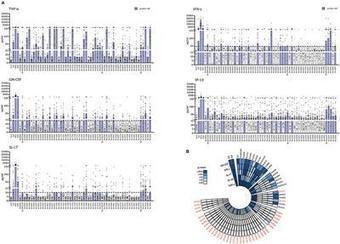
A quarter of the global human population is estimated to be latently infected by Mycobacterium tuberculosis (Mtb), the causative agent of tuberculosis (TB). TB remains the global leading cause of death by a single pathogen and ranks among the top-10 causes of overall global mortality. Current immunodiagnostic tests cannot discriminate between latent, active and past TB, nor predict progression of latent infection to active disease. The only registered TB vaccine, Bacillus Calmette-Guérin (BCG), does not adequately prevent pulmonary TB in adolescents and adults, thus permitting continued TB-transmission. Several Mtb proteins, mostly discovered through IFN-γ centered approaches, have been proposed as targets for new TB-diagnostic tests or -vaccines. Recently, however, we identified novel Mtb antigens capable of eliciting multiple cytokines, including antigens that did not induce IFN-γ but several other cytokines. These antigens had been selected based on high Mtb gene-expression in the lung in vivo, and have been termed in vivo expressed (IVE-TB) antigens. Here, we extend and validate our previous findings in an independent Southern European cohort, consisting of adults and adolescents with either LTBI or TB. Our results confirm that responses to IVE-TB antigens, and also DosR-regulon and Rpf stage-specific Mtb antigens are marked by multiple cytokines, including strong responses, such as for TNF-α, in the absence of detectable IFN-γ production. Except for TNF-α, th
|
|
Scooped by
Gilbert C FAURE
February 6, 2020 2:24 AM
|
Il1rl1 (also known as ST2) is a member of the IL-1 superfamily, and its only known ligand is IL-33. ST2 exists in two forms as splice variants: a soluble form (sST2), which acts as a decoy receptor, sequesters free IL-33, and does not signal, and a membrane-bound form (ST2), which activates the MyD88/NF-κB signaling pathway to enhance mast cell, Th2, regulatory T cell (Treg), and innate lymphoid cell type 2 functions. sST2 levels are increased in patients with active inflammatory bowel disease, acute cardiac and small bowel transplant allograft rejection, colon and gastric cancers, gut mucosal damage during viral infection, pulmonary disease, heart disease, and graft-versus-host disease. Recently, sST2 has been shown to be secreted by intestinal pro-inflammatory T cells during gut inflammation; on the contrary, protective ST2-expressing Tregs are decreased, implicating that ST2/IL-33 signaling may play an important role in intestinal disease. This review will focus on what is known on its signaling during various inflammatory disease states and highlight potential avenues to intervene in ST2/IL-33 signaling as treatment options.
|
|
Scooped by
Gilbert C FAURE
January 29, 2020 12:11 PM
|
Neutrophils have traditionally been viewed as bystanders or biomarkers of cardiovascular disease. However, studies in the past decade have demonstrated the important functions of neutrophils during cardiovascular inflammation and repair. In this Review, we discuss the influence of traditional and novel cardiovascular risk factors on neutrophil production and function. We then appraise the current knowledge of the contribution of neutrophils to the different stages of atherosclerosis, including atherogenesis, plaque destabilization and plaque erosion. In the context of cardiovascular complications of atherosclerosis, we highlight the dichotomous role of neutrophils in pathogenic and repair processes in stroke, heart failure, myocardial infarction and neointima formation. Finally, we emphasize how detailed knowledge of neutrophil functions in cardiovascular homeostasis and disease can be used to generate therapeutic strategies to target neutrophil numbers, functional status and effector mechanisms. In this Review, Soehnlein and colleagues discuss the role of neutrophils in cardiovascular inflammation and repair, describing the effect of cardiovascular risk factors on neutrophil production and function, appraising the contribution of neutrophils to the different stages of atherosclerosis and its clinical manifestations, and highlighting the evolving therapeutic strategies for targeting neutrophil numbers, functional status and effector mechanisms.
|
|
Scooped by
Gilbert C FAURE
January 24, 2020 1:22 PM
|
The field of Primary Immunodeficiencies (PID) is growing fast. Over 400 diseases are defined and characterized by recurrent or chronic infections, autoimmunity, allergy, inflammation or cancer as a consequence of genetic alterations affecting the immune system (1).
|
|
Scooped by
Gilbert C FAURE
January 15, 2020 9:00 AM
|
PubMed comprises more than 30 million citations for biomedical literature from MEDLINE, life science journals, and online books. Citations may include links to full-text content from PubMed Central and publisher web sites.
|
|
Scooped by
Gilbert C FAURE
January 12, 2020 4:13 AM
|
Human memory-like NK cells are commonly defined by either a lack of FcεRIγ or gain of NKG2C expression. Here, we investigated the heterogeneity of human CD56dim NK cell subpopulations according to the expression of FcεRIγ and NKG2C in a large cohort (n = 127). Although the frequency of FcεRIγ− and NKG2C+ NK cells positively correlated, the FcεRIγ− and NKG2C+ NK cell populations did not exactly overlap. The FcεRIγ+NKG2C+, FcεRIγ−NKG2C+, and FcεRIγ−NKG2C− NK cell populations were only evident after HCMV infection, but each had distinct characteristics. Among the subpopulations, FcεRIγ−NKG2C+ NK cells exhibited the most restricted killer immunoglobulin-like receptor repertoire, suggesting clonal expansion. Moreover, FcεRIγ−NKG2C+ NK cells exhibited the lowest Ki-67 and highest Bcl-2 expression, indicating the long-lived quiescent memory-like property. Functionally, FcεRIγ−NKG2C+ NK cells had weak natural effector function against K562 but strong effector functions by CD16 engagement, whereas FcεRIγ+NKG2C+ NK cells had strong effector functions in both settings. Anatomically, the FcεRIγ+NKG2C+, FcεRIγ−NKG2C+, and FcεRIγ−NKG2C− NK cell populations were present in multiple human peripheral organs. In conclusion, we demonstrate the heterogeneity of memory-like NK cells stratified by FcεRIγ and NKG2C and suggest both markers be utilized to better define these cells.
|
|
Rescooped by
Gilbert C FAURE
from Virus World
January 5, 2020 4:08 AM
|
HIV patients lose immunity to smallpox even though they were vaccinated against the disease as children and have had much of their immune system restored with antiretroviral therapy, according to a study published in the Journal of Infectious Diseases. Called HIV-associated immune amnesia, the finding could explain why people living with HIV still tend to have shorter lives on average than their HIV-negative counterparts despite being on antiretroviral therapy. The study follows other research recently published in the journals Science and Science Immunology that found the immune systems of children who contracted measles similarly "forgot" their immunity against other illnesses such as influenza. Mark K. Slifka, Ph.D., a professor of molecular microbiology and immunology at the Oregon Health & Science University School of Medicine and Oregon National Primate Research Center, led the study. Slifka and his colleagues compared the T-cell and antibody responses of a total of 100 HIV-positive and HIV-negative women who were vaccinated against smallpox in their youth. The research team chose smallpox because its last known U.S. case was in 1949, meaning study subjects haven't recently been exposed to its virus, which would have triggered new T-cell and antibody responses. They found the immune systems of HIV-positive women who were on antiretroviral therapy had a limited response when their blood was exposed to the vaccina virus, which is used in the smallpox vaccine. Normally, those vaccinated against smallpox have CD4 T cells that remember the virus and respond in large numbers when they're exposed again. Previous research has shown smallpox virus-specific CD4 T cells are maintained for up to 75 years after vaccination. This finding happened despite the fact that antiretroviral therapy works by boosting CD4 T cell counts in HIV-positive patients. This indicates that while antiretroviral therapy may boost total T cell counts overall, it can't recover virus-specific T cells generated from prior childhood vaccinations. Slifka and his colleagues plan to evaluate whether the same phenomenon occurs in HIV-infected men, and if people living with HIV also lose immune memory to other diseases. Published in J. Infectious Diseases(23 December 2019): https://doi.org/10.1093/infdis/jiz678
Via Juan Lama
|
|
Scooped by
Gilbert C FAURE
December 24, 2019 8:01 AM
|
Significance The complement system is a crucial antimicrobial system in the human body. However, controlling its regulation is essential, and failure to do so is implicated in a number of clinical inflammatory pathologies leading to great interest in therapeutic complement inhibition. We have identified and characterized a class of complement inhibitors from biting ticks. Utilizing both cryoelectron microscopy and X-ray crystallography we provide a comprehensive understanding of their mechanism of inhibition at the level of the terminal pathway of complement. We present a high-resolution cryoelectron microscopy structure of complement C5, the molecule targeted by the major therapeutic Eculizumab. In addition, we reveal the fold of the CirpT family of tick inhibitors and their unique mode of inhibition. Abstract The complement system is a crucial part of innate immune defenses against invading pathogens. The blood-meal of the tick Rhipicephalus pulchellus lasts for days, and the tick must therefore rely on inhibitors to counter complement activation. We have identified a class of inhibitors from tick saliva, the CirpT family, and generated detailed structural data revealing their mechanism of action. We show direct binding of a CirpT to complement C5 and have determined the structure of the C5–CirpT complex by cryoelectron microscopy. This reveals an interaction with the peripheral macro globulin domain 4 (C5_MG4) of C5. To achieve higher resolution detail, the structure of the C5_MG4–CirpT complex was solved by X-ray crystallography (at 2.7 Å). We thus present the fold of the CirpT protein family, and provide detailed mechanistic insights into its inhibitory function. Analysis of the binding interface reveals a mechanism of C5 inhibition, and provides information to expand our biological understanding of the activation of C5, and thus the terminal complement pathway. Footnotes ↵1Present address: MRC Laboratory of Molecular Biology, CB2 0QH Cambridge, United Kingdom. ↵2Present address: Department of Biochemistry, University of Oxford, OX1 2JD Oxford, United Kingdom. ↵3Present address: Department of Physiology, Anatomy and Genetics, University of Oxford, OX1 2JD Oxford, United Kingdom. ↵4Present address: Institute of Molecular Biotechnology, Austrian Academy of Sciences, Vienna Biocenter, 1030 Vienna, Austria. ↵5Present address: Department of Medical Microbiology, Radboud University Medical Center, 6500 HB Nijmegen, The Netherlands. ↵6To whom correspondence may be addressed. Email: susan.lea{at}path.ox.ac.uk. Author contributions: S.J., M.M.J., and S.M.L. designed research; M.P.R., S.J., T.T., T.M., N.T., N.P., J.C.D., M.M.J., and S.M.L. performed research; M.P.R., S.J., N.P., M.M.J.., and S.M.L. analyzed data; and M.P.R., S.J., and S.M.L. wrote the paper. Competing interest statement: M.M.J. and S.M.L. are authors on a patent applied for that describes members of the inhibitor family as potential protein therapeutics. This article is a PNAS Direct Submission. Data deposition: X-ray coordinates and data have been deposited into the Protein Data Bank (PDB), www.pdb.org (PDB ID code 6RPT). The electron microscopy coordinates and volumes have been deposited into the PDB (PDB ID code 6RQJ) and the Electron Microscopy Data Bank, https://www.ebi.ac.uk/ (EMDB ID code EMD-4983). This article contains supporting information online at https://www.pnas.org/lookup/suppl/doi:10.1073/pnas.1909973116/-/DCSupplemental. Copyright © 2019 the Author(s). Published by PNAS. This open access article is distributed under Creative Commons Attribution License 4.0 (CC BY).
|
|
Scooped by
Gilbert C FAURE
December 22, 2019 11:46 AM
|
|
|
Scooped by
Gilbert C FAURE
December 20, 2019 1:35 PM
|
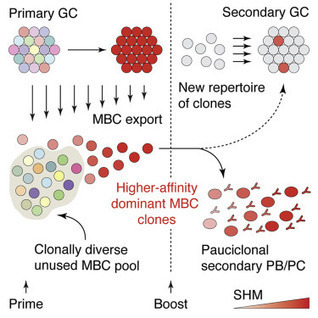
A clonal dynamics analysis of the transition between primary and recall B cell responses
in mice reveals a clonality bottleneck that constricts the breadth of the secondary
antibody response and limits reentry of previously matured B cells into secondary
germinal centers.
|
|
Scooped by
Gilbert C FAURE
December 17, 2019 2:36 AM
|
Prediction of HLA epitopes is important for the development of cancer immunotherapies and vaccines. However, current prediction algorithms have limited predictive power, in part because they were not trained on high-quality epitope datasets covering a broad range of HLA alleles. To enable prediction of endogenous HLA class I-associated peptides across a large fraction of the human population, we used mass spectrometry to profile >185,000 peptides eluted from 95 HLA-A, -B, -C and -G mono-allelic cell lines. We identified canonical peptide motifs per HLA allele, unique and shared binding submotifs across alleles and distinct motifs associated with different peptide lengths. By integrating these data with transcript abundance and peptide processing, we developed HLAthena, providing allele-and-length-specific and pan-allele-pan-length prediction models for endogenous peptide presentation. These models predicted endogenous HLA class I-associated ligands with 1.5-fold improvement in positive predictive value compared with existing tools and correctly identified >75% of HLA-bound peptides that were observed experimentally in 11 patient-derived tumor cell lines. Prediction of HLA class I epitopes is improved in accuracy and breath with peptidomes from 95 mono-allelic cell lines.
|
|
Scooped by
Gilbert C FAURE
December 13, 2019 12:36 PM
|
Surviving a single infection often results in lifelong immunity to the infecting pathogen. Such protection is mediated, in large part, by two main B cell memory ‘walls’ — namely, long-lived plasma cells and memory B cells. The cellular and molecular processes that drive the production of long-lived plasma cells and memory B cells are subjects of intensive research and have important implications for global health. Indeed, although nearly all vaccines in use today depend on their ability to induce B cell memory, we have not yet succeeded in developing vaccines for some of the world’s most deadly diseases, including AIDS and malaria. Here, we describe the two-phase process by which antigen drives the generation of long-lived plasma cells and memory B cells and highlight the challenges for successful vaccine development in each phase. The authors discuss the formation of two main ‘walls’ of B cell memory to protect against pathogen reinfection. The first wall comprises high-affinity antibodies produced by long-lived plasma cells, while the second wall is formed by memory B cells.
|
|
Scooped by
Gilbert C FAURE
December 12, 2019 4:49 AM
|
The clearance of apoptotic cells by professional and non-professional phagocytes — a process termed ‘efferocytosis’ — is essential for the maintenance of tissue homeostasis. Accordingly, defective efferocytosis underlies a growing list of chronic inflammatory diseases. Although much has been learnt about the mechanisms of apoptotic cell recognition and uptake, several key areas remain incompletely understood. This Review focuses on new discoveries related to how phagocytes process the metabolic cargo they receive during apoptotic cell uptake; the links between efferocytosis and the resolution of inflammation in health and disease; and the roles of efferocytosis in host defence. Understanding these aspects of efferocytosis sheds light on key physiological and pathophysiological processes and suggests novel therapeutic strategies for diseases driven by defective efferocytosis and impaired inflammation resolution. Clearing away dead cells — a process known as efferocytosis — is crucial for normal tissue homeostasis and is impaired in several pathological processes. This Review describes new insights into how efferocytes deal with the engulfed dead cell cargo, how efferocytosis supports the resolution of inflammation and how this understanding is informing new therapeutic strategies.
|
|
|
Scooped by
Gilbert C FAURE
February 7, 2020 3:51 AM
|
The P2X7 receptor (P2X7R) is a key pro-inflammatory plasma membrane receptor responsible for NLRP3 inflammasome activation and IL-1β release. Various inflammatory plasma membrane receptors (e.g., IL-1 type I receptor, TNF type I and II receptors, IL-2 receptor) are shed under different pathophysiological conditions. In the present study, we show that the full length P2X7R is released into circulation in patients as well as in healthy subjects. Blood levels of shed P2X7R (sP2X7R) correlate to those of the inflammatory marker C reactive protein (CRP). Blood sP2X7R ranged from 16.74 to 82.17 ng/L, mean ± SE 40.97 ± 3.82 (n = 26) in healthy subjects, from 33.1 to 484.0 ng/L, mean ± SE 114.78 ± 12.22 (n = 45) in patients with CRP n = 42) in patients with CRP >3 mg/L. sP2X7R in plasma was largely associated to microvesicles/microparticles. Peripheral blood monocytes from healthy subjects released sP2X7R upon stimulation with the semi-selective P2X7R agonist benzoyl ATP. These data show that the P2X7R can be released into circulation, and that its blood levels increase in various disease conditions.
|
|
Scooped by
Gilbert C FAURE
February 3, 2020 10:52 AM
|
|
|
Scooped by
Gilbert C FAURE
January 26, 2020 1:11 PM
|
Microphthalmia/TFE (MiT) transcription factors (TFs), such as transcription factor
EB (TFEB) and transcription factor E3 (TFE3), are emerging as key regulators of innate
immunity and inflammation. Rapid progress in the field requires a focused update on
the latest advances. Recent studies show that TFEB and TFE3 function in innate immune
cells to regulate antibacterial and antiviral responses downstream of phagocytosis,
interferon (IFN)-γ, lipopolysaccharide (LPS), and adenosine receptors. Moreover, overexpression
of TFEB or TFE3 can drive inflammation in vivo, such as in atherosclerosis, while
in other scenarios they can perform anti-inflammatory functions.
|
|
Scooped by
Gilbert C FAURE
January 19, 2020 2:47 PM
|
In the absence of class switch recombination and germinal centers, the mechanisms through which B cells from teleost fish mount extrafollicular immunoglobulin M (IgM) memory responses remains mostly unexplored. In this report, we demonstrate that teleost IgM+ B cells respond to CD40L, a thymus-dependent activation signal, similarly to mammalian B2 cells. However, when stimulated with different types of antigens, fish IgM+ B cells only reach a general activation state in response to antigens cataloged as thymus-independent 1 (TI-1) in mammals, as established through both functional assays and RNA sequencing. Interestingly, fish IgM+ B cells remained completely unresponsive to TI-2 antigens, suggesting that the engagement of innate receptors provided by TI-1 antigens is required for the activation of teleost B cells. Finally, a synergy between CD40L and TI-1 antigens was also demonstrated, further supporting that there is no clear dichotomy between thymus-dependent and TI responses in teleost fish.
|
|
Scooped by
Gilbert C FAURE
January 15, 2020 8:59 AM
|
Abstract The skin is innervated by numerous sensory afferent neurons that respond to a diverse array of stimuli ranging from gentle touch to noxious pain. Various features of the immune system—pathogen recognition, secretion of soluble mediators—are shared with the nervous system. This has led to the recognition that neurons share some functions with innate immune cells and have the capacity to recognize pathogens and participate in innate immune responses. Neuroimmune interactions are bidirectional. Soluble mediators from immune cells activate neurons and soluble mediators from neurons can activate immune cells. In this review, we will focus on the interplay between neurons and innate immunity in the skin in the context of host defense and inflammation. Footnotes This work was supported by the National Institute for Health (NIH): 1F30AI147396-01 (to J.A.C.); R01AR071720 (to D.H.K.). This work was also sponsored by the China Scholarship Council (to J.W.). Abbreviations used in this article: ACD allergic contact dermatitis AD atopic dermatitis Chr2 channelrhodopsin DTR diphtheria toxin receptor ILC2 innate lymphoid cell type 2 NGF nerve growth factor. Received September 13, 2019. Accepted November 5, 2019. Copyright © 2020 by The American Association of Immunologists, Inc.

|
Suggested by
Société Francaise d'Immunologie
January 9, 2020 1:26 PM
|
Ever since antiretroviral treatments against HIV infection were introduced in 1996, scientists have eagerly been hunting for a cure for the disease.
|
|
Scooped by
Gilbert C FAURE
December 26, 2019 1:11 PM
|
A genome-wide screening of functionally active enhancers, combined with analyses of chromatin features, transcription factor binding and gene expression, reveals general principles of gene regulatory networks in activated B cells.
|
|
Scooped by
Gilbert C FAURE
December 23, 2019 6:47 AM
|
|
|
Scooped by
Gilbert C FAURE
December 21, 2019 5:48 AM
|
Myeloid-derived suppressor cells (MDSCs) constitute a vast population of immature myeloid cells implicated in various conditions. Most notably, their role in cancer is of great complexity. They exert immunosuppressive functions like hampering cancer immunity mediated by T lymphocytes and natural...
|
|
Scooped by
Gilbert C FAURE
December 19, 2019 8:20 AM
|
HIV-specific Antibody Dependent Cell Cytotoxicity (ADCC) has shown to be important in HIV control and resistance. The ADCC is mediated primarily by natural killer cell activated through the binding of FcγRIIIa receptor to the Fc portion of antibody bound to the antigen expressed on the infected...
|
|
Scooped by
Gilbert C FAURE
December 13, 2019 1:56 PM
|
A New York Times journalist shared his key to reporting with a UAB honors seminar class. Both the reporter and the class want to understand how — for good or for bad — the human immune system works. UAB has one of the few in-depth undergraduate immunology programs in the nation.
|
|
Scooped by
Gilbert C FAURE
December 12, 2019 4:52 AM
|
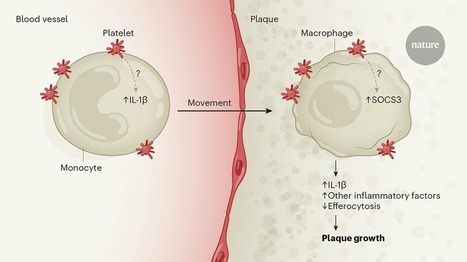
Platelets reprogram macrophages to accelerate plaque formation.
|