Your new post is loading...

|
Scooped by
Gilbert C FAURE
March 17, 2020 3:53 PM
|
Grimsholm et al. show that CD27dull and CD27bright represent sequential MBC developmental
stages. T cell- and germinal center (GC)-independent CD27dull MBCs are the plastic
source of strongly selected and GC-dependent CD27bright MBCs. CD27dull MBCs, able
to expand and differentiate in response to change, ensure stability and flexibility
of human B cell memory.
Summary Neutrophils make up some 70% of the white cells in blood, with billions spawned every day by stem cells nestled in the bone marrow. The cells patrol the bloodstream and wage war on pathogens, and their defensive role is so vital that people who lose their neutrophils in the course of cancer treatment can die from infections. But their scorched-earth tactics are tough on the body—their destructive enzymes kill microbes, but the compounds can also damage tissues or promote inflammation. The cells have been linked to heart disease, asthma, and other illnesses, leading researchers to try to target the cells for therapies. And a burst of new findings about the cells' diversity and behavior is likely to inspire new ways to manipulate them. "There is real hope in this field," one scientist says.
Via Krishan Maggon
|
|
Scooped by
Gilbert C FAURE
March 8, 2020 4:57 AM
|
PubMed comprises more than 30 million citations for biomedical literature from MEDLINE, life science journals, and online books. Citations may include links to full-text content from PubMed Central and publisher web sites.
|
|
Scooped by
Gilbert C FAURE
March 7, 2020 1:56 AM
|
PubMed comprises more than 30 million citations for biomedical literature from MEDLINE, life science journals, and online books. Citations may include links to full-text content from PubMed Central and publisher web sites.
|
|
Scooped by
Gilbert C FAURE
March 5, 2020 6:59 AM
|
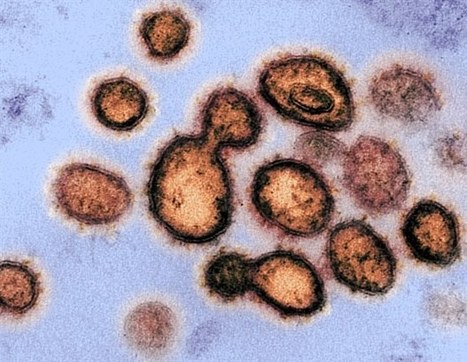
Amid the coronavirus outbreak that is wreaking havoc across the globe, it is essential to know how the cells of the body evade infection from viruses. A team of scientists has explained the mechanism that takes place in case a virus penetrates the body.
|
|
Scooped by
Gilbert C FAURE
March 2, 2020 1:52 PM
|
Significance There is an intense interest in immune reconstitution and immunotherapy to control and cure chronic infections. Yet, how the fundamental processes that are required to generate new T cells are affected by chronic viruses and how these permutations affect therapeutic reconstitution or underlie adverse disease sequelae are not well understood. We demonstrate that type I interferon signaling directly programs peripheral effector T cells to destroy thymic structure and function, leading to a catastrophic organ depletion. Moderate thymic reconstitution associated with immune exhaustion ultimately occurs, but continued ramifications in the efficacy of hematopoietic stem cell therapy to generate new antiviral T cells and to prevent escape of self-reactive T cells remain long term. Abstract Chronic infection provokes alterations in inflammatory and suppressive pathways that potentially affect the function and integrity of multiple tissues, impacting both ongoing immune control and restorative immune therapies. Here we demonstrate that chronic lymphocytic choriomeningitis virus infection rapidly triggers severe thymic depletion, mediated by CD8 T cell-intrinsic type I interferon (IFN) and signal transducer and activator of transcription 2 (Stat2) signaling. Occurring temporal to T cell exhaustion, thymic cellularity reconstituted despite ongoing viral replication, with a rapid secondary thymic depletion following immune restoration by anti-programmed death-ligand 1 (PDL1) blockade. Therapeutic hematopoietic stem cell transplant (HSCT) during chronic infection generated new antiviral CD8 T cells, despite sustained virus replication in the thymus, indicating an impairment in negative selection. Consequently, low amounts of high-affinity self-reactive T cells also escaped the thymus following HSCT during chronic infection. Thus, by altering the stringency and partially impairing negative selection, the host generates new virus-specific T cells to replenish the fight against the chronic infection, but also has the potentially dangerous effect of enabling the escape of self-reactive T cells. Footnotes ↵1Present address: Department of Laboratory Medicine, University of California, San Francisco, CA 94143. ↵2To whom correspondence may be addressed. Email: dbrooks{at}uhnresearch.ca. Author contributions: H.J.E., L.M.S., D.B.M., J.C.Z.-P., and D.G.B. designed research; H.J.E., M.M., I.O., L.M.S., C.R.C., and G.M.B. performed research; H.J.E., M.M., I.O., and D.G.B. analyzed data; D.G.B. wrote the paper; and D.B.M. and J.C.Z.-P. provided intellectual input. The authors declare no competing interest. This article is a PNAS Direct Submission. This article contains supporting information online at https://www.pnas.org/lookup/suppl/doi:10.1073/pnas.1913776117/-/DCSupplemental. Published under the PNAS license.
|
|
Scooped by
Gilbert C FAURE
February 29, 2020 11:11 AM
|
Cationic host defence peptides (CHDP), also known as antimicrobial peptides, are naturally occurring peptides that can combat infections through their direct microbicidal properties and/or by influencing the host’s immune responses. The unique ability of CHDP to control infections as well as resolve harmful inflammation has generated interest in harnessing the properties of these peptides to develop new therapies for infectious diseases, chronic inflammatory disorders and wound healing. Various strategies have been used to design synthetic optimized peptides, with negligible toxicity. Here, we focus on the progress made in understanding the scope of functions of CHDP and the emerging potential clinical applications of CHDP-based therapies. Naturally occurring cationic host defence peptides, also known as antimicrobial peptides, can control infections by their direct microbicidal properties and by modulating the host’s immune responses. In addition, certain cationic host defence peptides can resolve harmful inflammation. Here, Mookherjee et al. assess the emerging potential to therapeutically harness these peptides to treat infectious diseases, chronic inflammatory disorders and wound healing, highlighting current preclinical studies and clinical trials.
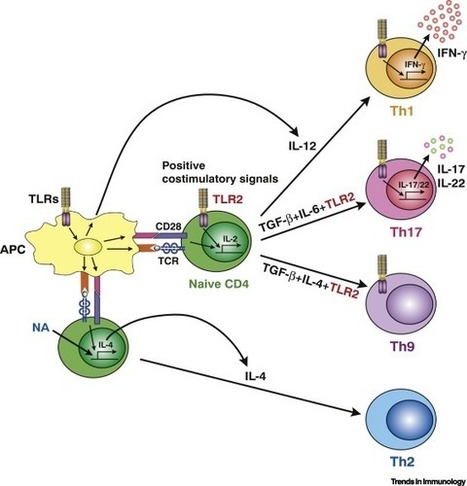
Pattern recognition receptors (PRRs), such as Toll-like receptors (TLRs), NOD-like
receptors (NLRs), and RIG-I-like receptors (RLRs), play a pivotal role in the initiation
of innate immune responses. Certain PRRs are also expressed by CD4+ and CD8+ T cells,
where they function to provide co-stimulatory signals for their activation and differentiation.
Recently, stimulator of interferon genes (STING) was found to be highly expressed
in CD4+ and CD8+ T cells and to modulate T cell function. STING signaling inhibits
cell growth and stimulates type I interferon (IFN-I) responses in T cells through
reciprocal regulation between T cell receptor (TCR) and STING signals.
Via Krishan Maggon
Origins of immune system mapped, opening doors for new cancer immunotherapies...
Via Krishan Maggon
|
|
Scooped by
Gilbert C FAURE
February 18, 2020 3:47 AM
|
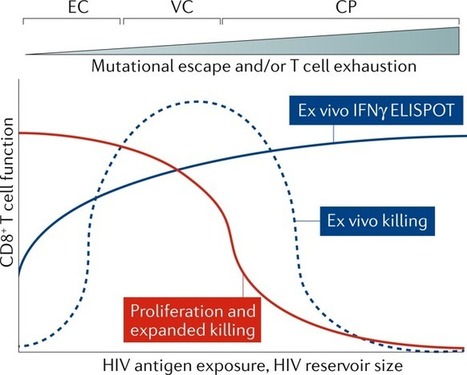
HIV infection can be effectively treated by lifelong administration of combination antiretroviral therapy, but an effective vaccine will likely be required to end the HIV epidemic. Although the majority of current vaccine strategies focus on the induction of neutralizing antibodies, there is substantial evidence that cellular immunity mediated by CD8+ T cells can sustain long-term disease-free and transmission-free HIV control and may be harnessed to induce both therapeutic and preventive antiviral effects. In this Review, we discuss the increasing evidence derived from individuals who spontaneously control infection without antiretroviral therapy as well as preclinical immunization studies that provide a clear rationale for renewed efforts to develop a CD8+ T cell-based HIV vaccine in conjunction with B cell vaccine efforts. Further, we outline the remaining challenges in translating these findings into viable HIV prevention, treatment and cure strategies. Recently, antibody-mediated control of HIV infection has received considerable attention. Here, the authors discuss the importance of CD8+ T cells in HIV infection and suggest that efforts to develop vaccines that target these cells in conjunction with B cells should be renewed.
|
|
Scooped by
Gilbert C FAURE
February 18, 2020 2:46 AM
|
Burn injuries are under-appreciated injuries that are associated with substantial morbidity and mortality. Burn injuries, particularly severe burns, are accompanied by an immune and inflammatory response, metabolic changes and distributive shock that can be challenging to manage and can lead to multiple organ failure. Of great importance is that the injury affects not only the physical health, but also the mental health and quality of life of the patient. Accordingly, patients with burn injury cannot be considered recovered when the wounds have healed; instead, burn injury leads to long-term profound alterations that must be addressed to optimize quality of life. Burn care providers are, therefore, faced with a plethora of challenges including acute and critical care management, long-term care and rehabilitation. The aim of this Primer is not only to give an overview and update about burn care, but also to raise awareness of the ongoing challenges and stigmata associated with burn injuries. Burn injuries, particularly severe burns, are accompanied by a metabolic, immune and inflammatory response that can be challenging to manage, often leading to multiple organ failure or even death. This Primer discusses aspects of burn injury, from prevention to care of patients from both an acute and a long-term perspective.
|
|
Scooped by
Gilbert C FAURE
February 15, 2020 2:28 PM
|
A study of the distribution and function of natural killer cells across various human
tissues reveals anatomic control of their development as well as populations that
mediate immunosurveillance systemically.

|
Suggested by
Société Francaise d'Immunologie
February 12, 2020 4:46 AM
|
Scientists have made a major breakthrough in understanding how the parasite that causes malaria is able to multiply at such an alarming rate, which could be a vital clue in discovering how it has evolved, and how it can be ...
|
|
|
Scooped by
Gilbert C FAURE
March 11, 2020 10:23 AM
|
|
|
Scooped by
Gilbert C FAURE
March 8, 2020 3:08 PM
|
|
|
Scooped by
Gilbert C FAURE
March 8, 2020 4:44 AM
|
Immune memory is a defining feature of the acquired immune system, but activation of the innate immune system can also result in enhanced responsiveness to subsequent triggers. This process has been termed ‘trained immunity’, a de facto innate immune memory. Research in the past decade has pointed to the broad benefits of trained immunity for host defence but has also suggested potentially detrimental outcomes in immune-mediated and chronic inflammatory diseases. Here we define ‘trained immunity’ as a biological process and discuss the innate stimuli and the epigenetic and metabolic reprogramming events that shape the induction of trained immunity. Here a group of leaders in the field define our current understanding of ‘trained immunity’, which refers to the memory-type responses that occur in the innate immune system. The authors discuss our current understanding of the key epigenetic and metabolic processes involved in trained immunity and consider its relevance in immune-mediated diseases and cancer.
|
|
Scooped by
Gilbert C FAURE
March 5, 2020 7:03 AM
|
Immune responses in diverse tissue sites are critical for protective immunity and homeostasis.Here, we investigate how tissue localization regulates …...
|
|
Scooped by
Gilbert C FAURE
March 4, 2020 6:47 AM
|
bioRxiv - the preprint server for biology, operated by Cold Spring Harbor Laboratory, a research and educational institution
|
|
Scooped by
Gilbert C FAURE
March 1, 2020 3:05 AM
|
Targeting Tumor and T-Cell Together The newly diversified experimental strategies to treat cancer include those that involve tweaks to host immunity. A recently described strategy, conducted in mou...
Via Krishan Maggon
|
|
Scooped by
Gilbert C FAURE
February 25, 2020 6:51 AM
|
The influx and efflux of cells and antigens to and from the draining lymph nodes largely take place through the subcapsular, cortical and medullary sinus systems. Recent analyses in mice and humans have revealed unexpected diversity in the lymphatic endothelial cells, which form the distinct regions of the sinuses. As a semipermeable barrier, the lymphatic endothelial cells regulate the sorting of lymph-borne antigens to the lymph node parenchyma and can themselves serve as antigen-presenting cells. The leukocytes entering the lymph node via the sinus system and the lymphocytes egressing from the parenchyma migrate through the lymphatic endothelial cell layer. The sinus lymphatic endothelial cells also orchestrate the organogenesis of lymph nodes, and they undergo bidirectional signalling with other sinus-resident cells, such as subcapsular sinus macrophages, to generate a unique lymphatic niche. In this Review, we consider the structural and functional basis of how the lymph node sinus system coordinates immune responses under physiological conditions, and in inflammation and cancer. Recent single-cell studies have revealed a previously unappreciated heterogeneity among endothelial cells that line the lymphatic sinuses of the lymph nodes. In this Review, the authors describe these various lymphatic endothelial cell types and how they support the trafficking of cells and antigens through lymph nodes.
|
|
Scooped by
Gilbert C FAURE
February 21, 2020 4:21 AM
|
|
|
Scooped by
Gilbert C FAURE
February 18, 2020 3:46 AM
|
The coordinated activities of innate and adaptive immunity are critical for effective protection against viruses. To counter this, some viruses have evolved sophisticated strategies to circumvent immune cell recognition. In particular, cytomegaloviruses encode large arsenals of molecules that seek to subvert T cell and natural killer cell function via a remarkable array of mechanisms. Consequently, these ‘immunoevasins’ play a fundamental role in shaping the nature of the immune system by driving the evolution of new immune receptors and recognition mechanisms. Here, we review the diverse strategies adopted by cytomegaloviruses to target immune pathways and outline the host’s response. This Review focuses on the cytomegaloviruses and the sophisticated strategies they have evolved to evade immune recognition. The authors suggest a better appreciation of these pathways could have clinical implications beyond antiviral immunity, for instance in understanding immune evasion in cancer.
|
|
Scooped by
Gilbert C FAURE
February 17, 2020 1:50 PM
|
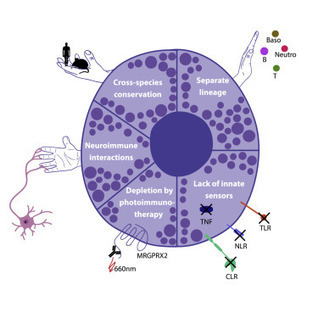
Mast cell functions beyond allergic diseases remain enigmatic. To provide structural
information, Plum et al. performed comprehensive proteome analyses on primary human and mouse mast cells, revealing the cells' unique lineage within the immune system, putative roles in neuroimmune interactions,...
|
|
Scooped by
Gilbert C FAURE
February 14, 2020 6:44 AM
|
14th February Researchers led by Prof Chen Dong from Tsinghua University (Beijing, China) have demonstrated that increased body temperature critically regulates
|