Your new post is loading...

|
Scooped by
Gilbert C FAURE
October 6, 2020 10:15 AM
|
Abstract The clinical progression of the severe acute respiratory syndrome coronavirus 2 (SARS‐CoV‐2) infection (COVID‐19) to critical illness is associated with an exaggerated immune response, lea...
|
|
Scooped by
Gilbert C FAURE
October 6, 2020 6:40 AM
|
|
|
Scooped by
Gilbert C FAURE
October 4, 2020 2:31 PM
|
Abstract The mononuclear phagocyte system (MPS) is a family of cells of related function that includes bone marrow progenitors, blood monocytes and resident tissue macrophages. Macrophages are effe...

|
Suggested by
Société Francaise d'Immunologie
October 2, 2020 11:12 AM
|
Cytokines are a broad group of soluble proteins secreted during pathogen infection by infected and non-infected immune cells with both pro-inflammatory and anti-inflammatory effector functions that stimulate or inhibit systematic inflammation.
|
|
Suggested by
Société Francaise d'Immunologie
October 1, 2020 9:47 AM
|
small cohort, but reexposure humoral immunity
|
|
Scooped by
Gilbert C FAURE
September 29, 2020 3:17 AM
|
Severe acute respiratory syndrome coronavirus–2 (SARS-CoV-2) is the novel coronavirus initially detected in Wuhan, China, and is responsible for the w…
|
|
Scooped by
Gilbert C FAURE
September 27, 2020 5:25 AM
|
|
|
Scooped by
Gilbert C FAURE
September 25, 2020 4:07 AM
|
|
|
Scooped by
Gilbert C FAURE
September 24, 2020 11:02 AM
|
|
|
Scooped by
Gilbert C FAURE
September 22, 2020 2:45 AM
|
|
|
Scooped by
Gilbert C FAURE
September 20, 2020 6:45 AM
|
An international, peer-reviewed genome sciences journal featuring outstanding original research that offers novel insights into the biology of all organisms
|
|
Scooped by
Gilbert C FAURE
September 17, 2020 1:59 AM
|
Analysis of SARS-CoV-2 specific adaptive immune responses during acute COVID-19 identifies
coordination between SARS-CoV-2-specific CD4 T cells and CD8 T cells to limit disease
severity. Aged individuals often exhibit uncoordinated adaptive responses, potentially
tied to scarcity of naive T cells, highlighting immunologic risk factors linked to
disease severity.
|
|
Scooped by
Gilbert C FAURE
September 14, 2020 6:03 AM
|
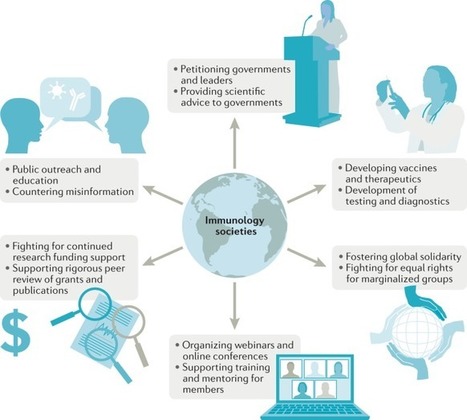
The COVID-19 pandemic is shining a spotlight on the field of immunology like never before. To appreciate the diverse ways in which immunologists have contributed, Nature Reviews Immunology invited the president of the International Union of Immunological Societies and the presidents of 15 other national immunology societies to discuss how they and their members responded following the emergence of severe acute respiratory syndrome coronavirus 2 (SARS-CoV-2). For this Viewpoint, Nature Reviews Immunology asked the presidents of 16 immunology societies from around the world to discuss how their society and its members responded to the COVID-19 pandemic. Their answers highlight the incredible contributions that immunologists around the globe have made following the emergence of severe acute respiratory syndrome coronavirus 2 (SARS-CoV-2).
|
|
|
Suggested by
Société Francaise d'Immunologie
October 6, 2020 10:14 AM
|
Atomic-resolution simulations combined with experiments show sugars’ role in shielding the virus and helping it to attack cells...
|
|
Scooped by
Gilbert C FAURE
October 6, 2020 3:38 AM
|
How the body responds to a coronavirus infection.
|
|
Scooped by
Gilbert C FAURE
October 4, 2020 2:19 PM
|
|
|
Scooped by
Gilbert C FAURE
October 1, 2020 2:09 PM
|
T cell immunity is central for the control of viral infections. To characterize T cell immunity, but also for the development of vaccines, identification of exact viral T cell epitopes is fundamental. Here we identify and characterize multiple dominant and subdominant SARS-CoV-2 HLA class I and HLA-DR peptides as potential T cell epitopes in COVID-19 convalescent and unexposed individuals. SARS-CoV-2-specific peptides enabled detection of post-infectious T cell immunity, even in seronegative convalescent individuals. Cross-reactive SARS-CoV-2 peptides revealed pre-existing T cell responses in 81% of unexposed individuals and validated similarity with common cold coronaviruses, providing a functional basis for heterologous immunity in SARS-CoV-2 infection. Diversity of SARS-CoV-2 T cell responses was associated with mild symptoms of COVID-19, providing evidence that immunity requires recognition of multiple epitopes. Together, the proposed SARS-CoV-2 T cell epitopes enable identification of heterologous and post-infectious T cell immunity and facilitate development of diagnostic, preventive and therapeutic measures for COVID-19. SARS-CoV-2-specific CD4+ and CD8+ T cell epitopes are found in both convalescent patients and virus-naive volunteers and are indicative of heterologous recognition shared with seasonal cold viruses.
|
|
Scooped by
Gilbert C FAURE
October 1, 2020 9:47 AM
|
Dr Ian Frayling says he is suffering with frequent, all-consuming tiredness, along with nausea, irritable bowel syndrome and lack of energy
|
|
Scooped by
Gilbert C FAURE
September 28, 2020 1:13 PM
|
Immune cells rely on cell-cell communication to specify and fine-tune their responses. They express an extensive network of cell communication modes, including a vast repertoire of cell surface and transmembrane receptors and ligands, membrane vesicles, junctions, ligand and voltage-gated ion channels, and transporters. During a crosstalk between the nervous system and the immune system these modes of cellular communication and the downstream signal transduction events are influenced by neurotransmitters present in the local tissue environments in an autocrine or paracrine fashion. Neurotransmitters thus influence innate and adaptive immune responses. In addition, immune cells send signals to the brain through cytokines, and are present in the brain to influence neural responses. Altered communication between the nervous and immune systems is emerging as a common feature in neurodegenerative and immunopathological diseases. Here, we present the mechanistic frameworks of immunostimulatory and immunosuppressive effects critical neurotransmitters — dopamine (3,4-dihydroxyphenethylamine), serotonin (5-hydroxytryptamine), substance P (trifluoroacetate salt powder), and L-glutamate — exert on lymphocytes and non-lymphoid immune cells. Furthermore, we discuss the possible roles neurotransmitter-driven neuroimmune networks play in the pathogenesis of neurodegenerative disorders, autoimmune diseases, cancer, and outline potential clinical implications of balancing neuroimmun
|
|
Scooped by
Gilbert C FAURE
September 26, 2020 7:04 AM
|
This Medical News article discusses the puzzling phenomenon of “long-haulers,” patients who haven’t returned to full health weeks or even months after what sometimes is a mild case of COVID-19.
|
|
Scooped by
Gilbert C FAURE
September 25, 2020 3:59 AM
|
Damaged interferon response helps explain why men get sicker than women
|
|
Rescooped by
Gilbert C FAURE
from Virus World
September 23, 2020 4:40 AM
|
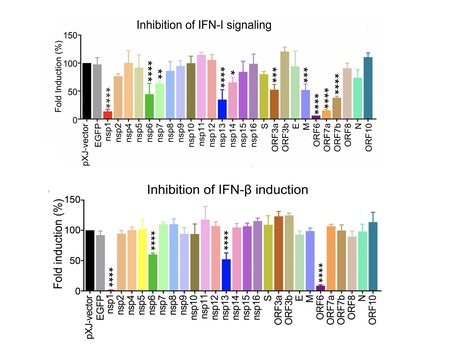
The coronavirus disease 2019 (COVID-19) is determined by SARS-CoV-2 replication and host immune response, but studies evaluating viral evasion of immune response are lacking. Here we employed unbiased screening to identify SARS-CoV-2 proteins that antagonize type-I interferon (IFN-I) response. Three proteins were found to antagonize IFN-I production via distinct mechanisms: nsp6 binds TBK1 to suppress IRF3 phosphorylation; nsp13 binds and blocks TBK1 phosphorylation; and ORF6 binds importin KPNA2 to inhibit IRF3 nuclear translocation. Two sets of viral proteins were identified to antagonize IFN-I signaling through blocking STAT1/STAT2 phosphorylation or nuclear translocation. Remarkably, SARS-CoV-2 nsp1 and nsp6 suppressed IFN-I signaling more efficiently than SARS-CoV and MERS-CoV. Thus, when treated with IFN-I, a SARS-CoV2 replicon replicated to a higher level than chimeric replicons containing nsp1 or nsp6 from SARS-CoV or MERS-CoV. Altogether, the study has provided insights on SARS-CoV-2 evasion of IFN-I response and its potential impact on viral transmission and pathogenesis. Published in Cell Reports (September 19, 2020):
Via Juan Lama
|
|
Scooped by
Gilbert C FAURE
September 20, 2020 10:31 AM
|
In this Minireview, we discuss basic aspects of germinal center biology in the context
of immunity to influenza infection and speculate on how the simultaneous evolutionary
races of virus and antibody may impact our efforts to design a universal influenza
vaccine.
|
|
Scooped by
Gilbert C FAURE
September 19, 2020 9:45 AM
|
A multi-layered, virus-specific immune response is important for controlling SARS-CoV-2 during the acute phase of the infection and reducing COVID-19 disease severity, with the bulk of the evidence pointing to a much bigger role for T cells than antibodies. A weak or uncoordinated immune response, on the other hand, predicts a poor disease outcome.
|
|
Scooped by
Gilbert C FAURE
September 16, 2020 4:18 AM
|
The immune system enables organisms to combat infections and to eliminate endogenous challenges. Immune responses can be evoked through diverse inducible pathways. However, various constitutive mechanisms are also required for immunocompetence. The inducible responses of pattern recognition receptors of the innate immune system and antigen-specific receptors of the adaptive immune system are highly effective, but they also have the potential to cause extensive immunopathology and tissue damage, as seen in many infectious and autoinflammatory diseases. By contrast, constitutive innate immune mechanisms, including restriction factors, basal autophagy and proteasomal degradation, tend to limit immune responses, with loss-of-function mutations in these pathways leading to inflammation. Although they function through a broad and heterogeneous set of mechanisms, the constitutive immune responses all function as early barriers to infection and aim to minimize any disruption of homeostasis. Supported by recent human and mouse data, in this Review we compare and contrast the inducible and constitutive mechanisms of immunosurveillance. Constitutive innate immune mechanisms, such as restriction factors, RNA interference, antimicrobial peptides, basal autophagy and proteasomal degradation, exert early host defence activities that also aim to minimize tissue damage and homeostatic disruption by limiting the activation of inducible innate immunity.
|




 Scoop.it!