Your new post is loading...

|
Scooped by
Gilbert C FAURE
October 13, 2021 10:57 AM
|
Virus entry, consisting of attachment to and penetration into the host target cell, is the first step of the virus life cycle and is a critical ‘do or die’ event that governs virus emergence in host populations. Most antiviral vaccines induce neutralizing antibodies that prevent virus entry into cells. However, while the prevention of virus invasion by humoral immunity is well appreciated, considerably less is known about the immune defences present within cells (known as intrinsic immunity) that interfere with virus entry. The interferon-induced transmembrane (IFITM) proteins, known for inhibiting fusion between viral and cellular membranes, were once the only factors known to restrict virus entry. However, the progressive development of genetic and pharmacological screening platforms and the onset of the COVID-19 pandemic have galvanized interest in how viruses infiltrate cells and how cells defend against it. Several host factors with antiviral potential are now implicated in the regulation of virus entry, including cholesterol 25-hydroxylase (CH25H), lymphocyte antigen 6E (LY6E), nuclear receptor co-activator protein 7 (NCOA7), interferon-γ-inducible lysosomal thiol reductase (GILT), CD74 and ARFGAP with dual pleckstrin homology domain-containing protein 2 (ADAP2). This Review summarizes what is known and what remains to be understood about the intrinsic factors that form the first line of defence against virus infection. Besides neutralizing antibodies, viruses face a range of cell-intrinsic inhibitors that are specialized to limit virus entry into host cells. Majdoul and Compton describe the mechanisms of action of the cellular factors providing this important first line of defence against virus infection, including infection by severe acute respiratory syndrome coronavirus 2 (SARS-CoV-2).
|
|
Scooped by
Gilbert C FAURE
October 12, 2021 3:00 AM
|
Neuropilins (NRPs) are non-tyrosine kinase cell surface glycoproteins expressed in all vertebrates and widely conserved across species. The two isoforms, such as neuropilin-1 (NRP1) and neuropilin-2 (NRP2), mainly act as coreceptors for class III Semaphorins and for members of the vascular...
|
|
Scooped by
Gilbert C FAURE
October 1, 2021 5:37 AM
|
Abstract T cell homeostasis, T cell differentiation, and T cell effector function rely on the constant fine-tuning of gene expression. To alter the T cell state, substantial remodeling of the prote...
|
|
Scooped by
Gilbert C FAURE
September 27, 2021 2:09 AM
|
Epstein–Barr virus (EBV) and Kaposi’s sarcoma-associated herpesvirus (KSHV) independently cause human cancers, and both are maintained as plasmids in tumor cells. They differ, however, in their mechanisms of segregation; EBV partitions its genomes quasi-faithfully, while KSHV often clusters its genomes and partitions them randomly. Both viruses can infect the same B-cell to transform it in vitro and to cause primary effusion lymphomas (PELs) in vivo. We have developed simulations based on our measurements of these replicons in B-cells transformed in vitro to elucidate the synthesis and partitioning of these two viral genomes when in the same cell. These simulations successfully capture the biology of EBV and KSHV in PELs. They have revealed that EBV and KSHV replicate and partition independently, that they both contribute selective advantages to their host cell, and that KSHV pays a penalty to cluster its genomes.
|
|
Scooped by
Gilbert C FAURE
September 20, 2021 1:36 PM
|
The core function of the immune response is to distinguish between self and foreign.
The multiorgan human autoimmune disease, autoimmune polyendocrinopathy-candidiasis-ectodermal
dystrophy (APECED/autoimmune polyendocrine syndrome type 1) is an example of what
happens in the body when central immune tolerance goes astray. APECED revealed the
existence and function of the autoimmune regulator gene, which has a central role
in the development of tolerance. The discovery of autoimmune regulator was the start
of a new period in immunology and in understanding the role of central and peripheral
tolerance, also very relevant to many skin diseases as we highlight in this review.
|
|
Scooped by
Gilbert C FAURE
September 15, 2021 6:40 AM
|
Researchers at the Vanderbilt Institute for Infection, Immunology, and Inflammation, have identified a novel antibacterial mechanism which could open the door to new therapeutics to combat pathogenic bacterial infection.
|
|
Scooped by
Gilbert C FAURE
September 2, 2021 8:25 AM
|

|
Suggested by
LIGHTING
August 26, 2021 7:45 AM
|
|
|
Scooped by
Gilbert C FAURE
August 23, 2021 10:48 AM
|
Click on the article title to read more.
|
|
Suggested by
LIGHTING
August 17, 2021 5:10 AM
|
CD4+ T-helper 22 (Th22) cells are a phenotypically distinct lymphocyte subset that produces high levels of interleukin (IL)-22 without co-production of IL-17A. However, the developmental origin and lineage classification of Th22 cells, their interrelationship to Th17 cells, and potential for plasticity at sites of infection and inflammation remain largely undefined. An improved understanding of the mechanisms underpinning the outgrowth of Th22 cells will provide insights into their regulation during homeostasis, infection, and disease. To address this knowledge gap we generated ‘IL-17A-fate-mapping IL-17A/IL-22 reporter transgenic mice’ and show that Th22 cells develop in the gastrointestinal tract and lung during bacterial infection without transitioning via an Il17a-expressing intermediate, although in some compartments alternative transition pathways exist. Th22-cell development was not dependent on T-bet; however, this transcription factor functioned as a promiscuous T-cell-intrinsic regulator of IL-17A and IL-22 production, in addition to regulating the outgrowth, phenotypic stability, and plasticity of Th22 cells. Thus, we demonstrate that at sites of mucosal bacterial infection Th22 cells develop as a distinct lineage independently of Th17 cells; though both lineages exhibit bidirectional phenotypic flexibility within infected tissues and their draining lymph nodes, and that T-bet plays a critical regulatory role in Th22-cell function and identity.
|
|
Suggested by
LIGHTING
August 13, 2021 1:47 PM
|
The liver is the sixth most common site of primary cancer in humans, and generally arises in a background of cirrhosis and inflammation. Moreover, the liver is frequently colonized by metastases from cancers of other organs (particularly the colon) because of its anatomical location and organization, as well as its unique metabolic and immunosuppressive environment. In this Review, we discuss how the hepatic microenvironment adapts to pathologies characterized by chronic inflammation and metabolic alterations. We illustrate how these immunological or metabolic changes alter immunosurveillance and thus hinder or promote the development of primary liver cancer. In addition, we describe how inflammatory and metabolic niches affect the spreading of cancer metastases into or within the liver. Finally, we review the current therapeutic options in this context and the resulting challenges that must be surmounted. This Review discusses the unique and complex immunological and metabolic features of the liver, from the precancerous stage through to oncological transformation and metastasis. Strategies for targeting this niche are also considered.
|
|
Scooped by
Gilbert C FAURE
August 4, 2021 2:10 PM
|
Abstract Neuroimmune interactions have been revealed to be at the centre stage of tissue defence, organ homeostasis, and organismal physiology. Neuronal and immune cell subsets have been shown to c...
|
|
Scooped by
Gilbert C FAURE
August 2, 2021 5:49 AM
|
Scientists are unpicking the life cycle of SARS-CoV-2 and how the virus uses tricks to evade detection.
|
|
|
Scooped by
Gilbert C FAURE
October 12, 2021 11:19 AM
|
|
|
Scooped by
Gilbert C FAURE
October 5, 2021 2:40 AM
|
|
|
Scooped by
Gilbert C FAURE
September 27, 2021 2:20 AM
|
Human monocytes are divided in three major populations; classical (CD14+CD16−), non-classical (CD14dimCD16+), and intermediate (CD14+CD16+). Each of these subsets is distinguished from each other by the expression of distinct surface markers and by their functions in homeostasis and disease. In this review, we discuss the most up-to-date phenotypic classification of human monocytes that has been greatly aided by the application of novel single-cell transcriptomic and mass cytometry technologies. Furthermore, we shed light on the role of these plastic immune cells in already recognized and emerging human chronic diseases, such as obesity, atherosclerosis, chronic obstructive pulmonary disease, lung fibrosis, lung cancer, and Alzheimer's disease. Our aim is to provide an insight into the contribution of human monocytes to the progression of these diseases and highlight their candidacy as potential therapeutic cell targets.
|
|
Scooped by
Gilbert C FAURE
September 25, 2021 5:42 AM
|
Senescent cells accumulate within tissues and drive the progression of diseases. Arora
et al. identify an endogenous immune surveillance mechanism to uncover a senolytic capacity of tissue-resident iNKT cells and pave the way for anti-senescence therapies that target these cells and their...
|
|
Scooped by
Gilbert C FAURE
September 18, 2021 4:49 AM
|
The viral receptor on human cells plays a critical role in disease progression
|
|
Scooped by
Gilbert C FAURE
September 14, 2021 5:17 AM
|
The introduction of vaccines has inspired new hope in the battle against SARS-CoV-2. However, the emergence of viral variants, in the absence of potent antivirals, has left the world struggling wit...
|
|
Scooped by
Gilbert C FAURE
August 27, 2021 6:36 AM
|
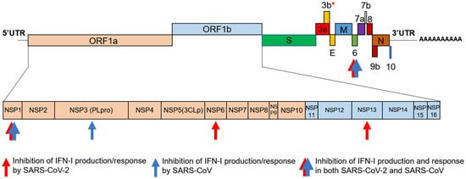
Among the many activities attributed to the type I interferon (IFN) multigene family, their roles as mediators of the antiviral immune response have emerged as important components of the host response to Severe Acute Respiratory Syndrome Coronavirus 2 (SARS-CoV-2) infection.
|
|
Scooped by
Gilbert C FAURE
August 24, 2021 5:31 AM
|
|
|
Scooped by
Gilbert C FAURE
August 23, 2021 10:40 AM
|
Several viruses are known to cause chronic infections, one is hepatitis C virus (HCV). Researchers studying these infections have now found that when they | Microbiology
|
|
Scooped by
Gilbert C FAURE
August 15, 2021 5:45 AM
|
Abstract The adaptive immune system has the important ability to generate and maintain a memory for antigens once encountered. Recent progress in understanding the organization of immunological mem...
|
|
Scooped by
Gilbert C FAURE
August 10, 2021 5:12 AM
|
COVID-19 can involve persistence, sequelae, and other medical complications that last weeks to months after initial recovery. This systematic review and meta-analysis aims to identify studies assessing the long-term effects of COVID-19. LitCOVID and Embase were searched to identify articles with original data published before the 1st of January 2021, with a minimum of 100 patients. For effects reported in two or more studies, meta-analyses using a random-effects model were performed using the MetaXL software to estimate the pooled prevalence with 95% CI. PRISMA guidelines were followed. A total of 18,251 publications were identified, of which 15 met the inclusion criteria. The prevalence of 55 long-term effects was estimated, 21 meta-analyses were performed, and 47,910 patients were included (age 17–87 years). The included studies defined long-COVID as ranging from 14 to 110 days post-viral infection. It was estimated that 80% of the infected patients with SARS-CoV-2 developed one or more long-term symptoms. The five most common symptoms were fatigue (58%), headache (44%), attention disorder (27%), hair loss (25%), and dyspnea (24%). Multi-disciplinary teams are crucial to developing preventive measures, rehabilitation techniques, and clinical management strategies with whole-patient perspectives designed to address long COVID-19 care.
|
|
Scooped by
Gilbert C FAURE
August 4, 2021 4:56 AM
|
CD147, a member of the immunoglobulin (Ig) superfamily, is widely expressed in several cell types. CD147 molecules have multiple cellular functions, such as migration, adhesion, invasion, energy metabolism and T cell activation. In particular, recent studies have demonstrated the potential application of CD147 as an effective therapeutic target for cancer, as well as autoimmune and inflammatory diseases. In this study, we elucidated the functional epitopes on CD147 extracellular domains in T cell regulation using specific monoclonal antibodies (mAbs). Upon T cell activation, the anti-CD147 domain 1 mAbs M6-1E9 and M6-1D4 and the anti-CD147 domain 2 mAb MEM-M6/6 significantly reduced surface expression of CD69 and CD25 and T cell proliferation. To investigate whether functional epitopes of CD147 are differentially expressed on distinct leukocyte subsets, PBMCs, monocyte-depleted PBMCs and purified T cells were activated in the presence of anti-CD147 mAbs. The mAb M6-1E9 inhibited T cell functions via activation of CD147 on monocytes with obligatory cell-cell contact. Engagement of the CD147 epitope by the M6-1E9 mAb downregulated CD80 and CD86 expression on monocytes and IL-2, TNF-α, IFN-γ and IL-17 production in T cells. In contrast, the mAb M6-1D4 inhibited T cell function via activation of CD147 on T cells by downregulating IL-2, TNF-α and IFN-γ. Herein, we demonstrated that certain epitopes of CD147, expressed on both monocytes and T cells, are involved in th
|