Your new post is loading...

|
Scooped by
Gilbert C FAURE
May 23, 2022 8:40 AM
|
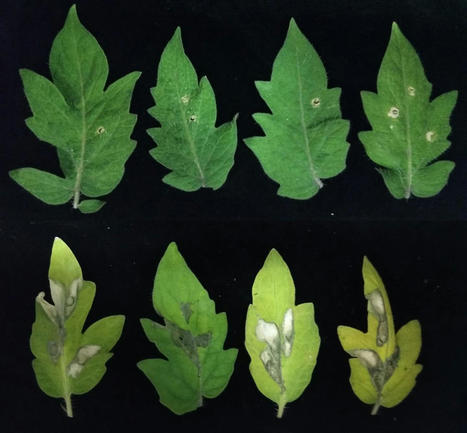
Plant immune receptor proteins that contain TIR domains are bifunctional enzymes that protect plants from pathogens.
|
|
Scooped by
Gilbert C FAURE
May 19, 2022 3:38 AM
|
No AccessNewsRequest AccessFull TextA Role for the Vascular Endothelium in Post–Acute COVID-19? Laura P.M.H. de Rooij , Lisa M. Becker and Peter Carmeliet Originally published16 May 2022https://doi.org/10.1161/CIRCULATIONAHA.122.059231Circulation. 2022;145:1503–1505FootnotesThe opinions expressed...
|
|
Scooped by
Gilbert C FAURE
May 18, 2022 5:44 AM
|
It has been posited SARS-CoV-2 contains at least one unique superantigen-like motif not found in any other SARS or endemic coronaviruses. Superantigens are potent antigens that can send the immune system into overdrive. SARS-CoV-2 causes many of the biological and clinical consequences of a superantigen, and, in the context of reinfection and waning immunity, it is important to better understand the impact of a widely circulating, airborne pathogen that may be a superantigen, superantigen-like or trigger a superantigenic host response. Urgent research is needed to better understand the long-term risks being taken by governments whose policies enable widespread transmission of a potential superantigenic pathogen, and to more clearly define the vaccination and public health policies needed to protect against the consequences of repeat exposure to the pathogen.
|
|
Scooped by
Gilbert C FAURE
May 13, 2022 2:59 AM
|
|
|
Scooped by
Gilbert C FAURE
April 25, 2022 5:21 AM
|
COVID-19 deteriorates type II pneumocytes and damages the alveolar immunologic balancing process through the inadvertent activation of a sequence of localized and general inflammatory responses.Due to an aggregation of uncleaved angiotensin II, the stimulated inflammatory cells cause cytokines synt...
|
|
Scooped by
Gilbert C FAURE
April 25, 2022 5:21 AM
|
B cell (Breg), one of the B cell populations is now widely accepted as an important regulatory subset in the immune system. In this collection, we have received articles from all over the world, including the Dittel lab and the Chu lab who have been working in this field for many years.
|
|
Scooped by
Gilbert C FAURE
April 23, 2022 5:38 AM
|
Leukocyte trafficking is an essential process of immunity, occurring as leukocytes travel within the bloodstream and as leukocyte migration within tissues. While it is now established that leukocytes can utilize the mesenchymal migration mode or amoeboid migration mode, differences in the migratory behavior of leukocyte subclasses and how these are realized on a molecular level in each subclass is not fully understood. To outline these differences, first migration modes and their dependence on parameters of the extracellular environments will be explained, as well as the intracellular molecular machinery that powers migration in general. Extracellular parameters are detected by adhesion receptors such as integrins. β2-integrins are surface receptors exclusively expressed on leukocytes and are essential for leukocytes exiting the bloodstream, as well as in mesenchymal migration modes, however, integrins are dispensable for the amoeboid migration mode. Additionally, the balance of different RhoGTPases – which are downstream of surface receptor signaling, including integrins – mediate formation of membrane structures as well as actin dynamics. Individual leukocyte subpopulations have been shown to express distinct RhoGTPase profiles along with their differences in migration behavior, which will be outlined. Emerging aspects of leukocyte migration include signal transduction from integrins via actin to the nucleus that regulates DNA status, gene expression profiles an
|
|
Scooped by
Gilbert C FAURE
April 20, 2022 4:33 AM
|
A biweekly scientific journal publishing high-quality research in molecular biology and genetics, cancer biology, biochemistry, and related fields...
|
|
Scooped by
Gilbert C FAURE
April 19, 2022 5:18 AM
|
Phenotypic and transcriptional profiling of regulatory T (Treg) cells at homeostasis reveals that T cell receptor activation promotes Treg cells with an effector phenotype (eTreg) characterized by the production of interleukin-10 and expression of the inhibitory receptor PD-1. At homeostasis, blockade of the PD-1 pathway results in enhanced eTreg cell activity, whereas during infection with Toxoplasma gondii, early interferon-γ upregulates myeloid cell expression of PD-L1 associated with reduced Treg cell populations. In infected mice, blockade of PD-L1, complete deletion of PD-1 or lineage-specific deletion of PD-1 in Treg cells prevents loss of eTreg cells. These interventions resulted in a reduced ratio of pathogen-specific effector T cells: eTreg cells and increased levels of interleukin-10 that mitigated the development of immunopathology, but which could compromise parasite control. Thus, eTreg cell expression of PD-1 acts as a sensor to rapidly tune the pool of eTreg cells at homeostasis and during inflammatory processes. Perry et al. demonstrate that regulatory T (Treg) cell function is restrained by the cell-autonomous action of the checkpoint inhibitor molecule PD-1. This PD-1-dependent mechanism tunes Treg cell function during homeostasis and infection.
|
|
Scooped by
Gilbert C FAURE
April 15, 2022 2:50 AM
|
|
|
Scooped by
Gilbert C FAURE
April 13, 2022 4:55 AM
|
|
|
Scooped by
Gilbert C FAURE
April 9, 2022 10:55 AM
|
|
|
Scooped by
Gilbert C FAURE
April 5, 2022 7:47 AM
|
|
|
|
Scooped by
Gilbert C FAURE
May 21, 2022 9:52 AM
|
interferon, friend or foe
|
|
Scooped by
Gilbert C FAURE
May 18, 2022 11:34 AM
|
Author summary Dysregulated immune responses and their associated pathologies are the culprit of severe disease symptoms in response to viral infections. The ability to properly regulate effective and controlled immune responses is a critical feature of preventing severe disease outcomes. Type I interferons are antiviral signaling molecules known to induce potent antiviral immune responses; however, their ability to suppress pathogenic immune responses is poorly understood. Employing a vaginal HSV-2 infection model in mice, we show that type I IFN signaling is critical to preventing the development of severe tissue pathology by suppressing the pathogenic functions of macrophages. In the absence of type I IFNs, these unleashed macrophages produce MMPs that can degrade tissue structure. We show that inhibiting MMPs reduces the severity of immunopathology. We further provide evidence that influenza infection in mice, as well as severe COVID-19 infection in humans, is linked to macrophage and MMP-mediated tissue destruction. Together, our study describes a distinct mechanism through which type I IFNs regulate pathogenic immune responses, and defines MMPs as a potential therapeutic target during severe viral infections. https://medicalxpress.com/news/2022-05-type-i-interferon-immune-rogue-viral.html
|
|
Scooped by
Gilbert C FAURE
May 15, 2022 3:08 AM
|
Le nombre d'hépatites aiguës infantiles augmente de jour en jour, rapportés dans un nombre croissant de pays, certains particulièrement touchés : USA
|
|
Scooped by
Gilbert C FAURE
May 10, 2022 2:14 PM
|
|
|
Scooped by
Gilbert C FAURE
April 25, 2022 5:21 AM
|
γδ T cells are members of 'unconventional' T cells that combine the properties of adaptive T lymphocytes and innate cells such as NK cells [...].
|
|
Scooped by
Gilbert C FAURE
April 24, 2022 8:19 AM
|
Abstract. Glycans expand the structural complexity of proteins by several orders of magnitude, resulting in a tremendous analytical challenge when including the
|
|
Scooped by
Gilbert C FAURE
April 21, 2022 12:01 PM
|
Through multiplexed screening of activating conditions and time points, Glass et al.
find that human IL-10+ B cells lack a unifying cellular phenotype and frequently co-express
pro-inflammatory cytokines. Mass-cytometry analyses reveal the breadth of phenotypic
and polyfunctional profiles of IL-10+ B cells and their associations with liver-allograft
operational tolerance.
|
|
Scooped by
Gilbert C FAURE
April 20, 2022 3:59 AM
|
Case of recurrent infections - investigation, diagnosis and treatment of Chronic Granulomatous Disease (CGD) and study of immunology of the immunodeficiency
|
|
Scooped by
Gilbert C FAURE
April 19, 2022 5:08 AM
|
It is now emerging that pain and the immune response share common mechanisms and deeply influence each other. Because the cornea receives the highest nerve dens
|
|
Scooped by
Gilbert C FAURE
April 15, 2022 2:48 AM
|
Antigen processing and presentation are the cornerstones of adaptive immunity. B cells cannot generate high-affinity antibodies without T cell help. CD4+ T cells, which provide such help, use antigen-specific receptors that recognize major histocompatibility complex (MHC) molecules in complex with peptide cargo. Similarly, eradication of virus-infected cells often depends on cytotoxic CD8+ T cells, which rely on the recognition of peptide–MHC complexes for their action. The two major classes of glycoproteins entrusted with antigen presentation are the MHC class I and class II molecules, which present antigenic peptides to CD8+ T cells and CD4+ T cells, respectively. This Review describes the essentials of antigen processing and presentation. These pathways are divided into six discrete steps that allow a comparison of the various means by which antigens destined for presentation are acquired and how the source proteins for these antigens are tagged for degradation, destroyed and ultimately displayed as peptides in complex with MHC molecules for T cell recognition. This ‘guide to’ article provides an overview of the antigen processing and presentation pathways, which lead to the loading of antigenic peptides on major histocompatibility complex (MHC) molecules for detection by T cells.
|
|
Scooped by
Gilbert C FAURE
April 13, 2022 4:45 AM
|
|
|
Scooped by
Gilbert C FAURE
April 8, 2022 11:21 AM
|
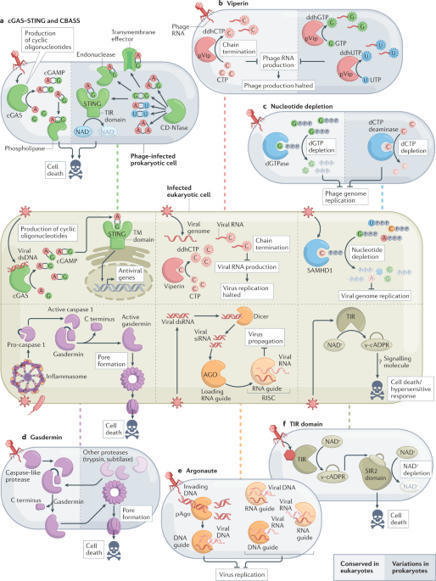
The cell-autonomous innate immune system enables animal cells to resist viral infection. This system comprises an array of sensors that, after detecting viral molecules, activate the expression of antiviral proteins and the interferon response. The repertoire of immune sensors and antiviral proteins has long been considered to be derived from extensive evolutionary innovation in vertebrates, but new data challenge this dogma. Recent studies show that central components of the cell-autonomous innate immune system have ancient evolutionary roots in prokaryotic genes that protect bacteria from phages. These include the cyclic GMP–AMP synthase (cGAS)–stimulator of interferon genes (STING) pathway, Toll/IL-1 receptor (TIR) domain-containing pathogen receptors, the viperin family of antiviral proteins, SAMHD1-like nucleotide-depletion enzymes, gasdermin proteins and key components of the RNA interference pathway. This Perspective details current knowledge of the elements of antiviral immunity that are conserved from bacteria to humans, and presents possible evolutionary scenarios to explain the observed conservation. The cell-autonomous innate immune system has long been considered an evolutionary innovation of metazoans; however, recent evidence challenges this dogma. This Perspective describes the components of antiviral immunity that are conserved from bacteria to humans, and presents potential evolutionary scenarios to explain the observed conservation.
|




 Scoop.it!