Your new post is loading...

|
Scooped by
Gilbert C FAURE
July 26, 2022 4:55 AM
|
Numerous mitochondrial constituents and metabolic products can function as damage-associated molecular patterns (DAMPs) and promote inflammation when released into the cytosol or extracellular milieu. Several safeguards are normally in place to prevent mitochondria from eliciting detrimental inflammatory reactions, including the autophagic disposal of permeabilized mitochondria. However, when the homeostatic capacity of such systems is exceeded or when such systems are defective, inflammatory reactions elicited by mitochondria can become pathogenic and contribute to the aetiology of human disorders linked to autoreactivity. In addition, inefficient inflammatory pathways induced by mitochondrial DAMPs can be pathogenic as they enable the establishment or progression of infectious and neoplastic disorders. Here we discuss the molecular mechanisms through which mitochondria control inflammatory responses, the cellular pathways that are in place to control mitochondria-driven inflammation and the pathological consequences of dysregulated inflammatory reactions elicited by mitochondrial DAMPs. Lorenzo Galluzzi and colleagues discuss the molecular mechanisms through which mitochondrial dysfunction elicits inflammatory reactions, the cellular pathways that are in place to control them and how the dysregulation of these systems contributes to pathology.
|
|
Scooped by
Gilbert C FAURE
July 24, 2022 4:00 AM
|
|
|
Scooped by
Gilbert C FAURE
July 18, 2022 10:23 AM
|
The progressive impairment of immunity to pathogens and vaccines with aging is a significant public health problem as the world population shifts to an increased percentage of older adults (> 65). We have previously demonstrated that cells obtained from older volunteers have delayed and defective induction of type I interferons and T cell and B cell helper cytokines in response to TLR ligands when compared to those from adult subjects. However, the underlying intracellular mechanisms are not well described. Herein, we studied two critical pathways important in the production of type I interferon (IFN), the interferon response factor 7 (pIRF7), and TANK-binding kinase (pTBK-1). We show a decrease in pIRF7 and pTBK-1 in cross-priming dendritic cells (cDC1s), CD4+ T cell priming DCs (cDC2s), and CD14dimCD16+ vascular patrolling monocytes from older adults (n = 11) following stimulation with pathway-specific agonists in comparison with young individuals (n = 11). The decrease in these key antiviral pathway proteins correlates with decreased phagocytosis, suggesting impaired function in Overall, our findings describe molecular mechanisms which explain the innate functional impairment in older adults and thus could inform us of novel approaches to restore these defects. Graphical abstract
|
|
Scooped by
Gilbert C FAURE
July 4, 2022 6:34 AM
|
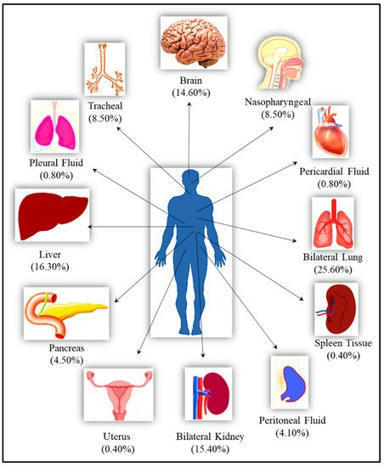
Precise reasons for severe manifestation of SARS-CoV-2 remain unanswered, and efforts have been focused on respiratory system management. Demonstration of unequivocal presence of SARS-CoV-2 in vital body organs by cadaver autopsy was the only way to prove multi-organ involvement.
|
|
Scooped by
Gilbert C FAURE
June 30, 2022 2:00 PM
|
|
|
Scooped by
Gilbert C FAURE
June 27, 2022 5:23 AM
|
Abstract T follicular helper cells (TFH) participate in germinal center (GC) development and are necessary for B cell production of high-affinity, isotype-switched antibodies. In a forward genetic screen, we identified a missense mutation in Prkd2, encoding the serine/threonine kinase protein kinase D2, which caused elevated titers of immunoglobulin E (IgE) in the serum. Subsequent analysis of serum antibodies in mice with a targeted null mutation of Prkd2 demonstrated polyclonal hypergammaglobulinemia of IgE, IgG1, and IgA isotypes, which was exacerbated by the T cell–dependent humoral response to immunization. GC formation and GC B cells were increased in Prkd2−/− spleens. These effects were the result of excessive cell-autonomous TFH development caused by unrestricted Bcl6 nuclear translocation in Prkd2−/− CD4+ T cells. Prkd2 directly binds to Bcl6, and Prkd2-dependent phosphorylation of Bcl6 is necessary to constrain Bcl6 to the cytoplasm, thereby limiting TFH development. In response to immunization, Bcl6 repressed Prkd2 expression in CD4+ T cells, thereby committing them to TFH development. Thus, Prkd2 and Bcl6 form a mutually inhibitory positive feedback loop that controls the stable transition from naïve CD4+ T cells to TFH during the adaptive immune response.
|
|
Scooped by
Gilbert C FAURE
June 24, 2022 3:28 AM
|
Over 20 years ago, it was first proposed that autoinflammation underpins a handful of rare monogenic disorders characterized by recurrent fever and systemic inflammation. The subsequent identification of novel, causative genes directly led to a better understanding of how the innate immune system is regulated under normal conditions, as well as its dysregulation associated with pathogenic mutations. Early on, IL-1 emerged as a central mediator for these diseases, based on data derived from patient cells, mutant mouse models and definitive clinical responses to IL-1 targeted therapy. Since that time, our understanding of the mechanisms of autoinflammation has expanded beyond IL-1 to additional innate immune processes. However, the number and complexity of IL-1-mediated autoinflammatory diseases has also multiplied to include additional monogenic syndromes with expanded genotypes and phenotypes, as well as more common polygenic disorders seen frequently by the practising clinician. In order to increase physician awareness and update rheumatologists who are likely to encounter these patients, this review discusses the general pathophysiological concepts of IL-1-mediated autoinflammation, the epidemiological and clinical features of specific diseases, diagnostic challenges and approaches, and current and future perspectives for therapy. In this Review, the authors summarize the pathophysiological mechanisms of IL-1-mediated autoinflammation. They describe the epidemiological and clinical features of autoinflammatory diseases, challenges associated with diagnostics and disease management, and current and future therapies for targeting the IL-1 pathway.
|
|
Scooped by
Gilbert C FAURE
June 23, 2022 4:36 AM
|
|
|
Scooped by
Gilbert C FAURE
June 21, 2022 3:30 AM
|
Natural killer (NK) cells and type 1 innate lymphoid cells (ILC1s) are populations of non-T, non-B lymphocytes found in peripheral tissues. Although several NK
|
|
Scooped by
Gilbert C FAURE
June 20, 2022 4:03 AM
|
Trace metals are essential micronutrients required for survival across all kingdoms of life. From bacteria to animals, metals have critical roles as both structural and catalytic cofactors for an estimated third of the proteome, representing a major contributor to the maintenance of cellular homeostasis. The reactivity of metal ions engenders them with the ability to promote enzyme catalysis and stabilize reaction intermediates. However, these properties render metals toxic at high concentrations and, therefore, metal levels must be tightly regulated. Having evolved in close association with bacteria, vertebrate hosts have developed numerous strategies of metal limitation and intoxication that prevent bacterial proliferation, a process termed nutritional immunity. In turn, bacterial pathogens have evolved adaptive mechanisms to survive in conditions of metal depletion or excess. In this Review, we discuss mechanisms by which nutrient metals shape the interactions between bacterial pathogens and animal hosts. We explore the cell-specific and tissue-specific roles of distinct trace metals in shaping bacterial infections, as well as implications for future research and new therapeutic development. Trace metals are essential micronutrients required for survival across all kingdoms of life. In this Review, Murdoch and Skaar discuss the strategies whereby vertebrate hosts limit metal or induce excess metal to prevent bacterial proliferation, a process termed nutritional immunity, and they discuss adaptive mechanisms that bacterial pathogens have evolved to survive in conditions of metal depletion or excess.
|
|
Scooped by
Gilbert C FAURE
June 17, 2022 11:58 AM
|
PD-1 and ICOS expression by different subsets of CD4+ Th TILs in HNSCC and CRC tumors. Our group and others have recently shown that CD8+ T cells isolated from human solid tumors comprise a heterogenous cell population, among which only a fraction of cells were tumor reactive (8, 9).
|
|
Scooped by
Gilbert C FAURE
June 14, 2022 7:13 AM
|
New research from UT Southwestern suggests that RNA exosomes– the cellular machines that degrade old molecules of RNA – play a key role in the development of B cells, which are critical to the immune system’s ability to protect against infection.
|
|
Scooped by
Gilbert C FAURE
May 24, 2022 6:13 AM
|
Case of immunodeficiency - investigation, diagnosis and treatment of Ataxia-telangiectasia (AT) and study of the immunology and genetics of the disease
|
|
|
Scooped by
Gilbert C FAURE
July 25, 2022 8:40 AM
|
Ataxia-Telangiectasia (A-T) is an inherited disease that affects several body systems, including the immune system.People with A-T have an unsteady, wobbly gait (ataxia) that gets worse as they get older; dilated, corkscrew-shaped blood vessels (telangiectasia) on the whites of the eyes and on sun-exposed...
|
|
Scooped by
Gilbert C FAURE
July 21, 2022 11:53 AM
|
Human immunodeficiency virus 1, more commonly known as HIV-1, is known for its uncanny ability to evade the immune system. Scientists at Scripps Research and collaborators have now uncovered how our innate immune system—the body's first line of quick defense in attacking foreign invaders—detects HIV-1, even when the virus is present in very small amounts.
|
|
Scooped by
Gilbert C FAURE
July 13, 2022 2:03 PM
|
Our body has a remarkable ability to remember its past encounters with allergens, pathogens, wounds and irritants, and to react more quickly to the next experience. This accentuated sensitivity also helps us to cope with new threats. Despite maintaining a state of readiness and broadened resistance to subsequent pathogens, memories can also be maladaptive, leading to chronic inflammatory disorders and cancers. With the ever-increasing emergence of new pathogens, allergens and pollutants in our world, the urgency to unravel the molecular underpinnings of these phenomena has risen to new heights. Here we reflect on how the field of inflammatory memory has evolved, since 2007, when researchers realized that non-specific memory is contained in the nucleus and propagated at the epigenetic level. We review the flurry of recent discoveries revealing that memory is not just a privilege of the immune system but also extends to epithelia of the skin, lung, intestine and pancreas, and to neurons. Although still unfolding, epigenetic memories of inflammation have now been linked to possible brain disorders such as Alzheimer disease, and to an elevated risk of cancer. In this Review, we consider the consequences—good and bad—of these epigenetic memories and their implications for human health and disease. A Review on inflammatory memory in non-immune cells of different epithelia and neurons, and the potential mechanisms controlling these epigenetic memories and their implications in human health and disease.
|
|
Scooped by
Gilbert C FAURE
July 1, 2022 2:41 AM
|
Two and a half years into the COVID-19 pandemic, we have gained many insights into the human antibody response to the causative SARS-CoV-2 virus. In this Review, we summarize key observations of humoral immune responses in people with COVID-19, discuss key features of infection- and vaccine-induced neutralizing antibodies, and consider vaccine designs for inducing antibodies that are broadly protective against different variants of the SARS-CoV-2 virus. Qi et al. provide an in-depth analysis of antibody responses generated in response to SARS-CoV-2.
|
|
Scooped by
Gilbert C FAURE
June 29, 2022 2:19 AM
|
Chronic inflammation is the main feature of many long-term inflammatory diseases such as autoimmune diseases, metabolic disorders, and cancer. There is a growing number of studies in which alterations of N-glycosylation have been observed in many pathophysiological conditions, yet studies of the underlying mechanisms that precede N-glycome changes are still sparse. Proinflammatory cytokines have been shown to alter the substrate synthesis pathways as well as the expression of glycosyltransferases required for the biosynthesis of N-glycans. The resulting N-glycosylation changes can further contribute to disease pathogenesis through modulation of various aspects of immune cell processes, including those relevant to pathogen recognition and fine-tuning the inflammatory response. This review summarizes our current knowledge of inflammation-induced N-glycosylation changes, with a particular focus on specific subsets of immune cells of innate and adaptive immunity and how these changes affect their effector functions, cell interactions, and signal transduction.
|
|
Scooped by
Gilbert C FAURE
June 25, 2022 12:36 PM
|
Cardioimmunology is a field that encompasses the immune cells and pathways that modulate cardiac function in homeostasis and regulate the temporal balance between tissue injury and repair in disease. Over the past two decades, genetic fate mapping and high-dimensional sequencing techniques have defined increasing functional heterogeneity of innate and adaptive immune cell populations in the heart and other organs, revealing a complexity not previously appreciated and challenging established frameworks for the immune system. Given these rapid advances, understanding how to use these tools has become crucial. However, cardiovascular biologists without immunological expertise might not be aware of the strengths and caveats of immune-related tools and how they can be applied to examine the pathogenesis of myocardial diseases. In this Review, we guide readers through case-based examples to demonstrate how tool selection can affect data quality and interpretation and we provide critical analysis of the experimental tools that are currently available, focusing on their use in models of ischaemic heart injury and heart failure. The goal is to increase the use of relevant immunological tools and strategies among cardiovascular researchers to improve the precision, translatability and consistency of future studies of immune cells in cardiac disease. In this Review, the authors summarize the latest advances in cardioimmunology and discuss experimental tools and strategies that are currently available for the study of immune cells, guiding readers through case-based examples to provide recommendations for the use of immunological tools and strategies in the study of immune cells in cardiac disease.
|
|
Scooped by
Gilbert C FAURE
June 23, 2022 5:15 AM
|
Case of enlarged hard tongue - investigation, diagnosis and treatment of Multiple myeloma and study of immunology of the disease and malignancy of B cells.
|
|
Scooped by
Gilbert C FAURE
June 21, 2022 10:44 AM
|
Abstract—How a cell responds to stress is a central problem in cardiovascular biology. Diverse physiological stresses (eg, heat, hemodynamics, mutant proteins, and oxidative injury) produc
|
|
Scooped by
Gilbert C FAURE
June 20, 2022 10:44 AM
|
Antibiotics, an international, peer-reviewed Open Access journal.
|
|
Scooped by
Gilbert C FAURE
June 17, 2022 2:05 PM
|
|
|
Scooped by
Gilbert C FAURE
June 17, 2022 8:14 AM
|
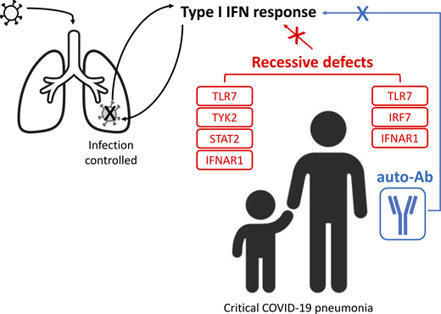
In an international cohort of 112 children hospitalized for moderate to critical COVID-19 pneumonia, we identified 12 children with one of four known recessive
|
|
Scooped by
Gilbert C FAURE
May 31, 2022 5:34 AM
|
The nervous and immune systems are intricately linked1. Although psychological stress is known to modulate immune function, mechanistic pathways linking stress networks in the brain to peripheral leukocytes remain poorly understood2. Here, we show that distinct brain regions shape leukocyte distribution and function throughout the body during acute stress in mice. Using optogenetics and chemogenetics, we demonstrate that motor circuits induce rapid neutrophil mobilization from the bone marrow to peripheral tissues via skeletal muscle-derived neutrophil-attracting chemokines. Conversely, the paraventricular hypothalamus controls monocyte and lymphocyte egress from secondary lymphoid organs and blood to the bone marrow through direct, cell-intrinsic glucocorticoid signaling. These stress-induced, counter-directional, population-wide leukocyte shifts are associated with altered disease susceptibility. On the one hand, acute stress changes innate immunity by reprogramming neutrophils and directing their recruitment to sites of injury. On the other hand, corticotropin releasing hormone (CRH) neuron-mediated leukocyte shifts protect against the acquisition of autoimmunity, but impair immunity to SARS-CoV-2 and influenza infection. Collectively, these data show that distinct brain regions differentially and rapidly tailor the leukocyte landscape during psychological stress, thus calibrating the immune system’s capacity to respond to physical threats.
|