Your new post is loading...

|
Scooped by
Gilbert C FAURE
August 24, 2022 2:53 AM
|
Kessler et al. identify aberrant DNA recognition by cGAS/STING and IFN-I production by inflammatory macrophages as a driver of severe ANCA-associated vasculitis
|
|
Scooped by
Gilbert C FAURE
August 23, 2022 9:18 AM
|
Using monoclonal antibodies built from SARS-CoV-2–specific memory B cells, Hale et al. demonstrate that IgM antibodies outperform IgG in neutralization assays a
|
|
Scooped by
Gilbert C FAURE
August 21, 2022 4:12 AM
|
The emergence of SARS-CoV-2 variants capable of evading neutralizing antibodies have
increased the interest in defining the immunological correlates of disease protection.
Bertoletti, Le Bert, and Tan summarize how SARS-CoV-2-specific T cell magnitude, function
and anatomical localization can affect the their ability to protect against severe
COVID-19.
|
|
Scooped by
Gilbert C FAURE
August 19, 2022 5:36 AM
|
Cancer cells in the lymph nodes trick the immune system into tolerating their presence and welcoming metastasis, a pair of Stanford studies find. Blocking this process could stop cancer’s spread.
|
|
Scooped by
Gilbert C FAURE
August 19, 2022 3:28 AM
|
We have created this teaching resource hub to provide immunology educators with links, videos, worksheets, webinars and other resources that can help explain, describe, supplement and assess immunology content for students from A-level studies up to Master's level. The BSI recognises the particular needs and support that immunology educators require due to the COVID-19
|
|
Scooped by
Gilbert C FAURE
August 14, 2022 3:18 AM
|
|
|
Scooped by
Gilbert C FAURE
August 11, 2022 3:57 AM
|
The lymphocyte genome is prone to many threats, including programmed mutation during differentiation<sup>1</sup>, antigen-driven proliferation and residency in diverse microenvironments.Here, after developing protocols for expansion of single-cell lymphocyte cultures, we sequenced whole genomes fro...
|
|
Scooped by
Gilbert C FAURE
August 11, 2022 3:15 AM
|
medRxiv - The Preprint Server for Health Sciences
|
|
Scooped by
Gilbert C FAURE
August 8, 2022 4:34 AM
|
First map of immune system connections reveals new therapeutic opportunities ResearchSystems biology Researchers of the Wellcome Sanger Institute and ETH Zurich have created the first full connectivity map of the human immune system, showing how immune cells communicate with each other and ways to...
|
|
Scooped by
Gilbert C FAURE
August 5, 2022 1:39 PM
|
|
|
Scooped by
Gilbert C FAURE
August 4, 2022 9:57 AM
|
The human immune system is composed of a distributed network of cells circulating throughout the body, which must dynamically form physical associations and communicate using interactions between their cell-surface proteomes1. Despite their therapeutic potential2, our map of these surface interactions remains incomplete3,4. Here, using a high-throughput surface receptor screening method, we systematically mapped the direct protein interactions across a recombinant library that encompasses most of the surface proteins that are detectable on human leukocytes. We independently validated and determined the biophysical parameters of each novel interaction, resulting in a high-confidence and quantitative view of the receptor wiring that connects human immune cells. By integrating our interactome with expression data, we identified trends in the dynamics of immune interactions and constructed a reductionist mathematical model that predicts cellular connectivity from basic principles. We also developed an interactive multi-tissue single-cell atlas that infers immune interactions throughout the body, revealing potential functional contexts for new interactions and hubs in multicellular networks. Finally, we combined targeted protein stimulation of human leukocytes with multiplex high-content microscopy to link our receptor interactions to functional roles, in terms of both modulating immune responses and maintaining normal patterns of intercellular associations. Together, our work provides a systematic perspective on the intercellular wiring of the human immune system that extends from systems-level principles of immune cell connectivity down to mechanistic characterization of individual receptors, which could offer opportunities for therapeutic intervention. Systematic measurements of the interactions between proteins found on the surfaces of human leukocytes provides a global view of the way that immune cells are dynamically connected by receptors.
|
|
Scooped by
Gilbert C FAURE
August 1, 2022 4:07 AM
|
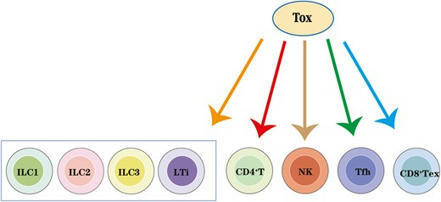
Abstract. The thymocyte selection-related HMG box protein (TOX) subfamily comprises evolutionarily conserved DNA-binding proteins, and is expressed in certain i
|
|
Scooped by
Gilbert C FAURE
July 26, 2022 4:59 AM
|
|
|
|
Scooped by
Gilbert C FAURE
August 23, 2022 1:39 PM
|
Lymphatic vessels are immunological highways that connect lymph nodes to peripheral
tissues. Ataide et al. found that tissue-derived UTCs also continuously migrate via
this route. This migration pattern leads to characteristic innate and adaptive immune
responses that differ between lymph nodes, mirrors the drained tissue, and is based
on the immediate effector function of UTCs.
|
|
Scooped by
Gilbert C FAURE
August 21, 2022 5:39 AM
|
SignificanceNF-κB is central to immune and inflammatory responses but a long-standing
question is if and how NF-κB integrates host responses against injury and microbial
pathogens by reprogramming cell metabolism. A recent flurry of studies has now partially
resolved this conundrum, underscoring how the NF-κB transcriptional machinery is inherently
hardwired to the metabolic programs that govern immune regulation, energy homeostasis,
and oncogenesis.
|
|
Scooped by
Gilbert C FAURE
August 19, 2022 5:46 AM
|
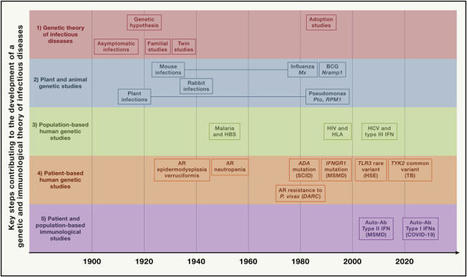
Inborn errors associated with rare susceptibility to weakly virulent agents illuminate
fundamental immunopathological mechanisms of disease.
|
|
Scooped by
Gilbert C FAURE
August 19, 2022 5:24 AM
|
Tissue-resident memory T cells (TRM cells) provide rapid and superior control of localized infections. While the transcription factor Runx3 is a critical regulator of CD8+ T cell tissue residency, its expression is repressed in CD4+ T cells. Here, we show that, as a direct consequence of this Runx3-deficiency, CD4+ TRM cells lacked the transforming growth factor (TGF)-β-responsive transcriptional network that underpins the tissue residency of epithelial CD8+ TRM cells. While CD4+ TRM cell formation required Runx1, this, along with the modest expression of Runx3 in CD4+ TRM cells, was insufficient to engage the TGF-β-driven residency program. Ectopic expression of Runx3 in CD4+ T cells incited this TGF-β-transcriptional network to promote prolonged survival, decreased tissue egress, a microanatomical redistribution towards epithelial layers and enhanced effector functionality. Thus, our results reveal distinct programming of tissue residency in CD8+ and CD4+ TRM cell subsets that is attributable to divergent Runx3 activity. Mackay and colleagues show that distinct programs of tissue residency are induced in CD8+ and CD4+ TRM cell subsets, a difference attributable to the activity of the transcription factor Runx3.
|
|
Scooped by
Gilbert C FAURE
August 19, 2022 2:15 AM
|
Jeffery Modell Foundation - your online resource center for Primary Immunodeficiencies (PI).
|
|
Scooped by
Gilbert C FAURE
August 13, 2022 2:46 AM
|
|
|
Scooped by
Gilbert C FAURE
August 11, 2022 3:23 AM
|
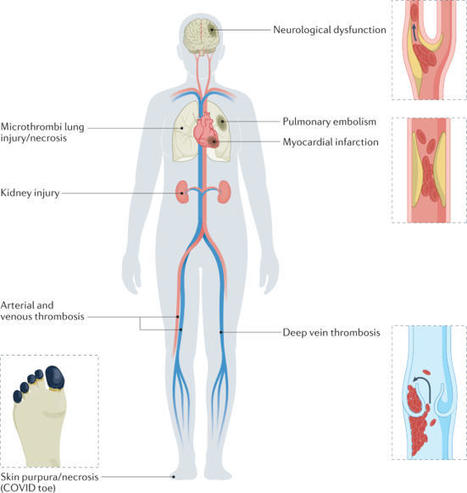
COVID-19-associated coagulopathy (CAC) is a life-threatening complication of SARS-CoV-2 infection. However, the underlying cellular and molecular mechanisms driving this condition are unclear. Evidence supports the concept that CAC involves complex interactions between the innate immune response, the coagulation and fibrinolytic pathways, and the vascular endothelium, resulting in a procoagulant condition. Understanding of the pathogenesis of this condition at the genomic, molecular and cellular levels is needed in order to mitigate thrombosis formation in at-risk patients. In this Perspective, we categorize our current understanding of CAC into three main pathological mechanisms: first, vascular endothelial cell dysfunction; second, a hyper-inflammatory immune response; and last, hypercoagulability. Furthermore, we pose key questions and identify research gaps that need to be addressed to better understand CAC, facilitate improved diagnostics and aid in therapeutic development. Finally, we consider the suitability of different animal models to study CAC. Here, the authors consider our emerging understanding of COVID-19-associated coagulopathy. They focus on the complex interactions between innate immune, coagulation and fibrinolytic pathways that can lead to potentially life-threatening thrombosis following SARS-CoV-2 infection.
|
|
Scooped by
Gilbert C FAURE
August 9, 2022 4:13 AM
|
Human immunology may soon benefit from the use of artificial intelligence and blockchain technologies. Here, we discuss how Swarm Learning could foster collaborative worldwide immunology studies that fully respect local data privacy regulations by sharing insights, not data.
|
|
Scooped by
Gilbert C FAURE
August 6, 2022 4:56 AM
|
|
|
Scooped by
Gilbert C FAURE
August 5, 2022 3:48 AM
|
SignificanceCertain drugs against cancers or immune-mediated diseases are marked by
limited efficacy and off-target toxicity; however, targeting high endothelial venules
for selective nanocarrier-based, active drug delivery harbors significant potential
to solve this clinical problem.
|
|
Scooped by
Gilbert C FAURE
August 1, 2022 4:49 AM
|
|
|
Scooped by
Gilbert C FAURE
July 27, 2022 3:28 AM
|
The formation and maintenance of germinal centers is fundamental to humoral immunity
and requires interleukin 21 (IL-21). Quast et al. show that IL-21 independently regulates germinal center T and B cells and that its effects occur in paracrine, related to amount and outside the confines of the...
|


 Scoop.it!