Ana F. Popi, Ieda M. Longo-Maugéri, Mario Mariano

 Your new post is loading...
 Scoop.it!
Ana F. Popi, Ieda M. Longo-Maugéri, Mario Mariano
Gilbert C FAURE's insight:
The role of B cells as antigen-presenting cells (APCs) has been extensively studied, mainly in relation to the activation of memory T cells. Considering the B cell subtypes, the role of B-1 cells as APCs is beginning to be explored. Initially, it was described that B-1 cells are activated preferentially by T-independent antigens. However, some reports demonstrated that these cells are also involved in a T-dependent response. The aim of this review is to summarize information about the ability of B-1 cells to play a role as APCs and to briefly discuss the role of the BCR and toll-like receptor signals in this process. Furthermore, some characteristics of B-1 cells, such as natural IgM production and phagocytic ability, could interfere in the participation of these cells in the onset of an adaptive response.
from Brasil 
No comment yet.
Sign up to comment
Scoop.it!

The role of B cells as antigen-presenting cells has been extensively studied, mainly in relation to the activation of memory T cells. Considering the B cell subtypes, the role of B-1 cells as antigen-presenting cells is beginning to be explored.
Scoop.it!

RT @britsocimm: "Innate immunity in vertebrates: an overview" https://t.co/gzbFwHx39V #immunology #science #scicomms #phdchat https://t.co/…
Scoop.it!

Melbourne (Australia) will celebrate the International Day of Immunology on Friday 29 April 2016. Find out about events in Melbourne and learn about immunology.
Scoop.it!

Cell death and differentiation is a monthly research journal focused on the exciting field of programmed cell death and apoptosis.
Gilbert C FAURE's insight:
Ubiquitination has emerged as a crucial mechanism that regulates signal transduction in diverse biological processes, including different aspects of immune functions. Ubiquitination regulates pattern-recognition receptor signaling that mediates both innate immune responses and dendritic cell maturation required for initiation of adaptive immune responses. Ubiquitination also regulates the development, activation, and differentiation of T cells, thereby maintaining efficient adaptive immune responses to pathogens and immunological tolerance to self-tissues. Like phosphorylation, ubiquitination is a reversible reaction tightly controlled by the opposing actions of ubiquitin ligases and deubiquitinases. Deregulated ubiquitination events are associated with immunological disorders, including autoimmune and inflammatory diseases.
OPEN?

Kenzibit's curator insight,
April 3, 2016 10:51 PM
Ubiquitination has emerged as a crucial mechanism that regulates signal transduction in diverse biological processes, including different aspects of immune functions. Ubiquitination regulates pattern-recognition receptor signaling that mediates both innate immune responses and dendritic cell maturation required for initiation of adaptive immune responses. Ubiquitination also regulates the development, activation, and differentiation of T cells, thereby maintaining efficient adaptive immune responses to pathogens and immunological tolerance to self-tissues. Like phosphorylation, ubiquitination is a reversible reaction tightly controlled by the opposing actions of ubiquitin ligases and deubiquitinases. Deregulated ubiquitination events are associated with immunological disorders, including autoimmune and inflammatory diseases.
OPEN?
Scoop.it!

Toxoplasma gondii is a widespread parasite responsible for causing clinical diseases especially in pregnant and immunosuppressed individuals.
Scoop.it!

Int Rev Immunol. 2016 Mar 3;35(2):116-135.
Scoop.it!
In press from @ImmunityCP #STEM #Immunology Independent Roles of Switching and Hypermutation in the Development... https://t.co/SrOnWwkztm
Scoop.it!

A 175 Million Year History of T Cell Regulatory Molecules Reveals Widespread Selection,… #immunology https://t.co/1ZykK7EGrC

Krishan Maggon 's curator insight,
March 23, 2016 6:15 AM
Immunity Volume 38, Issue 6, p1129–1141, 27 June 2013
A 175 Million Year History of T Cell Regulatory Molecules Reveals Widespread Selection, with Adaptive Evolution of Disease Alleles Diego Forni, Rachele Cagliani, Uberto Pozzoli, Marta Colleoni, Stefania Riva, Mara Biasin, Giulia Filippi, Luca De Gioia, Federica Gnudi, Giacomo P. Comi, Nereo Bresolin, Mario Clerici, Manuela Sironicorrespondenceemail 
Kerry Winslet's curator insight,
March 30, 2016 4:36 AM
Immunity Volume 38, Issue 6, p1129–1141, 27 June 2013
A 175 Million Year History of T Cell Regulatory Molecules Reveals Widespread Selection, with Adaptive Evolution of Disease Alleles Diego Forni, Rachele Cagliani, Uberto Pozzoli, Marta Colleoni, Stefania Riva, Mara Biasin, Giulia Filippi, Luca De Gioia, Federica Gnudi, Giacomo P. Comi, Nereo Bresolin, Mario Clerici, Manuela Sironicorrespondenceemail
Scoop.it!
Communicating science and being an advocate for public support of research are critical roles for scientists. However, despite having the most relevant expertise, many of us do not get involved in matters bridging science and policy.
Scoop.it!

Study "Immunology - High Yield Questions" whenever and wherever suits you. This course by " Lecturio USMLE" will boost your knowledge. Try for free!
|
Scoop.it!

photo de groupe du cours nord africain d'Immunologie sur "Tolérance et Autoimmunité" IUIS-FAIS ImmunoTunisia, 4-8 Avril 2016 Hammamet
Gilbert C FAURE's insight:
IUIS inside thanks Hatem Masmoudi Chef de Service Immunologie chez CHU Habib Bourguiba de Sfax TunisiaMedical Practice Current Faculté de Médecine, CHU Habib Bourguiba de Sfax à rencontrer sur linkedin
Scoop.it!

Scientists at the University of North Carolina (UNC) School of Medicine and Sanford Burnham Prebys Medical Discovery Institute (SBP) have identified a human (host) protein that weakens the immune response to HIV and othe...
Scoop.it!

Engaging the #Public with Your #Research #pint16 https://t.co/yTQB2ND8N0
Scoop.it!
Phosphorylation of the T cell receptor (TCR) by the kinase Lck is the first detectable signaling event upon antigen engagement.
Scoop.it!
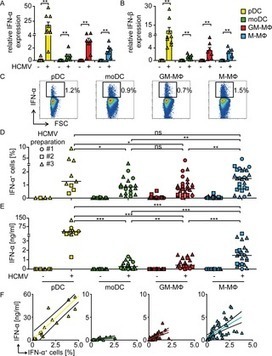
Author Summary Human cytomegalovirus (HCMV) has been shown to induce type I interferon (IFN-I) responses in myeloid cells such as plasmacytoid dendritic cells (pDC).
Gilbert C FAURE's insight:
Recent studies indicated that during viral infection the cyclic GMP/AMP synthase (cGAS) senses cytosolic DNA and catalyzes formation of the cyclic di-nucleotide cGAMP, which triggers stimulator of interferon genes (STING) and thus induces antiviral type I interferon (IFN-I) responses. We found that plasmacytoid dendritic cells (pDC) as well as monocyte-derived DC and macrophages constitutively expressed cGAS and STING. HCMV infection further induced cGAS, whereas STING expression was only moderately affected.
Scoop.it!

The diversity of antigen receptor specificities is largely generated by random recombination of its segments.
Gilbert C FAURE's insight:
The adaptive immune system’s capability to protect the body requires a highly diverse lymphocyte antigen receptor repertoire. However, the influence of individual genetic and epigenetic differences on these repertoires is not typically measured. By leveraging the unique characteristics of B, CD4+ T and CD8+ T-lymphocyte subsets from monozygotic twins, we quantify the impact of heritable factors on both the V(D)J recombination process and on thymic selection. We show that the resulting biases in both V(D)J usage and N/P addition lengths, which are found in naïve and antigen experienced cells, contribute to significant variation in the CDR3 region. Moreover, we show that the relative usage of V and J gene segments is chromosomally biased, with ~1.5 times as many rearrangements originating from a single chromosome. These data refine our understanding of the heritable mechanisms affecting the repertoire, and show that biases are evident on a chromosome-wide level.
OPEN
Scoop.it!

Natural killer cells are a major component of the innate immune response. Here, Wang et al .
Scoop.it!

This week Science published a short study examining the role of MYK in tumor immune evasion mechanisms [MYC is a transcription factor that regulates the expression of a multitude of gene products involved in cell proliferation, growth,...
Scoop.it!

Several lines of evidence have recently suggested that natural killer (NK) cells develop immunological memory against viral infections.
Scoop.it!

NCI scientists have developed a novel strategy for identifying immune cells circulating in the blood that recognize specific proteins on tumor cells, a finding they believe may have potential implications for immune-based therapies.
Scoop.it!

And we thought tumor cells were sneaky... Anti-Immunology: Evasion of the host immune system. #immunology https://t.co/tG5zRRbmhQ
|