


Are you an Immuno-Wizard, or are you a Naïve Nancy? Put your immu-know-how to the test with our Immunology LabQuiz!

 Your new post is loading...
 Scoop.it!
Are you an Immuno-Wizard, or are you a Naïve Nancy? Put your immu-know-how to the test with our Immunology LabQuiz!

No comment yet.
Sign up to comment
Scoop.it!

The remarkable language of cells includes many elements such as touching, cytokines, neurotransmitters, hormones, vesicles, photons, electricity & nanotubes | Autoimmune diseases (Lupus, RA), Vaccines and Stem Cell Therapies Highlights
Scoop.it!

() The thymus is a little known organ, something that Maria Antica, Thymistem scientist, knew well when chatting with her friends and family in Croatia.
Gilbert C FAURE's insight:
another language!
Scoop.it!

This study identifies a previously unanticipated role for platelets as pathfinders, guiding leukocytes to the sites at which they can exit the microvasculature; this process appears to be critical for an effective immune response.
Gilbert C FAURE's insight:
for inflammation explained
Scoop.it!

T follicular helper (Tfh) cells are a subset of T cells carrying the CD4 antigen; they are important in supporting plasma cell and germinal centre responses. The initial induction of Tfh cell properties occurs within the first few days after activation by antigen recognition on dendritic cells, although how dendritic cells promote this cell-fate decision is not fully understood. Moreover, although Tfh cells are uniquely defined by expression of the follicle-homing receptor CXCR5 (refs 1, 2), the guidance receptor promoting the earlier localization of activated T cells at the interface of the B-cell follicle and T zone has been unclear. Here we show that the G-protein-coupled receptor EBI2 (GPR183) and its ligand 7α,25-dihydroxycholesterol mediate positioning of activated CD4 T cells at the interface of the follicle and T zone. In this location they interact with activated dendritic cells and are exposed to Tfh-cell-promoting inducible co-stimulator (ICOS) ligand. Interleukin-2 (IL-2) is a cytokine that has multiple influences on T-cell fate, including negative regulation of Tfh cell differentiation. We demonstrate that activated dendritic cells in the outer T zone further augment Tfh cell differentiation by producing membrane and soluble forms of CD25, the IL-2 receptor α-chain, and quenching T-cell-derived IL-2. Mice lacking EBI2 in T cells or CD25 in dendritic cells have reduced Tfh cells and mount defective T-cell-dependent plasma cell and germinal centre responses. These findings demonstrate that distinct niches within the lymphoid organ T zone support distinct cell fate decisions, and they establish a function for dendritic-cell-derived CD25 in controlling IL-2 availability and T-cell differentiation.
Scoop.it!

It is the antibodies that detect pathogens in order to fight infections and prevent disease, but there is an entire team of immune cells that work together
Via Krishan Maggon
Scoop.it!
Learn about DiGeorge syndrome, also known as 22q11.2 deletion syndrome, a chromosomal disorder that causes several body systems to develop poorly.
Scoop.it!

Clinical & Translational Immunology focuses on the general functioning of the immune system in its broadest sense, with a particular emphasis on its cell biology.

Krishan Maggon 's curator insight,
April 29, 2016 11:41 AM
Citation: Clinical & Translational Immunology (2016) 5, e70; doi:10.1038/cti.2016.16 Published online 15 April 2016
Ryan Montler1, R Bryan Bell2,3, Colin Thalhofer1, Rom Leidner2,3, Zipei Feng2,4, Bernard A Fox2, Allen C Cheng3, Tuan G Bui3, Christopher Tucker1,2, Helena Hoen2 and Andrew Weinberg1,2 1AgonOx, Inc., Portland, OR, USA
Scoop.it!
And Hancock et al. discuss emerging roles for host defence peptides - beyond antimicrobial activity https://t.co/3p3E3FEX3t
Via Denis Hudrisier
Gilbert C FAURE's insight:
innate immunity and more
Scoop.it!

To respond to many different microbes & to avoid inflammation over reaction and disease, we need vast complexity of immune pattern recognition receptors.
Scoop.it!

The development of T-cell self-tolerance in the thymus is important for establishing immune homeostasis and preventing autoimmunity.
Scoop.it!
Aging: A Temporal Dimension for Neutrophils: Trends in Immunology https://t.co/HA7C0qlo8Z
Gilbert C FAURE's insight:
Trends Acute inflammatory syndromes, as well as other types of disease, show circadian patterns of manifestation that parallel changes in the number of circulating leukocytes. Neutrophils are the most abundant myeloid cells in blood, and their numbers follow circadian patterns of release and clearance. Neutrophils undergo phenotypic changes from the time they are released into blood (fresh neutrophils) to the time they disappear from the circulation (aged neutrophils). This phenotypic drift, which occurs within a single day, is referred to as aging. Fresh and aged neutrophils show distinct properties in the production of reactive oxygen species (ROS), deformability, migration, and NET formation, suggesting a shift in inflammatory properties over time. Because aged and activated neutrophils share phenotypic similarities but only aging is regulated in a circadian fashion, metabolites or cytokines whose levels follow diurnal changes (e.g., those produced by the microbiota) may drive aging.
|
Scoop.it!

Koelina Ganguly, Jeevan Giddaluru, Avery August, Nooruddin Khan
Scoop.it!

Recognising difference in immune response between survivors and fatalities raises hope that current anti-cancer drug could be used to treat Ebola patients
Scoop.it!

Research shows that inhibiting this mechanism reduces brain cell damage, hinting at a new therapy to mitigating the effects of prenatal Zika virus infection
Scoop.it!

T cells, the security guards of the immune system, use a kind of mechanical "handshake" to test whether a cell they encounter is a friend or foe, a new study finds.
Gilbert C FAURE's insight:
my comparison of cells being like buyers and sellers in a rural market is physically supported! Great
Scoop.it!

We celebrate the day of Immunology with an interview with Sergio Rosenzweig, Deputy Chief of the Immunology Service at the Clinical Center, NIH and the Co-Director of the Primary Immunodeficiency Clinic, NIAID, NIH and Associate Editor for...
Scoop.it!

Follicular helper T cells (Tfh cells), a rare type of T cells, are indispensable for the maturation of antibody-producing B cells.
Via Krishan Maggon
Gilbert C FAURE's insight:
for my "life in a lymph node" course
Scoop.it!

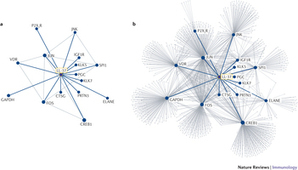
Gene signature-based mapping of immunological systems and diseases Hong LiuEmail author, Jessica Liu, Michelle Toups, Timothy Soos and Christopher Arendt BMC BioinformaticsBMC series – open, inclusive and trusted201617:171 DOI: 10.1186/s12859-016-1012-y© Liu et al. 2016 Received: 30 October 2015Accepted: 5 April 2016Published: 18 April 2016
Gilbert C FAURE's insight:
Conclusion An in silico approach has been developed to characterize immune cell subsets and diseases based on the gene signatures that most differentiate them from other biological states. This modular ‘biomap’ reveals the linkages between different diseases and immune subtypes, and provides evidence for the presence of specific immunocyte subsets in mixed tissues. The over-represented genes in disease signatures of interest can be further investigated for their functions in both host defense and disease.
Scoop.it!

Antibodies to dengue virus enhance infection of cells by Zika virus, which may explain neurological and fetal disease caused by infection.
Via Krishan Maggon
Scoop.it!

IL-18 contributes to sepsis development during post-natal period
Scoop.it!

Regulatory T cells (TReg cells), a specialized T cell lineage, have a pivotal function in the control of self tolerance and inflammatory responses. Recent studies have revealed a discrete mode of T cell receptor (TCR) signalling that regulates TReg cell differentiation, maintenance and function and that affects gene expression, metabolism, cell adhesion and migration of these cells. Here, we discuss the emerging understanding of TCR-guided differentiation of TReg cells in the context of their function in health and disease.
Via Krishan Maggon
Krishan Maggon 's curator insight,
April 26, 2016 8:25 AM
Nature Reviews Immunology 16, 220–233 (2016) doi:10.1038/nri.2016.26
Ming O. Li & Alexander Y. Rudensky Immunology Program, Memorial Sloan Kettering Cancer Center, New York, New York 10065, USA. Ming O. Li Immunology Program, Howard Hughes Medical Institute and Memorial Sloan Kettering Cancer Center, New York, New York 10065, USA. Alexander Y. Rudensky
Scoop.it!
Melbourne researchers have uncovered the genes responsible for the way the body fights infection at the point of 'invasion' - whether it's the skin, liver, lungs or the gut.
|






