


gpmt
67.1K views |
+0 today
Filter by date
Tags
 Your new post is loading...
 Scoop.it! 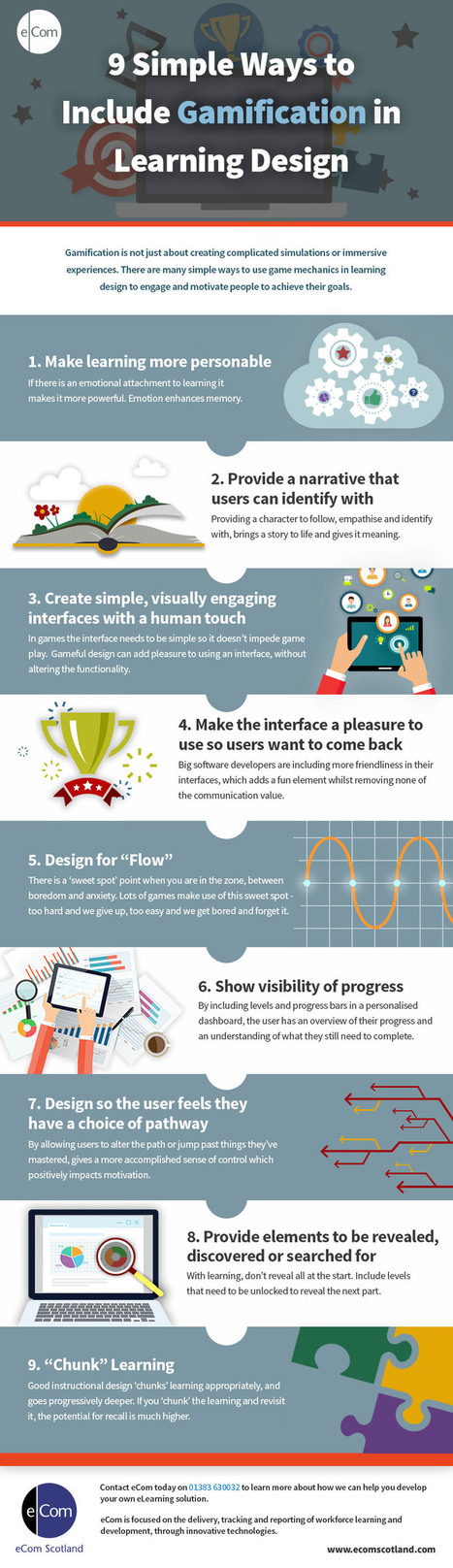
Gamification is one of the hottest trends in Learning and Development this year. Here are 9 ways to include gamification in your learning design. Via Ramon Aragon, juandoming
Scoop.it!

Three years after the university system’s Academic Senate approved a bold plan to make faculty research freely available, only 25 percent of professors are putting their papers in a state-created repository. Via Aristotle University - Library
Scoop.it!
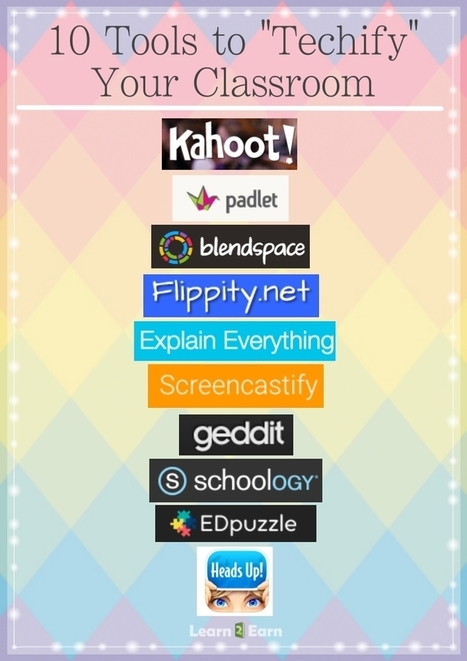
By Bethany Petty The classrooms of today have the potential to look vastly different than those of the past. Many teachers have access to a vast array of technology tools that can be used in the classroom to increase student engagement. Via Rui Guimarães Lima, Alfredo Corell 
Emily K. Reuter's curator insight,
July 4, 2016 6:18 PM
Some of my favorite choices for facilitating formative learning and assessment in the online college classroom.

Alfredo Corell's curator insight,
July 7, 2016 5:16 AM
Sometimes the world of educational technology can seem daunting and extremely overwhelming—especially for newcomers. Use this list of teacher tools to “techify” your lessons one step at a time. Each one has the potential to enhance your classroom biome and get students excited about your content. 
António Leça Domingues's curator insight,
August 21, 2017 9:53 AM
Ferramentas para introduzir tecnologias na sala de aula.
Scoop.it!

Comment l’enseignement peut-il répondre aux enjeux du millénaire ? Chercheur de renommée internationale, François Taddei viendra partager son analyse et présenter des initiatives concrètes lors du Monde Festival 2016.
Via Claude Tran 
Claude Tran's curator insight,
July 7, 2016 2:47 AM
Pour commencer, il faut faire confiance. Aux élèves, aux enseignants, aux parents. Les études de l’OCDE montrent que les pays qui réussissent le mieux en la matière sont ceux où, face aux élèves en difficulté, les professeurs ne se disent pas qu’ils doivent avant tout boucler le programme pour les autres, mais cherchent des solutions pour ces enfants. Ils sont accompagnés dans cette quête. On leur fournit des ressources pédagogiques, ils peuvent compter sur l’appui d’enseignants spécialisés s’ils sont confrontés à des problèmes spécifiques – qu’ils soient linguistiques, liés à un handicap, à une situation économique difficile, etc. On constate, en somme, une volonté institutionnelle de ne laisser tomber aucun enfant.
Scoop.it!

Zevillage lance le MOOC sur le Travail flexible destiné à découvrir les nouvelles formes de travail, à les mettre en oeuvre en entreprise ou dans les administrations. Les inscriptions sont ouvertes .
Rejoignez-nous dans l’aventure et participez aussi dans les groupes Facebook et Linkedin ! Via Xavier de Mazenod
Scoop.it!

From
ww2

A Google certified educator and ed-tech trainer shares some her favorite tech tool gems both inside the Google suite and beyond. Via WebTeachers
Scoop.it!

One of the unique aspects of the e-learning industry is how often it changes and how quickly you have to adapt to that change. Regardless of your background, education, or professional experience, becoming a better e-learning designer requires a willingness to learn new things. Via Edumorfosis, juandoming 
Yeison Ossa Trejos's curator insight,
September 19, 2016 6:33 PM
Educational technology has become a paramount factor in a ever-growing digital era. This means teachers have to adapt themselves to the varying digital resources and tools that can be used to facilitate and improve the teaching/learning process. Among the different tasks that teachers ususally have to carry out in and outside the classroom there is one specifically teachnology-related: creating online courses in order to provide learners with content and resources necessary to support the classroom practices and to encourage learners to become autonomous.
Scoop.it!

Publié par Denis Cristol sur Thot Cursus En quelques années la France a transformé son écosystème pour devenir le pays où il faut aller pou Via Michelle Laurissergues
Scoop.it!

Have you tried Google Cardboard in your classroom? This super inexpensive (under $10!) and lets students explore virtual reality! Via RitaZ |
Scoop.it!

Alfredo Corell's curator insight,
July 12, 2016 5:31 PM
Beyond Multiple Choice Students can type, show their work with drawings or submit images. Formative Everything Formative Everything Frequent formal and informal checks for understanding guarantee student growth. Real-Time Intervention Real-Time Intervention Know exactly what each student needs as they learn and take immediate actions.
Scoop.it!

The function of the World Wide Web combined with easy and increasingly widespread access has emerged as a factor for new modes of learning outside the control of the educational establishment. Via Ludmila Smirnova
Scoop.it!

From
cursus
Les apprentissages dans la sphère publique et à l’occasion de projets publics montre une porosité d’apprentissage entre agents publics et citoyens. Ces méthodes de dialogue avec les citoyens permettent d’apprendre en poussant son argumentation mais aussi produisent du lien social. Via PhCourcier
Scoop.it!

From
www
Leading universities will offer fully accredited undergraduate courses online within five years, says the founder of a leading US online university network. Via Wildcat2030
Scoop.it!

Microlearning is replacing costly traditional employee training programs that yielded uneven results, at best. Via Mel Riddile, Alfonso Gonzalez
Scoop.it!

Gamification de la formation continue et adaptive learning en question : l'innovation made in USA Via Yasmine Kasbi
Scoop.it!

Notice that we didn’t use the more vague “good teacher” phrasing.
1. You make frequent minor adjustments. 2. You have access to “good” data. 3. You don’t teach, you design. 4. You plan backwards. 5. You don’t do what you’re told. 6. You’re a learning feedback machine. 7. You prioritize endlessly. 8. You change your mind. 9. You see each student individually. 10. Your students are changing–all of them.
Learn more / En savoir plus / Mehr erfahren:
https://gustmees.wordpress.com/2014/10/03/design-the-learning-of-your-learners-students-ideas/
https://gustmees.wordpress.com/2014/03/29/practice-learning-to-learn/
https://gustmees.wordpress.com/?s=PracTICE
Via Gust MEES 
Gust MEES's curator insight,
July 3, 2016 12:22 PM
Notice that we didn’t use the more vague “good teacher” phrasing.
1. You make frequent minor adjustments. 2. You have access to “good” data. 3. You don’t teach, you design. 4. You plan backwards. 5. You don’t do what you’re told. 6. You’re a learning feedback machine. 7. You prioritize endlessly. 8. You change your mind. 9. You see each student individually. 10. Your students are changing–all of them.
Learn more / En savoir plus / Mehr erfahren:
https://gustmees.wordpress.com/2014/10/03/design-the-learning-of-your-learners-students-ideas/
https://gustmees.wordpress.com/2014/03/29/practice-learning-to-learn/
https://gustmees.wordpress.com/?s=PracTICE
Scoop.it!
This video will provide you with information on how one Early Childhood Education teacher collects on-going assessment information about her Pre-Kindergarten students and how she learned about a new aspect of learning, called multiple intelligences, that influenced her teaching, assessment, lesson-planning, and collaboration with families. http://www.scoop.it/t/intelligences-multiples# Via Lucas Gruez
Scoop.it!

A 21st century educational system must educate all students in the effective and authentic use of the technologies that permeate society to prepare them for the future. As part of this future, lear… Via Dr. Tom D'Amico (@TDOttawa) |










La realidad virtual ofrece una serie de ventajas para simular escenarios y situaciones que en la vida real serían o muy costosas o de alto riesgo y poder de esta manera aprender de una manera mucho más contextualizada y motivada. Sin embargo, su inversión inicial puede ser muy elevada aunque el impacto que puede generar en términos de cantidad de usuarios (estudiantes) que pueden aprender a la vez permite una recuperación de la inversión más rápida que escenarios reales (laboratorios, talleres, etc.) La combinación adecuada entre espacios reales y virtuales que permita una formación de calidad a un costo asequible será el elemento clave que diferenciará a las universidades del futuro. La PUCP esta experimentando en el desarrollo de laboratorios virtuales que permitan aprender de una manera mucho más flexible, más personalizada y divertida.