
Un logiciel gratuit pour apprendre l'orthographe suivant un itinéraire passionnant de découverte et de mémorisation
Via Club de TeleMatique

 Your new post is loading...
 Scoop.it! Un logiciel gratuit pour apprendre l'orthographe suivant un itinéraire passionnant de découverte et de mémorisation Via Club de TeleMatique No comment yet.
Sign up to comment
Scoop.it!
Augmented reality is making some huge inroads in the field of education. More and more teachers are incorporating this relatively ne Via Educatorstechnology
Scoop.it!

Sharaya Baltimore's curator insight,
September 20, 2016 12:29 PM
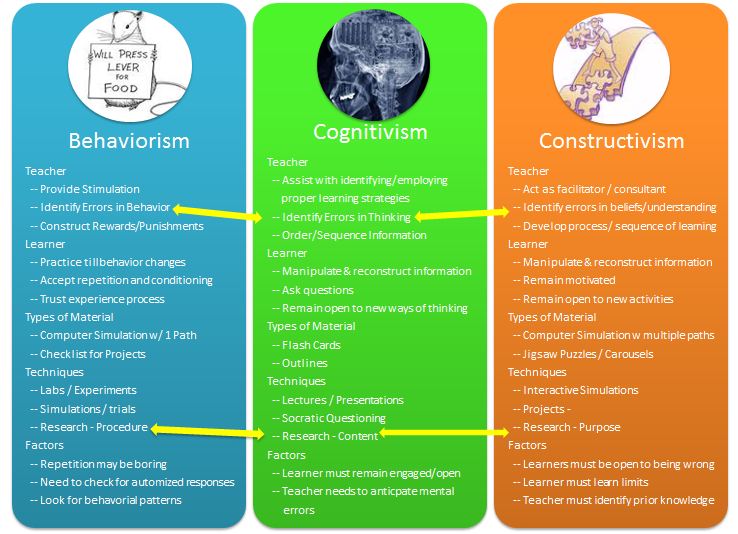
I like that it gives a comparison of behaviorism, cognitism and constructivism (even though we aren't looking at that school) and it also gives information about the teachers, learner and techniques, etc.

Susmita Dhungel's curator insight,
September 14, 2017 12:03 PM
This article explains the differences between behaviorism, cognitivism, and constructivism. It shows differences in each school's teachers, learners, types of materials, techniques, and factors. 
Krystal Robles's curator insight,
September 21, 2017 11:54 AM
I don't get as to why they all can share these things. The arrows indicate that the things relate to each other.
Scoop.it!

The Lawrence Hall of Science is a great educational website from University of California, Berkeley. It provides a wide variety o Via Dr. Tom D'Amico (@TDOttawa)
Scoop.it!
Scoop.it!

Scoop.it!

La start-up lève 6 millions d'euros, notamment auprès de bpifrance, Citizen Capital et Xavier Niel.Après la France, elle vise le Royaume-Uni et l'Espagne. Objectif : 20 millions d'inscrits en 2020.
Via Stéphanie Sellier
Scoop.it!

Want to know how to reinforce Scenario-Based Learning? Check how defining learning outcomes reinforces Scenario-Based Learning. Via EDTECH@UTRGV
Scoop.it!
In this presentation I place the development of the MOOC in the context of innovative and transformational change. I then describe what will need to take place… Via Ana Cristina Pratas
Scoop.it!

Scribblar is an online collaboration tool that is perfect for online tutoring. It features live audio, chat, whiteboard, image sharing, document sharing and more. Used by learners, trainers and schools around the world, Scribblar is quickly becoming the favourite tool for online collaboration and tutoring. Via Ana Cristina Pratas
Scoop.it!

From online forum debates to predictive essay writing software, data showing how students learn can help universities adapt their teaching Via Dr. Susan Bainbridge 
Koen Mattheeuws's curator insight,
September 13, 2016 4:01 AM
Wat we kunnen meten, meten we al. Dingen die ertoe doen zijn niet altijd meetbaar. Hebben ook de ambitie om te meten wat we moeilijk kunnen meten?
Scoop.it!

Dans cet article, Wathelet et ses collaborateurs présentent les grandes lignes de leur recherche sur l’autoévaluation.
Via Sandrine Decamps
Scoop.it!

This was written by Phil McRae who is an executive staff officer with the Alberta Teachers` Association. Dr. Phil McRae’s Biography, Research, Writing, Scholarship and Presentations can be found at www.philmcrae.com, and you can follow him on Twitter here. |
Scoop.it!
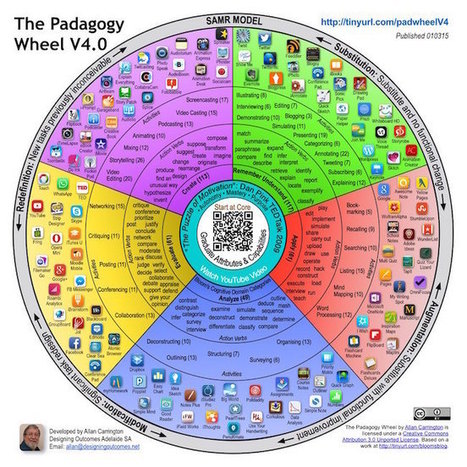
[google-translator] DOWNLOAD THE LATEST VERSION: V4 published Mar 2015. This PDF Poster has links to 122 of the latest and most popular educational apps. Now these resources are available in 19 different languages. The poster also has app selection criteria according to Blooms taxonomy. It could provide the backbone of a complete course or seminar … Via Michèle Drechsler
Scoop.it!

Réunion académique "numérique 1D" - Académie Orléans-Tours. 14-10-2015 Formation IEN 1er degré et formateurs 1D Via Michèle Drechsler
Scoop.it!
George Siemens spoke with the Future Trends Forum about what's happening with data analytics in education. Via Dr. Susan Bainbridge
Scoop.it!
A new report shares its vision for lifelong, equitable STEM education in the United States. Via Dr. Tom D'Amico (@TDOttawa)
Scoop.it!

Cette année, j’ai vécu une expérience renversante de formation. Plus fort encore que la classe inversée, j’ai renversé totalement mon enseignement à distance
Scoop.it!

The notion that we can "fix" our schools to create more-equitable outcomes for these students only moves us backward. It implies that our education system is broken. In reality, the system is working exactly as it was intended when public education was designed over 100 years ago. It is culling and sorting the more elite students and leaving the rest to work the factories or the farms.
"Today, schools and communities across the country are advancing a framework known as student-centered learning, which questions traditional concepts of where, when, and how learning happens. This innovative approach is not restricted to the traditional classroom. Rather than simply sitting through lectures, students use class time for interactive projects and thoughtful discourse. Learners complete internships for credit and run their own parent-teacher conferences. They advance by demonstrating understanding of material at their own pace, rather than by accruing credits based on the "seat time" they've endured at a desk." Via Jim Lerman 
Jim Lerman's curator insight,
September 13, 2016 3:40 PM
I believe Donohue may have a key to unlocking the "mystery" of why making high schools truly high functioning seems so difficult.
Scoop.it!

Wondering how to implement online group collaboration in your eLearning course? Check 5 Online Group Collaboration ideas for your next eLearning Course. Via EDTECH@UTRGV
Scoop.it!

Être freelance : conseils et premiers pas lorsque l'on décide de se lancer dans une activité professionnelle à son compte.
Via Xavier de Mazenod
Scoop.it!
Alex Faaborg shares how Virtual Reality introduces unique challenges for interface design, and opens up incredible opportunities for the future of art, journalism, and education. Virtual Reality design techniques and Google Cardboard is introduced to over 1000 TEDxCincinnati Main Stage participants. Via Jim Lerman
Scoop.it!

Practical tips and principles to trick people into thinking you’re an industry thought leader. Via Jean-Luc Le Moal, malek 
Dave Wood's curator insight,
September 12, 2016 11:27 AM
Tongue in cheek tips with good use of graphics
Scoop.it!
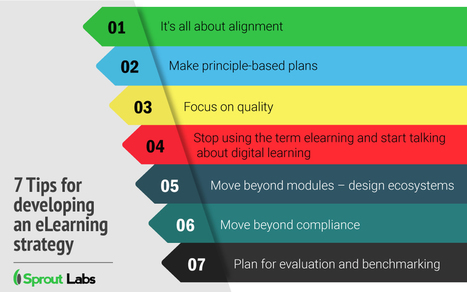
The 7 Tips for Developing an eLearning Strategy Infographic provides some tips and ideas to think about when developing an elearning strategy. Via NikolaosKourakos, juandoming
Scoop.it!

A third of U.S. middle and high school students use mobile devices issued by their schools. Many others use their own devices for their schoolwork, using software such as the widely adopted Google Apps for Education. If you have children in school, chances are good that people and organizations you don’t know are collecting massive quantities of information about your children and using this information for purposes you know nothing about.
We don’t know much about how children’s information is used, or by whom, or for what purpose
Once data is collected and the company that collected it uses it for its stated purpose, there is little in law or policy that prevents the company from also using the information for other purposes, such as “product development.” It may also sell the information to others for their use or archive it for possible later use. Many bills bearing on student privacyhave been introduced in the past several years in Congress and state legislatures, and several of them have been enacted into law. However, protection of student privacy remains limited. Our recent report explores how corporate entities use their involvement with schools to gather student data and how those data may be used for marketing and other non-school-related purposes. Although most people probably know that digital marketers targetand track children on the devices they use, many would be surprised to learn that schools now serve both as a portal to and reinforcer of digital marketing messages to children. In so doing, they lend companies that collect, sell, analyze, and buy data both enhanced credibility and access to vast amounts of education-related data.
Learn more / En savoir plus / Mehr erfahren:
https://gustmees.wordpress.com/2013/12/21/privacy-in-the-digital-world-shouldnt-we-talk-about-it/
Via Gust MEES 
Gust MEES's curator insight,
September 12, 2016 7:13 AM
A third of U.S. middle and high school students use mobile devices issued by their schools. Many others use their own devices for their schoolwork, using software such as the widely adopted Google Apps for Education. If you have children in school, chances are good that people and organizations you don’t know are collecting massive quantities of information about your children and using this information for purposes you know nothing about.
We don’t know much about how children’s information is used, or by whom, or for what purpose
Once data is collected and the company that collected it uses it for its stated purpose, there is little in law or policy that prevents the company from also using the information for other purposes, such as “product development.” It may also sell the information to others for their use or archive it for possible later use. Many bills bearing on student privacyhave been introduced in the past several years in Congress and state legislatures, and several of them have been enacted into law. However, protection of student privacy remains limited. Our recent report explores how corporate entities use their involvement with schools to gather student data and how those data may be used for marketing and other non-school-related purposes. Although most people probably know that digital marketers targetand track children on the devices they use, many would be surprised to learn that schools now serve both as a portal to and reinforcer of digital marketing messages to children. In so doing, they lend companies that collect, sell, analyze, and buy data both enhanced credibility and access to vast amounts of education-related data.
Learn more / En savoir plus / Mehr erfahren:
https://gustmees.wordpress.com/2013/12/21/privacy-in-the-digital-world-shouldnt-we-talk-about-it/
|