Your new post is loading...

|
Scooped by
michel verstrepen
February 3, 2022 11:29 AM
|
Parmi toutes les façons d’enseigner à distance, la classe virtuelle est celle qui ressemble le plus à ce qui se fait quand les étudiants sont physiquement présents à l’école. On s’y retrouve sans avoir à changer toutes ses habitudes. Déjà qu'à chaque fois qu’un enseignant propose une lecture, un manuel, un vidéo, un devoir, une recherche, il suggère habituellement d’utiliser des ressources médiatisées. Même la gestion des enseignements et le dépôt de documents se font le plus souvent sur une plate-forme numérique. Le temps des enseignants est mieux utilisé à supporter les étudiants dans leurs travaux, dans l’animation d’équipe, de discussions, de projets. L’éducation passe de la transmission à un véritable processus d’acquisition de connaissances. La partie «sociale», collaborative, se développe et s'enrichit. Le passage obligé à distance n’a fait qu’accélérer le développement des compétences, habitudes, techniques et discipline pour enseigner et apprendre de manière hybride, de toutes les façons et en toutes occasions. On peut parier qu’au retour en classe, celle-ci ne reviendra pas comme avant; de nouvelles possibilités se sont ouvertes.
Via CIPE AMU
|
|
Rescooped by
michel verstrepen
from Educational Technology News
February 3, 2022 11:29 AM
|
Decentralized technology is helping students capture and share their credentials in real time.
Via EDTECH@UTRGV
|
|
Rescooped by
michel verstrepen
from Veille Usages numériques
February 2, 2022 2:07 PM
|
Une histoire de l'Internet » : réseaux, cyberespace, gouvernance, théorie de l’information, vocabulaire au programme de cette série de 8 podcasts de 14'.
Disponible à partir du 3 février sur le site de France Culture et l’appli Radio France.
Via Tice Doc Reims
|
|
Rescooped by
michel verstrepen
from Educación a Distancia y TIC
February 2, 2022 2:05 PM
|
Wiley’s Vice-President of Digital Education argues that concerns about academic integrity in online courses have eased significantly among college instructors since 2020, when the transition to remote instruction was still ramping up. Many college instructors worried about problems with academic integrity when courses shifted to online instruction early in the pandemic… Our findings, however, suggest those concerns were greatly allayed as instructors gained more experience with remote coursework. Maybe. Nevertheless a large majority (77%) still think it’s easier to cheat online.
Via LGA
|
|
Rescooped by
michel verstrepen
from Educación a Distancia y TIC
February 2, 2022 2:04 PM
|
IT leaders in K–12 need visibility into their data on both a network and classroom level to simplify audits, manage budgets and improve security.
Via EDTECH@UTRGV, LGA
|
|
Rescooped by
michel verstrepen
from Educational Technology News
February 1, 2022 1:16 PM
|
If schools encounter the loss of data, there’s a tendency that their learning system would be negatively impacted. This is why backing up information for later recovery is essential to keep the school moving forward. Personal and work data should always be duplicated, at least daily.
How can this be done? By having your files copied to a more secure system or database. With this, you can always have the file accessed easily whenever you need it. In this article, we take a broader look at how schools prioritize data recovery in their different institutions.
Via EDTECH@UTRGV
|
|
Rescooped by
michel verstrepen
from Educación a Distancia y TIC
February 1, 2022 1:14 PM
|
Universities should reward more than research outputs, says Peter Copeland.
Via LGA
|
|
Rescooped by
michel verstrepen
from Educación a Distancia y TIC
February 1, 2022 4:01 AM
|
Formerly named the International Review of Research in Open and Distance Learning.SSCI impact factor of 0.734 with a H5 index of 36.
Via LGA
|
|
Rescooped by
michel verstrepen
from Art of Hosting
February 1, 2022 4:00 AM
|
Abstract This study investigates both individual and group interactions around Synchronicity awareness and the possibility of including a new Synchronicity Principle in Appreciative Inquiry (AI) methodology and practice. In his initial research, Swiss psychologist C. G. Jung defined Synchronicity as “a meaningful coincidence of two or more events, where something other than probability of chance is involved”
Via F. Thunus
|
|
Rescooped by
michel verstrepen
from Educational Technology News
January 31, 2022 4:24 PM
|
While “digital transformation” may seem like the latest corporate buzzword, it’s actually an essential process most companies will need to undertake to survive in the modern economy. After all, finding ways to improve efficiency and lower costs is a concept as old as business itself—and today, the best way to do that is usually through technology.
Via EDTECH@UTRGV
|
|
Rescooped by
michel verstrepen
from L'eVeille
January 31, 2022 11:59 AM
|
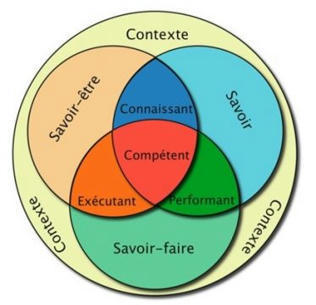
De quoi parle-t-on souvent dans le monde du travail ? Des fameuses compétences ! A-t-il les compétences pour accomplir ces tâches ? Quel est mon propre sentiment d’efficacité personnel ? ou encore comment puis-je développer mon potentiel ? Toutes des questions touchant les compétences.
Mais de quoi est composée une compétence ? Comment sait-on si une personne est compétente ? Si elle agit avec pertinence dans un contexte particulier, nous dirons qu’elle fait preuve de savoir-agir. Ce savoir agir repose pour sa part sur la capacité de la personne à faire appel à plusieurs ressources internes :
Savoir (connaissances)
Savoir-être (qualités personnelles)
Savoir-faire (compétences opérationnelles)
Via Canadian Vocational Association / Association canadienne de la formation professionnelle, juandoming
|
|
Rescooped by
michel verstrepen
from Freewares
January 29, 2022 6:33 PM
|
L'éditeur Icecream Apps est connu pour ses nombreux logiciels multimédia et bureautique dont nous vous avons parlé sur le blog par le passé. Il a également créé une suite PDF en ligne PDF Candy composée de nombreux outils pour éditer les fichiers PDF.
Via Freewares&Tutos
|
|
|
Rescooped by
michel verstrepen
from Educational Technology News
February 3, 2022 11:29 AM
|
A new survey from Cengage Group examined why workers quit, what opportunities they are exploring next and what they are doing to achieve those goals. For The Great Resigners Report, the ed tech company polled 1,200 American adults who had either left their job in the past six months (67% of respondents) or were seriously planning to quit in the next six months (33%). The majority of respondents (67%) had attained a bachelor's degree or higher and most (89%) were in the 25-44 age range.
Via EDTECH@UTRGV
|
|
Rescooped by
michel verstrepen
from Veille Usages numériques
February 2, 2022 2:07 PM
|
Ils sont souvent très équipés en smartphones et à l’aise sur les réseaux sociaux, mais une partie des jeunes Français manque de compétences numériques, nourrissant les inégalités d’accès à l’emploi.
Via Tice Doc Reims
|
|
Rescooped by
michel verstrepen
from Learning & Technology News
February 2, 2022 2:07 PM
|
To a degree, forms of personalized learning have been a part of our education system for a long time, particularly for students with special needs. Such students have received support from tutors and have been offered a diverse set of electives as part of their learning pathways. Personalized learning also has clear limits. Students need guidance and interaction with their peers to learn effectively.
Via Nik Peachey
|
|
Rescooped by
michel verstrepen
from Educational Technology News
February 2, 2022 2:05 PM
|
Educational technology isn’t new, but meaningfully integrating tech in a modern learning environment can be a significant challenge for educators today.
Via EDTECH@UTRGV
|
|
Rescooped by
michel verstrepen
from Learning & Technology News
February 1, 2022 1:16 PM
|
One of the hardest things to do as a teacher is integrating students’ individual interests with a strict curriculum. We learn best when we’re engaged with a topic. That’s true whether we’re talking about children, teenagers, or adult learners.
Genius hour is a great solution to this problem.
Via Nik Peachey
|
|
Rescooped by
michel verstrepen
from Educational Technology News
February 1, 2022 1:15 PM
|
To combat cheating, which increased with online and hybrid learning during the coronavirus pandemic, instructors changed how they designed courses and communicated with their students, according to a survey released Wednesday from the education publishing company Wiley. That included writing more open-ended test questions, assigning more projects and discussing consequences more frequently.
Via EDTECH@UTRGV
|
|
Rescooped by
michel verstrepen
from Les outils du Web 2.0
February 1, 2022 4:13 AM
|
Comment avec la narration multimédia donner vie à vos publications sur le web ? Comment intégrer pour enrichir le texte des images, du son des
Via Fidel NAVAMUEL
Zoom’s capabilities, we know, can not only change many aspects of the teaching life (farewell, glorious January snow days) but could modify future conference life in not wholly positive ways. The ability to “attend” from your home office certainly was a boon starting in March 2020, but, as Kai Ryssdal reminds me often on NPR’s Marketplace, all decisions have economic consequences—often unintended ones. Business travel may never recover to pre-pandemic levels. And if corporate bean counters are questioning the bottom-line value of traveling to meet clients, cash-strapped universities and colleges will also be wondering whether flying to academic meetings is absolutely necessary.
Via Edumorfosis, juandoming
|
|
Rescooped by
michel verstrepen
from Educational Technology News
January 31, 2022 4:25 PM
|
The demand for stackable credentials will continue to grow in coming years, and higher education institutions that can adapt quickly will be positioned to meet this shared need from both employers and learners.
Via EDTECH@UTRGV
|
|
Rescooped by
michel verstrepen
from Educational Technology News
January 31, 2022 4:24 PM
|
Instead of seeing edtech as a silver bullet that simply drives learning outcomes, it is more useful to think of it as technology that mediates learning relations and processes: what relationships do we value as important for students and when is technology helpful and unhelpful in establishing those?
Via EDTECH@UTRGV
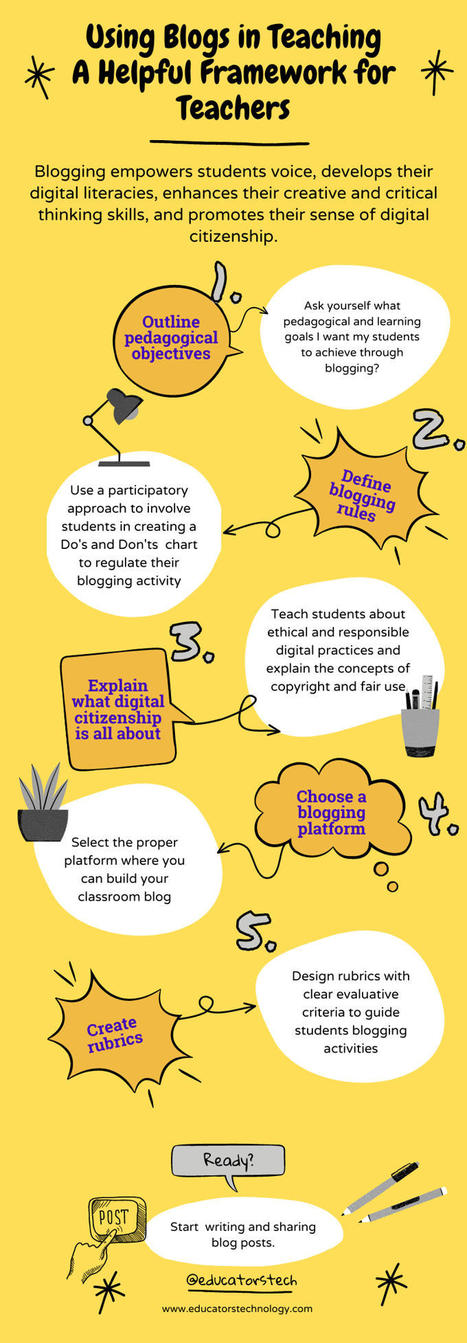
Blogging is a digital activity with immense pedagogical benefits for students. Besides developing a number of key multimedia literacy skills essential for thriving in the 21st century classroom, blogging also empowers students voice and helps them communicate more effectively.
Via Gumersindo Fernández, juandoming
|
|
Rescooped by
michel verstrepen
from Art of Hosting
January 30, 2022 4:59 AM
|
|