Et si les GAFA et autres acteurs traditionnels ne faisaient plus rêver ? On observe une fuite des talents vers l'industrie blockchain, crypto et web 3.0.
*Note: Due to COVID 19, we will need all guests to fill in the Travel and Health Declaration online during registration. This is for all the participant's health safety and follows the Local Taiwan regulations.
The critical concern for any metaverse beginner would pertain to the ways in which metaverse can change education. How will the metaverse change education? The big question brings many doubts to mind alongside emphasizing particularly the specific parts of the metaverse, which might play a role here.
A broader classification of the metaverse would bring you face to face with four important concepts such as augmented reality, lifelogging, virtual reality, and mirror worlds. All of these concepts provide a detailed impression of using metaverse technology to drive use cases in the education sector. Let us learn about these four aspects of the metaverse with a brief overview of each of them.
Le volume des données quasiment « mortes » ne cesse de croître. À l’occasion du Cyber World Cleanup Day, nous montrons qu’il est possible d’agir pour identifier et supprimer ces données zombies.
Juan Domingo Farnós Hasta ahora siempre hemos utilizado un sistema basado en normas de contenido y tecnología, donde el conocimiento de expertos en diseño de instrucción y expertos en el dominio del conocimiento estén asignados en una ontología y las reglas a emplear dirigidas a reducir automáticamente la complejidad de las decisiones del proceso de…
Most curricula found in education systems or training programs are designed in a linear fashion. They are unnatural. Teachers and trainers, like other humans, want to order ‘stuff’ in such a way that it apparently makes sense: this leads to this leads to that thinking. Most curricula, despite sometimes referring to higher levels of Bloom’s Taxonomy in the objectives, is at the competence level of describing, explaining, and demonstrating. This leads to rather stilted forms of didactic teaching, the ubiquitous slide show, the passive learner. All of which is unnatural and we wonder why learners have problems in motivation and learning.
Positive relationships between students and instructors are crucial to meeting students’ academic and socio-emotional needs as outlined by the American Psychological Association (APA). As university educators, we contend that trust is an essential ingredient in these relationships. While teaching is inherently relational, we argue that models of “good teaching” must include trust
Destiné aux militaires et aux personnels civils de la Défense ainsi qu’à leurs familles, la troisième édition du Guide du bon usage des réseaux sociaux propose la synthèse des bonnes pratiques numériques.
We talk a lot about personalized learning and how it can benefit learners by providing them with more detailed instruction catered to their needs. It helps them overcome learning challenges and achieve their educational goals.
We’ve also discussed assistive technologies – technologies designed to aid students with learning difficulties and other disabilities, understand and retain knowledge to improve their learning outcomes. The two can go hand-in-hand, as assistive technology can help all students receive a more personalized learning experience.
Let’s take a look at some of the ways that AT is used in the classroom and its personalized learning.
The current expansion of so-called “smart technologies” (adaptive, predictive, personalized) might make our lives easier in some cases (e.g. assistive chatbots or robotic caregivers). But it is also true that we are now much more aware of some of the unintended (in some cases negative) consequences of these new technologies than we were in the recent past.
Some people might feel uncomfortable thinking that AI or robots can be part of the current conversation in education. What is unknown tends to produce fear -- or rejection. On the other hand, perhaps is time to think about how to better prepare the next generation to thrive in contexts where data-intensive systems might assist or replace a number of skills and capacities currently developed in schools.
Creativity is not only an essential feature of language use, but it will be a key skill for employability over the coming decade. With classrooms moving progressively towards more online delivery, how can we ensure that we don’t lose one of the most fulfilling and engaging aspects of learning?
Is there a difference between an imaginative mind and a creative mind? In this episode of the Fueling Creativity Podcast, Dr. Cyndi Burnett and Dr. Matthew Worwood speak with Dr. Anna Abraham, an E. Paul Torrance Professor and Director of the Torrance Center for Creativity and Talent Development at UGA’s Mary Frances Early College of Education. Anna investigates the psychological and neurophysiological mechanisms underlying creativity and other aspects of the human imagination.
In part one of this two-part interview, you’ll gain insight into the similarities and differences between a creative mind and an imaginative mind based on neuroscientific research. Anna breaks down her findings on the neurophysiological mechanisms underlying creativity and how teachers can translate these to a classroom environment. Anna also identifies problems and potential solutions in unimodal forms of teaching and learning as part of the standard educational curriculum.
Plus, she shares her candid thoughts, from a neuroscience perspective, on the question: Can creativity be taught?
About Anna Abraham: Anna Abraham, Ph.D. is the E. Paul Torrance Professor and the Director of the Torrance Center for Creativity and Talent Development at UGA’s Mary Frances Early College of Education. Her educational and professional training has been within the disciplines of Psychology and Neuroscience, and she has worked across a diverse range of academic institutions and departments the world over, all of which have informed her multidisciplinary focus. She investigates the psychological and neurophysiological mechanisms underlying creativity and other aspects of the human imagination. Her wide-ranging contributions to the field of creativity include theoretical, methodological and empirical advances in the context of basic and applied research. She has penned numerous publications including the sole authored book, The Neuroscience of Creativity (2018, Cambridge University Press), and the multidisciplinary edited volume, The Cambridge Handbook of the Imagination (2020). She is the Founding Editor of The Cambridge Elements Series in Creativity and the Imagination.
Visit Anna's websiteConnect with her on LinkedIn
Resources Mentioned: Listen to part 2 linked needed Internet of Us by Michael P. Lynch
Eager to bring more creativity into your home or classroom? Access a variety of creativity resources and tools & listen to more episodes of The Fueling Creativity Podcast by visiting our website, www.CreativityandEducation.com.
Subscribe to our monthly newsletter!
You can also find The Fueling Creativity Podcast on Apple Podcasts, Spotify, Audible, and PodBean! Make sure to rate, review, and share the podcast if you enjoy it!
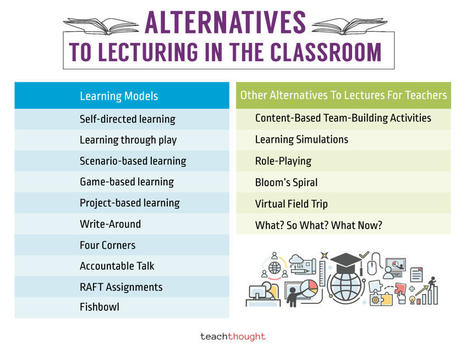
We have a concept we want the class to understand, so we stand and explain it to them. We give them background. Offer details. Anticipate and pre-empt common misconceptions. Illuminate the more entertaining bits. Emphasize the nuance.
Two years into the pandemic, schools continue to grapple with a broad array of concerns, from loss of instructional time to evolving pedagogical practices. Many believe that technology is the key to addressing any perceived learning loss, as well as redefining teaching and learning. Karen Adams, the Head of America’s Professional Development at Promethean, recently offered her perspective on where we are and where we’re going.
If it is difficult to transfer tacit knowledge through language, then how can it be passed on? Here are six proven strategies for inferring and acquiring tacit knowledge.
When people think about digital learning, the first things that come to mind are likely the common applications they’ve experienced. For example, you might think of remote learning through class meetings that happen over a video call, sharing class materials and collecting assignments using a learning management system, taking an asynchronous online course, or giving students individualized practice and feedback with learning software.
We invest in AI, AR, VR and other technologies with the understanding, however, that their development will not solve the pressing issues facing our sector. On their own, new technologies will not drive down costs, increase access or advance the quality of learning.
We invest in AI, AR, VR, and other technologies with the understanding, or more accurately assumption that these technologies in and of themselves will address the pressing issues and short-falls facing academia, as well as other online learning programs by reducing costs, increasing the access or advancing the quality of learning. Clearly, we, as a society and as organizations need to get better at doing the whole technology deployment and learning thing together, rather than just throw some technology at the wall and hope it works. Hope as a replacement to strategy is not one. A whole lot of assumptions by those selling the technology, and hyping what it can do to benefit learners is what I see. What I do sense is that the folks that sell this technology to academics, companies, organizations and even institutions are not really taking into consideration the needs of students/learners, because if they did, that would have happened at the very beginning of the whole process of deployment of these technologies, and clearly, they have not. Results are what results are. This should be rectified by those selling AI, AR, VR, and other technologies to the learning & education community. ( I do have some recommendations, on how to improve this learning and education thing, if you're interested and have a budget let me know)
To get content containing either thought or leadership enter:
To get content containing both thought and leadership enter:
To get content containing the expression thought leadership enter:
You can enter several keywords and you can refine them whenever you want. Our suggestion engine uses more signals but entering a few keywords here will rapidly give you great content to curate.


 Your new post is loading...






















On observe une fuite des talents vers l'industrie blockchain, crypto et web 3.0 !