


While traditional higher-ed enrollments are down, the demand for online learning remains high
Via EDTECH@UTRGV

 Your new post is loading...
 Scoop.it! While traditional higher-ed enrollments are down, the demand for online learning remains high Via EDTECH@UTRGV No comment yet.
Sign up to comment
Scoop.it!

Juan Domingo Farnós IMAGEN: Maria Limniou Esta nueva realidad poco a poco empuja a que los sistemas educativos y en general las sociedades de ciertos países a que se transformen y adopten posiciones propias del Sigo XXI. Sin duda, el potencial cognitivo de las tecnologías ha tenido un impacto significativo en la transformación de la… Via juandoming
Scoop.it!

Tech Tactics in Education speaker Jason Simon shares how colleges and universities can better utilize data to tackle existential challenges and move toward analytic maturity across the institution. Via EDTECH@UTRGV
Scoop.it!

We explore the impact of AI on personalized learning and delve into its applications and limitations in eLearning. Via LGA
Scoop.it!

As modern advances in technology continue to strengthen, new techniques continue to open and provide new avenues for education. Learn how modern classrooms are changing the eLearning industry. Via EDTECH@UTRGV
Scoop.it!

College professors worry that ChatGPT will sow chaos on campuses this fall. They also await guidance from university leadership on how to deal with AI technology. Via Peter Mellow, LGA
Scoop.it!

It is essential that our schools and governments ensure students are equipped with the necessary skills and competencies for the future Via EDTECH@UTRGV
Scoop.it!
In this blog, we set out some of the insights and deeper questions that have been emerging as we apply and embody the principles set out in the report in our own work — insights and questions we hope to engage with through the playbook. Via june holley, juandoming
Scoop.it!
AI has the potential to enhance education, but how does AI impact teachers? And how can we ensure it doesn't disrupt the quality of learning? Via LGA
Scoop.it!
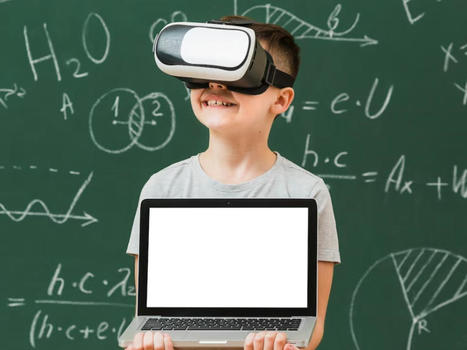
In this article, we delve into the transformative trends that are redefining classrooms and the future of teaching. AUGUST 10, 2023 As the world evolves at an unprecedented pace, so does the landscape of education. The future of teaching is being reshaped by innovative methods that embrace technological advancements, personalized approaches, and a focus on holistic student development. In this article, we delve into the transformative trends that are redefining classrooms and empowering educators to create engaging and effective learning experiences. The Digital Revolution: How Technology is Shaping Classroom LearningSource: smithsystem.comThe digital revolution has had a profound impact on education, reshaping the way students learn and teachers instruct. Technological advancements, such as interactive whiteboards, educational apps, materials for online learning and cloud-based learning platforms, have become integral tools in modern classrooms. These digital resources facilitate active engagement, collaboration, and accessibility, enabling students to explore concepts beyond textbooks and providing educators with versatile teaching aids. Moreover, technology has opened up opportunities for distance learning and virtual classrooms, enabling students to access education from anywhere in the world. The digital revolution has not only increased the accessibility of education but also enriched the learning experience by integrating multimedia, simulations, and interactive content that cater to diverse learning styles. Personalized Learning: Tailoring Education to Individual NeedsOne size does not fit all when it comes to education. Personalized learning is an approach that recognizes the unique strengths, weaknesses, and interests of each student, tailoring the learning experience to meet their individual needs. Technology plays a vital role in enabling personalized learning, as adaptive learning platforms can analyze student data and provide customized content and feedback based on their performance and progress. By embracing personalized learning, educators create more engaging and relevant learning experiences that resonate with students. Students are empowered to take ownership of their learning journey, fostering a sense of autonomy and intrinsic motivation. Project-Based Learning: Fostering Critical Thinking and CollaborationProject-based learning (PBL) is a pedagogical approach that centers on real-world problem-solving and hands-on activities. Instead of traditional lectures, students work on projects that require critical thinking, research, collaboration, and creativity. PBL fosters a deeper understanding of concepts as students apply theoretical knowledge to practical scenarios. Through project-based learning, students develop valuable skills such as communication, problem-solving, and teamwork. PBL also nurtures a sense of curiosity and a desire for lifelong learning, as students engage with meaningful and relevant projects that connect classroom learning to the real world. Flipped Classrooms: Reimagining the Learning ExperienceThe flipped classroom model flips the traditional instructional approach. Instead of teachers delivering lectures during class time, students access pre-recorded video lessons or content outside of class. Class time is then dedicated to discussions, activities, and collaborative learning experiences. This flipped approach enables students to learn at their own pace, review content as needed, and come prepared for interactive class sessions. Flipped classrooms encourage active engagement and foster deeper understanding through peer-to-peer interactions and application of knowledge.
Gamification in Education: Engaging Students through Playful Learning Gamification leverages game elements and mechanics in educational contexts to motivate and engage students in their learning journey. By introducing elements such as points, badges, leaderboards, and rewards, educators can create a sense of achievement and friendly competition, encouraging students to progress and excel in their studies. Gamification taps into students’ natural inclination for play and curiosity, making learning more enjoyable and stimulating. It can be applied across various subjects and grade levels, promoting active participation and boosting student motivation. Virtual Reality in the Classroom: Opening New Horizons for ExplorationVirtual reality (VR) is revolutionizing classroom experiences by transporting students to virtual worlds and immersive simulations. Whether exploring ancient civilizations, diving into the depths of the ocean, or taking a virtual field trip to outer space, VR allows students to engage with content in ways that were previously impossible. VR enhances experiential learning, making abstract concepts tangible and relevant. It caters to different learning styles and promotes empathy by enabling students to see the world through different perspectives. As VR technology becomes more accessible, its potential to revolutionize education is only growing. AI and Machine Learning: Enhancing Teaching and AssessmentArtificial intelligence (AI) and machine learning are transforming education by automating administrative tasks, personalizing learning paths, and enhancing assessment methods. AI-powered educational platforms can analyze vast amounts of student data, providing insights that inform instructional decisions and interventions. Moreover, AI can identify individual learning gaps and offer personalized recommendations to help students progress. Adaptive learning platforms use machine learning algorithms to continuously adjust content and difficulty levels based on student performance, ensuring that each student receives the support they need. Social and Emotional Learning (SEL): Nurturing Well-Being and EmpathyEducating the whole child involves fostering social and emotional skills alongside academic knowledge. Social and emotional learning (SEL) focuses on developing students’ emotional intelligence, self-awareness, empathy, and interpersonal skills. Integrating SEL into the curriculum creates a supportive and inclusive learning environment where students feel valued and understood. SEL programs promote positive behavior, emotional regulation, and conflict resolution, contributing to improved well-being and positive relationships within the classroom and beyond. Teacher Professional Development: Preparing Educators for an Innovative FutureEmbracing the future of teaching requires empowering educators with the knowledge and skills to effectively implement innovative methods in their classrooms. Professional development plays a crucial role in equipping teachers with the tools they need to navigate the changing landscape of education. Teacher professional development programs can focus on training in technology integration, project-based learning techniques, gamification strategies, and other innovative pedagogies. Moreover, continuous professional development ensures that teachers stay informed about the latest research and best practices, fostering a culture of lifelong learning among educators. ConclusionThe future of teaching is a dynamic and ever-evolving landscape that embraces change, innovation, and student-centered approaches. The digital revolution has opened up unprecedented possibilities for enhancing classroom learning, making education more accessible and engaging for students. Personalized learning tailors education to individual needs, empowering students to take charge of their learning journey. Project-based learning flipped classrooms, and gamification strategies foster critical thinking, collaboration, and active participation among students. Virtual reality and AI technologies offer immersive and personalized learning experiences, while social and emotional learning nurtures students’ well-being and empathy. As we navigate this transformative future of teaching, investing in teacher professional development becomes essential to equip educators with the knowledge and skills to implement innovative methods effectively. Embracing these innovative approaches will undoubtedly shape a new era of education, one that prepares students to thrive in an ever-changing world and make a positive impact on society. Via Charles Tiayon, juandoming 
caseytburns@gmail.com's curator insight,
September 14, 2025 6:43 PM
This is an excellent piece piece that reflects a moment of convergence in educational innovation, where emergent technologies, evolving pedagogies, and shifting learner expectations intersect to reshape the classroom experience. Key methods emphasized include integrating generative AI and adaptive learning systems for more personalized instruction; leveraging immersive technologies, such as virtual and augmented reality, to make abstract or remote content more tangible; and emphasizing pedagogical approaches like project-based, inquiry-based, and competency-based learning that place students as co-creators of knowledge rather than passive receivers. Recent studies, such as Research and Practice of Future Innovative Classroom in the Context of Digital Transformation, show how virtual reality projects combined with cooperative learning can build immersive, cross-disciplinary learning experiences while intelligent systems facilitate real-time feedback and tailored scaffolding. These transformations hinge not only on tool adoption, but on enhancing teacher digital literacy, redesigning assessment methods, and ensuring equity and access so that innovation does not exacerbate existing gaps. In short, the future isn’t about novelty per se, but about fostering classrooms that are flexible, responsive, and learner-centered, where innovation aligns with educational purpose, and where teachers are as much designers of experience as deliverers of content.

Loganne Featherston's curator insight,
September 14, 2025 9:12 PM
This article explores innovative teaching methods transforming classrooms, such as personalized learning, project-based learning, flipped classrooms, gamification, and virtual reality. It emphasizes the importance of adapting teaching strategies to meet the evolving needs of students in a digital age. I appreciate the focus on creating engaging and effective learning experiences that cater to diverse learning styles. The integration of technology in education, as discussed, can enhance accessibility and foster a more interactive learning environment.

Christian Cardona's curator insight,
September 6, 8:27 PM
This article goes beyond one specific tool and looks at educational apps, personalized learning, gamification, virtual reality, and AI. Each one can support engagement differently, whether it is through interaction, choice, creativity, or experiences students may not otherwise have. It also shows how much the classroom continues to change as new technologies become available.
Scoop.it!

Cathoven is an intelligent teaching material design assistant specifically designed for language teachers. Using artificial Via Nik Peachey 
Nik Peachey's curator insight,
August 11, 2023 12:44 PM
An interesting AI tool for building reading activities. Will also check CEFR level https://www.cathoven.com/en/ |
Scoop.it!
Embracing Multipotentialism: Inspiring Teaching Strategies and Student Encouragement | Faculty Focus
Multipotentialism offers an alternative perspective, advocating for the exploration of multiple academic interests and career paths. Via Vladimir Kukharenko, juandoming
Scoop.it!
A new research report, "Enabling Learning for Life: New Realities for Work and Education," by global technology company D2L, suggests that while American workers are interested in upskilling in their careers, they have little understanding of the value of microcredentials and how to go about obtaining them. Via EDTECH@UTRGV
Scoop.it!

Kathleen Palmieri shows how AI bots like ChatGPT can help launch the new school year with content activities, introductory letters, lesson planning, and more. Via Yashy Tohsaku, LGA
Scoop.it!

No cerne da nova era educacional pós-IA, está o conceito de ensino adaptativo, uma metodologia que utiliza a tecnologia para personalizar a experiência de aprendizado de acordo com as necessidades e habilidades individuais de cada aluno. Via Inovação Educacional, juandoming
Scoop.it!

Experiential learning is one of the key pedagogical concepts that informs the modern philosophy of teaching. Defined by the process of learning through doing, reflection, and active engagement, experiential learning takes learners beyond traditional classroom boundaries, immersing them in... Via LGA
Scoop.it!

Uplimit—formerly CoRise—offers huge classes on tech and work topics. And it’s using generative AI to provide some of the personal touch that usually gets lost at scale. Via EDTECH@UTRGV
Scoop.it!

In spite of efforts to suppress online student enrollments at community colleges, we must be reminded that ultimately students drive the mix of modalities that are offered. For instance, a collateral casualty of the historic growth of online enrollment has been the decline of evening classes/programs at most community colleges. Via EDTECH@UTRGV, juandoming 
EDTECH@UTRGV's curator insight,
August 15, 2023 10:36 AM
The pandemic accelerated the adoption of online and blended learning. Over the past few years colleges have focused on building capacity. We now need to focus on improving quality.
Scoop.it!

In this post, I explore the six key principles outlined in the draft framework and make some recommendations for how schools can put them into practice. Via Edumorfosis, LGA
Scoop.it!

The world is increasingly going digital, and this trend will continue in the future. Because of this, teaching students about digital citizenship is more important than it has ever been. Via Nik Peachey, juandoming
Scoop.it!

We’re going in-depth on the subject of how AI will affect higher education in 2023 and beyond. Prepare to discover about five amazing ways AI is changing the educational scene, from intelligent tutoring systems to individualized learning experiences. Via EDTECH@UTRGV, juandoming 
Zhang Meilan's curator insight,
August 16, 2023 9:34 AM
2023 年AI人工智影响高等教育的五种方式:
人工智能改变教育场景的五种惊人方式,从智能辅导系统到个性化学习体验。 1.人工智能将创造个性化学习体验:专为你设计的学习之旅,其中每一步都是根据你的具体要求、偏好和学习偏好量身定制的。 2.人工智能将推动智能辅导系统的发展:一位虚拟导师可以随时为您提供帮助,他可以在您需要时帮助您学习。人工智能能够创建智能教学系统,从而改变我们的学习方式。 3.AI技术将简化管理任务:NLP有潜力彻底改变高等教育领域的招生、课程注册和沟通等流程。在佐治亚理工学院,一位教授正在利用人工智能驱动的聊天机器人作为虚拟助教,立即帮助学生。学生们对这个项目的反应也相当积极。 4.高等教育中的人工智能将提供预测分析:人工智能也在改变高等教育中的电子学习环境。人工智能技术的一项有趣用途是对学生成绩进行预测分析,旨在发现趋势并预测影响学生参与度、表现和成功的因素。 5.人工智能将为教育工作者提供先进的数据分析工具:研究人员可以通过在教育中利用人工智能及其预测建模技能来模拟场景、预测结果并探索假设。这使他们能够做出明智的判断并预测未来趋势。这为跨学科的战略规划和创新创造了新的机会。
Scoop.it!

Unleash the power of passion! Discover how it can fuel success in eLearning and Instructional Design, driving innovation, resilience, and learner-centric approaches. Explore the role of passion in overcoming challenges and creating impactful learning experiences. Via EDTECH@UTRGV
Scoop.it!

This year, the topic of AI has become part of so many educators’ conversations. AI tools are already transforming the way we think about teaching and learning. Today on the blog, we’ll look at how you can increase your impact as a teacher by using AI to boost your prep, save tons of time on grading and feedback, and genuinely support students in the moment. Via EDTECH@UTRGV |






