To boldly go where only Astrophysicians have gone before. What I find interesting (and can roughly understand) in Astronomy & Space exploration these days.
Red Bull somehow stole the show from Virgin last week.
Even though, Branson shows a fair attitude in the intro of this post, you can feel he can't refrain from explaining this was something they could have done as well. And maybe should have considering the impact.
Of course, Virgin has a much larger ambitious and a very compelling program but I wonder...
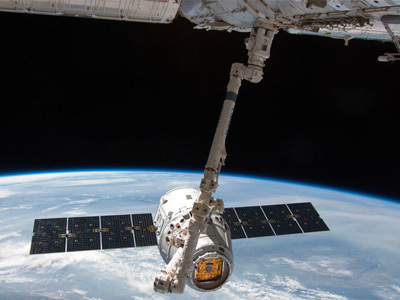
"SpaceX's Dragon capsule is on its way to the ISS, but not before losing one of the nine Merlin engines during the first stage of the Falcon 9 rocket. PM Contributor Rand Simberg explains why the engine failure can actually be seen as a positive."
While Failure will always happen, robustness is about being able to survive these failures. And that's what happened in that flight.
Via Stratocumulus
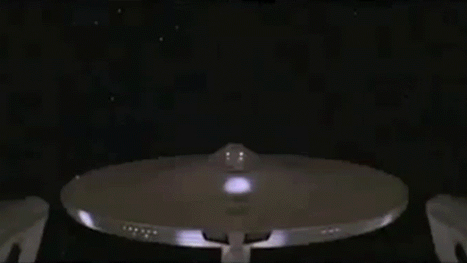
"Perhaps a Star Trek experience within our lifetime is not such a remote possibility." These are the words of Dr. Harold "Sonny" White, the Advanced Propulsion Theme Lead for NASA Engineering.
I'm sur we're going to see objections to that article but for the meantime, let's dream a little, shouldn't we?
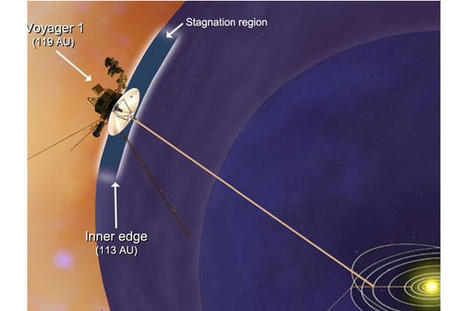
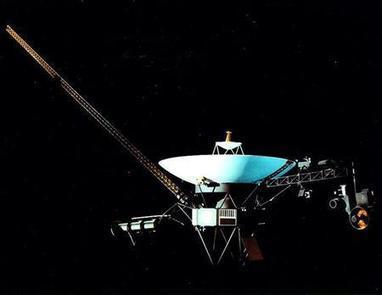
"Launched on Sept. 5, 1977 and now more than 11 billion miles from the sun, the Voyager 1 probe was expected to be exiting the solar system by now. But it seems the edge is farther out than scientists thought."
Thought this was just a matter of pure abstract definition? Nope. Unlike country borders, there are a number of layers that can be scientifically defined around the solar system to trace its limits.
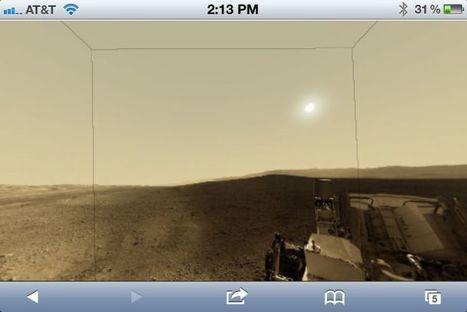
Those dazzling images captured by Curiosity and stitched together by a panographer look even more amazing when paired with your iDevice's gyroscope. Read this blog post by Rick Broida on iPhone Atlas.
I first felt it was going to be awkward and I have to admit it's easy, fluid and the result is awesome. Try it!
"Ernst Stuhlinger wrote this letter on May 6, 1970, to Sister Mary Jucunda, a nun who worked among the starving children of Kabwe, Zambia, in Africa, who questioned the value of space exploration."
He could have easily dismiised the argument but chose a very long, detailed and convincing answer.
Maybe, the sad part of the story is that we didn't keep it up....
Science-Fiction author and space travel advocate Sylvia Engdahl explains why the fading appetite for space exploration by the general public and politicians might not be bad news but just a sign that momentum takes time to build for such a massive change in mankind's history.
A truly powerful image generates questions. The incredible night photos and time-lapse movies NASA has been sharing with us provoke questions about our planet.
"Researchers at MIT, NASA and elsewhere have detected a possible planet, some 1,500 light years away, that appears to be evaporating under the blistering heat of its parent star. The scientists infer that a long tail of debris — much like the tail of a comet — is following the planet, and that this tail may tell the story of the planet’s disintegration. According to the team’s calculations, the tiny exoplanet, not much larger than Mercury, will completely disintegrate within 100 million years."
As the hunt for exoplanets continues to rage, we're apparently going to find more and more interesting things like this one about planets.
Two volunteer astronomers have confirmed the existence of a Neptune-like planet that has four suns, making it the first quadruple star system ever discovered.
A system like this has statistically a very small chance to exist in a stable way: the planet should be torn apart by conflicting gravitationnal forces.
But the discovery was confirmed by professional astronomers: "Looking at the data, the duo [of amateur astronomeurs Kian Jek of San Francisco and Robert Gagliano from Cottonwood, Arizona] noticed faint dips in light caused by the planet passing in front of its parent stars. Following their immediate observation and announcement, a team of professional astronomers took over and confirmed the presence of a quadruple system using telescopes on Mauna Kea, Hawaii."
"The first steps towards interstellar travel have been taken, but the stars are very far away. Voyager 1 is about 17 light-hours distant from Earth and is traveling with a velocity of 0.006 percent of light speed, meaning it will take about 17,000 years to travel one light-year. Fortunately, the elusive "warp drive" now appears to be evolving past difficulties with new theoretical advances and a NASA test rig under development to measure artificially generated warping of space-time."
This is a follow up to the news I published a few days ago and it is a much more detailed article. It is a great read if you won't to understand while, far from being a practical possibility yet, it is something theoretically possible.
"Very cool videoanimation of Spirit / Opportunitys flight to mars!"
This is not the Curiosity rover but as we've heard so much great stuff about this little rover recently, I felt this video detailing the whole trip to Mars of similar rovers was interesting. It completes nicely an animation I previously published on Curiosity.
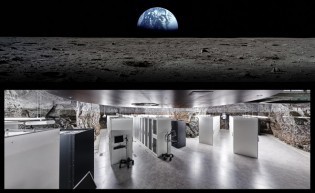
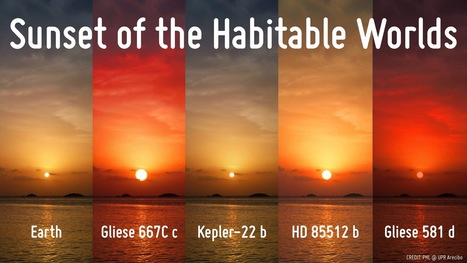
"This figure shows an actual image of a sunset on Earth compared to artistic representations for the best candidates of potential habitable worlds so far. CREDIT: PHL @ UPR AreciboThe Planetary Habitability Laboratory (PHL) is a virtual laboratory dedicated to the study of planetary habitability."
Why the differences? Size and type of stars. Full explanation on the original post.
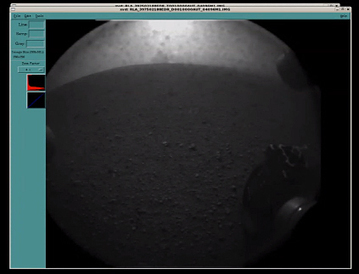
"NASA's most advanced Mars rover Curiosity has landed on the Red Planet. The one-ton rover, hanging by ropes from a rocket backpack, touched down onto Mars Sunday to end a 36-week flight and begin a two-year investigation."
Astronomers have spotted one of the rarest and most extreme galaxy clusters in the universe and, behind it, an object that shouldn’t exist...
The further we observe stars, the older they are. This one apparently was too far away (13+ billion light-years if I understand correctly) to have a significant chance of existing. Yet, it seems to be here (or rather have been here, I should say).
AsiaSat in February signed with Hawthorne, Calif.-based SpaceX for the launch of the two satellites on separate Falcon 9 rockets. Under that contract, AsiaSat agreed to pay $52.2 million per satellite — half the ILS price.
But the SpaceX contract stipulated that the AsiaSat 6 contract will be canceled, and all advance payments refunded, if the launch does not occur by March 31, 2014. For AsiaSat 8, the launch deadline is May 31, 2014.
"The Voyager 1 space probe has reached the edge of the solar system, extending its record for being the most distant man-made object in space."
I still remember getting as a kid a copy of the Voyager 1 (or was it Voyager 2?) plate that was supposed to tell Aliens finding the probe how we looked, where we lived and what we were made of. Feeling old...
To get content containing either thought or leadership enter:
To get content containing both thought and leadership enter:
To get content containing the expression thought leadership enter:
You can enter several keywords and you can refine them whenever you want. Our suggestion engine uses more signals but entering a few keywords here will rapidly give you great content to curate.


 Your new post is loading...