To boldly go where only Astrophysicians have gone before. What I find interesting (and can roughly understand) in Astronomy & Space exploration these days.
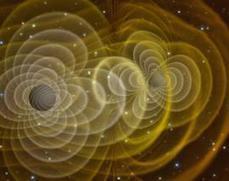
A landmark day for Einstein and our understanding of the universe: the detection of gravitational waves. Brian Greene explains the discovery. Subscribe to ou...
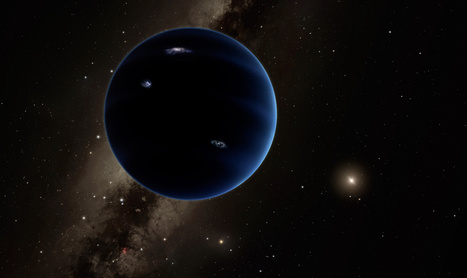
Is here a 9th planet far away in the solar system that's 10x the mass of earth and hat orbits in 10,000 to 20,000 years? The Caltech team who had discovered the bodies beyond Pluto that ended disqualifying it as a planet are saying yes. Here's why and what critics' questions it would address.
Since its first light in 2009, the Kepler Space Telescope has been scanning the cosmos in search of habitable worlds beyond our Solar System. During its routine observations, the telescope observed something very unusual.
Mars is the dream of all astronauts and space fans. As the realistic sci-fi book is released as a movie, here's an interesting recap of all the technologies that have yet to be mastered before this mythical journey can be attempted.
Solid signs of alien life will be spotted within 10 years, and definitive evidence will roll in within 20 to 30 years, NASA chief scientist Ellen Stofan said Tuesday (April 7).
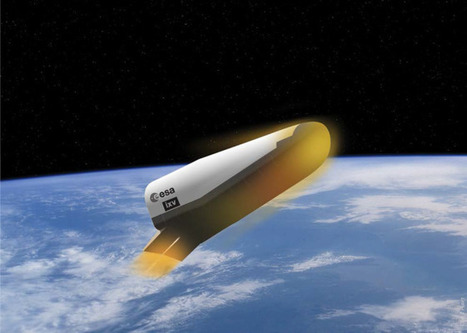
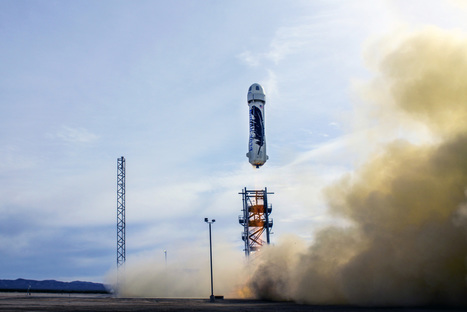
Yesterday, an unmanned experimental spacecraft from the European Space Agency took off from French Guiana and, 100 minutes later, splashed down into the Pacific Ocean just west of the Galapagos Islands.
Quarks and leptons, the building blocks of matter, are staggeringly small—less than an attometer (a billionth of a billionth of a meter) in diameter. But zoom in closer—a billion times more—past zeptometers and yoctometers, to where the units run out of names. Then keep going, a hundred million times smaller still, and you finally hit bottom: This is the Planck length, the smallest possible unit in the universe. Beyond this point, physicists say, the very notion of distance becomes meaningless.
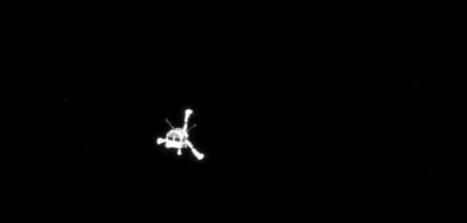
BERLIN/FRANKFURT (Reuters) - The European Space Agency (ESA) landed a probe on a comet on Wednesday, a first in space exploration and the climax of a decade-long mission to examine up close the remnants
Many researchers believe that physics will not be complete until it can explain not just the behavior of space and time, but where these entities come from.
Look at the picture above. Nope, it’s not a snapshot of a Star Wars scene, or any other sci-fi movie. It’s what you get if you combine a NASA physicist working on achieving faster-than-light travel with a 3D artist, and the result is freaking AWESOME. And yes, you heard correctly, there are scientists working on faster-than-light travel, and this is what the ship could look like in the future.
Beyond the click bait graphic, I recommend to watch the video: it's awesome and explains in very simple terms the concept and challenges of FTL travel based on the warp drive theory. Plus some othee more accessible discoveries that could change space exploration sooner.
Sifting through observations from tens of thousands of distant stars, astronomers say they have discovered the first definitive Earth-sized planet that orbits in a habitable zone where water could exist in liquid form — a necessary condition for...
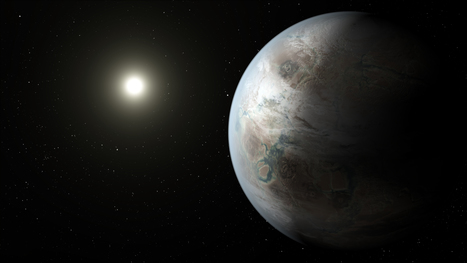
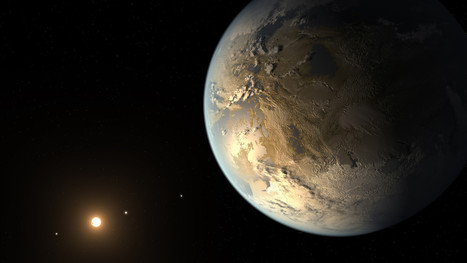
Meet Kepler-186f, the most 'Earth-like' planet ever: roughly the same size and in that area of its system where water - and therefore life as we know it - can exist in liquid form. It's not millions of light-years away but it would still take some generations to cruise there even at he speed of light.
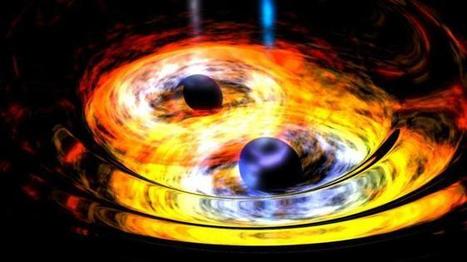
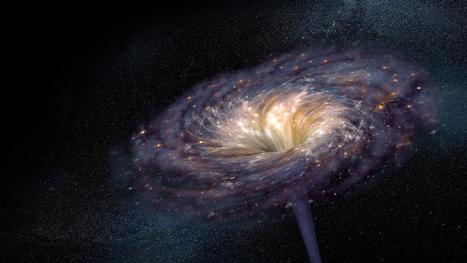
The discovery marks not just the first time that gravitational waves have been confirmed, but the first time researchers have observed binary black holes.
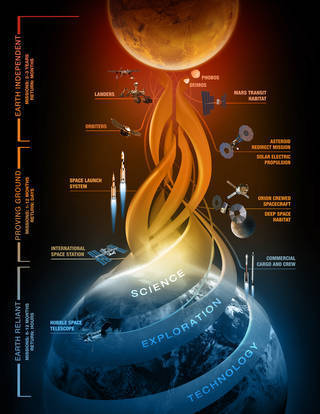
NASA’s Journey to Mars: Pioneering Next Steps in Space Exploration. This report provides an update on NASA's strategy for human deep space exploration that will enable our journey to Mars
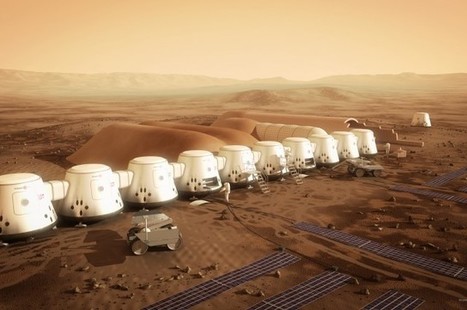
Whatever your views on Mars One, at the very least they have put the topic of Mars colonization in the public eye. Their plan, although ambitious, has received coverage from media across the world. For that, they can be applauded.
Interesting debate between MIT scientists and the Mars One team. While I'm always cautious of naysayers, you have to admit that the project seems foolish from the arguments they're making.
Very interesting and clear description. The fact that the time to compute and decode information can have an impact on information itself, and physics laws, is fascinating.
Eight planets have been found existing in the “Goldilocks” zone around their stars, which is neither too hot nor too cold for liquid water. Two of these, on the characteristics we can measure, resemble Earth more closely than any other known planet.
Dan Winters There’s no way to anticipate the emotional impact of leaving your home planet. You look down at Earth and realize: You’re not on it. It’s breathtaking. It’s surreal. It’s a “we’re not in Kansas anymore, Toto” kind of feeling.
“ (Phys.org) —There are some 100 million other places in the Milky Way galaxy that could support complex life, report a group of university astronomers in the journal Challenges.”
Via Jeff Powell
It's tough to find a good Internet speed without paying your cable provider through the nose to get it, but NASA can get you one... if you live on the Moon.
To get content containing either thought or leadership enter:
To get content containing both thought and leadership enter:
To get content containing the expression thought leadership enter:
You can enter several keywords and you can refine them whenever you want. Our suggestion engine uses more signals but entering a few keywords here will rapidly give you great content to curate.


 Your new post is loading...


 Scoop.it!