


Over the last couple of months I have been asked to help a university (that will remain nameless) in its transition to a newer version of of its Learning...

 Your new post is loading...
 Scoop.it! Over the last couple of months I have been asked to help a university (that will remain nameless) in its transition to a newer version of of its Learning... 
No comment yet.
Sign up to comment
Scoop.it!

Tampere University of Applied Sciences has developed a postgraduate certificate program for teaching in higher education that is currently being implemented at Higher Colleges of Technology in the United Arab Emirates. In the design of the program, the principles of authentic e-learning (Herrington, Reeves, & Oliver 2010) have been used as a guideline. This paper examines how the design principles have been transferred into practice and how the elements of authentic learning have been realized from the student perspective. The experiences of the students have been mapped in a survey conducted after the first semester of the program. The data was analyzed with the help of the authentic e-learning framework in order to identify the challenges and successes regarding the implementation of the elements of authentic e-learning and thus draw guidelines for future development.
Scoop.it!

theory and Practice of Online Learning, edited by Terry Anderson and Fathi Elloumi, is concerned with assisting providers of online education with useful tools to carry out the teaching and learning transactions online. It presents, in an easily readable form, the theory, administration, tools, and methods of designing and delivering learning online. By doing so, the authors bring to the teaching community a valuable product which should go a long way in popularizing the use of the learning technologies.
Scoop.it!

FUTURE OF HIGHER EDUCATION: We continue our series on the rise of online and blended learning and how free online courses are set to transform the higher education sector.
You might think from much of the above that I’m a reactionary curmudgeon who believes that education has gone downhill since the days of chalk and slates. This is not so. I am a passionate believer in using whatever tools, technology, practices or processes will help to engage students and encourage their learning.
Scoop.it!

There are things that educators need to know before diving in to ensure that Hangouts are both fun and successful for students.
Scoop.it!
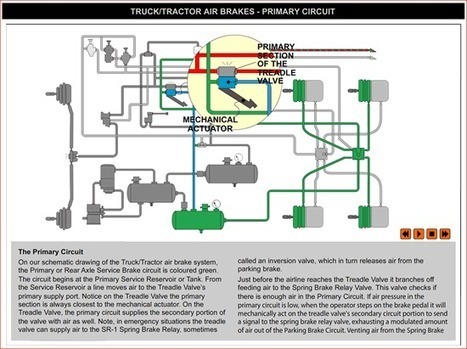
In 2007, a counsellor in the Accessibility Office at Fanshawe College in London received a grant to study and support the learning styles of students with learning disabilities enrolled in apprenticeship programs. As many of the students learned more effectively with visual resources, it was decided to create video materials that would be accessible to all learners to enhance and review what they had heard and seen in the classrooms in lectures and live demonstrations.
The videos were produced collaboratively, with the Learning Object Studio working with the professors in Motive Power (now the School of Transportation Technology) and the Accessibility Office. Although the grant has expired, the creation of video learning objects has continued. The Learning Object Studio includes staff from the Centre for Academic Excellence and the Information Technology Department.
Scoop.it!

Use Curatr to build a rich, active and social online course in less than a day.
If you are looking for a way to build really effective online courses, but you are wary of the cost and time they might take to develop, Curatr could be for you.
We advocate a new approach to creating online courses; a Social Learning approach that focusses on learners actively creating and curating content, not simply clicking the "next" button on a PowerPoint presentation.
Curatr's Social Learning platform is a fraction of the cost when compared to developing hours of E-learning Courseware. And it is more effective, engaging and enjoyable to boot!
Scoop.it!

There are few more contentious issues in thinking about education today than the place of technology in the classroom. For all of us parents struggling to figure out how to respond to the inevitable request from our children to use the ipad or the iphone—to play Brainquest, of course—there is an obvious trade off: No doubt, our kids learn math and reading with the ipad. And yet, there is something that seems wrong as they spend more and more time in front of the screen, interacting with a machine instead of with other human beings. As efficient and productive as that machine is at teaching, it thinks and acts like the electronic circuits that it is. As parents, we can't help but worry what is lost as our children spend an increasing amount of time engaged with machines—even educational machines.
Scoop.it!

Developing an online course based on an existing face-to-face course requires more than learning the technology and loading the material into the LMS.
Scoop.it!

Create an interactive online lesson with this brilliant site. Upload and curate all the resources for a lesson in one place and access them with one click. The site works with Office files, PDFs, flash files, small videos file, images, Youtube videos, internet links and even connects to Google Drive and Dropbox. Then simply share the link with anyone who need to use view it. http://ictmagic.wikispaces.com/Planning+%26+Assessment Via Jim Lerman
Scoop.it!

KEN'S KEY TAKEAWAY This author does a great job of explaining how he uses Wikis to help students organize their thoughts before and after class meetings. I have used wikis in the past, but I prefer blogs. My ideal situation would be if a leader took the best of the blogs and created a wiki. Maybe next semster? Ken
"We have heard the complaint or issued it ourselves one too many times: “They don’t read!”
But can Digital Media provide some simple pedagogical models to promote a more active engagement with that most ancient and passive form of learning: the reading assignment? In this article, I describe the use of Wikis (web pages that people can easily edit as a group) to get students to summarize, ask questions, and comment on a reading before they even meet for class. And while many new—and old—tools can be used to accomplish similar results, what is innovative about this approach is that whereas before reading and writing was something students were supposed to do individually in the isolation of their rooms or the library, now—thanks to Wikis—it is a project they tackle collaboratively as a class. The goals of this critical pedagogy are thus both modest and radical, at the intersection of old and new technologies: to use Digital Media to change the way students interact with texts."
Assignment provided and reflection on it's impact on student learning. A really worthwhile read! Via Anne Whaits, Ken Heidebrecht, Ken Morrison, NikolaosKourakos, Maria Margarida Correia, Rui Guimarães Lima

Ken Morrison's comment,
October 3, 2012 8:45 AM
This has been on my mind a lot lately. It frustrates me that so many teachers are ready to gather around Wikipedia like a pinata and beat it down. It is still sooooooo young. It can become something really special if we nurture it and encourage wise use. For example, the most powerful part is not the front page but by going under the hood and looking at the discussions about what should be on the front page. Helping our students find those discussions is so important. Ken

slesch's curator insight,
December 17, 2012 8:27 AM
Interesting use of Wiki's to foster student engagement with course readings
Scoop.it!

By Terry Heick
"Blended Learning is not so much an innovation as it is a natural by-product of the digital domain creeping into physical boundaries. As digital and social media become more and more prevalent in the life of learners, it was only a matter of time before learning became “blended” by necessity.
"That said, there’s a bit more to Blended and “Hybrid” Learning than throwing in a little digital learning.
"6 Types of Blended Learning Face-to-face Driver Rotation Flex Online Lab Self-Blend Online Driver" Via Jim Lerman
Scoop.it!
Anne Collier: Digital Transliteracy As The “Social Intelligence” Of The 21st Century | WiredAcademic
Social literacy is greatly needed in social media, we all know. If we all grew up with social-emotional learning, we'd have greater academic success and social skills and a lot less bullying in schools and workplaces.
KF: The notion of transliteracies is something that needs to penetrate the general capabilities planning in higher education.
|
Scoop.it!
This presentation describes a successful approach to eCompetency building amongst teacher educators at Dar es Salaam University College of Education (DUCE), implemented in collaboration between DUCE, Center of Virtual Learning (CVL) at UDSM and e-Learning and teacher education professionals from Tampere University of Applied Sciences, Finland. The outcomes include increased faculty eCapacity and new e-Learning study modules for teacher education. The results show that this type of interdisciplinary collaboration has the potential to address several considerations relevant to many African countries, such as teacher shortages, access to learning materials, quality of e-Learning programs and eInclusion.
Scoop.it!
Overview of the model of learning informing the design of the first MOOCs, including a look at some aspects of the gRSShopper software we have been using to sup...
Scoop.it!

FUTURE OF HIGHER EDUCATION: We continue our series on the rise of online and blended learning and how free online courses are set to transform the higher education sector.
If you have listened to the debate so far about online education, you’d think learning was simply about content. Of course, universities teach the “hard skills” of a particular discipline – what a lawyer knows about law, or an engineer knows about building design.
But the silence on what the transition to online learning will mean for all-important “soft skills” is deafening.
Scoop.it!

We’ve been discussing blended learning in the Edudemic Magazine for several months but I had been struggling to find a video that helps explain what it actually is and why you should care.
Then I happened upon one of the startups I’ve been watching. Education Elements has a terrific page along with a video to describe exactly what blended learning is, what it hopes to achieve, and what it looks like.
Scoop.it!
Udemy Rolls Out New Publishing Platform To Helps Teachers Create Quality Online Courses | TechCrunch
Online video education is a hot space right now, thanks to the likes of Khan Academy, Coursera, Udacity, StraighterLine, Lynda.com, CreativeLIVE (and many more), which are collectively on a mission to democratize education and bring affordable,...
Scoop.it!

Preparing to Develop and Teach Online and Blended Courses
Many teachers want their students to make more use of technology between classes or instead of some classes to accelerate and deepen their learning. Few courses take place without technology – even if it’s just for sending assignments or dealing with queries.
Scoop.it!

Tanner Lecturer and respondents tackle the challenges of preserving the best of higher education while venturing onto new ground. Via Peter Mellow
Scoop.it!

Developing your Digital Story
Pre-writing: brainstorming, collecting images, researching, outlining, and storyboarding Drafting: creating a script and developing form Revising: modifying images and organization Editing: timing, images, and narration Publishing: the final product Via Ana Cristina Pratas, Benita Sneesby, Sue Ward, R.Conrath, Ed.D., Jenny Smith

JoanneMorris's curator insight,
August 25, 2013 10:14 AM
This could be useful for my afterschool program
Scoop.it!

By Connie Malamed
"Higher order thinking goes beyond memorizing and recalling facts and data. It even goes beyond comprehension. Higher-order thinking refers to cognitive processes that involve analytical, critical or creative thinking....
"Because test items must be aligned with learning objectives, you’ll need to include higher-order thinking skills from the start. And yes, these may be better measured through open ended questions, essays and discussions. But if you find yourself needing to use multiple choice tests as a necessity, you can make the best of this situation with these three approaches." Via Jim Lerman
Scoop.it!

From wire service reports
Scoop.it!

When you're trying to teach people how to do something new on their computers having screencast videos or annotated screen capture images can be invaluable to you and the people you're trying to help. Here are some free tools that you can use to create screen capture videos and images. Via Baiba Svenca
Scoop.it!

In his 2005 article Connectivism: A Learning Theory for the Digital Age, Siemens outlined a new way of thinking about learning based on the recent advances in information technology. He argues that this new theory, connectivism, supersedes previous learning theories, including behaviourism, cognitivism, and contructivism. In this post, I am seeking to further my understanding of this new theory, examine its limitations, and consider its relevance to both classroom teaching as well as knowledge management practices within organizations.
|






