

A single workshop or training will not adequately prepare educators for everything they need to know and do in regard to AI.


|
Scooped by
EDTECH@UTRGV
onto Educational Technology News August 31, 3:51 PM
|
 Scoop.it!
A single workshop or training will not adequately prepare educators for everything they need to know and do in regard to AI.

 Your new post is loading...
 Your new post is loading...
Your new post is loading...
Scoop.it!
|
|
|
Scooped by
EDTECH@UTRGV
September 3, 11:02 AM
|
Scoop.it!

Colleges should stop treating AI literacy as the finish line and start building clear pathways from learning to workplace application. Every AI literacy program should be designed with employers, tested across institutions and evaluated by what students can actually do afterward.
"AI literacy is necessary. Still, just knowing how to use a tool does not mean a student knows how to apply it responsibly to an unfamiliar workplace problem."
|
|
Scooped by
EDTECH@UTRGV
September 3, 10:58 AM
|
Scoop.it!

Schools are gathering tons of data. Here’s how they can use it to support classroom learning.
“AI-powered tools can help schools identify patterns, surface insights and analyze large data sets more effectively, but human expertise remains essential for interpreting results, asking the right questions and making informed decisions"
|
|
Scooped by
EDTECH@UTRGV
September 3, 10:55 AM
|
Scoop.it!
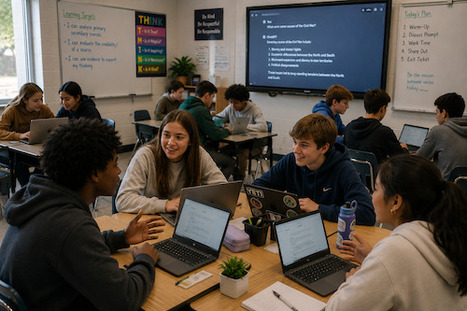
Ai in schools must move beyond superficial bans and passive policies to everyday practice grounded in scrutiny, judgment, and equity.
"Transforming ethical guidelines into practice requires concrete strategies that equip educators with tools, training, and institutional support needed to govern AI responsibly"
|
|
Scooped by
EDTECH@UTRGV
September 2, 4:38 PM
|
Scoop.it!
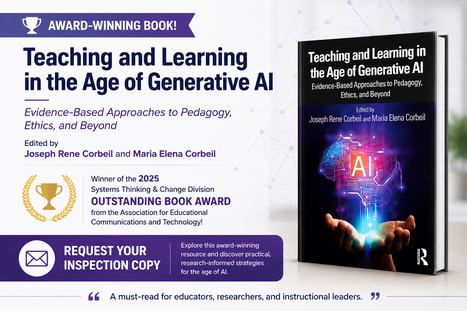
One of the biggest questions surrounding generative AI in education is no longer simply whether students use it. AI can help someone brainstorm, receive feedback, organize ideas, revise writing, conduct research—or avoid doing the learning altogether.
So perhaps the better questions are:
This connects to the idea of cognitive offloading—using a tool to reduce the mental effort required to complete a task. We already do this with calculators, calendars, search engines, and navigation systems.
Generative AI greatly expands what we can hand over. The challenge is deciding what can be offloaded productively and what thinking remains necessary for developing understanding, judgment, creativity, and expertise.
These are among the issues explored in our award-winning book, Teaching and Learning in the Age of Generative AI.
We would love to hear your perspective:
When does AI become a useful learning support—and when does it begin replacing the learning?
People have always used tools to reduce mental effort. We use calculators, calendars, search engines, navigation systems, and countless other supports.
Generative AI dramatically expands what we can offload.
The challenge for educators is determining which work can be delegated productively and which thinking remains essential for developing understanding, judgment, creativity, and expertise.
|
|
Scooped by
EDTECH@UTRGV
September 2, 12:17 PM
|
Scoop.it!
A look at what happens when rules written far from a classroom land on a teacher’s desk.
|
|
Scooped by
EDTECH@UTRGV
September 2, 12:14 PM
|
Scoop.it!

AI access is only the beginning--institutions need instructional designers to translate new capabilities into responsible teaching practice.
"Giving faculty access to AI is only the beginning--institutions also need people who can help translate new capabilities into responsible teaching practice"
|
|
Scooped by
EDTECH@UTRGV
September 2, 12:12 PM
|
Scoop.it!

If ever there was a most important era in which we must emphasize discourse with our students, it is today. We are in the midst of major changes in our culture and society as a whole. I have had a long tenure of teaching in higher education, beginning in 1972 at the instructor level at the University of Illinois Urbana, continuing through spring semester 2022 as a full professor and associate vice chancellor at the University of Illinois Springfield. That is one half of a century in the faculty ranks.
“Today, AI fluency is rapidly becoming the common language of work and a prerequisite for the next chapter of competitiveness."
|
|
Scooped by
EDTECH@UTRGV
September 1, 11:47 AM
|
Scoop.it!


What we’re learning—and still need to discover—about AI for networking.
"When students retreat to chatbots, they risk atrophying the very relational skills they need to thrive"
|
|
Scooped by
EDTECH@UTRGV
September 1, 11:04 AM
|
Scoop.it!

Here are 8.5 things young reporters and editors want you to know about artificial intelligence.
"Just as the technology has rewired the relationship between young writers-in-training and their teachers, it has also changed how student journalists and their editors work together — or, in some cases, don’t.
And AI has created headaches for these journalists that mirror those afflicting their professional peers, with school newsrooms struggling to figure out how to respond."
|
|
Scooped by
EDTECH@UTRGV
September 1, 10:39 AM
|
Scoop.it!

A generation of advocacy, 20,000 papers, and zero experimental control trials. How educational romanticism replaces empirical proof
"Noble intentions are the starting point of instructional design, not the finish line. If we want our classrooms to be truly evidence-based, we must demand that our most cherished theories survive the scrutiny of a controlled trial. Until we do, our curriculum choices will remain driven by ideological fashion rather than proven impact."
|
|
Scooped by
EDTECH@UTRGV
August 31, 3:56 PM
|
Scoop.it!

"AI is changing how learners study, write, and complete aassessments. This article explains how eLearning teams can build AI literacy, redesign assessments, and protect learner trust."
"AI literacy means learners can evaluate AI output, question assumptions, identify weak evidence, protect privacy, understand bias, and decide when not to use AI. It is not only about producing faster work. It is about developing better judgment."
|
|
Scooped by
EDTECH@UTRGV
August 31, 3:51 PM
|
Scoop.it!
A single workshop or training will not adequately prepare educators for everything they need to know and do in regard to AI.
"Educators want to understand what AI is, how it works, and how it can support their work, but they also want practical guidance about data privacy, academic integrity, bias, responsible classroom use, and appropriate student use. They need clear and consistent guidance that supports their practice."
|
|
Scooped by
EDTECH@UTRGV
September 3, 11:05 AM
|
Scoop.it!

"Just as schools are preparing to open, New York City is putting new limits on technology use. As reported in The New York Times and Chalkbeat, there will be no individual screens before third grade and recommended caps on screen time for grades 3 - 8."
"[T]he problem with screen-time rules is that they measure the device rather than what students are doing with it. That's particularly problematic with young children because sometimes the screen is... an accessibility tool"
|
|
Scooped by
EDTECH@UTRGV
September 3, 10:59 AM
|
Scoop.it!

For most colleges and universities, access to AI tools is no longer the barrier. The real work is building the clarity, confidence, and shared responsibility to use them well.
"AI gains traction when embedded in familiar learning environments and supported by policy, trusted platforms, educator agency, peer examples, and practical training."
|
|
Scooped by
EDTECH@UTRGV
September 3, 10:56 AM
|
Scoop.it!

A structured pilot program reduces risk before a districtwide rollout. Here’s how to build one that generates actionable data.
"A pilot program can mitigate the risks by first launching a small-scale, time-limited test of a technology tool with a defined group of users before committing to full schoolwide or districtwide adoption."
|
|
Scooped by
EDTECH@UTRGV
September 3, 10:53 AM
|
Scoop.it!

Ghost students are viewed primarily as a financial aid problem. In reality, they are an institutional cybersecurity challenge.
"Ghost student fraud represents the next evolution in identity-based attacks. Instead of stealing student credentials, fraud rings create synthetic identities from stolen and fabricated personal information. Once those identities pass proofing, they receive accounts, privileges, and financial aid as legitimate students, and every subsequent transaction inherits that trust."
|
|
Scooped by
EDTECH@UTRGV
September 2, 12:19 PM
|
Scoop.it!
The new offering is promising, but there are some real-world reservations.
"ChatGPT for Teens illustrates the promise and the limits of AI in education. Tools like Study Mode can fill a genuine gap for students who lack resources. But...the technology is not a substitute for teachers."
|
|
Scooped by
EDTECH@UTRGV
September 2, 12:16 PM
|
Scoop.it!

Attendance, completion, and click-through data show presence, but they often miss the signals that determine whether learning sticks.
"Completion data tells you who stayed in the room. Processing shows who stayed mentally engaged. Application reveals whether the learning reached the workplace. Looking at all three together gives L&D teams a far clearer picture than attendance alone ever could."
|
|
Scooped by
EDTECH@UTRGV
September 2, 12:13 PM
|
Scoop.it!

When tech and AI can increasingly handle routine tasks, students need opportunities to build skills that come from not simply following a set of instructions
"[T]here is a downside to making a rubric, exemplar, or step-by-step checklist the starting point for every assignment: students can become very good at following directions without becoming very good at figuring things out."
|
|
Scooped by
EDTECH@UTRGV
September 2, 12:09 PM
|
Scoop.it!
"Steven Spielberg’s Precogs Are The Sharpest Portrait Of Generative AI Anyone Drew Before It Arrived — Fluent, Confident, Acting On Their Own, Hallucinations Included."
"The precogs do not retrieve the future; they generate it, the same move that makes a language model useful and needs human in the loop."
|
|
Scooped by
EDTECH@UTRGV
September 1, 11:42 AM
|
Scoop.it!
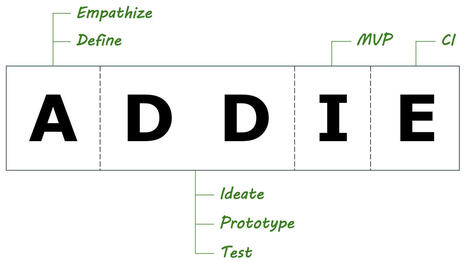
"While listening to the conversation between Purnima Valiathan and Guy Wallace on The LEAD Podcast, I was surprised to hear about the ongoing confusion that's prevalent among instructional designers in relation to Design Thinking."
"By recognising the complementary nature of HCD and traditional instructional design in this way, we shield ADDIE from much of the heat that it attracts from its many detractors. It’s a sound model if you do it right – and by doing it right, I mean embedding HCD practices into it."
|
|
Scooped by
EDTECH@UTRGV
September 1, 10:42 AM
|
Scoop.it!
With tools like Amira and Khanmigo, ‘the take-up is very low,’ according to Stanford University’s Susanna Loeb.
"[H]uman tutors can become more effective with prompts from an AI tool. Tasks like scheduling, tracking attendance, analyzing notes from sessions and giving students additional practice outside of tutoring sessions are other ways that AI can support tutoring, according to the researchers.
|
|
Scooped by
EDTECH@UTRGV
September 1, 10:36 AM
|
Scoop.it!
Artificial intelligence can bridge the middle grades literacy gap by providing individualized student reading instruction at scale.
"The best way to improve student reading achievement is still to read a lot, and we should look for tools that support a higher volume of reading with increasingly complex texts."
|
|
Scooped by
EDTECH@UTRGV
August 31, 3:52 PM
|
Scoop.it!

A ban on edtech and screen time won't work if we want to prepare students for the future and help them build digital fluency and AI literacy.
"Preparing students responsibly means building digital fluency and AI literacy--that’s possible through purposeful, constructive technology use"
|
|
Scooped by
EDTECH@UTRGV
August 31, 3:47 PM
|
Scoop.it!

"Employers increasingly seek graduates who know how to use artificial intelligence. Through new courses and curricula, several institutions are ensuring that their students will fit the bill."
"As artificial intelligence continues to reshape the workforce, several colleges and universities are introducing AI requirements to general education curricula, majors and certificate programs this fall."








"Educators want to understand what AI is, how it works, and how it can support their work, but they also want practical guidance about data privacy, academic integrity, bias, responsible classroom use, and appropriate student use. They need clear and consistent guidance that supports their practice."