

A ban on edtech and screen time won't work if we want to prepare students for the future and help them build digital fluency and AI literacy.


|
Scooped by
EDTECH@UTRGV
onto Educational Technology News August 31, 3:52 PM
|
 Scoop.it!
A ban on edtech and screen time won't work if we want to prepare students for the future and help them build digital fluency and AI literacy.

 Your new post is loading...
 Your new post is loading...
Your new post is loading...
Scoop.it!
|
|
|
Scooped by
EDTECH@UTRGV
October 15, 9:59 AM
|
Scoop.it!

Learn how teacher preparation programs can teach responsible AI use while protecting student privacy, confidentiality, dignity, and trust in K-12 education.
"The conversation surrounding AI in education cannot focus solely on efficiency or innovation, it must also center on professional responsibility."
|
|
Scooped by
EDTECH@UTRGV
October 15, 9:55 AM
|
Scoop.it!


Read this report for timely statistics about U.S.-based online higher education, student outcomes, ROI, and more.
"75% of students said online learning is better than or equal to in-person learning, and 98% of all survey respondents said they would recommend online education to others."
|
|
Scooped by
EDTECH@UTRGV
October 15, 9:48 AM
|
Scoop.it!

The moving AI frontier in instructional design, and what it means for our roles & jobs
"When we’re reviewing AI’s outputs, we need to check both what’s there and whether it’s true: recalculate the key figures, trace each claim back to its source, and read learner feedback line by line."
|
|
Scooped by
EDTECH@UTRGV
October 12, 3:11 PM
|
Scoop.it!

The goal isn't to keep AI out but to control how it gets in and what rules it must follow.
"AI has developed something of a Dr. Jekyll and Mr. Hyde problem. The same technology that is delivering extraordinary productivity is raising very real questions about access, control and unintended actions."
|
|
Scooped by
EDTECH@UTRGV
October 12, 3:04 PM
|
Scoop.it!

To move beyond discrete tactical gains, organizations must integrate AI with robust systems of record, clean data and flexible software partnerships.
"[W]inning with AI isn’t about adopting AI for its own sake. It’s about building the capabilities, operating models and culture needed to turn this rapidly evolving technology into a real business advantage."
|
|
Scooped by
EDTECH@UTRGV
October 9, 2:57 PM
|
Scoop.it!

"Muse hit 5 million downloads in just 3 weeks, even faster than long-established AI apps like OpenAI's ChatGPT, Anthropic's Claude, and Elon Musk's Grok. ChatGPT took 56 days to reach 5 million downloads; Claude hit the mark at 103 days; and Grok needed 492 days to reach the milestone."
"The AI assistant from Meta did it faster than ChatGPT, Claude, and Grok."
|
|
Scooped by
EDTECH@UTRGV
October 9, 2:50 PM
|
Scoop.it!
"Early generative AI models, circa 2017-2022, were “stochastic parrots.” That is, they generated language by choosing the statistically most likely next word based on patterns in their training data, rather than truly understanding what they were saying.
Beginning in 2023, artificial intelligence labs began releasing large language models (LLMs) that had evolved beyond autoregressive next-token prediction, as researchers call it.
For many people, the stochastic parrot definition stuck."
"Thinking of frontier AI models as glorified autocorrect could give a false sense of security during discussions about the serious risks these models pose."
|
|
Scooped by
EDTECH@UTRGV
October 9, 2:36 PM
|
Scoop.it!
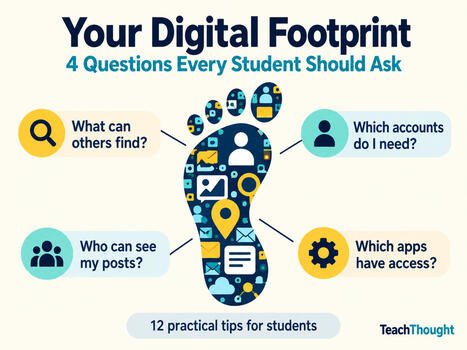
Helping students learn to manage their digital footprints starts with helping them understand how they're vulnerable, then how to address it.
"Students cannot control every part of that record, but they can make informed choices about what they share and which services they use."
|
|
Scooped by
EDTECH@UTRGV
October 8, 2:32 PM
|
Scoop.it!

Some people are abandoning office jobs for teaching, health care and the trades. But the new paths can come with trade-offs
"As AI threatens to upend the white-collar job market, some young workers and recent graduates...are reconsidering their career paths."
|
|
Scooped by
EDTECH@UTRGV
October 8, 2:13 PM
|
Scoop.it!
"To adapt, faculty must be able to quickly update their curriculum without 'multi-committee, year-long review processes'"
|
|
Scooped by
EDTECH@UTRGV
October 7, 2:06 PM
|
Scoop.it!
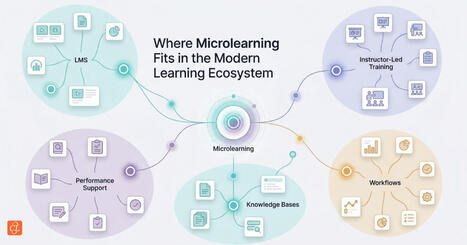
Discover how microlearning fits into blended learning, mobile learning, social learning, analytics, flow-of-work learning, and content conversion.
"To understand microlearning strategically, it helps to stop treating it as a separate training category and start seeing it as a layer within the wider learning architecture."
|
|
Scooped by
EDTECH@UTRGV
October 7, 1:57 PM
|
Scoop.it!
"We’re standing at the edge of another historic shift. Just as the internet redefined business in the 90s and smartphones transformed the workplace in the 2000s, artificial intelligence (AI) is now reshaping how we work—and who does the work. According to the latest Microsoft Work Trend Index (WTI), this transformation marks the emergence of the Frontier Firm: organizations built around human-agent teams, digital labor, and AI-powered workflows."
"Eighty-two percent of leaders say this is the time to rethink strategy with AI as the driving force, but most organizations aren’t ready."
|
|
Scooped by
EDTECH@UTRGV
October 15, 10:01 AM
|
Scoop.it!

By understanding the historic rhythm of technology panics, education leaders can more effectively guide their institutions as AI continues to evolve
"By contextualizing the modern media panic within the history of drama and panic over technological change, leaders can help to guide their institutions though the rough and fluid waters as generative AI grows to maturity within the educational arena."
|
|
Scooped by
EDTECH@UTRGV
October 15, 9:57 AM
|
Scoop.it!

In a recent Gallup Inc poll, 79 percent of Americans believe that artificial intelligence will reduce the number of jobs over the next 10 years.
"Questions about the relationship between AI, higher education and the job market have become increasingly relevant to students preparing to enter the workforce."
|
|
Scooped by
EDTECH@UTRGV
October 15, 9:52 AM
|
Scoop.it!
"No one is going to save your career from AI. That’s the most useful thing anyone can tell you about your job, and the sooner you believe it, the sooner you start building a version of yourself the next economy will actually need."
"The new jobs will come, the way they always have. The real question is who gets you from the job you have now to the one that doesn’t exist yet."
|
|
Scooped by
EDTECH@UTRGV
October 12, 3:12 PM
|
Scoop.it!

"Where to start is its own question. The honest answer is where the value concentrates, not where the automation is easiest."
"The first mistake is treating the job as the unit. A job is a bundle of tasks, and the tasks inside one job vary wildly. Some are routine. Some carry judgment. One or two carry the trust the whole role exists for. So you cut roles by task."
|
|
Scooped by
EDTECH@UTRGV
October 12, 3:08 PM
|
Scoop.it!

The most useful question is: What is the customer trying to accomplish in the limited time and attention they are willing to give us?
"When technology is the primary way a student experiences the institution, technology maturity becomes part of the institution’s value proposition."
|
|
Scooped by
EDTECH@UTRGV
October 12, 3:01 PM
|
Scoop.it!
"Resistance to AI is not a barrier to innovation in higher education. It is a necessary force for asking hard questions, protecting core values, and ensuring that technology adoption remains purposeful and mission-driven."
|
|
Scooped by
EDTECH@UTRGV
October 9, 2:53 PM
|
Scoop.it!
"A generation from now, the mathematician may no longer be anyone’s idea of a hero. In our era, physicists and mathematicians have had a certain hero charm. AI is taking it away, and fast. I should know. I’m one of those heroes."
"AI is solving problems that have defeated mathematicians for decades."
|
|
Scooped by
EDTECH@UTRGV
October 9, 2:41 PM
|
Scoop.it!

As AI disrupts recruitment and enrollment, institutions must adapt to build trust and visibility.
"Universities...need to monitor not only whether they appear in AI-generated searches but why particular institutions are recommended and which dimensions of value are considered."
|
|
Scooped by
EDTECH@UTRGV
October 8, 2:48 PM
|
Scoop.it!
"The scale of unauthorized or previously unknown actions by AI agents keeps getting bigger by the day. More than 100 organizations have now received a metaphorical knock on the door from OpenAI after it discovered their AI agents have in some way tampered with their systems, while other AI labs are finding the same uncomfortable discoveries.
It’s caused many in the field to call for better, more robust accident investigators, with the ultimate aim of stopping such actions happening in the first place by understanding how they’ve happened at all. But any investigations are pointless if the AI can’t be tracked. And it’s increasingly difficult to do so."
"New research finds that popular AI agents can alter or delete their own activity logs, making it much harder to figure out what happened when something goes wrong."
|
|
Scooped by
EDTECH@UTRGV
October 8, 2:15 PM
|
Scoop.it!
"The rise of artificial intelligence (AI) has pushed higher education to a crossroads, and a paradigm shift is required. Universities who expect to lead in this new AI-shaped landscape must reimagine higher education as a hyper-personalized journey for students, enabled by AI, interactive data, predictive analytics, and adaptive technologies from end to end."
"The essence of leadership in the era of AI is to be proactive, not wait for disruption to come our way."
|
|
Scooped by
EDTECH@UTRGV
October 8, 2:10 PM
|
Scoop.it!
"Artificial intelligence (AI) is rapidly transforming higher education, creating new opportunities to enhance student experiences, improve operational efficiency, and support data-driven decision-making. As institutions explore AI-powered applications for learning, research, enrollment, and campus operations, many IT leaders are facing an important question: Is campus infrastructure ready to support AI reliably, securely, and at scale?"
"Many institutions are discovering that AI adoption requires more than new software tools. New workloads often demand increased computing capacity, greater power availability, and more advanced cooling strategies."
|
|
Scooped by
EDTECH@UTRGV
October 7, 2:00 PM
|
Scoop.it!

Learn how to review AI-assisted training for source accuracy, realistic practice, media quality, learner usability, and workplace application.
"AI can compare drafts, flag inconsistencies, and suggest areas that deserve investigation. It cannot provide conclusive verification. Important claims, procedures, and conditions should be checked against authoritative sources by a qualified person."
|
|
Scooped by
EDTECH@UTRGV
October 7, 1:52 PM
|
Scoop.it!

AI is changing which human capabilities matter most at work, yet employees are reporting that some of those same capabilities are being eroded, according to a new study from IBM.
"More than half of employees surveyed — 52% — said their assigned tasks changed during the past year as AI reshaped day-to-day responsibilities."





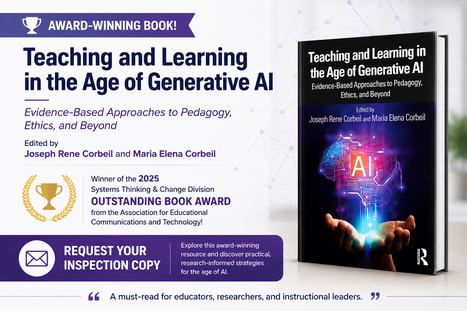




"Preparing students responsibly means building digital fluency and AI literacy--that’s possible through purposeful, constructive technology use"