Your new post is loading...
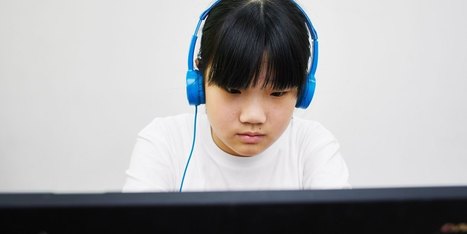
Zhou Yi was terrible at math. He risked never getting into college. Then a company called Squirrel AI came to his middle school in Hangzhou, China, promising personalized tutoring. He had tried tutoring services before, but this one was different: instead of a human teacher, an AI algorithm would curate his lessons. The 13-year-old decided…
Via Gerhard Bless

|
Scooped by
Dennis Swender
August 10, 2020 12:42 PM
|
A common criticism of the ultra-progressive Left is that its culture warriors now resemble the right-wing ideological enforcers of yore, excommunicating those deemed to have sinned or performed heresies. Indeed, anyone older than 30 or so should have at least a dim memory of the social conservatives who wanted every aspect of American society—from universities, to the media, right down to the content of children’s television shows—hewing to the same family-values prayer book, and who led campaigns to censor violent video games, rap music, and edgy Hollywood entertainment. In 1996, Republican presidential candidate Bob Dole called out Time Warner for publishing hip hop music whose lyrics glamorized violence against police officers. (“I would like to ask the executives of Time Warner a question: Is this what you intended to accomplish with your careers? You have sold your souls, but must you debase our nation and threaten our children as well?”) A quarter-century later, it’s progressives demanding the cancelation of movies and TV shows that present the police in any kind of positive light (and numerous …
There are many misconceptions about bridging differences, so we consulted with researchers and practitioners to clarify what it is—and what it isn’t.
Via june holley
|
|
Rescooped by
Dennis Swender
from Papers
July 31, 2020 3:00 AM
|
Hiroki Sayama
Phys. Rev. E 102, 012303 Today's society faces widening disagreement and conflicts among constituents with incompatible views. Escalated views and opinions are seen not only in radical ideology or extremism but also in many other scenes of our everyday life. Here we show that widening disagreement among groups may be linked to the advancement of information communication technology by analyzing a mathematical model of population dynamics in a continuous opinion space. We adopted the interaction kernel approach to model enhancement of people's information-gathering ability and introduced a generalized nonlocal gradient as individuals' perception kernel. We found that the characteristic distance between population peaks becomes greater as the wider range of opinions becomes available to individuals or the more attention is attracted to opinions distant from theirs. These findings may provide a possible explanation for why disagreement is growing in today's increasingly interconnected society, without attributing its cause only to specific individuals or events.
Via Complexity Digest
|
|
Rescooped by
Dennis Swender
from Hospitals and Healthcare
July 29, 2020 1:57 AM
|
The royal commission into aged care declared older people and their families were left “isolated and powerless". COVID-19 has provided a tragic real time vindication of the commission's observation.
Via Peter Mellow
|
|
Rescooped by
Dennis Swender
from Education 2.0 & 3.0
July 29, 2020 1:54 AM
|
"As the coronavirus pandemic spread through the country, a common (socially distanced) conversation among friends and families compared how many hours of remote learning kids were getting. Preliminary results from a new survey of school districts confirm what many parents learned through the Zoom grapevine. The number of hours your kids got varied wildly depending on where you happen to live. But the amount of time was not the only difference, according to a recent survey: the type of instruction students received also diverged dramatically."
Via EDTECH@UTRGV, Yashy Tohsaku
"Frustration is giving way to optimism for global companies in their long-running fights against intellectual property theft in China. Recent New Balance and Spin Master court awards are cementing the new push, lawyers say ..."
Via Leona Ungerer
"Jeff Meng, a 25-year-old watch lover from a well-heeled Guangdong family, had US$22,800 burning a hole in his pocket. He could not find the Rolex Daytona watch he wanted, dubbed “panda” for its black-and-white face, anywhere in China ..."
Via Leona Ungerer
National responses to tackling the coronavirus pandemic in China and Italy have given rise to jaw-dropping double standards at The New York Times. For it seems that locking down around 60 million people in China is tantamount to a gross human rights violation, while doing the same to 60 million Italians is a bold step forward showing an enhanced sense of community that should be universally applauded. The West = good. China = bad. This rank hypocrisy, borne of a desperate liberal need to unnecessarily politicize everything, including the Covid-19 outbreak, has revealed an unflattering truth about ‘The Gray Lady,’ its sobriquet that once conveyed the impression the paper possessed of high virtue. No longer.
Via ThePlanetaryArchives/BlackHorseMedia - San Francisco
|
|
Rescooped by
Dennis Swender
from Edumorfosis.Work
July 2, 2020 3:27 AM
|
The digital workplace is making us question a lot of what we once took for granted. What does work mean? How are employees selected and trained? What kind of office do we want to work in ... or do we need an office at all?
Diversity, equity and inclusion are crucial to success in the digital workplace. It’s arguably even more important when we don’t have regular in-person interaction with our colleagues. Research continues to show that companies that rank in the top quartile for gender, racial, ethnic and cultural diversity are 21% to 33% more likely to experience above-average profitability. Beyond that, diversity of thought and opinion is more likely to bring new perspectives that are crucial for success.
Via Edumorfosis
|
|
Scooped by
Dennis Swender
June 29, 2020 4:09 AM
|
Discrimination and prejudice on the basis of race is a violation of the human dignity of our neighbors, and we all have a responsibility to fight injustice wherever it is found. The question, of course, is how we ought to do this. Are the foundations of our American systems of government and civil s
|
|
|
Scooped by
Dennis Swender
August 10, 2020 12:20 PM
|
Concerns raised that ‘narrow’ criteria for challenging grades may ‘exacerbate existing inequalities’
|
|
Rescooped by
Dennis Swender
from Papers
July 31, 2020 3:01 AM
|
Herd immunity differs from place to place, and many factors influence how it’s calculated.
Via Complexity Digest
|
|
Rescooped by
Dennis Swender
from Papers
July 31, 2020 2:59 AM
|
Xiaowen Dong, Alfredo J. Morales, Eaman Jahani, Esteban Moro, Bruno Lepri, Burcin Bozkaya, Carlos Sarraute, Yaneer Bar-Yam & Alex Pentland
EPJ Data Science volume 9, Article number: 20 (2020) Urban income segregation is a widespread phenomenon that challenges societies across the globe. Classical studies on segregation have largely focused on the geographic distribution of residential neighborhoods rather than on patterns of social behaviors and interactions. In this study, we analyze segregation in economic and social interactions by observing credit card transactions and Twitter mentions among thousands of individuals in three culturally different metropolitan areas. We show that segregated interaction is amplified relative to the expected effects of geographic segregation in terms of both purchase activity and online communication. Furthermore, we find that segregation increases with difference in socio-economic status but is asymmetric for purchase activity, i.e., the amount of interaction from poorer to wealthier neighborhoods is larger than vice versa. Our results provide novel insights into the understanding of behavioral segregation in human interactions with significant socio-political and economic implications.
Via Complexity Digest
|
|
Rescooped by
Dennis Swender
from consumer psychology
July 23, 2020 2:49 AM
|
"Roughly 66.3 million pairs of shoes are produced every day and this takes a heavy toll on the planet, on animals and the workers producing them. Tansy Hoskins, author of Foot Work: What Your Shoes Are Doing to The World, shares eye-opening truths about the reality behind the shoes we wear ..."
Via Leona Ungerer
"Faced with the spread of the coronavirus, the government is promoting using serving utensils, but resistance is strong. Sharing food with personal chopsticks is one way Chinese people express intimacy ..."
Via Leona Ungerer
This past Spring, the US Congress authorized emergency funding for states and districts within the Coronavirus Aid, Relief, and Economic Security Act (CARES Act). Almost half of this funding will go to K-12 schools, with the goal of making learning more accessible for populations most affected by school closures—especially students with disabilities, at-risk populations, language needs, and other challenges. As the deadline to submit CARES Act budgets draws near, how can leaders create the most effective and inclusive plans, ensuring funds are used to adequately support students, educators, and communities? Join us as we host Sophia Mendoza, Director of Instructional Technology Initiatives at L.A. Unified, Ji Soo Song, Senior Policy and Advocacy Associate at ISTE, Gretchen Livesey, Vice President of Partner Impact at Turnaround for Children, and Amina Fazlullah, Equity Policy Counsel at Common Sense D.C, in a panel discussion focused on equitable infrastructure, digital learning and ongoing support during this historic new chapter in education.
Via Dr. Tom D'Amico (@TDOttawa)
|
|
Rescooped by
Dennis Swender
from Buy vape cards online
July 13, 2020 4:36 AM
|
The persecution of Julian Assange is a transparent and iron-fisted attempt by the US government to globally criminalize the publication of leaks which embarrass the US-centralized empire, thereby drawing a firm line which journalists all around the world know never to cross.
This is the inverted totalitarian oligarchic empire at its most overtly tyrannical. The imprisonment of Assange was the part of the movie where the villain finally reveals their true face for the monster they’ve always been, where it became clear to anyone paying attention that the US power alliance is as authoritarian and intolerant of real dissent as any tin pot dictator.
But this is the rarest form of imperial censorship. Normally, wherever possible, the power structures which dominate human civilization prefer to do so out of sight and out of mind, ideally having the inmates of the prison serve as their own wardens.
Via ThePlanetaryArchives/BlackHorseMedia - San Francisco, ai8708701@gmail.com
|
|
Scooped by
Dennis Swender
June 30, 2020 5:30 AM
|
Filtering content is often done with good intent, but filtering can also create equity and privacy issues.
|