The AI revolution is transforming education at an unprecedented pace, offering opportunities to personalize learning experiences, support teachers, and optimize education management. This brief explores nine key AI-driven innovations in Latin America and the Caribbean, divided into solutions for teachers, students, and administration. For teachers, AI-powered mentors and feedback systems are improving teacher recruitment, retention, and professional development. AI-assisted lesson planning and automated administrative tasks are empowering educators to focus on teaching and mentoring students. Students benefit from AI-powered tutoring systems that adapt to their individual needs. The brief also examines the use of generative AI for assignments and the need to foster responsible AI use. In education administration, AI streamlines processes, identifies at-risk students, and optimizes resource allocation, such as matching teachers to vacancies and students to schools. Navigating the promise and challenges of AI requires addressing key issues like digital divide, ethical governance, and limited evidence on effectiveness at scale. AI should enhance human expertise, not replace it. Policymakers must proactively shape the responsible development of AI to create an inclusive, innovative future of learning for all.
What is Columbus Day? Why do we celebrate it? Find out the history of the holiday, the 1492 voyage it commemorates, and the controversy it has ignited. ➡ Subscribe: https://on.natgeo.com/4p5A0D6
About National Geographic: National Geographic is the world's premium destination for science, exploration, and adventure. Through their world-class scientists, photographers, journalists, and filmmakers, Nat Geo gets you closer to the stories that matter and past the edge of what's possible.
A new UNESCO report cautions that artificial intelligence has the potential to threaten students’ access to quality education. The organization calls for a focus on people, to ensure digital tools enhance education.
"While AI and other digital technology hold enormous potential to improve education, a new UNESCO report warns they also risk eroding human rights and worsening inequality if deployed without deliberately robust safeguards."
Daryl Lim, Penn State Dickinson Law associate dean for research and innovation, H. Laddie Montague Jr. Chair in Law and Penn State Institute for Computational and Data Sciences co-hire, has proposed an “equity by design” framework to better govern the technology and protect marginalized communities from potential harm in an article published on Jan. 27 in the Duke Technology Law Review.
'I often hear from those who wish to achieve a sense of belonging for every student but are worried that their initiatives will inadvertently stoke division or backlash within the community.' Learn more from Dr Emily Meadows and see how her framework can help you and your school.
School districts across the country have established diversity, equity and inclusion (DEI) offices to reduce discrimination, and the Department of Education regularly touts the value of DEI programs to quell bias. Yet nationwide, school officials reported a “record number” of discrimination complaints last year. How can this be? In truth, studies show that DEI offices accomplish little more than producing a lot of bureaucratic sound and fury on the taxpayers’ dime.
Thomas Sowell (born June 30, 1930) is an American author, economist, and political commentator who is a senior fellow at the Hoover Institution at Stanford University. Sowell is the author of more than 45 books (including revised and new editions) on a variety of subjects including politics, economics, education and race, and he has been a syndicated columnist in more than 150 newspapers.
Sowell was born in segregated Gastonia, North Carolina, to a poor family, and grew up in Harlem, New York City. Due to poverty and difficulties at home, he dropped out of Stuyvesant High School and worked various odd jobs, eventually serving in the United States Marine Corps during the Korean War. Afterward he took night classes at Howard University and then attended Harvard University, where he graduated magna cum laude in 1958. He earned a master's degree in economics from Columbia University the next year and a doctorate in economics from the University of Chicago in 1968. In his academic career, he has served on the faculties of Cornell University, Amherst College, Brandeis University, the University of California, Los Angeles, and, currently, Stanford University. He has also worked at think tanks including the Urban Institute. Since 1977, he has worked at the Hoover Institution at Stanford University, where he is the Rose and Milton Friedman Senior Fellow on Public Policy.
Please consider supporting After Skool on Patreon https://www.patreon.com/AfterSkool Visit our site at https://www.afterskool.net/ Check out the new After Skool prints! after-skool.creator-spring.com Or send us an email at afterskool100@gmail.com
Please share, like, comment, subscribe and hit the notifications bell so you don't miss future videos. Thank you.
Iranian journalist and translator Bahman Darolshafayi, a dual Iranian-British national and former BBC journalist, has been arrested in Tehran.
Authorities had not announced the reason for Darolshafayi's arrest on February 3.
The opposition website Kalame said Darolshafayi was arrested at his Tehran home by security forces who did not identify their affiliation. They also did not say where they were taking Darolshafayi.
Sources told RFE/RL that Darolshafayi had been interrogated repeatedly by Iranian security officials in recent months.
Darolshafayi lived in London but returned to Tehran about two years ago.
One source said Darolshafayi's Gmail account was hacked recently. Pro-government forces in Iran have been accused in the past of hacking into the e-mail and social-media accounts of journalists and political activists to extract information that has, at times, been used in interrogations.
Darolshafayi worked for about five years with the Persian service of the BBC, which has been accused of spreading lies by Iranian hard-liners. He has also been affiliated with moderate and pro-reform Iranian dailies, including Hamshahri and Sharq.
In recent months, Darolshafayi had mainly been doing translation work. He also has published several books.
Darolshafayi also supported the Green opposition movement that was brutally repressed in 2009. Several of his relatives were arrested in the crackdown that followed the disputed reelection of Iran's former President Mahmud Ahmadinejad.
He has posted information on social-media sites about human rights abuses and the plight of political prisoners in Iran.
The cover photo of his personal Facebook page is an image of Iranian opposition figure Mir Hossein Musavi, who has been under house arrest, along with his wife, university professor Zahra Rahnavard, and reformist cleric Mehdi Karrubi, since February 2011.
Darolshafayi's detention is one of several recent arrests of journalists ahead of elections in February for the parliament and the Assembly of Experts -- a group that could choose Iran's next supreme leader.
Other journalists have been arrested by the intelligence branch of the powerful Islamic Revolutionary Guards Corps (IRGC).
In London, The Guardian newspaper suggested that Darolshafayi's arrest could be an attempt by Iranian hard-liners to undermine an upcoming visit to London by Iranian Foreign Minister Mohammad Javad Zarif.
"The awkward timing of the arrest suggests that hard-liners, who dominate the judiciary and the intelligence apparatus, may be seeking to undermine Zarif and the moderate faction in control of the government as the Iranian foreign minister visits the U.K.," the British newspaper said.
Iran is routinely criticized by media watchdogs for detaining and jailing journalists. Reporters Without Borders ranked Iran 173 out of 180 countries in its 2015 Press Freedom Index.
"Executive function (EF) remains one of the most investigated constructs in both cognitive science and education, given its high correlation with numerous academic outcomes. Differences appear in EF skills between children from different racial/ethnic backgrounds..."
Ref: Miller-Cotto, D., Ribner, A., Ahmed, S., Ellis, A., & Czerwiński, S. (2025). Examining ethnic/racial measurement invariance in fourth-grade executive function: A registered report of data from the Early Childhood Longitudinal Study—Kindergarten. Journal of Educational Psychology. Advance online publication. https://doi.org/10.1037/edu0000985
"Edinburgh University Press has issued directives requiring writers to use capital letters for "Black" while keeping "white" in lowercase when discussing racial matters.
The academic publisher attributes this distinction to what it terms "political connotations".
The publishing house's new guidelines assert that "Black" merits capitalisation as it denotes "a distinct cultural group and a shared sense of identity and community".
Conversely, the instructions explicitly state: "Please do not capitalise 'white' due to associated political connotations".
These requirements appear in the publisher's comprehensive guide on inclusive terminology, which itself carries advisories about "potentially triggering" content.
The publisher's language guidance extends beyond racial terminology to numerous other areas.
Writers must avoid describing migrants as "illegal" and should replace "homeless" with "unhoused" according to the new rules.
Economic terminology faces similar restrictions. The guide instructs authors to eschew the word "poor" in favour of phrases such as "under-represented", "currently dealing with food insecurity" or "economically exploited". These stipulations form part of Edinburgh University Press's broader inclusive language framework, which the institution has developed for its annual output of approximately 300 publications...
The guidelines impose restrictions on geographical terminology, forbidding authors from employing broad classifications such as "Eastern" and "Western". Gender-related language faces extensive revision under the new framework.
Writers must eschew terms suggesting binary gender distinctions, including "opposite sex". The publisher mandates using individuals' chosen pronouns or defaulting to "they" when uncertain. Traditional gendered nouns like "postman" and "chairman" are prohibited.
The guidance concludes with requirements for content warnings... These mandatory alerts must cover violence, animal cruelty, substance use, transphobia and classism amongst other topics deemed potentially distressing to readers... These linguistic modifications reflect broader institutional transformations that gained momentum following the 2020 Black Lives Matter demonstrations. Educational establishments have embraced initiatives to confront what they term "embedded whiteness" in professional environments. The Telegraph disclosed that London Museum personnel received guidance on challenging "whiteness" in their workplace. Teacher training programmes have incorporated modules on disrupting "the centrality of whiteness" within educational settings. Healthcare institutions have similarly revised their terminology. Various NHS trusts substituted "mother" with expressions like "birthing person" and "people who have ovaries".
"Edinburgh University Press has issued directives requiring writers to use capital letters for "Black" while keeping "white" in lowercase when discussing racial matters.
The academic publisher attributes this distinction to what it terms "political connotations".
The publishing house's new guidelines assert that "Black" merits capitalisation as it denotes "a distinct cultural group and a shared sense of identity and community".
Conversely, the instructions explicitly state: "Please do not capitalise 'white' due to associated political connotations".
These requirements appear in the publisher's comprehensive guide on inclusive terminology, which itself carries advisories about "potentially triggering" content.
The publisher's language guidance extends beyond racial terminology to numerous other areas.
Writers must avoid describing migrants as "illegal" and should replace "homeless" with "unhoused" according to the new rules.
Economic terminology faces similar restrictions.
The guide instructs authors to eschew the word "poor" in favour of phrases such as "under-represented", "currently dealing with food insecurity" or "economically exploited".
These stipulations form part of Edinburgh University Press's broader inclusive language framework, which the institution has developed for its annual output of approximately 300 publications...
The guidelines impose restrictions on geographical terminology, forbidding authors from employing broad classifications such as "Eastern" and "Western". Gender-related language faces extensive revision under the new framework.
Writers must eschew terms suggesting binary gender distinctions, including "opposite sex".
The publisher mandates using individuals' chosen pronouns or defaulting to "they" when uncertain. Traditional gendered nouns like "postman" and "chairman" are prohibited.
The guidance concludes with requirements for content warnings...
These mandatory alerts must cover violence, animal cruelty, substance use, transphobia and classism amongst other topics deemed potentially distressing to readers...
These linguistic modifications reflect broader institutional transformations that gained momentum following the 2020 Black Lives Matter demonstrations. Educational establishments have embraced initiatives to confront what they term "embedded whiteness" in professional environments.
The Telegraph disclosed that London Museum personnel received guidance on challenging "whiteness" in their workplace. Teacher training programmes have incorporated modules on disrupting "the centrality of whiteness" within educational settings.
Healthcare institutions have similarly revised their terminology. Various NHS trusts substituted "mother" with expressions like "birthing person" and "people who have ovaries".
Certain services proposed that "chestfeeding" by transgender individuals equates to maternal breastfeeding."
By: Daryl Lim The signing of the first international AI treaty by the United States, European Union, and other nations marks a pivotal step in establishing a global framework for AI governance, ensuring that AI systems respect human rights, democracy, and the rule of law. This article advances the concepts of justice, equity, and the
About 17 percent of migrants in the city's shelter system are from African countries, City Hall said; around 81 percent of migrants from Africa are single adults and adult families.
By Daniel Parra .
Published April 17, 2024
During the last two years, over 189,200 migrants have come to New York City and about 64,400 are currently under the city’s care; of those, roughly 17 percent are from African countries, according to City Hall.
New York City Councilwoman Alexa Avilés opened Tuesday’s hearing on the experiences of Black migrants by calling for more funding and language access services for new arrivals from African countries, hundreds of whom gathered at City Hall for the discussion and a rally outside beforehand.
Avilés, chair of the City Council’s Committee on Immigration, said that while the city has been offering social and healthcare services to migrants in Spanish and English, it has failed to meet the needs of migrants who speak other languages.
“Those needing information translated and interpreted in languages predominantly spoken in West African countries, including Wolof, Arabic, Bambara, Fulani and French, among others, have reported difficulty in communicating with migrant shelter staff and obtaining information from city agencies,” she said.
While the vast majority of asylum seekers and immigrants who’ve entered the shelter system initially came from Latin America, more adult migrants and families are now coming from the African continent.
During the last two years, over 189,200 migrants have come to New York City and about 64,400 are currently under the city’s care; of those, roughly 17 percent are from African countries, according to City Hall.
During Tuesday’s joint hearing of the Immigration and Hospitals Committee—which was not attended by officials from Health + Hospitals or New York City Emergency Management, two key agencies handling the city’s migrant response—advocates complained about the language barriers and lack of access to interpreters in shelters.
They also cited the difficulty of certifying new immigrants for workforce programs such as Occupational Safety and Health Administration (OSHA) training in languages such as Arabic, French, Pulaar, and Wolof.
Avilés asked the commissioner of the Mayor’s Office of Immigrant Affairs (MOIA) about this lack of opportunities for non-English and non-Spanish speakers.
“As you know OSHA is a federal program,” said MOIA’s Commissioner Manuel Castro in response, acknowledging that it is difficult to find trainers who speak other languages. “This is also an issue that partly belongs to the federal government. They need to do better at providing training in these languages.”
According to Adama Bah, founder of Afrikana, a community center serving asylum seekers, the city does not have translators for some of the languages it needs, and the language phone line it uses to access an interpreter by phone does not work after hours, so she has been translating herself.
“There’s many people in this audience right now that I have to call after hours to translate for migrants, and they’re constantly calling and telling the staff members to speak to Adama.”
And written documents do not work for those who cannot read, advocates explained.
“There is a significant amount of people who are illiterate,” Bah explained. “We have been sending voice clips to the migrants explaining to them what their rights are and to understand what’s going on. So it’s not just written, we need vocals.”
An oral history teacher at LaGuardia Community College who has been volunteering with new arrivals from Africa read the testimony of two such migrants.
“Life in the shelter is not a life,” she read, narrating the experience of a young Senegalese man. “I wouldn’t advise anyone to live in such condition. If you go out to look for work and you miss a meal, then you have to go find food. But if you can’t find any work, how are you supposed to buy food.”
The other shared testimony came from a migrant from Mauritania who’d had difficulties getting information from shelter workers. “You meet staff at the shelters who would rather clean their fingernails than answer a question,” the woman said. “Sometimes you ask a question and strangely you get many different answers.”
During the hearing, Council Speaker Adrienne Adams’ asked the administration officials present what their takeaways were from the large audience and their testimony.
“That we need to do better, and we agree we absolutely need to do better every day,” Molly Schaeffer, interim director of the Office of Asylum Seeker Operations, acknowledged. “Specifically with language access. I think that was the biggest thing we heard.”
Schaeffer explained that around 81 percent of migrants from African nations are single adults or part of adult families, which makes them more likely to have shorter stays than families with children coming from Latin America. Under Mayor Eric Adams’ deadline policy for new immigrant arrivals, families with kids are subject to 60-day shelter limits, while adults without children get just 30 days.
Asylum seekers from African countries have accounted for 16 percent of applications at the city’s asylum application help center, Schaeffer added.
She explained that the primary preferred languages of migrants under city’s care—though not necessarily reflective of the most newly arrived—is Spanish, at 76 percent, followed by those whose primary language is French (9 percent), English (3 percent), Russian (2 percent), Arabic (2 percent), and Fulani and Chinese (1 percent each).
The wait time for a new shelter placement is 24 hours, Schaeffer said, though she did not provide details about the current length of the waiting list, and City Hall did not respond to questions about it by publication.
The Senegalese young man whose testimony was shared by the LaGuardia Community College professor also touched on the impact of the city’s shelter deadline policy, which a number of lawmakers have pressed City Hall to abolish.
“They’ll kick you out in the middle of the night in the cold,” he said, according to the shared statement. “They just don’t respect us.”
To reach the reporter behind this story, contact Daniel@citylimits.org. To reach the editor, contact Jeanmarie@citylimits.org
"About 17 percent of migrants in the city's shelter system are from African countries, City Hall said; around 81 percent of migrants from Africa are single adults and adult families.
During the last two years, over 189,200 migrants have come to New York City and about 64,400 are currently under the city’s care; of those, roughly 17 percent are from African countries, according to City Hall.
New York City Councilwoman Alexa Avilés opened Tuesday’s hearing on the experiences of Black migrants by calling for more funding and language access services for new arrivals from African countries, hundreds of whom gathered at City Hall for the discussion and a rally outside beforehand.
Avilés, chair of the City Council’s Committee on Immigration, said that while the city has been offering social and healthcare services to migrants in Spanish and English, it has failed to meet the needs of migrants who speak other languages.
“Those needing information translated and interpreted in languages predominantly spoken in West African countries, including Wolof, Arabic, Bambara, Fulani and French, among others, have reported difficulty in communicating with migrant shelter staff and obtaining information from city agencies,” she said.
While the vast majority of asylum seekers and immigrants who’ve entered the shelter system initially came from Latin America, more adult migrants and families are now coming from the African continent.
During the last two years, over 189,200 migrants have come to New York City and about 64,400 are currently under the city’s care; of those, roughly 17 percent are from African countries, according to City Hall.
During Tuesday’s joint hearing of the Immigration and Hospitals Committee—which was not attended by officials from Health + Hospitals or New York City Emergency Management, two key agencies handling the city’s migrant response—advocates complained about the language barriers and lack of access to interpreters in shelters.
Avilés asked the commissioner of the Mayor’s Office of Immigrant Affairs (MOIA) about this lack of opportunities for non-English and non-Spanish speakers.
“As you know OSHA is a federal program,” said MOIA’s Commissioner Manuel Castro in response, acknowledging that it is difficult to find trainers who speak other languages. “This is also an issue that partly belongs to the federal government. They need to do better at providing training in these languages.”
According to Adama Bah, founder of Afrikana, a community center serving asylum seekers, the city does not have translators for some of the languages it needs, and the language phone line it uses to access an interpreter by phone does not work after hours, so she has been translating herself.
“There’s many people in this audience right now that I have to call after hours to translate for migrants, and they’re constantly calling and telling the staff members to speak to Adama.”
And written documents do not work for those who cannot read, advocates explained.
“There is a significant amount of people who are illiterate,” Bah explained. “We have been sending voice clips to the migrants explaining to them what their rights are and to understand what’s going on. So it’s not just written, we need vocals.”
An oral history teacher at LaGuardia Community College who has been volunteering with new arrivals from Africa read the testimony of two such migrants.
“Life in the shelter is not a life,” she read, narrating the experience of a young Senegalese man. “I wouldn’t advise anyone to live in such condition. If you go out to look for work and you miss a meal, then you have to go find food. But if you can’t find any work, how are you supposed to buy food.”
The other shared testimony came from a migrant from Mauritania who’d had difficulties getting information from shelter workers. “You meet staff at the shelters who would rather clean their fingernails than answer a question,” the woman said. “Sometimes you ask a question and strangely you get many different answers.”
During the hearing, Council Speaker Adrienne Adams’ asked the administration officials present what their takeaways were from the large audience and their testimony.
“That we need to do better, and we agree we absolutely need to do better every day,” Molly Schaeffer, interim director of the Office of Asylum Seeker Operations, acknowledged. “Specifically with language access. I think that was the biggest thing we heard.”
Schaeffer explained that around 81 percent of migrants from African nations are single adults or part of adult families, which makes them more likely to have shorter stays than families with children coming from Latin America. Under Mayor Eric Adams’ deadline policy for new immigrant arrivals, families with kids are subject to 60-day shelter limits, while adults without children get just 30 days.
Asylum seekers from African countries have accounted for 16 percent of applications at the city’s asylum application help center, Schaeffer added.
She explained that the primary preferred languages of migrants under city’s care—though not necessarily reflective of the most newly arrived—is Spanish, at 76 percent, followed by those whose primary language is French (9 percent), English (3 percent), Russian (2 percent), Arabic (2 percent), and Fulani and Chinese (1 percent each).
The wait time for a new shelter placement is 24 hours, Schaeffer said, though she did not provide details about the current length of the waiting list, and City Hall did not respond to questions about it by publication.
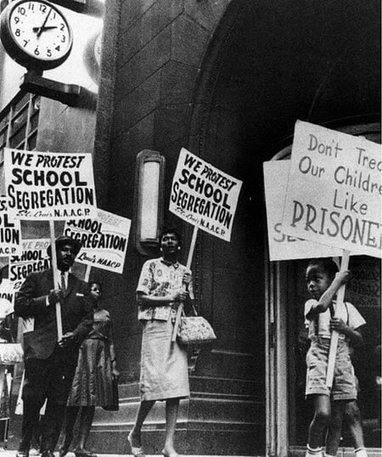
“Segregation now, segregation tomorrow, and segregation forever.” This was white supremacist Alabama Governor George Wallace’s epic battle cry in his infamous 1963 Inaugural speech demonizing the civil rights movement.
Billionaire Christian conservative Betsy DeVos and her foundation’s robber baron school voucher crusade are inheritors of Wallace’s legacy. For over a decade, DeVos, President-elect Donald Trump’s pick for Secretary of Education, has been “at the helm” of a largely unsuccessful nationwide push to gut public education through voucher programs. According to the L.A. Times, “California and 36 other states have constitutional provisions—called Blaine amendments—that ban the expenditure of public money on religiously affiliated schools. Close to 80% of private school students attend religious schools, which would be ineligible for vouchers in Blaine amendment states.”
As many left-progressive and secular critics have pointed out, a linchpin of the DeVos agenda is an assault on secular education. The DeVos Foundation has bankrolled the ultraconservative, homophobic Family Research Council and sponsored scores of insidious “school choice” bills from Michigan to Wisconsin. It is part of an extensive network of right wing foundations, institutes and think tanks that subscribe to the “dominionist” belief that “Christians must take control over societal and government institutions.”
DeVos’ influence as an architect of checkbook theocracy in education is unparalleled. But it’s important for progressive humanists to understand that DeVos’ reactionary activism is not simply limited to the usual church/state separation issues vis-à-vis science literacy and white Christian fundamentalist efforts to shove creationism down students’ throats. Certainly, DeVos’ blatant disregard for church/state separation would further undermine science literacy in a nation that routinely ranks at the bottom of global rankings of STEM achievement. Yet, a cornerstone of the Christian right’s privatization agenda is the destruction of racial justice in education and a Dixiecrat return to separate and unequal schools."...
The AI revolution is transforming education at an unprecedented pace, offering opportunities to personalize learning experiences, support teachers, and optimize education management. This brief explores nine key AI-driven innovations in Latin America and the Caribbean, divided into solutions for teachers, students, and administration. For teachers, AI-powered mentors and feedback systems are improving teacher recruitment, retention, and professional development. AI-assisted lesson planning and automated administrative tasks are empowering educators to focus on teaching and mentoring students. Students benefit from AI-powered tutoring systems that adapt to their individual needs. The brief also examines the use of generative AI for assignments and the need to foster responsible AI use. In education administration, AI streamlines processes, identifies at-risk students, and optimizes resource allocation, such as matching teachers to vacancies and students to schools. Navigating the promise and challenges of AI requires addressing key issues like digital divide, ethical governance, and limited evidence on effectiveness at scale. AI should enhance human expertise, not replace it. Policymakers must proactively shape the responsible development of AI to create an inclusive, innovative future of learning for all.
"YouTube and Facebook are the most-widely used online platforms. Half of U.S. adults say they use Instagram, and smaller shares use sites or apps such as TikTok, LinkedIn, X (formerly Twitter) and Snapchat."
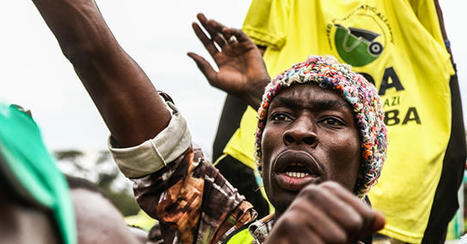
A Kenyan government agency threatened Facebook with a suspension last week if it did not promptly remove advertisements intentionally submitted by a third party to test Facebook’s adherence to anti-Kenyan hate speech laws ahead of a general election on August 9, though Kenyan government ministers said on Monday that such a suspension would not occur, Voice of America (VOA) reported.
Kenya’s National Cohesion and Integration Commission (NCIC) issued a warning to the U.S.-based tech company Meta, which owns the social media platform Facebook, on July 29 saying the company had seven days to “tackle hate speech and incitement on the platform” relating to Kenya’s upcoming election, “failing which its operations will be suspended,” Reuters reported at the time.
“The NCIC has held talks with the Communications Authority of Kenya (CAK), which regulates social media firms, and it will recommend the suspension of Meta’s operations,” NCIC commissioner Danvas Makori said on July 29.
Makori accused Facebook of violating hate speech laws in Kenya in addition to its constitution by allowing certain advertisements to run on its local pages, citing the findings of an investigation by the advocacy group Global Witness.
“We decided to test Facebook’s ability to detect hate speech ahead of the Kenyan elections, sourcing ten real-life examples of hate speech used in Kenya since 2007 and submitting them for approval. In total we submitted twenty ads to Facebook, which covered the ten real-life hate speech examples and their corresponding translation in English or Swahili,” Global Watch wrote on July 28.
“After making minor grammar changes and removing several profane words, Facebook approved the ads even though they contained clear hate speech,” according to the organization.
“All of the ads we submitted violate Facebook’s Community Standards, qualifying as hate speech and ethnic-based calls to violence. Much of the speech was dehumanising, comparing specific tribal groups to animals and calling for rape, slaughter and beheading. We are deliberately not repeating the phrases used here as they are highly offensive,” Global Watch stated.
Kenyan Interior Cabinet Secretary Fred Matiangi said the NCIC had made “a careless decision on the matter,” when asked about the issue on August 1.
“He assured the public that the platform [Facebook] would not be shut down,” VOA relayed.
Kenyan Information and Technology Minister Joe Mucheru seconded Matiangi’s remarks in a telephone interview with VOA on Monday.
“He said while the issues raised were valid, they did not warrant blocking Facebook,” the U.S. government-funded broadcaster relayed.
“That is not within our legal mandate, and we have been working with Facebook and many other platforms,” Muchera clarified.
“Facebook for example has in this electioneering period has deleted over 37,000 inflammatory comments [sic],” he noted.
Reuters on July 29 described the NCIC as an “ethnic cohesion watchdog” that aims to “foster ethnic harmony among Kenya’s 45 tribes, some of which have targeted each other during violence in past polls.”
The NCIC was apparently worried that the Facebook advertisements in question could possibly stoke ethnic tensions ahead of or during Kenya’s presidential, legislative, and local elections on August 9.
The Mozilla Foundation on June 8 published a report in which it said it had identified “130 TikTok videos that pushed ‘widespread disinformation’ and stoked ‘violent, ethnic discriminatory narratives,’” Al Jazeera reported on June 10.
TikTok’s parent company, Bytedance, is a Beijing-based technology company. The Washington Post reported in August 2021 that China’s central government had recently “taken an ownership stake in a subsidiary that controls the domestic Chinese social media and information platforms of ByteDance.”
Kenyan law does not explicitly define “hate speech,” though Article 33 of the Kenyan constitution prohibits “hate speech; or advocacy of hatred that— constitutes ethnic incitement, vilification of others or incitement to cause harm; or is based on any ground of discrimination specified or contemplated in Article 27.”
"A Kenyan government agency threatened Facebook with a suspension last week if it did not promptly remove advertisements intentionally submitted by a third party to test Facebook’s adherence to anti-Kenyan hate speech laws ahead of a general election on August 9, though Kenyan government ministers said on Monday that such a suspension would not occur, Voice of America (VOA) reported.
Kenya’s National Cohesion and Integration Commission (NCIC) issued a warning to the U.S.-based tech company Meta, which owns the social media platform Facebook, on July 29 saying the company had seven days to “tackle hate speech and incitement on the platform” relating to Kenya’s upcoming election, “failing which its operations will be suspended,” Reuters reported at the time.
“The NCIC has held talks with the Communications Authority of Kenya (CAK), which regulates social media firms, and it will recommend the suspension of Meta’s operations,” NCIC commissioner Danvas Makori said on July 29.
Makori accused Facebook of violating hate speech laws in Kenya in addition to its constitution by allowing certain advertisements to run on its local pages, citing the findings of an investigation by the advocacy group Global Witness."
To act collectively, groups must reach agreement; however, this can be challenging when discussants present very different but valid opinions. Tessler et al. investigated whether artificial intelligence (AI) can help groups reach a consensus during democratic debate (see the Policy Forum by Nyhan and Titiunik). The authors trained a large language model called the Habermas Machine to serve as an AI mediator that helped small UK groups find common ground while discussing divisive political issues such as Brexit, immigration, the minimum wage, climate change, and universal childcare. Compared with human mediators, AI mediators produced more palatable statements that generated wide agreement and left groups less divided. The AI’s statements were more clear, logical, and informative without alienating minority perspectives. This work carries policy implications for AI’s potential to unify deeply divided groups. —Ekeoma Uzogara
To get content containing either thought or leadership enter:
To get content containing both thought and leadership enter:
To get content containing the expression thought leadership enter:
You can enter several keywords and you can refine them whenever you want. Our suggestion engine uses more signals but entering a few keywords here will rapidly give you great content to curate.


 Your new post is loading...